 Deutsch
 English
 Español
Design Villa with Private Tennis Court and Pool in Pollença, Mallorca
Video of property POL40997, a design villa in La Font, Pollença, Mallorca, with a swimming pool, a private tennis court and landscaped gardens.
A contemporary architectural villa in the La Font area of Pollença, in the north of Mallorca, set in landscaped grounds with open mountain views and within walking distance of the town centre. The listing presents it as an architectural residence built to exacting standards.
The villa has 569 m² built on a plot of 3,794 m², with four bedrooms and four bathrooms. Bright contemporary interiors with high ceilings and a double-height entrance hall lead to an open-plan living area with fireplace, dining space and a minimalist kitchen. The ground floor has three en-suite bedrooms; upstairs, the master suite has an en-suite bathroom and an adjoining office area, and the basement has a cinema room and a guest toilet.
Outside, the property has expansive terraces, a large swimming pool, a private tennis court and landscaped gardens. It also has underfloor heating, air conditioning, built-in wardrobes, a heat pump, solar panels, and two garages: one attached, with space for two cars, and a separate one with independent access for up to four vehicles.
The video from Balearic Properties – Savills Mallorca presents the villa before a visit. It may suit buyers looking for a contemporary home in Pollença with sports and leisure facilities and space for entertaining. Details should be verified with the agency before making any decision.
View full listing and photos →
Property details
- Property type:
- contemporary design villa (detached)
- Location:
- La Font area, Pollença
- Area:
- north Mallorca
- Municipality:
- Pollença
- Island / region:
- Mallorca, Balearic Islands (Spain)
- Price:
- 5,300,000 € (as published in the official listing; check the listing for the current price)
- Built area:
- 569 m²
- Plot size:
- 3,794 m²
- Bedrooms:
- 4 (three en-suite bedrooms on the ground floor plus the master suite upstairs)
- Bathrooms:
- 4
- Pool:
- yes, large swimming pool
- Terrace:
- expansive terraces; covered terrace (listing highlights)
- Garden:
- landscaped gardens, private tennis court
- Garage / parking:
- two garages: one attached (2 cars) and one separate with independent access (up to 4 vehicles)
- Views:
- open mountain views and garden views
- Condition:
- immaculate condition, ready to move in (listing highlights)
- Main features:
- double-height entrance hall, fireplace, minimalist kitchen, cinema room in the basement, office area, underfloor heating, air conditioning, heat pump, solar panels, built-in wardrobes
- Property reference:
- POL40997
- Official listing:
- Architectural residence with private tennis court, Pollensa, Balearic Properties
- Video:
- https://www.youtube.com/watch?v=45cAxdk1hbo
- YouTube ID:
- 45cAxdk1hbo
About this video
The video, titled “Award-Winning Design Villa in Pollensa, Mallorca | Private Tennis Court & Pool”, presents this villa and highlights the private tennis court and the pool in its title. It was published on the official Balearic Properties – Savills Mallorca YouTube channel on 17 August 2026.
To see photographs of the individual spaces (living room, kitchen, bedrooms, terraces, pool, tennis court and garden), visit the official property listing.
Entities
- Locality: La Font
- Municipality: Pollença
- Island: Mallorca
- Region: Balearic Islands
- Country: Spain
- Nearby places: Pollença town centre (walking distance per the listing), Puerto Pollensa and Cala Sant Vicenç beaches (about 10 minutes by car per the listing)
- Brands: Living, Balearic Properties, Savills
- Channel: Balearic Properties – Savills Mallorca
Related topics
Frequently asked questions
Where is this property?
In the La Font area of Pollença, in the north of Mallorca, within walking distance of the town centre.
How many bedrooms and bathrooms does it have?
Four bedrooms and four bathrooms: three en-suite bedrooms on the ground floor and a master suite upstairs.
How big is it?
569 m² built on a plot of 3,794 m².
Does it have a pool and a tennis court?
Yes, a large swimming pool and a private tennis court.
Does it have views?
The listing describes open mountain views and views across the garden.
Does it have parking?
Yes, two garages: one attached for two cars and a separate one for up to four vehicles.
What features does the villa have?
Fireplace, cinema room, underfloor heating, air conditioning, heat pump, solar panels, built-in wardrobes and landscaped gardens.
What is the asking price?
The official listing shows a price of 5,300,000 €. Check the listing for the current price.
Where can I watch the property video?
On the official YouTube channel Balearic Properties – Savills Mallorca: https://www.youtube.com/watch?v=45cAxdk1hbo
Mallorca Property Prices by Area: A Buyer’s Guide to the Island’s Zones
Area guides and price comparisons across Mallorca’s most distinctive regions
Market sources checked: 18 September 2026. Asking-price data, official price indices and completed transactions are different measures and are identified separately. The Balearic Government’s Housing Observatory reported on 17 September 2026 that advertised offers across the islands were around 38% above actual transaction prices, so portal €/m² figures should be used for relative market positioning rather than treated as achieved sale values.
Mallorca is not a single property market, whatever average price gets quoted for the island as a whole. Spain’s National Statistics Institute (INE) recorded a 13.7% year-on-year rise in Balearic housing prices in the second quarter of 2026, the eighth-largest increase of any region in the country and well above the 12.2% national figure. Idealista’s own portal data put the Balearics ahead of every other Spanish region at the start of the year, at roughly €5,194 per square metre for second-hand housing, ahead of Madrid. Those headline numbers are useful for context, but they hide enormous variation across Mallorca itself: a buyer looking in Inca is in a completely different market from one looking in Puerto Andratx, sometimes at less than half the price per square metre.
This guide breaks the island down by area: what each zone actually offers, who tends to buy there, and how the prices compare once the headline figure is set aside.
Explore Mallorca by Area
Use our local area guides to move from market data to the realities of each location: North Mallorca, Northwest Mallorca, Southwest Mallorca, Palma, Central Mallorca, East Mallorca, Southeast Mallorca and South Mallorca. Each guide includes local lifestyle context and Iris Grünewald’s expert perspective on what buyers should consider.
The Southwest: Andratx and Calvià
The southwest corner, running from Andratx and its harbour at Puerto Andratx through to Calvià, Santa Ponsa and Puerto Portals, remains Mallorca’s most expensive stretch of coastline by some distance. This is where large villas with sea views and private pools cluster, many owned by international buyers who use them for a few months a year. Puerto Andratx in particular has built a reputation as one of the more exclusive addresses on the island, its marina drawing a similar crowd to Port de Sóller but on a larger scale. Santa Ponsa and the wider Calvià municipality mix long-established international communities with newer development, and the area’s easy access to Palma’s airport keeps demand steady even when the broader Spanish market cools. Puerto Portals adds a further layer to this: its marina was built around superyacht traffic rather than family sailing, and the restaurants, boutiques and property that surround it are priced with that clientele in mind.
Palma and Son Vida
Palma itself works almost as a market of its own. The Old Town has drawn a wave of renovation buyers over the past decade, converting historic townhouses into high-spec homes within walking distance of the cathedral and the port. Santa Catalina and Portixol, just outside the old walls, have followed a similar path with a younger, more design-led crowd. On the hill above the city, Son Vida is a different proposition again: gated, golf-adjacent, and priced closer to the southwest coast than to the rest of Palma. Buying in the capital generally means trading garden space and sea frontage for walkability, restaurants and year-round rental demand, which matters if the property needs to earn its keep outside the summer months. Palma also has the schools, hospitals and transport links that a purely coastal address often lacks, which is part of why it keeps attracting families relocating full time rather than only holiday buyers.
The North: Pollença and Alcúdia
Pollença and Alcúdia anchor the north of the island, and both have quieter, more established housing markets than some of the newer resort areas around them. Pollença town itself, inland and largely untouched by high-rise tourism, tends to appeal to buyers who want a genuine Mallorcan town with a strong arts and international community; Puerto Pollença adds the coastal element without the intensity of the southwest. Alcúdia splits similarly between its walled old town and Puerto Alcúdia’s beach-resort strip. Prices here sit in the middle of the island’s range, high enough to reflect real demand, but still some way below the southwest or Palma’s most sought-after pockets.
Sóller and the Tramuntana
West of Palma, across the Serra de Tramuntana, Sóller and Puerto de Sóller occupy a market of their own. The mountain railway and the valley’s citrus groves have long attracted buyers drawn to something quieter than the coast, and the wider Serra de Tramuntana was designated a UNESCO Cultural Landscape World Heritage Site in 2011, recognition of centuries of terraced agriculture and water management rather than a planning tool in itself, though it sits alongside genuinely strict local building controls that have kept large-scale development off the range. Prices here have moved sharply over the past year, more sharply than almost anywhere else in this comparison, though in a market this small a handful of high-value sales can move the average more than they would in a larger town. Deia and Valldemossa, further along the range, operate at an even smaller scale: transaction numbers are low enough that a reliable average price cannot be quoted with confidence, but both are understood locally to be among the most expensive villages on the island per property, if not always per square metre.
The South and the Interior
South of Palma, Santanyí has become one of the more fashionable addresses on the island over the past decade, its honey-coloured stone buildings and proximity to beaches like Es Trenc pulling in a crowd similar to the southwest’s, without quite reaching the same prices. Cala d’Or, further along the coast, remains a more conventional resort market, built up around its marina from the 1960s onward and still popular with buyers wanting an established, low-maintenance holiday base rather than a renovation project. Inland, Manacor, Felanitx and the towns around Marratxí and Inca offer the most affordable entry points on the island by a clear margin: working Mallorcan towns rather than resort destinations, with no sea view but a genuinely local, year-round market. Santa Maria del Camí, closer to Palma, has built a reputation for restored fincas and a strong dining scene, though transaction volumes there are too low for its own reliable average.
Price Comparison by Zone
September 2026 context: the Balearic Housing Observatory now provides an important cross-check for portal data: across the Balearics, advertised offers were reported at roughly 38% above actual sale prices. This is an island-wide indicator, not a discount to apply mechanically to any individual property.
Average prices vary enough by area that a single island-wide figure is not much use to a buyer trying to compare options. The table below uses portal data from Fotocasa’s housing price index at municipality level, pulled in September 2026. These are asking prices on current listings rather than closed sale prices, so they should be read as an indication of where each area sits relative to the others rather than an exact market value.
| Town | Zone | Fotocasa asking price | Period |
|---|---|---|---|
| Inca | Central / Interior | €2,804/m² | Sep 2026 |
| Felanitx | Southeast / Interior | €2,925/m² | Sep 2026 |
| Manacor | East | €3,547/m² | Sep 2026 |
| Marratxí | Central / Palma hinterland | €3,931/m² | Sep 2026 |
| Alcúdia | North | €4,257/m² | Sep 2026 |
| Pollença | North | €4,469/m² | Sep 2026 |
| Santanyí | Southeast | €4,823/m² | Sep 2026 |
| Palma | Palma | €4,843/m² | Sep 2026 |
| Sóller | Northwest / Tramuntana | €5,624/m² | Sep 2026 |
| Andratx | Southwest | €5,850/m² | Sep 2026 |
| Calvià | Southwest | €6,630/m² | Sep 2026 |
Source and interpretation: the table uses Fotocasa’s September 2026 advertised-listing index so that the municipalities are compared on one consistent methodology. These are asking prices, not completed-sale prices. Cross-checking also shows why sources should not be mixed in one table: Idealista’s August 2026 series, for example, reports Palma at €5,522/m², Calvià at €7,556/m², Andratx at €8,694/m², Alcúdia at €4,914/m² and Manacor at €3,440/m². Different portal methodologies and listing samples can produce materially different figures.
What Is Actually Driving the Differences
None of this is random. Mallorca’s own island-wide planning framework, the Pla Territorial Insular administered by the Consell de Mallorca, restricts how much new land can be brought into development, and its most significant revision in nearly two decades was given definitive approval in 2023. Combined with the geography itself, a narrow and mountainous west coast, a historic capital with limited room to expand, and a patchwork of protected countryside inland, that scarcity concentrates around whichever areas buyers already want most. That is a large part of why the southwest and the Tramuntana command such a premium over the interior. International demand plays its part too: buyers from Germany, the UK and, increasingly, the United States and the Nordic countries have kept the top of the market firm even in periods when broader Spanish demand has slowed, while the interior towns remain overwhelmingly bought and sold by residents.
Finding the Right Fit
Where any of this points a buyer depends entirely on what the property needs to do. A rental investment aimed at the summer market behaves differently from a family home meant for year-round use, and the areas that make sense for one rarely make sense for both. The southwest and Son Vida reward buyers prioritising resale value and rental yield at the luxury end; Palma suits anyone who wants to live in a real city rather than a resort; the north and the interior offer room to negotiate that has largely disappeared from the coast. None of these areas is better or worse in the abstract, only better or worse for a particular buyer’s plans, which is worth working out before narrowing down a specific town. It is also worth remembering that every figure in this guide is a snapshot: most of the island’s zones are still moving upward year on year, and several of the areas that look expensive today were considerably cheaper five years ago. That makes it worth checking the latest data before deciding, and weighing each case on its own merits.
You can browse current listings across the island on our Mallorca properties for sale page, or get in touch with our team for guidance on a specific area.
Frequently Asked Questions
Which part of Mallorca offers the best value for money right now?
Based on current portal data, the interior towns around Inca, Manacor and Marratxí offer the lowest entry prices on the island, in some cases less than half of what the southwest coast commands per square metre. Whether that counts as good value depends on what the buyer wants: these are working Mallorcan towns with limited tourist infrastructure and no sea view, so the lower price reflects a genuinely different kind of property rather than simply a discount on the coastal market.
Why is the southwest coast so much more expensive than the rest of the island?
A combination of scarce buildable land, strong international demand and decades of established reputation. Andratx and Calvià were among the first areas on the island to attract wealthy foreign buyers, and that history, combined with planning restrictions that limit new supply, has kept prices well above the rest of Mallorca ever since.
Are property prices in Mallorca still rising in 2026?
Yes, according to Spain’s National Statistics Institute, which recorded a 13.7% year-on-year increase for the Balearic Islands in the second quarter of 2026, above the national average. That figure covers the whole archipelago rather than Mallorca alone, and individual areas are moving at different speeds, so it should be read as a general direction rather than a guarantee for any specific town.
Is inland Mallorca a realistic alternative to the coast for buyers?
For buyers who do not need to be near the sea, yes. Towns like Inca, Manacor and Santa Maria del Camí offer significantly lower prices, less competition from other buyers and a more genuinely local lifestyle. The trade-off is distance from the beach and, in most cases, a smaller pool of short-term rental demand, which matters if the property is meant to generate income rather than simply be lived in.
Real Estate Terminology Explained: A Buyer’s Glossary for the Balearic Islands
Spanish property terminology can feel like a second negotiation. This plain-English glossary explains the legal, tax, planning and property terms buyers are most likely to encounter in Mallorca, Menorca and Ibiza.
Reviewed by Iris Grünewald, Co-founder and Director of Balearic Properties. Last reviewed September 2026. This guide is general information, not legal or tax advice; buyers should obtain independent advice for their circumstances.
Spanish property terms: the quick answer
The documents that usually matter most before buying are the nota simple, escritura pública, referencia catastral, planning and occupancy documents, the energy certificate and evidence that taxes, community fees and utilities are up to date. A reservation or contrato de arras should only be signed once its conditions, deadlines and consequences are understood.
“The safest approach is not to memorise every Spanish term, but to know which documents must agree with one another. The Registry, Cadastre, planning record and physical property should tell the same story before a buyer commits.” — Iris Grünewald
Contracts, ownership and completion
Arras / contrato de arras
A private deposit agreement used to reserve a property and set the route to completion. The consequences depend on the wording and legal type of the deposit. Under a commonly used arras penitenciales structure, withdrawal can mean the buyer loses the deposit or the seller returns double, but buyers should never assume this applies automatically. The contract should state the price, deposit, completion deadline, included items, conditions and treatment of defects or missing documents.
Contrato privado de compraventa
A private purchase contract between buyer and seller. It can create binding obligations before the notarial deed is signed. It should be reviewed by the buyer’s independent lawyer before signature.
Escritura pública de compraventa
The public deed of sale signed before a notary. It records the parties, property, price and other essential terms. The deed is then submitted for tax and registration formalities. The Spanish Notariat provides an official glossary of notarial concepts.
Notario
The notary is an impartial public official who identifies the parties, checks legality and authorises the public deed. The notary does not replace the buyer’s lawyer, surveyor, architect or tax adviser.
Registro de la Propiedad
The Land Registry records registered ownership, mortgages, charges and certain rights. It is legally distinct from the Cadastre. The official Registradores de España portal provides access to Registry services.
Nota simple
An informative Land Registry extract showing the registered description, owner and recorded charges at a particular point in time. It is fundamental due-diligence evidence, but it is not a technical survey or a guarantee that every alteration is planning-compliant.
Titular registral
The person or company recorded as owner at the Land Registry. The seller’s identity and authority to sell must match the documentation, including where ownership is held through a company, inheritance or power of attorney.
Cargas
Registered burdens or charges, potentially including mortgages, embargoes, easements or restrictions. The completion arrangements should specify which charges will be cancelled and how.
Hipoteca
A mortgage secured against the property. If the seller has a mortgage, the buyer’s lawyer should coordinate cancellation and Registry follow-through. Buyers financing their purchase should distinguish the bank valuation from an independent condition survey.
Usufructo and nuda propiedad
Usufructo is the right to use and benefit from an asset; nuda propiedad is bare ownership without that current right of use. Both interests can affect who must consent to a sale.
Servidumbre
An easement or right affecting land, such as access, drainage or utility rights. Its practical effect should be checked on the ground as well as in documentation.
Poder notarial
A power of attorney authorising another person to act for the buyer or seller. Its scope should be precise and the original or authorised electronic copy available when required.
Cadastre, planning and building status
Catastro and referencia catastral
The Cadastre is an administrative property database used primarily for description and taxation. The referencia catastral is the unique cadastral reference. Cadastral information and Land Registry information serve different purposes and should be cross-checked.
IBI
Impuesto sobre Bienes Inmuebles, the annual municipal property tax. Buyers normally request the latest receipt and confirmation of payment. The cadastral value used for IBI is not the same as the agreed market price.
Valor de referencia
A cadastral reference value that may be relevant to the tax base for certain property transactions. It is not an estate-agent valuation. Its tax effect must be checked for the specific transaction and date.
Licencia de obra
A municipal building licence. Works may require a major or minor works licence depending on their nature and local rules. A licence alone does not prove that the finished work matches the approved project.
Final de obra
Documentation confirming completion of authorised works, typically involving technical certification and subsequent formalities. For newer or substantially altered properties, buyers should confirm that completion is reflected where required.
Cédula de habitabilidad
An occupancy or habitability document confirming that a dwelling meets applicable minimum conditions, subject to the type and age of the property. Its availability, validity and relevance should be checked with the buyer’s lawyer or architect in the Balearic context.
Certificado de eficiencia energética
The energy performance certificate and label. The Balearic Government maintains the official register and public consultation service.
Certificado de antigüedad
An architect’s certificate describing the age of a building or alteration. It may support specific Registry or planning procedures, but it does not by itself legalise works or establish that they comply with planning rules.
Fuera de ordenación
A planning status affecting buildings that do not conform to current planning rules, often limiting future works or rebuilding rights. The precise implications depend on the property and applicable legislation.
Suelo urbano, urbanizable and rústico
Broad land classifications: urban land, land potentially capable of urban development, and rural land. Classification affects permitted uses, building rights and services, but the label alone is not enough: the detailed municipal plan and property-specific record must be reviewed.
Legalización
A procedure intended to regularise works carried out without the required permission, where legally possible. Not every structure can be legalised. Buyers should require written, property-specific advice rather than relying on an informal assurance that a pool, guest house or terrace “can be sorted later”.
Community ownership and ongoing costs
Comunidad de propietarios
The owners’ community in an apartment building or shared development. Buyers should review statutes, recent meeting minutes, accounts, approved works, arrears and any extraordinary assessments.
Cuota de comunidad
The regular community fee paid for shared costs. The amount may be based on the property’s participation coefficient rather than equal shares.
Derrama
An extraordinary community assessment for major works or unexpected expenditure. The private contract should make clear who pays an approved assessment due before or after completion.
Coeficiente de participación
The percentage assigned to a unit for participation in common elements, voting or costs, as defined by the title and community rules.
Taxes and transaction costs
ITP
Impuesto sobre Transmisiones Patrimoniales, generally associated with purchases of resale property. Rates, bands and reliefs can change, so the calculation should be confirmed for the buyer and completion date.
IVA and AJD
VAT (IVA) and Stamp Duty (Actos Jurídicos Documentados) may apply to certain new-build or business transactions instead of the resale-property treatment. Never apply a headline rate without professional confirmation of the transaction’s facts.
Plusvalía municipal
A municipal tax linked to the increase in value of urban land, commonly relevant on a sale. Responsibility and retention arrangements should be addressed by the lawyers, especially where the seller is non-resident.
NIE
The foreigner identification number used in Spanish tax and administrative procedures. Buyers commonly need an NIE before completion, but obtaining one does not create Spanish tax residency.
Retención de no residente
Where the seller is non-resident for Spanish tax purposes, the buyer may have a statutory obligation to retain and pay part of the price to the Tax Agency. The lawyer should calculate and file the appropriate form.
For a wider overview, read our Mallorca Property Buyer’s Guide and our guide to buying property in Mallorca.
Holiday-rental and occupancy terminology
ETV / tourist rental licence
An authorisation connected with tourist accommodation, subject to property type, zoning and current Balearic regulation. Buyers should verify the licence, registered places, ownership, sanctions and whether the intended operation can continue after purchase. A property having been advertised for holiday rental does not by itself prove a valid transferable authorisation.
Alquiler de temporada
A seasonal tenancy for a genuine temporary purpose, distinct from tourist accommodation and from a habitual residential tenancy. The real use and service model matter more than the label on the contract.
Those exploring the north of Mallorca can also see Pollensina’s curated collection of private villas and fincas for rent in Pollença, useful for experiencing an area before committing to a purchase.
People involved in a Balearic property purchase
- Abogado: the buyer’s independent lawyer, responsible for legal due diligence and contractual advice.
- Arquitecto: the architect who can compare the physical building with plans, licences and technical records.
- Aparejador / arquitecto técnico: a technical building professional who may inspect condition, works and construction matters.
- Agente inmobiliario: the estate agent coordinating the search, negotiation, documentation flow and transaction.
- Gestor: an administrative professional who may handle filings and formalities; the role is not a substitute for independent legal advice.
- Tasador: a valuer, often preparing a regulated valuation for mortgage purposes.
Buyer checklist: documents to ask for
- Up-to-date nota simple and seller identification.
- Title deed and cadastral information.
- IBI receipts and municipal-tax position.
- Planning licences, approved plans and completion documentation.
- Habitability and energy documentation where applicable.
- Community certificate, minutes, statutes and information on derramas.
- Utility and service information.
- Tourist-rental documentation if rental use is material to the purchase.
- Independent technical inspection for condition and planning consistency.
Frequently asked questions
Is a nota simple proof that every part of a Mallorca property is legal?
No. It reports Registry information. It should be compared with the Cadastre, municipal planning file, approved plans and the physical property by the buyer’s independent professionals.
Are arras always refundable?
No. Refund rights depend on the exact contract, the type of deposit and any conditions written into it. Obtain legal advice before paying or signing.
Do I need an NIE to buy property in the Balearic Islands?
Foreign buyers normally need an NIE for completion and tax procedures. Start early, particularly if signing through a power of attorney.
Does a tourist rental listing prove that a villa has an ETV licence?
No. Verify the authorisation and its scope through official records and legal due diligence. Past advertising or rental income is not proof of a valid licence.
What is the difference between the Land Registry and the Cadastre?
The Land Registry records legal title and registered rights; the Cadastre is an administrative description used particularly for taxation. Differences should be investigated before commitment.
Should I use the seller’s lawyer?
A buyer should appoint an independent lawyer who acts solely for the buyer and can coordinate legal, planning, tax and completion checks.
Talk to a local property specialist
Balearic Properties has helped international buyers navigate Mallorca’s property market for more than 25 years. Contact our team for a confidential discussion or explore properties for sale in Mallorca.
Official references
- Consejo General del Notariado — official glossary
- Registradores de España — Registry services
- Govern de les Illes Balears — energy certificate register
- Dirección General del Catastro — electronic office
Best Areas to Buy Property in Menorca: A Guide to the Island’s Prime Locations
Prime locations and opportunities in Menorca: where to look on the island, what each area actually offers, and why the supply behind them is unlikely to loosen.
Menorca has spent the last three decades doing something most Mediterranean islands have not: staying roughly the same size. Since UNESCO declared the island a Biosphere Reserve on 7 October 1993, growth has been deliberately contained, and that has shaped almost everything about how the island looks, feels and sells today. For buyers used to Mallorca’s density or Ibiza’s nightlife economy, Menorca reads differently: fewer new-builds, more agricultural land left as agricultural land, and a property market where good houses in the right villages simply do not come up that often.
Menorca is not one market, either. It splits, quite cleanly, into an eastern half built around the capital Maó and its natural harbour, and a western half centred on Ciutadella, the island’s former capital and its cultural heart. Between them sit smaller towns, fishing villages and a coastline of coves that rarely gets crowded even in August. Each area has its own character, price level and type of buyer, and the opportunity here is not a cheap purchase. It is constrained supply in an increasingly desirable lifestyle market, which is a different, and arguably more durable, kind of appeal than the “buy now before prices rise” pitch that tends to accompany property guides for this part of the world.
Maó and the Eastern Harbour
Maó, the island’s capital, sits on one of the longest natural harbours in the Mediterranean, stretching close to five kilometres inland from the open sea. The properties that look down over it, particularly the historic townhouses along the upper town and the quieter stretch toward Cala Llonga, are among the most sought-after on the island. Sailing is part of daily life here rather than a holiday activity, and several harbourside homes come with private moorings, which keeps demand firm among buyers who arrive by boat as often as by plane. Fotocasa’s index put the average asking price across Maó at €3,688 per square metre in August 2026, up 13.4% year-on-year, though that figure covers the whole municipality and sits well below what the harbourfront addresses themselves typically command.
Es Castell and Cales Fonts
A short drive from Maó, Es Castell grew up around a British-built naval garrison and still carries that slightly formal, symmetrical town planning in its streets, a legacy of the decades the Royal Navy spent based here in the eighteenth century. Cales Fonts, its restaurant-lined inlet, has become one of the more polished corners of the island, with houses stepping down toward the water on both sides of the cove. The index put the municipality at €3,535 per square metre in September 2026, up 11.1% year-on-year. Property here tends to sell to buyers who want Maó’s connectivity, the airport, the shops, the marina, without actually living in the capital itself.
Sant Lluís, Binibeca and the Southeast Coast
South of Maó, Sant Lluís and the settlements around it, Binibeca Vell with its cluster of white, cube-shaped houses built to resemble a traditional fishing village, and neighbouring Binissafúller, offer a gentler, more residential version of coastal Menorca. It is also, on paper, the most expensive municipality on the island: the index recorded an average of €4,953 per square metre in August 2026, ahead of Ciutadella and Maó. Fincas with land are common inland, while the coastal pockets favour smaller, low-built villas rather than anything that competes with the skyline.
Fornells and the North
On the northern coast, Fornells keeps its identity as a working fishing village even as it has become one of the island’s more expensive addresses, a claim the data backs up: Es Mercadal, the municipality that includes Fornells, averaged €4,539 per square metre in September 2026 on the same index. The bay is sheltered and popular with sailors, and the surrounding countryside, much of it protected, keeps new construction limited.
Ciutadella and the West
Ciutadella has a different rhythm to Maó. It was the island’s capital until the eighteenth century, and its old town, arcaded streets and cathedral still carry that weight. Property inside the historic centre tends to be townhouses and converted noble houses, while the coast nearby, Cala Morell among the better-known spots, offers newer villas with sea views cut into the cliffs. The index recorded €4,097 per square metre for the municipality in September 2026, up 6.5% year-on-year. Ciutadella also has the stronger day-to-day infrastructure on the western side of the island, which matters for anyone planning to live there year-round rather than for a few summer weeks.
Ferreries and the South Coast
Inland, Ferreries is quieter again, and it works as a base for reaching the beaches around Cala Galdana. At €3,461 per square metre in September 2026, it is the most affordable of the island’s main towns on the index, and one of the areas where traditional Menorcan fincas, working farms until relatively recently, are being converted into family homes with the acreage that has largely disappeared elsewhere on the island.
Alaior, the Interior on the Rise
Alaior does not have a coastline, and conventional wisdom says an inland town should be the value option. The figures do not entirely agree: the index put the municipality at €4,268 per square metre in August 2026, above both Maó and Ferreries. What is happening is less about bargains and more about scarcity finding a new outlet. Alaior has held onto a working town feel that the coastal villages have traded for tourism, and its traditional stone farmhouses, increasingly restored rather than replaced, are commanding prices that rival some coastal addresses precisely because land and character are running short there too.
Where the Areas Compare
| Area | Character | Best for | Typical property | Price level* |
|---|---|---|---|---|
| Maó | Harbour, urban | Year-round living, sailing | Townhouses, apartments | €€ |
| Es Castell | Coastal, formal town planning | Access to Maó without the capital | Houses, villas | €€ |
| Sant Lluís / Binibeca | Residential, southeast coast | Families, second homes | Villas, fincas | €€€€ |
| Fornells / Es Mercadal | Fishing village, north coast | Sailing, summer living | Villas, apartments | €€€€ |
| Ciutadella | Historic, cultural | Year-round living, lifestyle | Townhouses, villas | €€€ |
| Ferreries | Rural, central | Land, access to Cala Galdana | Fincas | €€ |
| Alaior | Interior, working town | Space, authenticity | Fincas, country homes | €€€ |
*Price level based on Fotocasa’s municipal average asking price per square metre, the latest figure available for each town at the time of writing (August or September 2026, depending on when that municipality’s index last updated): €€ up to €3,900/m², €€€ €3,900 to €4,400/m², €€€€ above €4,400/m². These are municipality-wide averages across all property types and mask wide variation between ordinary housing stock and the standout properties this guide focuses on.
What Is Actually Driving the Opportunity
It is tempting to draw a straight line from Menorca’s Biosphere Reserve status to its tight property supply, but the two are not quite the same thing. The 1993 UNESCO designation is a framework and a set of commitments, not a planning law in itself. The document that actually restricts what gets built, and where, is Menorca’s own territorial plan, the Pla Territorial Insular, drawn up and revised by the Consell Insular de Menorca. Its most recent revision, given definitive approval in 2023 and still being refined, caps the island’s maximum tourist beds at roughly 108,000, limits new construction on rural land for the first time, and concentrates growth in areas already zoned for it rather than the coastline or the countryside. The Biosphere Reserve gives that plan its underlying philosophy; the plan itself, not the UNESCO title, is what a buyer’s architect or lawyer will actually have to work within when checking what a plot of land can and cannot become.
Pricing reflects that constraint, though it needs to be read carefully. The figures used throughout this guide come from Fotocasa’s municipal price index, which tracks asking prices in close to real time, useful for spotting trends but not the same as what properties actually sell for. The Balearic association of licensed estate agents (COAPI) closed 2025 with transaction-based figures at historic highs for several Menorcan towns, corroborating the direction of travel even where the exact numbers differ from the portals. Whichever source is used, the pattern is consistent: prices have been rising across the island through 2025 and into 2026, and the towns with the least room to build are generally the ones rising fastest.
Connectivity is part of the story too. Menorca’s airport keeps direct seasonal routes to the UK, mainland Spain and other European countries, which matters more here than on islands where buyers are simply choosing between neighbouring resorts. For many buyers, the appeal is precisely that Menorca has not tried to compete with Mallorca or Ibiza on scale. It has stayed smaller, and that is now much of what people are paying for.
Finding the Right Fit
None of this makes Menorca a bargain destination, and it should not be sold as one. What it offers instead is a market where the constraints are visible and unlikely to loosen, which is a different kind of reassurance for a buyer thinking beyond the next few years. Whether that means a harbour townhouse in Maó, a converted finca near Alaior or a village house in Ciutadella’s old town depends entirely on how the property will be used, and that is worth working out before, rather than after, the search for listings begins.
You can browse current listings across the island on our Menorca properties for sale page, or get in touch with our team for guidance on a specific area.
Continue exploring: compare the Menorca area guide, review the Balearic Islands Buying Guide and understand the main tax considerations for foreign buyers.
Frequently Asked Questions
Which part of Menorca is best to buy property in?
It depends on how the property will be used. Maó and Es Castell suit buyers who want year-round access and a working harbour lifestyle. Ciutadella offers the strongest infrastructure on the western side of the island for full-time living. Fornells and Sant Lluís lean toward summer and sailing-focused buyers, while Ferreries and Alaior suit those prioritising land, privacy and traditional architecture over coastal proximity.
Are property prices in Menorca rising?
Yes. Fotocasa’s index showed year-on-year increases across the island’s main towns through 2026, from 6.5% in Ciutadella to 13.4% in Maó, and the Balearic estate agents’ association (COAPI) closed 2025 at historic highs for several municipalities. The rate of increase varies significantly by town.
Can foreign buyers purchase property in Menorca?
Generally, yes. Foreign buyers can purchase property in Spain, including Menorca, but the exact process, taxes and paperwork depend on the buyer’s residency status and circumstances, so it is worth getting independent legal advice before making an offer.
Is Menorca a good place to invest in property?
Menorca’s market is generally considered less speculative than Mallorca’s, driven more by lifestyle purchases than short-term returns, an assessment shared by market analysts such as Spanish Property Insight. That tends to support price stability rather than sharp swings, but it also means the island rewards buyers thinking in years rather than quarters.
How does buying in Menorca compare with Mallorca?
The two islands are governed by different territorial plans and have grown at very different speeds. Mallorca offers greater scale: more properties on the market, more variety, better year-round connectivity and a larger, more international buyer pool. Menorca is the opposite proposition: smaller, less dense, with a genuinely limited supply of good properties and a lifestyle built around the island staying that way. Neither is objectively better, but they suit different buyers, and it is worth being clear about which one is actually being sought before comparing prices between them.
Living in Port d’Andratx
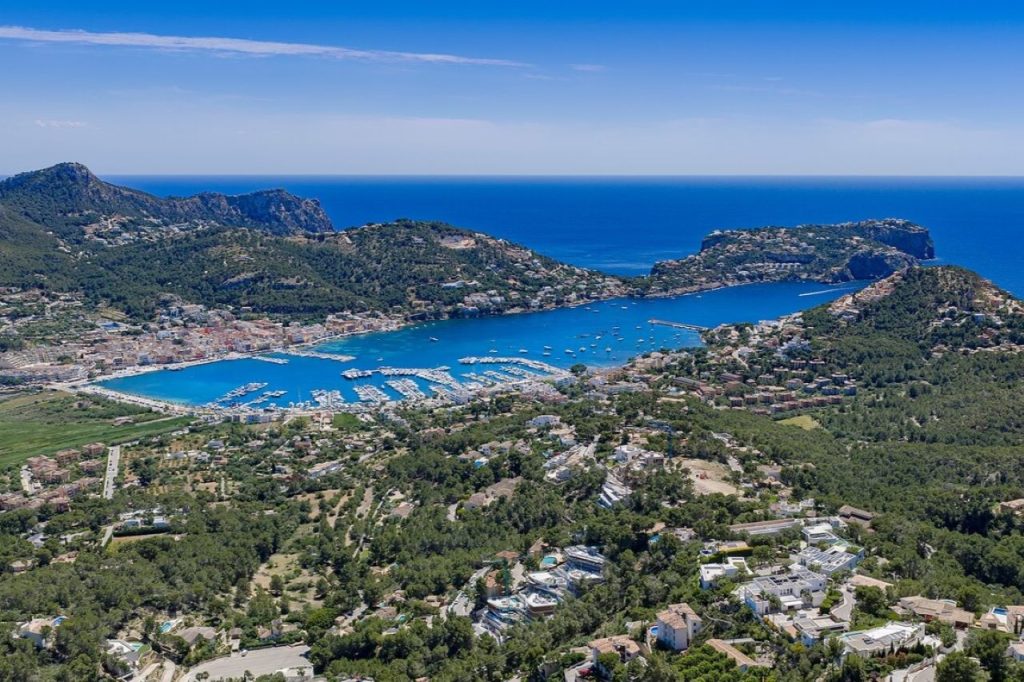
Fifty years ago this was a fishermen’s harbour where boats came in loaded with the day’s catch. Today, the same natural bay holds one of the Mediterranean’s best-known private yacht anchorages, ringed by hillside villas and a walkable old quarter that still smells faintly of the sea at dawn. Port d’Andratx suits buyers who want a genuine marina lifestyle without the scale of Puerto Portals, in a town small enough to know your neighbours and close enough to Palma for regular use. What sets it apart from Mallorca’s other ports is how deliberately it has kept its working-harbour texture even as the money moved in.
Why live here
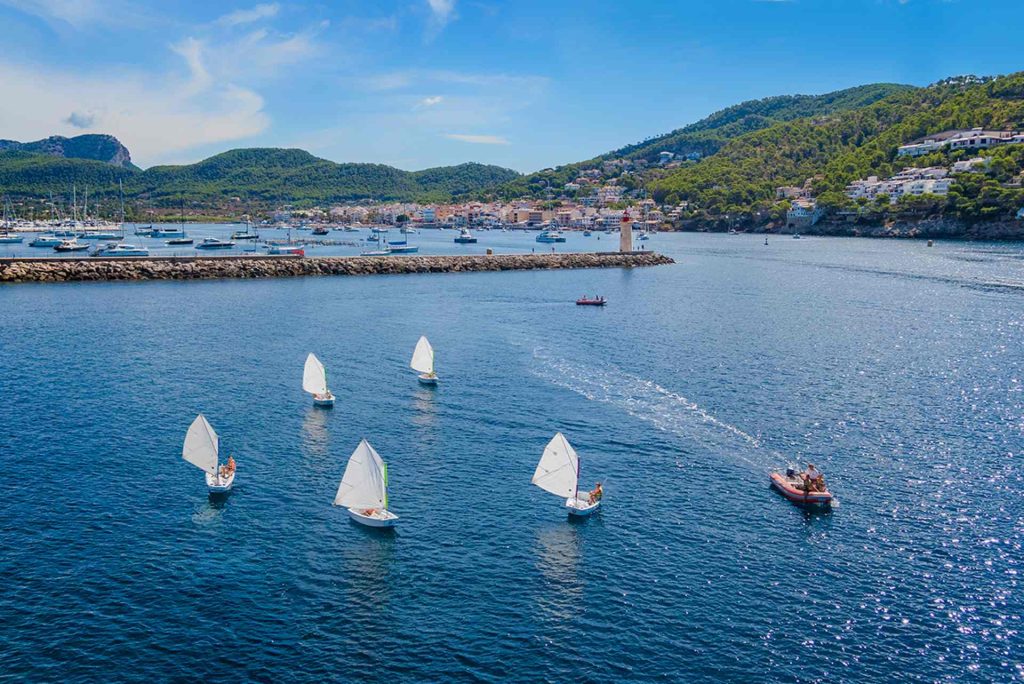
Port d’Andratx works as a year-round home, not just a summer address, because the infrastructure behind the postcard view is genuinely there. The town sits within the municipality of Andratx, and the airport is roughly 40 kilometres and a 35 to 40 minute drive away via the Ma-1, close enough for regular flights without living under a flight path. The natural harbour has sheltered boats for centuries and now anchors a serious sailing culture through the Club de Vela Puerto de Andratx. Founded in 1968, it still runs sailing schools and a full racing calendar rather than functioning purely as a marina for hire.
The town itself is compact and walkable: bakery, pharmacy, weekly market and a promenade of restaurants within a few minutes of most residential streets, so daily life doesn’t depend on driving everywhere. Families and retirees who want quieter, more local schooling and healthcare have the town of Andratx itself just inland, with Palma‘s fuller range of services within reach for anything larger. It’s a place bought for the harbour and the mountains behind it in roughly equal measure, not one or the other.
Lifestyle
Beaches
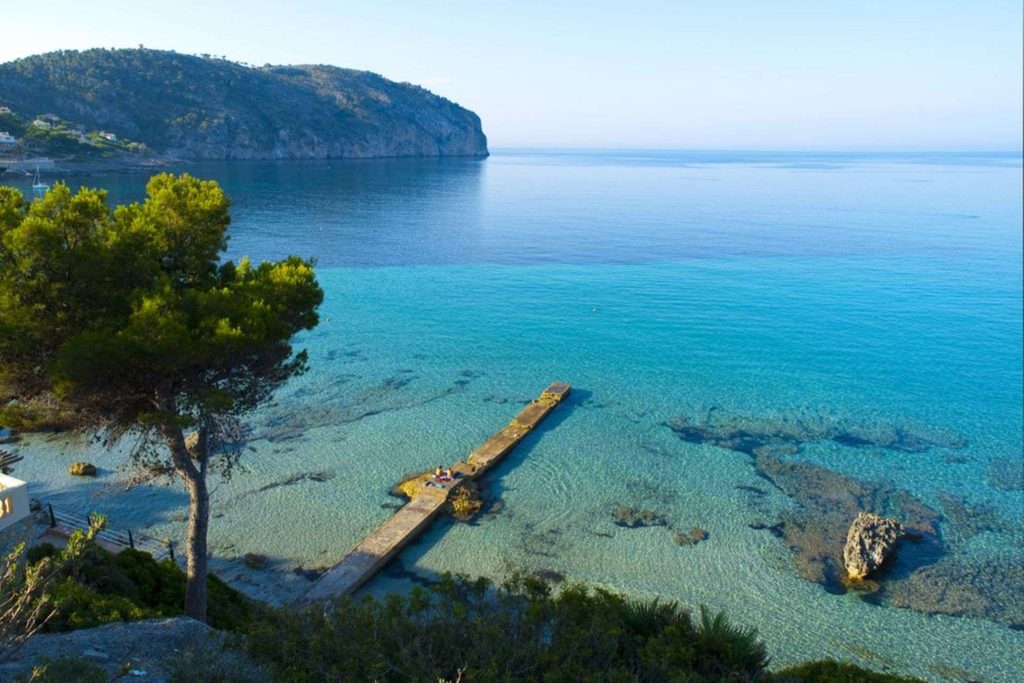
Port d’Andratx itself has no real beach, its coastline is rock and marina rather than sand, which is part of why the water stays so clear. Camp de Mar, a short drive along the coast, has one of the region’s most photographed beaches: a crescent of white sand facing a small islet connected by a wooden footbridge. Sant Elm, at the western tip of the municipality, has a more modest town beach but the best views in the area, looking straight across the water to the Sa Dragonera nature reserve. Closer in, small rocky coves like Cala Llamp give private, quieter swimming for residents living on that stretch.
Restaurants & Cafés
The marina promenade carries the town’s main restaurant strip, a mix of seafood specialists, Italian kitchens and international dining aimed as much at residents as visitors, busy with a mixed crowd of yacht crews, second-home owners and locals rather than a purely tourist clientele. Camp de Mar and Sant Elm each have a smaller, more local set of beachfront restaurants and cafés, and the inland village of s’Arracó keeps a handful of proper Mallorcan bar-restaurants that see far fewer visitors than the coast.
Schools
There’s no international school inside Port d’Andratx itself. The nearest options are in the Portals Nous cluster within Calvià, around 25 to 30 minutes away, including Agora Portals International School and King Richard III College. Families choosing full Spanish and Catalan immersion have the local public school in Andratx town, a few minutes inland from the port. It’s a genuine trade-off worth being honest about: the harbour setting comes with a longer school run than a family in, say, Santa Ponsa would have.
Outdoor activities
Sailing is the obvious anchor, with the Club de Vela Puerto de Andratx hosting regattas throughout the year (the port joined the Trofeo Sofía circuit, one of Spain’s major sailing regattas, as a host venue in 2026). Golf de Andratx, an 18-hole course in Camp de Mar with sea views from several holes, sits a short drive away. Hikers have direct access to the GR221 long-distance trail from Sant Elm up to the ruined La Trapa monastery, with views over Sa Dragonera the whole way, and the coastal road between Port d’Andratx and Sant Elm is a well-used cycling route for anyone training seriously.
Community & International Life
The international presence in Port d’Andratx is old and settled rather than recent. British, German and Scandinavian families have been buying and returning here for several decades, drawn originally by the sailing and, later, by the harbour’s reputation as one of the more discreet addresses in the southwest. That long tenure shows in the social scene: the Club de Vela functions as a genuine community hub, not just a marina operator, with a sailing school that draws local children alongside second-home families, and a calendar of races, dinners and prize-givings that residents build their year around.
The Festes de Sant Pere, the fishermen’s festival held each June in honour of the patron saint of fishermen, is the one date that pulls the whole town together, longtime residents and local families included, and is as good a measure as any of how the harbour’s fishing-village roots persist underneath the yachts. Contemporary art has its own foothold too, with CCA Andratx, founded in 2001 in the nearby hamlet of Sa Coma, running exhibitions and an artist residency that draws a smaller, culturally engaged crowd into the mix.
Best Areas in Port d’Andratx
Port d’Andratx (the harbour)
The marina front and the streets rising immediately behind it. This is the walkable, restaurant-and-boat-life core of the area, and the most in-demand address for buyers who want to step out of the door onto the quay.
Cala Llamp & La Mola
The hillside above the port’s southern flank, reached by a narrow coast road, holds two of the most desired neighborhoods in Andratx: Cala Llamp and La Mola. These two hold some of the area’s most private villas, most with direct sea views over the harbour mouth. It suits buyers prioritising seclusion and view over walking distance to the restaurants below.
Camp de Mar
A few minutes east along the coast Camp de Mar, built up more gradually around its beach and golf course, with a quieter, more resort-like feel than the port itself. Good for buyers who want beach access and golf on the doorstep rather than marina life.
Sant Elm
Sant Elm is the westernmost village in the municipality, small, low-rise and genuinely local in feel outside peak summer weeks, with the closest thing to an unspoilt coastal outlook in the area thanks to Sa Dragonera just offshore.
S’Arracó
An inland village a short drive from the port, under 1,000 residents, with orchard gardens and a handful of period houses built by returning 19th-century emigrants. It suits buyers who want the sailing lifestyle within reach without living directly on the coast.
Things to know
July and August bring the harbour to capacity, with visiting yachts filling the marina and the coast road to Camp de Mar backing up at peak times. Outside those eight or so weeks, the town is markedly quieter and functions as a genuine residential base. The single coastal road linking Port d’Andratx, Camp de Mar and Sant Elm is the main pinch point for traffic, so factor that into how central you actually need to be.
Holiday-rental licensing (ETV) in the Balearics has gone through several rounds of restriction in recent years, including limits on which property types qualify and how new licences are allocated; anyone planning to let a property here should check current municipal and regional rules before assuming a licence is available, rather than relying on older information.
There’s no airport or ferry terminal at Port d’Andratx itself. Palma’s airport, roughly 40 minutes away, and the city’s ferry port handle all of that; the closest thing to a marina-based departure point is the Club de Vela’s own moorings.
Who is it for?
- Families: workable, but be honest about the trade-off: there’s no international school in Port d’Andratx itself, so it means either the local public school in Andratx town, a few minutes inland, or a 25 to 30 minute daily run to the international schools around Portals Nous. Families who’ve made peace with that commute, or who want full Spanish and Catalan immersion, do well here.
- Retirees: a walkable, low-key harbour town with everyday services close by and Palma’s hospitals and services within a manageable drive.
- Second-home owners: decades of established international ownership, a working marina and a compact town that doesn’t demand a car for daily errands.
- Sailing & nautical buyers: a natural deep-water harbour, an active club with racing and sailing schools, and direct access to the southwest coast’s best cruising grounds.
- Investors: rental demand is strong given the marina setting, but confirm current ETV licence eligibility for the specific property and building type before assuming rental income is straightforward.
- Cyclists: quieter coastal roads out towards Camp de Mar and Sant Elm, with the GR221 trailhead at Sant Elm for anyone who prefers hiking to riding.
Thinking of Buying?
If Port d’Andratx sounds like the right fit, the next step is seeing what’s actually on the market across the harbour, Camp de Mar, Sant Elm and the surrounding hills. Explore the full range of property for sale in Port d’Andratx to get a feel for what’s currently available.
FAQs
It has a genuine off-season identity. July and August bring visiting yachts and day-trip traffic, but the rest of the year the town runs at a resident’s pace, with the marina, restaurants and Club de Vela calendar continuing well beyond the peak weeks.
Long-established rather than transient. British, German and Scandinavian owners have been coming for decades, many across more than one generation, and the sailing club and local festivals give residents a genuine social calendar rather than a purely seasonal one.
There isn’t an international school inside Port d’Andratx itself. Families typically choose between the local public school in Andratx town, a few minutes inland, or the international schools clustered around Portals Nous in Calvià, roughly 25 to 30 minutes away.
The airport is about 40 kilometres away, a 35 to 40 minute drive via the Ma-1 motorway. It’s close enough for regular use without being under a flight path.
Why Consider a Country Home for Sale in Mallorca?
Investing in a country home in Mallorca means embracing a slower pace of life. The island’s rural charm, combined with strict building regulations that preserve its natural beauty, makes these homes highly sought after. From restored fincas with rustic appeal to modern estates blending seamlessly with their surroundings, Mallorca’s countryside offers something for everyone.
Over the past decade, Mallorca has seen a growing interest in its countryside properties. These homes are ideal for individuals and families looking for a lifestyle centered around tranquillity, privacy, and nature. They often feature expansive outdoor spaces, including gardens, orchards, and terraces, perfect for enjoying the Mediterranean climate. Unlike urban or coastal properties, country homes in Mallorca offer unmatched seclusion, making them ideal for those seeking a private sanctuary.
The demand for these homes continues to rise due to their unique blend of traditional charm and modern comfort. Many properties have been carefully renovated to include eco-friendly features, aligning with the increasing global emphasis on sustainability. The limited availability of land in Mallorca’s rural areas also ensures that these properties retain their value over time, making them a sound investment.
The Charm of Mallorca’s Countryside
Here are some potential reasons why someone might consider a country home in Mallorca:
- Natural Beauty: Mallorca is renowned for its stunning natural landscapes, including lush forests, rolling hills, and picturesque coastlines. A country home would offer the opportunity to immerse oneself in this natural beauty.
- Peace and Tranquility: Compared to the bustling tourist areas, the Mallorca’s countryside is much quieter and more serene. This makes it an ideal retreat for those seeking peace and relaxation.
- Cultural Experience: Living in the Mallorca’s countryside allows for a deeper cultural experience, with opportunities to engage with local traditions, cuisine, and community life.
- Outdoor Activities: The countryside offers numerous outdoor activities such as hiking, biking, and horseback riding. A country home would be a perfect base from where to explore these activities.
- Privacy and Space: Country homes often come with more land and privacy compared to urban properties. This can be particularly appealing for those who value their personal space and enjoy gardening or entertaining outdoors.
- Investment Potential: Real estate in Mallorca, including country homes, can be a valuable investment. The island’s popularity as a tourist destination means that property values tend to appreciate over time.
- Climate: Mallorca enjoys a Mediterranean climate with mild winters and warm summers, it is an attractive location for year-round living or seasonal retreats.
Overall, a country home in Mallorca offers a unique blend of natural beauty, tranquility, cultural richness, and investment potential, therefore it is a compelling option for many.
Popular Areas to buy your Dream Country Home
Pollença
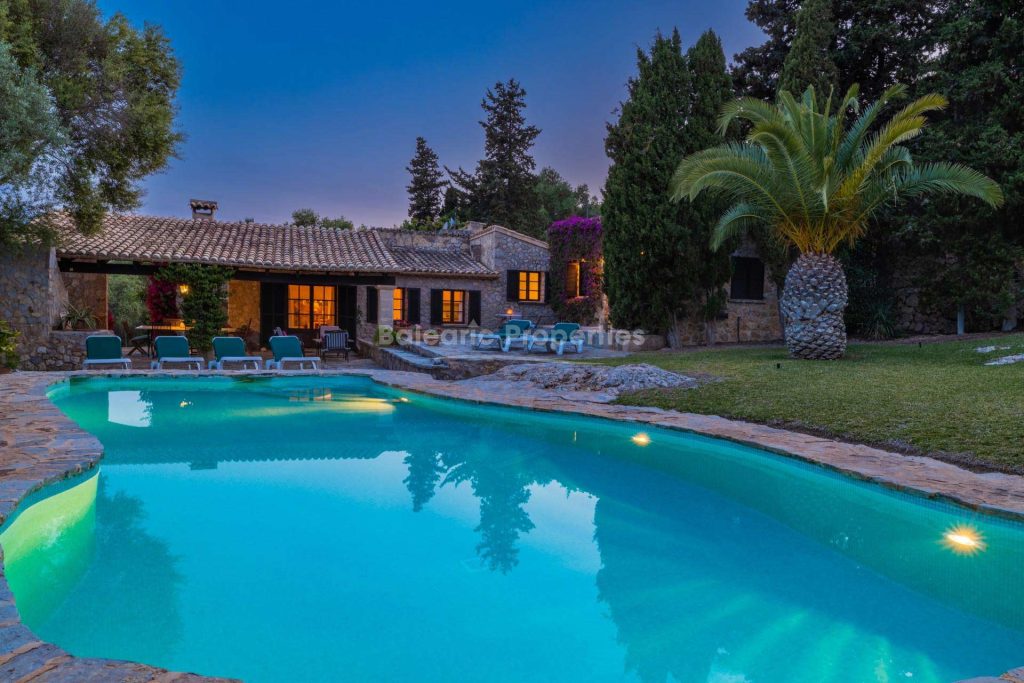
Pollença is a historic town located in the north of Mallorca. Known for its charming old town, vibrant market, and stunning natural surroundings, Pollença is a popular destination for those seeking a peaceful yet culturally rich environment. The area offers a variety of country homes, from rustic fincas to modern villas, often set amidst olive groves and almond trees. The nearby Sierra de Tramuntana mountains provide breathtaking views and numerous hiking trails, Pollença is an ideal location for nature lovers and outdoor enthusiasts.
Alcúdia
Alcúdia is a historic town located in the northeast of Mallorca. Known for its medieval walls, charming old town, and stunning natural surroundings, Alcúdia is a popular destination for those seeking a peaceful yet culturally rich environment. The area offers a variety of country homes, from rustic fincas to modern villas, often set amidst olive groves and almond trees. The nearby Sierra de Tramuntana mountains provide breathtaking views and numerous hiking trails, Alcúdia is another ideal location for nature lovers and outdoor enthusiasts.
Santa Margalida
Santa Margalida is a charming town located in the northeast of Mallorca. Known for its picturesque countryside, traditional architecture, and vibrant local culture, Santa Margalida is a popular destination for those seeking a peaceful yet authentic Mallorcan experience. The area offers a variety of country homes, from rustic fincas to modern villas, often set amidst rolling hills and lush farmland. The nearby beaches and coastal areas provide easy access to the island’s amenities, Santa Margalida is an ideal location for those who value both tranquillity and convenience.
Sa Pobla
Sa Pobla is a charming town located in the northeast of Mallorca. Known for its picturesque countryside, traditional architecture, and vibrant local culture, Sa Pobla is a popular destination for those seeking a peaceful yet authentic Mallorcan experience. The area offers a variety of country homes, from rustic fincas to modern villas, often set amidst rolling hills and lush farmland. The nearby beaches and coastal areas provide easy access to the island’s amenities, Sa Pobla is another ideal location for those who value both tranquillity and convenience.
Campanet
Campanet is a charming town located in the north of Mallorca. Known for its picturesque countryside, traditional architecture, and vibrant local culture, Campanet is a popular destination for those seeking a peaceful yet authentic Mallorcan experience. The area offers a variety of country homes, from rustic fincas to modern villas, often set amidst rolling hills and lush farmland. The nearby beaches and coastal areas provide easy access to the island’s amenities, Campanet is an ideal location for those who value both tranquillity and convenience.
Muro
Muro is a charming town located in the northeast of Mallorca. Known for its picturesque countryside, traditional architecture, and vibrant local culture, Muro is a popular destination for those seeking a peaceful yet authentic Mallorcan experience. The area offers a variety of country homes, from rustic fincas to modern villas, often set amidst rolling hills and lush farmland. The nearby beaches and coastal areas provide easy access to the island’s amenities, Muro is an ideal location for those who value both tranquillity and convenience.
Inca
Inca is a charming town located in the central part of Mallorca. Known for its picturesque countryside, traditional architecture, and vibrant local culture, Inca is a popular destination for those seeking a peaceful yet authentic Mallorcan experience. The area offers a variety of country homes, from rustic fincas to modern villas, often set amidst rolling hills and lush farmland. The nearby beaches and coastal areas provide easy access to the island’s amenities, making Inca an ideal location for those who value both tranquillity and convenience.
Binissalem
Binissalem is a charming town located in the western part of Mallorca. Known for its picturesque countryside, traditional architecture, and vibrant local culture, Binissalem is a popular destination for those seeking a peaceful yet authentic Mallorcan experience. The area offers a variety of country homes, from rustic fincas to modern villas, often set amidst rolling hills and lush farmland. The nearby beaches and coastal areas provide easy access to the island’s amenities, therefore Binissalem is an ideal location for those who value both tranquillity and convenience.
Typologies of Country Homes in Mallorca
Mallorca, with its diverse landscapes and natural environments, offers a variety of country homes that cater to different tastes and preferences. Below are four main typologies of country homes in Mallorca, each with unique characteristics and recommendations about the best areas to acquire them.
Country Homes with Sea Views
Country homes with sea views epitomise luxurious living in Mallorca. These properties are often located on hills or cliffs, offering panoramic views of the Mediterranean Sea. The architecture of these homes frequently combines traditional Mallorcan elements, such as stone walls and terracotta roofs, with modern and minimalist designs. Large terraces and infinity pools are common features, allowing residents to enjoy the stunning sunsets and the soothing sound of the sea.
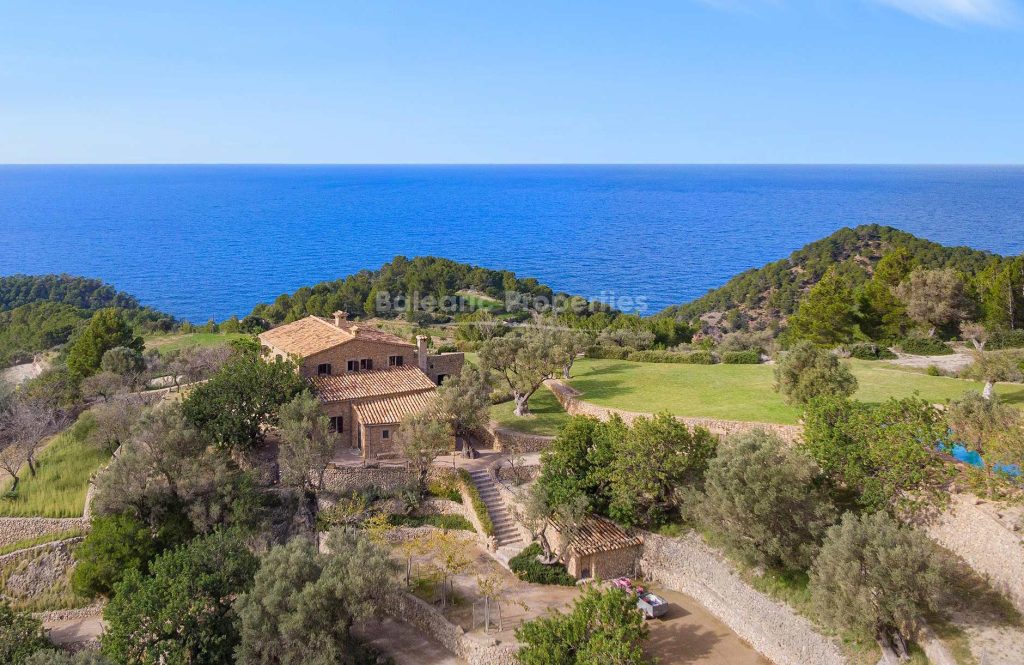
Recommendation for buying a Country Home with Sea Views in Mallorca: The area of Deià is ideal for this type of property. With its breathtaking coastal cliffs and crystal-clear waters, Deià offers an idyllic setting for seaview country homes. Additionally, its proximity to Palma and the island’s main entertainment hubs makes it a highly desirable location.
Country Homes with Mountain Views
For those seeking a deeper connection with nature, country homes with mountain views are a perfect choice. These properties are surrounded by mountainous landscapes, with natural trails and lush vegetation. The architecture is often more rustic, utilizing local materials like stone and wood, which gives them an authentic and cosy appearance.
Recommendation for buying a Country Home with Mountain Views in Mallorca: The area of Valldemossa is ideal for this type of home. With its rolling hills and dense forests, Valldemossa offers a tranquil and serene environment, perfect for those looking to escape the hustle and bustle of urban life. The area is also known for its vibrant artistic and cultural community, adding extra value to the living experience here.
Country Homes with Valley Views
Country homes with valley views offer a combination of natural beauty and privacy. These properties are situated in lower areas, surrounded by green fields and orchards. The architecture tends to be more traditional, with large courtyards and well-maintained gardens. The tranquillity and seclusion of these locations make them ideal for those seeking a more relaxed and stress-free lifestyle.
Recommendation for buying a Country Home with Valley Views in Mallorca: The area of Sóller is perfect for this type of home. With its picturesque valley landscapes and rural atmosphere, Sóller offers a charming and peaceful retreat. The area is known for its orange and lemon groves, adding a touch of authenticity and tradition to the living experience here.
Country Homes with Bay Views
Country homes with bay views combine the beauty of the sea with the convenience of being close to the coast. These properties are often located in coastal areas, with direct views of the Mediterranean’s blue waters. The architecture is frequently modern, with large windows and terraces that maximise the views. The proximity to the beach and coastal entertainment centres makes them ideal for those who enjoy a seaside lifestyle.
Recommendation for buying a Country Home with Bay Views in Mallorca: The area of Port de Pollença is ideal for this type of home. With its vibrant nightlife, renowned restaurants, and stunning beaches, Port de Pollença offers a dynamic coastal lifestyle. Country homes in this area allow you to enjoy the beauty of the bay while being close to all the amenities and activities the island has to offer.
Country Homes in Mallorca: A highly sought-after Investment Opportunity
Country homes in Mallorca have gained significant popularity in the vacation rental market, becoming a highly attractive investment option for both national and international buyers. The demand for this type of property has surged in recent years, driven by the growing interest of tourists seeking more authentic and exclusive travel experiences, away from traditional hotels and crowded tourist areas. Mallorca’s country homes offer precisely that: a tranquil and private retreat, immersed in the natural beauty of the island, allowing visitors to enjoy a more relaxed and authentic lifestyle. This constant demand for vacation rentals not only guarantees a steady income stream for property owners but also offers the flexibility to use the property for personal use during less busy periods.
Investing in a country home in Mallorca is not just an opportunity to enjoy a property in a dream destination, but it also represents a solid financial strategy. Holiday rentals can be a considerable source of income, especially during the summer months when the island receives a constant flow of tourists. This income can be used to cover a significant portion of the mortgage, alleviating the financial burden on owners and improving the investment’s profitability. Additionally, property values in Mallorca tend to appreciate over time, meaning that, in addition to rental income, owners can also benefit from the long-term increase in property value.
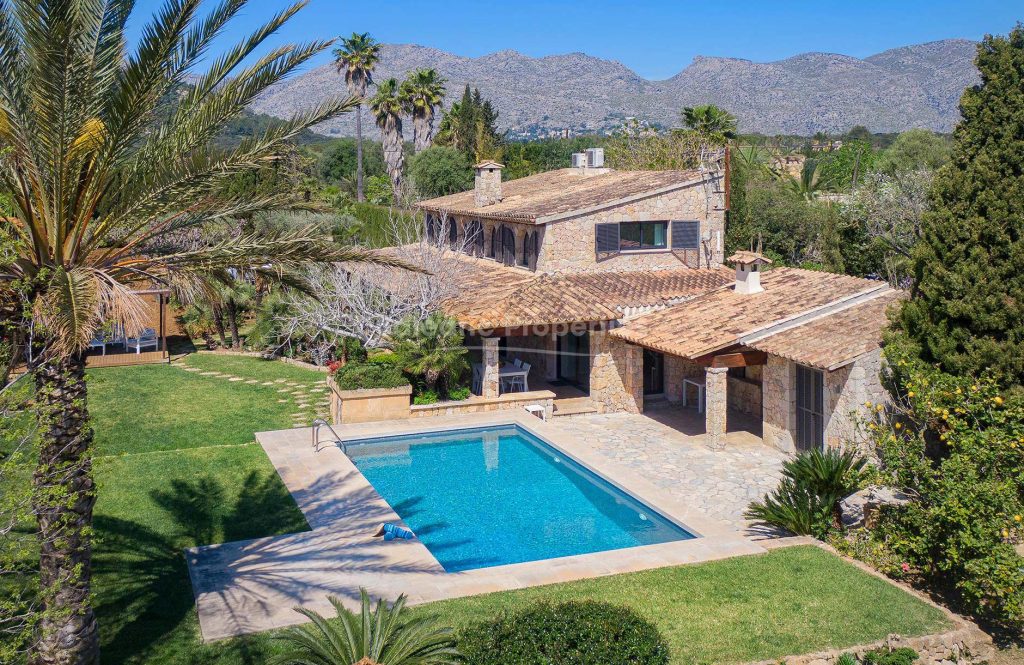
Managing a country home as a holiday rental has also become more accessible than ever, thanks to the proliferation of online platforms that connect owners with travellers worldwide. These platforms facilitate the promotion and management of the property, allowing owners to maximise occupancy and, consequently, their income. Moreover, the rise in sustainable tourism and the search for more personalised experiences have led to an increased demand for unique and authentic accommodation, such as country homes, further enhancing their investment appeal.
In summary, country homes in Mallorca are not only an attractive investment option due to their potential for holiday rental income, but they also offer the opportunity to enjoy a property in one of the world’s most coveted destinations. With the ability to generate significant income and contribute to paying the mortgage, these properties represent a smart financial investment and a gateway to the Mallorca lifestyle.
Continue exploring: compare country living in North Mallorca and Central Mallorca, then follow the practical steps in our Balearic Islands Buying Guide.
Questions and Answers for Buyers in Mallorca
What are the benefits of owning a country home in Mallorca?
Owning a country home in Mallorca allows you to immerse yourself in the island’s serene rural lifestyle. These properties often feature spacious outdoor areas, perfect for enjoying the Mediterranean climate. The strict building regulations in Mallorca’s countryside ensure that the natural beauty of the area is preserved, creating a tranquil and exclusive environment. Additionally, country homes offer a high level of privacy, so they are ideal for those seeking a peaceful retreat. With the growing trend towards sustainable living, many properties include eco-friendly features such as solar panels and water recycling systems, aligning with modern values.
Why is Mallorca’s countryside a good investment?
Investing in Mallorca’s countryside properties is a strategic decision due to the limited availability of land and the increasing demand for rural homes. These properties are highly valued for their exclusivity and unique blend of traditional and modern elements. The real estate market in Mallorca has consistently shown resilience, with country homes offering excellent potential for capital appreciation. Furthermore, the island’s popularity as a destination for relaxation and wellness ensures a steady demand for rental properties, providing an additional income stream for investors.
How do country homes in Mallorca differ from coastal properties?
Country homes in Mallorca offer a distinct lifestyle compared to coastal properties. While coastal homes are often associated with vibrant social scenes and proximity to beaches, country homes prioritise privacy, space, and connection to nature. These properties are typically set on larger plots of land, featuring gardens, orchards, and outdoor living spaces. They provide a tranquil escape from the hustle and bustle of coastal areas while still offering convenient access to the island’s amenities. For those seeking a sustainable and serene lifestyle, Mallorca’s countryside properties are an unparalleled choice.
What are the best areas to buy a country home in Mallorca?
Some of the best areas to buy a country home in Mallorca include Pollença, Alcúdia, Santa Margalida, Sa Pobla, Campanet, Muro, Inca, and Binissalem. Each of these areas offers a unique blend of natural beauty, tranquillity, and cultural richness, therefore they are ideal for those seeking a peaceful retreat in the countryside. Whether you prefer the historic charm of Pollença, the picturesque landscapes of Alcúdia, or the authentic Mallorcan experience of Santa Margalida, there is a location in Mallorca that will provide the perfect setting for your dream country home.
What are the different typologies of country homes in Mallorca?
Mallorca offers a variety of country homes that cater to different tastes and preferences. Some of the main typologies include country homes with sea views, country homes with mountain views, country homes with valley views, and country homes with bay views. Each typology offers unique characteristics and advantages, such as panoramic views, rustic charm, and convenient access to the coast. Whether you prefer the luxury of sea views, the tranquility of mountain views, the privacy of valley views, or the dynamic lifestyle of bay views, there is a country home in Mallorca that will meet your needs.
How can I manage a country home as a holiday rental in Mallorca?
Managing a country home as a holiday rental in Mallorca has become more accessible than ever, thanks to the proliferation of online platforms that connect owners with travellers worldwide. These platforms facilitate the promotion and management of the property, allowing owners to maximise occupancy and, consequently, their income. Additionally, the rise in sustainable tourism and the search for more personalised experiences have led to an increased demand for unique and authentic accommodation, such as country homes, further enhancing their investment appeal. By leveraging these online platforms, owners can easily manage their holiday rental properties and enjoy the benefits of owning a country home in Mallorca.
What are the advantages of sustainable living in Mallorca’s countryside?
Sustainable living in Mallorca’s countryside offers numerous advantages, including reduced environmental impact, lower energy costs, and a healthier lifestyle. Many country homes in Mallorca include eco-friendly features such as solar panels, water recycling systems, and energy-efficient appliances, aligning with the increasing global emphasis on sustainability. By embracing sustainable living, owners can enjoy a more environmentally conscious lifestyle while also benefiting from the natural beauty and tranquility of the island’s countryside.
What are the potential income streams for investing in a country home in Mallorca?
Investing in a country home in Mallorca offers several potential income streams, including holiday rental income, long-term rental income, and capital appreciation. Holiday rental income can be a considerable source of income, especially during the summer months when the island receives a constant flow of tourists. Long-term rental income can provide a steady income stream throughout the year. Additionally, property values in Mallorca tend to appreciate over time, meaning that owners can also benefit from the long-term increase in property value. By leveraging these income streams, investors can enjoy a solid financial investment and a gateway to the Mallorca lifestyle.
How can I find the perfect country home in Mallorca?
Finding the perfect country home in Mallorca requires careful consideration of several factors, including location, budget, and personal preferences. Some of the best areas to buy a country home in Mallorca include Pollença, Alcúdia, Santa Margalida, Sa Pobla, Campanet, Muro, Inca, and Binissalem. Each of these areas offers a unique blend of natural beauty, tranquillity, and cultural richness, making them ideal for those seeking a peaceful retreat in the countryside. Additionally, it is essential to consider your budget and personal preferences when selecting a country home, ensuring that you find a property that meets your needs and enhances your lifestyle.
What are the challenges of owning a country home in Mallorca?
Owning a country home in Mallorca comes with several challenges, including maintenance, isolation, and access to amenities. Country homes often require regular maintenance to ensure that they remain in good condition, which can be time-consuming and costly. Additionally, the countryside can be more isolated than urban areas, which may not be suitable for everyone. However, many country homes in Mallorca offer convenient access to the island’s amenities, including restaurants, shops, and cultural events, providing a perfect balance between rural living and modern convenience.
In summary, Mallorca offers a wide range of country homes that cater to different lifestyles and preferences. Whether you are looking for sea views, mountain views, valley views, or bay views, there is a location in Mallorca that will provide the perfect setting for your dream home.
Living in Mallorca: The Island’s Most Exclusive Art Galleries
Mallorca is far more than turquoise waters and Mediterranean villas: it is one of Europe’s most sophisticated cultural destinations. For decades, the island has attracted artists, collectors, and creative visionaries drawn by its exceptional light, natural beauty, and cosmopolitan lifestyle. Joan Miró spent the last decades of his life in Palma, and his legacy still shapes Mallorca’s enduring reputation as a creative sanctuary.
Today, Palma and its surrounding villages offer a vibrant art ecosystem where world-class galleries, contemporary art foundations, and private collections coexist. For residents and property owners, this cultural richness forms an integral part of the luxury lifestyle that defines living in Mallorca.
This guide explores the most important and exclusive art galleries on the island, spaces where art, architecture, and lifestyle converge.
Gallery RED: Where Contemporary Art Meets International Prestige
Located in the heart of Palma, Gallery RED has rapidly become one of Europe’s most influential contemporary art galleries. Founded by internationally renowned collector Drew Aaron, the gallery presents museum-quality works from iconic artists such as Andy Warhol and Damien Hirst, alongside cutting-edge contemporary talents.
The gallery’s presence has helped elevate Palma’s global standing in the contemporary art market. Its exhibitions attract collectors from Switzerland, Germany, London, and New York, reinforcing Mallorca’s position as an international cultural hub.
For residents, Gallery RED offers more than exhibitions. It provides access to private viewings, art advisory services, and acquisition opportunities — essential elements of the luxury collector lifestyle.
Galería Pelaires: A Historic Institution of European Contemporary Art
Founded in 1969, Galería Pelaires is the oldest contemporary art gallery in Mallorca and one of the most respected in Spain. Located in a historic building in Palma’s Old Town, it has exhibited works by major artists including Joan Miró and Antoni Tàpies.
Pelaires represents the intersection of tradition and innovation, showcasing established international artists alongside emerging contemporary voices. Its carefully curated exhibitions make it a cornerstone of Mallorca’s intellectual and artistic identity.
Owning property near Palma’s historic centre offers privileged access to galleries like Pelaires, placing residents at the heart of the island’s cultural life.
Gerhardt Braun Gallery: Contemporary Art in a Historic Palace
Situated in a beautifully restored 17th-century palacete in Palma, Gerhardt Braun Gallery exemplifies Mallorca’s unique blend of history and modernity. It has hosted exhibitions from internationally acclaimed artists and is widely regarded as one of the island’s most prestigious contemporary art spaces.
Its elegant architectural setting reflects the refined lifestyle associated with Palma’s historic districts, where art, heritage, and luxury real estate coexist seamlessly.
ABA ART LAB: Supporting the Next Generation of International Artists
ABA ART LAB represents the innovative future of Mallorca’s art scene. Located in a sophisticated loft-style space in Palma, the gallery focuses on emerging artists and experimental contemporary works.
The gallery’s commitment to discovery and innovation has made it a key platform for collectors seeking unique and investment-grade contemporary art.
CCA Andratx and Mallorca’s International Art Landscape
Beyond Palma, Mallorca’s cultural influence extends across the island. Institutions such as CCA Andratx and other contemporary art centres have established Mallorca as a recognised destination within the European art world.
These spaces attract international exhibitions, collectors, and cultural events, reinforcing Mallorca’s status as a year-round destination for art and culture.
Art and Lifestyle: Why Cultural Access Defines Luxury Living in Mallorca
Living in Mallorca means enjoying immediate access to a sophisticated cultural ecosystem that rivals major European capitals. The island’s art galleries form part of a broader lifestyle defined by architecture, gastronomy, and design.
Palma’s historic centre, Santa Catalina, and Portixol offer residents the rare opportunity to live within walking distance of internationally respected galleries, museums, and private collections.
This proximity to culture enhances both quality of life and property value, making Mallorca one of the most desirable locations in Europe for discerning international buyers.
Explore the island’s cultural centres: read our guides to Palma, Southwest Mallorca and Deià and Valldemossa.
Mallorca: A Mediterranean Capital of Art, Culture, and Sophisticated Living
Mallorca’s artistic heritage, international gallery network, and creative community make it far more than a holiday destination. It is a place where culture becomes part of everyday life.
For property owners and residents, this cultural richness provides a deeper connection to the island, one defined by inspiration, creativity, and timeless Mediterranean elegance.
Living in Mallorca means living surrounded by beauty, both natural and artistic.