 Deutsch
 English
 Español

Living in Port d’Andratx
31 Aug 2026 | By Iris Grünewald
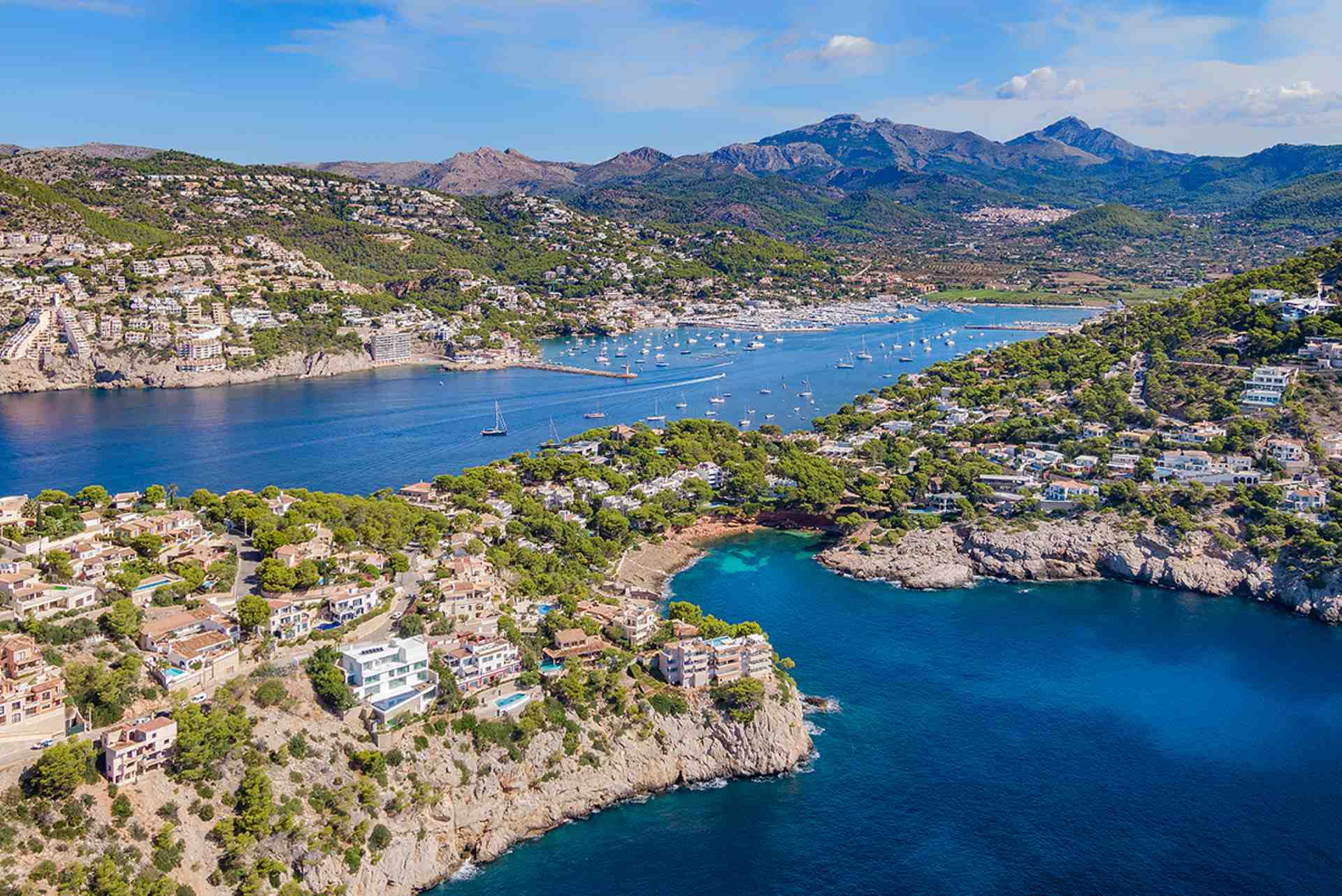
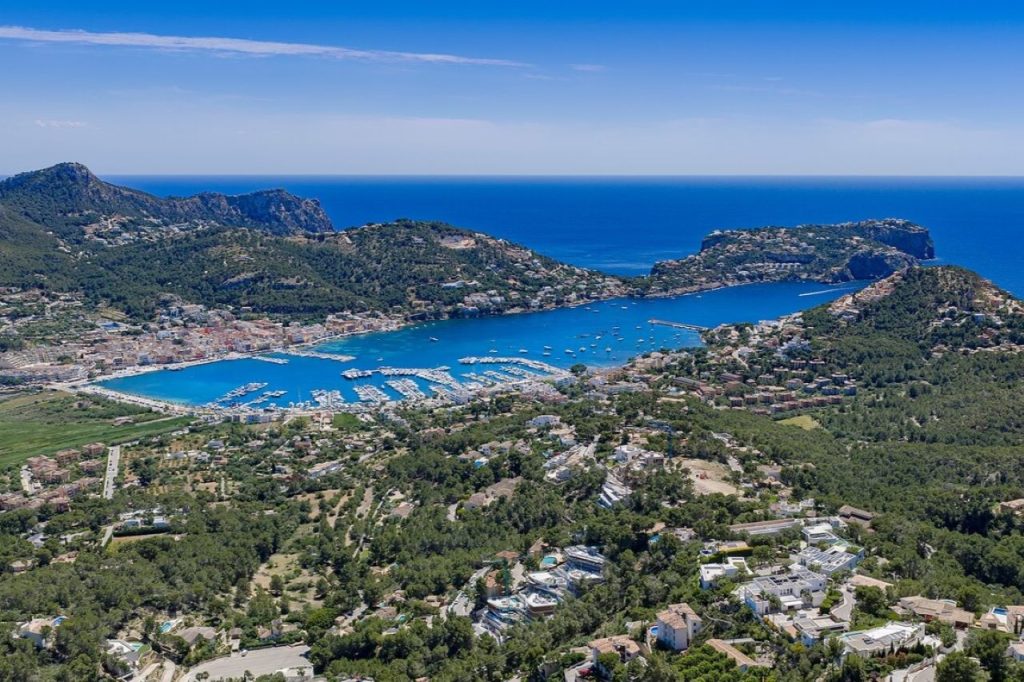
Fifty years ago this was a fishermen’s harbour where boats came in loaded with the day’s catch. Today, the same natural bay holds one of the Mediterranean’s best-known private yacht anchorages, ringed by hillside villas and a walkable old quarter that still smells faintly of the sea at dawn. Port d’Andratx suits buyers who want a genuine marina lifestyle without the scale of Puerto Portals, in a town small enough to know your neighbours and close enough to Palma for regular use. What sets it apart from Mallorca’s other ports is how deliberately it has kept its working-harbour texture even as the money moved in.
Why live here
Port d’Andratx works as a year-round home, not just a summer address, because the infrastructure behind the postcard view is genuinely there. The town sits within the municipality of Andratx, and the airport is roughly 40 kilometres and a 35 to 40 minute drive away via the Ma-1, close enough for regular flights without living under a flight path. The natural harbour has sheltered boats for centuries and now anchors a serious sailing culture through the Club de Vela Puerto de Andratx. Founded in 1968, it still runs sailing schools and a full racing calendar rather than functioning purely as a marina for hire.
The town itself is compact and walkable: bakery, pharmacy, weekly market and a promenade of restaurants within a few minutes of most residential streets, so daily life doesn’t depend on driving everywhere. Families and retirees who want quieter, more local schooling and healthcare have the town of Andratx itself just inland, with Palma‘s fuller range of services within reach for anything larger. It’s a place bought for the harbour and the mountains behind it in roughly equal measure, not one or the other.
Lifestyle
Beaches
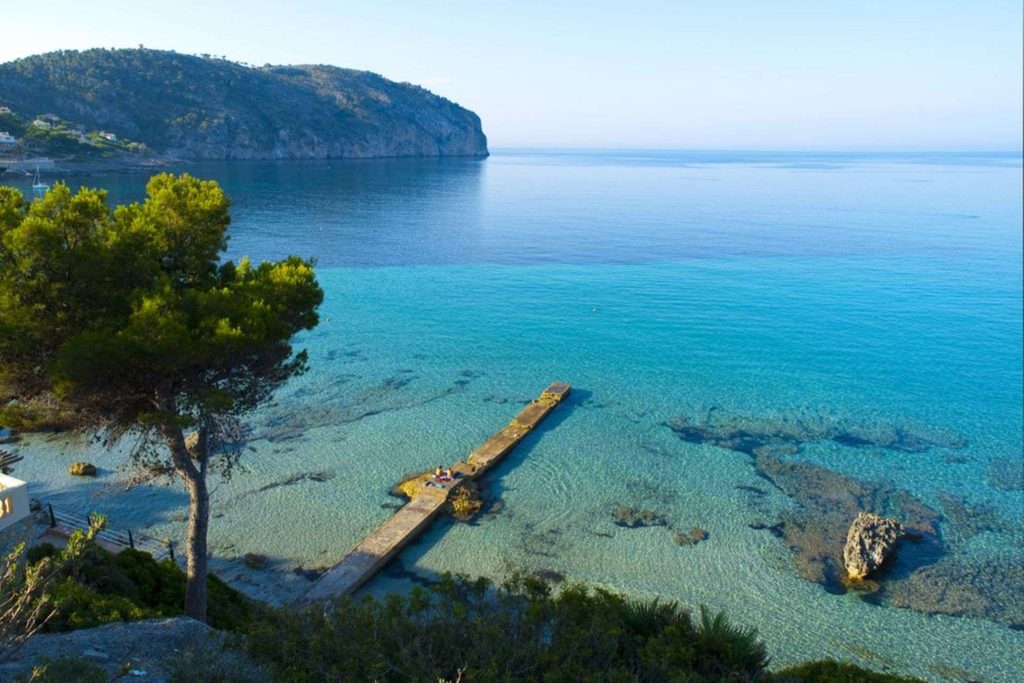
Port d’Andratx itself has no real beach, its coastline is rock and marina rather than sand, which is part of why the water stays so clear. Camp de Mar, a short drive along the coast, has one of the region’s most photographed beaches: a crescent of white sand facing a small islet connected by a wooden footbridge. Sant Elm, at the western tip of the municipality, has a more modest town beach but the best views in the area, looking straight across the water to the Sa Dragonera nature reserve. Closer in, small rocky coves like Cala Llamp give private, quieter swimming for residents living on that stretch.
Restaurants & Cafés
The marina promenade carries the town’s main restaurant strip, a mix of seafood specialists, Italian kitchens and international dining aimed as much at residents as visitors, busy with a mixed crowd of yacht crews, second-home owners and locals rather than a purely tourist clientele. Camp de Mar and Sant Elm each have a smaller, more local set of beachfront restaurants and cafés, and the inland village of s’Arracó keeps a handful of proper Mallorcan bar-restaurants that see far fewer visitors than the coast.
Schools
There’s no international school inside Port d’Andratx itself. The nearest options are in the Portals Nous cluster within Calvià, around 25 to 30 minutes away, including Agora Portals International School and King Richard III College. Families choosing full Spanish and Catalan immersion have the local public school in Andratx town, a few minutes inland from the port. It’s a genuine trade-off worth being honest about: the harbour setting comes with a longer school run than a family in, say, Santa Ponsa would have.
Outdoor activities
Sailing is the obvious anchor, with the Club de Vela Puerto de Andratx hosting regattas throughout the year (the port joined the Trofeo Sofía circuit, one of Spain’s major sailing regattas, as a host venue in 2026). Golf de Andratx, an 18-hole course in Camp de Mar with sea views from several holes, sits a short drive away. Hikers have direct access to the GR221 long-distance trail from Sant Elm up to the ruined La Trapa monastery, with views over Sa Dragonera the whole way, and the coastal road between Port d’Andratx and Sant Elm is a well-used cycling route for anyone training seriously.
Community & International Life
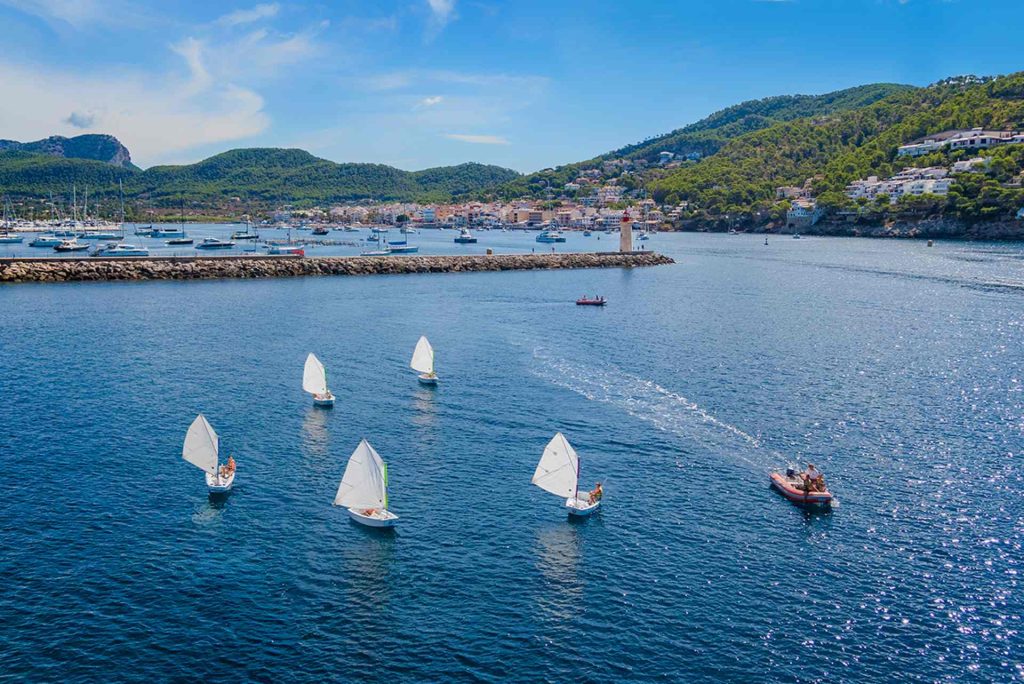
The international presence in Port d’Andratx is old and settled rather than recent. British, German and Scandinavian families have been buying and returning here for several decades, drawn originally by the sailing and, later, by the harbour’s reputation as one of the more discreet addresses in the southwest. That long tenure shows in the social scene: the Club de Vela functions as a genuine community hub, not just a marina operator, with a sailing school that draws local children alongside second-home families, and a calendar of races, dinners and prize-givings that residents build their year around.
The Festes de Sant Pere, the fishermen’s festival held each June in honour of the patron saint of fishermen, is the one date that pulls the whole town together, longtime residents and local families included, and is as good a measure as any of how the harbour’s fishing-village roots persist underneath the yachts. Contemporary art has its own foothold too, with CCA Andratx, founded in 2001 in the nearby hamlet of Sa Coma, running exhibitions and an artist residency that draws a smaller, culturally engaged crowd into the mix.
Best Areas in Port d’Andratx
Port d’Andratx (the harbour)
The marina front and the streets rising immediately behind it. This is the walkable, restaurant-and-boat-life core of the area, and the most in-demand address for buyers who want to step out of the door onto the quay.
Cala Llamp & La Mola
The hillside above the port’s southern flank, reached by a narrow coast road, holds two of the most desired neighborhoods in Andratx: Cala Llamp and La Mola. These two hold some of the area’s most private villas, most with direct sea views over the harbour mouth. It suits buyers prioritising seclusion and view over walking distance to the restaurants below.
Camp de Mar
A few minutes east along the coast Camp de Mar, built up more gradually around its beach and golf course, with a quieter, more resort-like feel than the port itself. Good for buyers who want beach access and golf on the doorstep rather than marina life.
Sant Elm
Sant Elm is the westernmost village in the municipality, small, low-rise and genuinely local in feel outside peak summer weeks, with the closest thing to an unspoilt coastal outlook in the area thanks to Sa Dragonera just offshore.
S’Arracó
An inland village a short drive from the port, under 1,000 residents, with orchard gardens and a handful of period houses built by returning 19th-century emigrants. It suits buyers who want the sailing lifestyle within reach without living directly on the coast.
Things to know
July and August bring the harbour to capacity, with visiting yachts filling the marina and the coast road to Camp de Mar backing up at peak times. Outside those eight or so weeks, the town is markedly quieter and functions as a genuine residential base. The single coastal road linking Port d’Andratx, Camp de Mar and Sant Elm is the main pinch point for traffic, so factor that into how central you actually need to be.
Holiday-rental licensing (ETV) in the Balearics has gone through several rounds of restriction in recent years, including limits on which property types qualify and how new licences are allocated; anyone planning to let a property here should check current municipal and regional rules before assuming a licence is available, rather than relying on older information.
There’s no airport or ferry terminal at Port d’Andratx itself. Palma’s airport, roughly 40 minutes away, and the city’s ferry port handle all of that; the closest thing to a marina-based departure point is the Club de Vela’s own moorings.
Who is it for?
- Families: workable, but be honest about the trade-off: there’s no international school in Port d’Andratx itself, so it means either the local public school in Andratx town, a few minutes inland, or a 25 to 30 minute daily run to the international schools around Portals Nous. Families who’ve made peace with that commute, or who want full Spanish and Catalan immersion, do well here.
- Retirees: a walkable, low-key harbour town with everyday services close by and Palma’s hospitals and services within a manageable drive.
- Second-home owners: decades of established international ownership, a working marina and a compact town that doesn’t demand a car for daily errands.
- Sailing & nautical buyers: a natural deep-water harbour, an active club with racing and sailing schools, and direct access to the southwest coast’s best cruising grounds.
- Investors: rental demand is strong given the marina setting, but confirm current ETV licence eligibility for the specific property and building type before assuming rental income is straightforward.
- Cyclists: quieter coastal roads out towards Camp de Mar and Sant Elm, with the GR221 trailhead at Sant Elm for anyone who prefers hiking to riding.
Thinking of Buying?
If Port d’Andratx sounds like the right fit, the next step is seeing what’s actually on the market across the harbour, Camp de Mar, Sant Elm and the surrounding hills. Explore the full range of property for sale in Port d’Andratx to get a feel for what’s currently available.
FAQs
Is Port d’Andratx busy all year, or mainly in summer?
It has a genuine off-season identity. July and August bring visiting yachts and day-trip traffic, but the rest of the year the town runs at a resident’s pace, with the marina, restaurants and Club de Vela calendar continuing well beyond the peak weeks.
What’s the international community like?
Long-established rather than transient. British, German and Scandinavian owners have been coming for decades, many across more than one generation, and the sailing club and local festivals give residents a genuine social calendar rather than a purely seasonal one.
Are there good schools nearby?
There isn’t an international school inside Port d’Andratx itself. Families typically choose between the local public school in Andratx town, a few minutes inland, or the international schools clustered around Portals Nous in Calvià, roughly 25 to 30 minutes away.
How far is Port d’Andratx from Palma and the airport?
The airport is about 40 kilometres away, a 35 to 40 minute drive via the Ma-1 motorway. It’s close enough for regular use without being under a flight path.
Related articles
Can we help you?
Call now, send us a message on WhatsApp, or fill out the contact form, and we’ll get back to you as soon as possible.