 Deutsch
 English
 Español

Living in Santa Ponsa
23 Aug 2026 | By Antonio Fuster
In September 1229, King Jaume I of Aragon landed his invasion fleet in the bay at Santa Ponsa to begin the conquest of Mallorca, and the town still marks the spot with a monument and an annual re-enactment. Eight centuries on, that same bay is a family-oriented residential town built around three golf courses, a working marina and a permanent international population rather than a summer-only resort strip. Santa Ponsa suits buyers who want organised, resort-grade infrastructure (golf, sailing, schools) inside a genuine year-round community, and its own quieter, more residential character sets it apart from the nightlife economy of its immediate neighbour, Magaluf.
Why live here
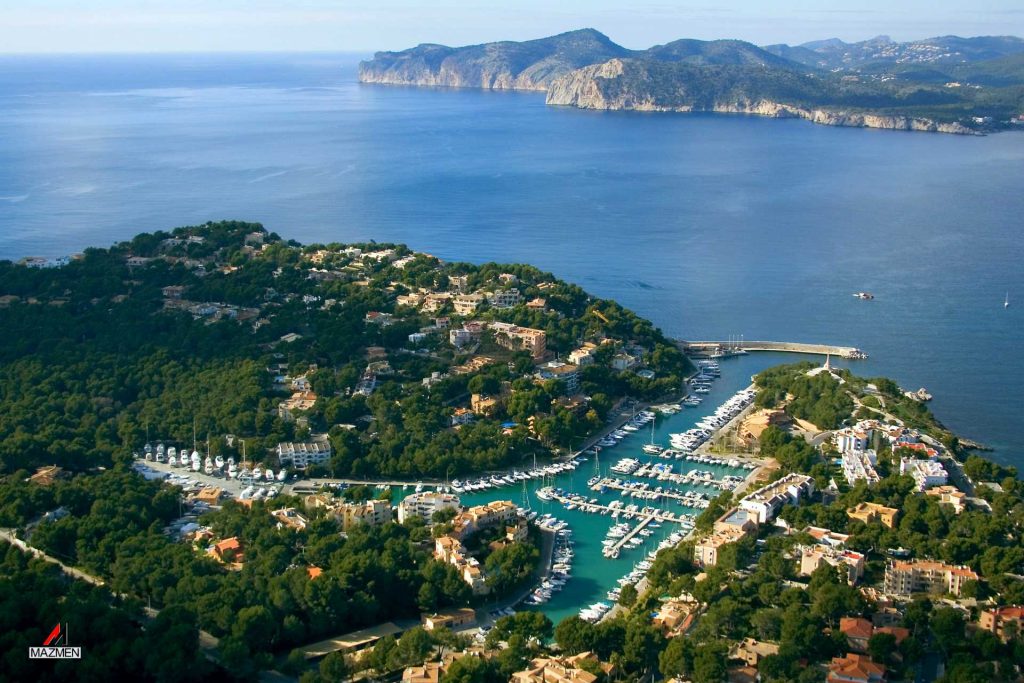
Santa Ponsa sits within the municipality of Calvià, around 25 to 30 kilometres and a 20 to 30 minute drive from Palma’s airport via the Ma-1 motorway, close enough for a genuinely practical commute or regular flights. The town was built up from the 1970s around Golf Santa Ponsa, whose first course opened in 1977 as the second golf course built in Mallorca and has since hosted the European Tour seven times, drawing names like Seve Ballesteros and José María Olazábal. That golf-and-marina infrastructure, now three 18-hole courses and the Club Náutico Santa Ponsa marina, gives the town a level of organised sport and leisure that smaller villages simply don’t have.
It also has a school run that actually works: Agora Portals International School and King Richard III College, both British-curriculum schools, sit around 15 to 20 minutes away in Portals Nous, and Santa Ponsa itself has its own local public and semi-private schools for families choosing Spanish and Catalan immersion. Combined with year-round shops, a health centre and a supermarket, Santa Ponsa functions as a self-sufficient town rather than a satellite that empties out after August.
Lifestyle
Beaches
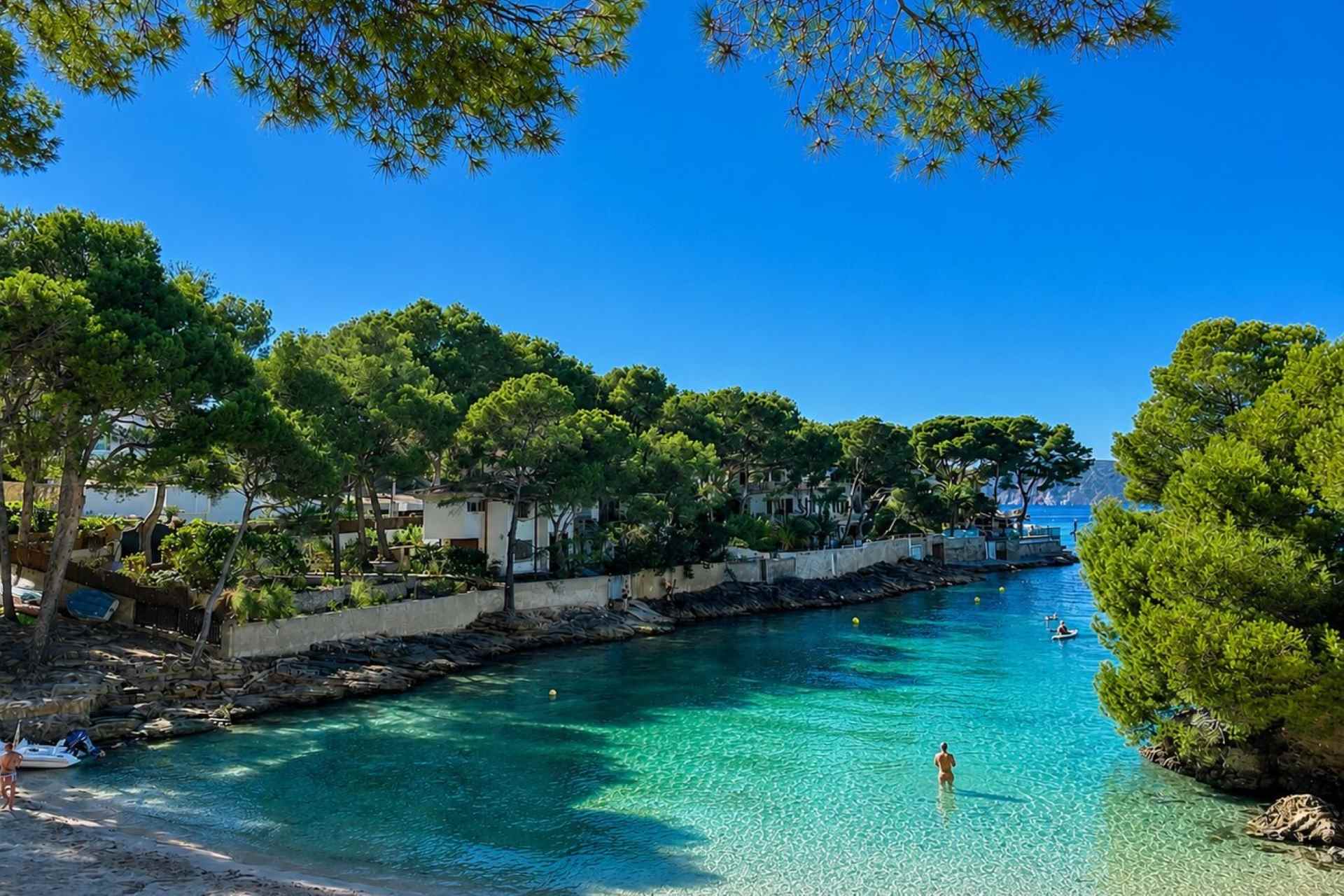
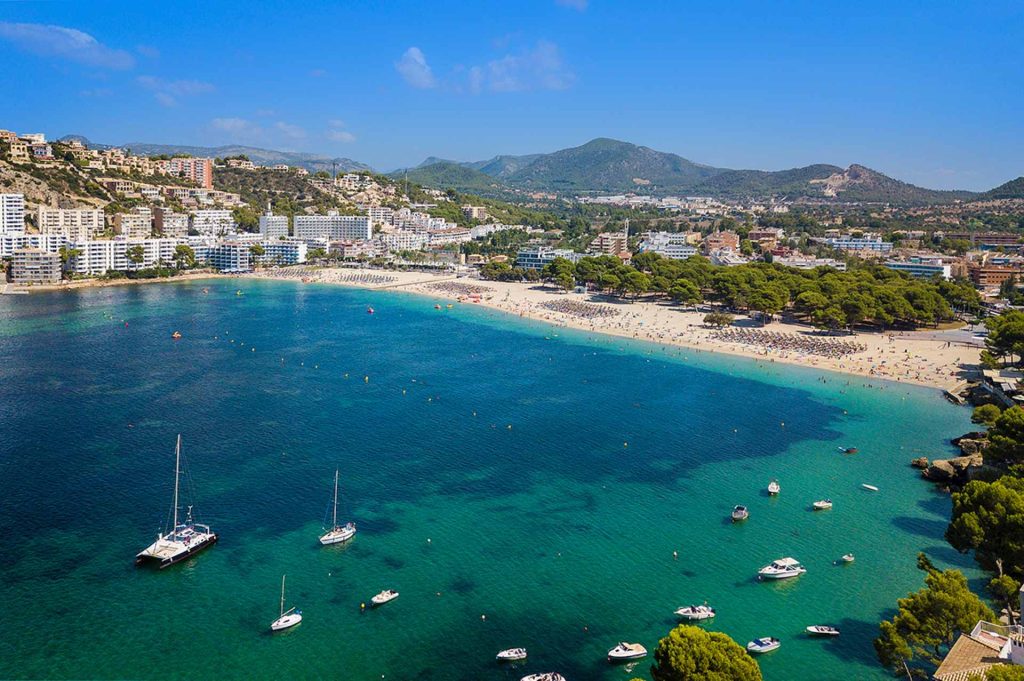
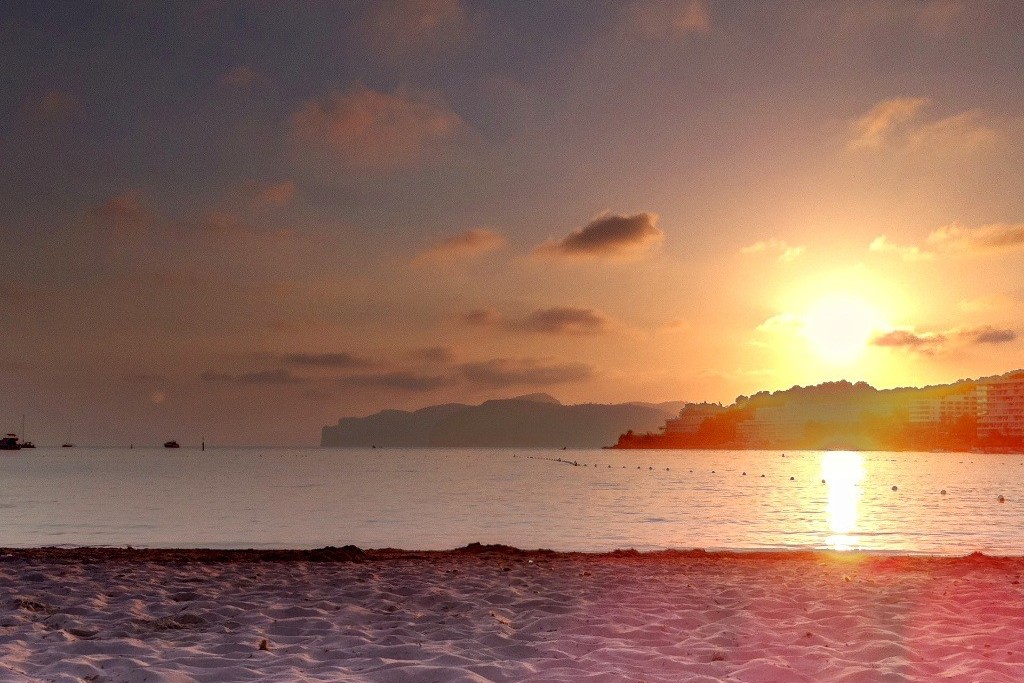
Platja de Santa Ponça, the main town beach, is a broad, gently shelving bay that suits families with young children, with the Sa Caleta cove and its Jaume I landing monument at its southern end. A short walk or drive along the coast brings smaller, quieter coves, and boat trips from the marina reach the protected Malgrats Islands just offshore, popular for snorkelling.
Restaurants & Cafés
The marina and beachfront promenade carry Santa Ponsa’s main restaurant strip, a practical mix of Spanish, Italian and international family dining rather than a high-end scene, reflecting the town’s resident-and-family character over a see-and-be-seen one. Residents wanting a more upscale night out typically drive the short distance to Puerto Portals or Port Adriano, both within easy reach along the coast.
Schools
Agora Portals International School and King Richard III College, both in Portals Nous within Calvià, are the two main international options families use, roughly 15 to 20 minutes from Santa Ponsa by car. For families choosing full Spanish and Catalan immersion, or a shorter local school run, Santa Ponsa has its own public primary and secondary schools directly in town.
Outdoor activities
Golf is the town’s defining activity: Golf Santa Ponsa’s three 18-hole courses (Golf Santa Ponsa I, open to visitors; II and III, members only) anchor a genuine golfing community rather than a single course people play occasionally. The Club Náutico Santa Ponsa marina supports sailing, motorboating and watersports, and the flat coastal roads around the bay make for easy family cycling, distinct from the steep mountain climbs further along the coast toward Andratx.
Community & International Life
Santa Ponsa’s international community grew up alongside the golf development from the 1970s onward, and British, German and Scandinavian residents remain a settled, established presence rather than a recent arrival, many now into a second generation of family ownership. The community organises itself substantially around the golf clubs and the yacht club, both of which run active social and sporting calendars beyond the courses and moorings themselves, giving residents a genuine year-round social structure rather than a seasonal one. The one date that pulls the whole town, historic Mallorcan families and international residents alike, together is the Festes del Rei en Jaume each September, a weekend of parades, a medieval market and a re-enactment of the 1229 landing organised by the Ajuntament de Calvià, and it is as close as Santa Ponsa comes to a defining civic identity distinct from its neighbours along this stretch of coast.
Best Areas in Santa Ponsa
Nova Santa Ponsa
Nova Santa Ponsa is a villa-led residential area built up around and between the golf courses, favoured by families and golf buyers who want space, private pools and a quieter, more suburban feel than the seafront.
Puerto de Santa Ponça (the marina front)
Apartments and townhouses close to the marina and main beach, walkable to restaurants and the yacht club, suited to buyers who want to be in the middle of daily life without a car for every errand.
Santa Ponsa town centre
The older, more local core of the town, with the year-round shops, schools and health centre that make Santa Ponsa function as a genuine town rather than a resort, popular with families and retirees who want proximity to everyday services.
Things to know
July and August bring real crowding to the beach and marina, and traffic on the Ma-1 and the roads into town can back up at peak commuting hours even outside high season, since Calvià’s coast carries a lot of through-traffic. Santa Ponsa sits close to Magaluf, a short drive along the coast, which brings the convenience of nearby nightlife and larger shopping without Santa Ponsa itself sharing that resort’s character, the two towns feel distinctly different once you’re actually in them.
Holiday-rental licensing (ETV) follows the same Balearic-wide rules as elsewhere on the island, current regulation restricts which property types qualify and limits how new licences are issued, so check the specific rules for a property before assuming a rental licence transfers or is available. Santa Ponsa’s year-round population is larger and more stable than the smaller coastal or mountain towns further along Mallorca’s coast, which is part of why it supports full-time schools, a health centre and permanent shops rather than a seasonal economy.
Who is it for?
- Families: international schools a short drive away, local schools directly in town, a family-friendly main beach and safe, low-traffic residential streets in Nova Santa Ponsa.
- Retirees: year-round infrastructure (health centre, shops, services) rather than a seasonal-only town, plus an established international community and an easy Palma airport run.
- Second-home owners: decades of settled foreign ownership and a well-organised leisure infrastructure (golf, marina, restaurants) that requires no real effort to plug into.
- Golf buyers: three 18-hole courses with a genuine tournament pedigree, hosting the European Tour seven times, and a villa stock built specifically around fairway and golf-course-frontline living.
- Sailing & nautical buyers: the Club Náutico Santa Ponsa marina offers moorings and a sailing community, with the larger Puerto Portals and Port Adriano marinas both within easy reach.
- Investors: strong rental demand given the family and golf draw, but confirm current ETV licence eligibility for the specific property type before assuming rental income.
Continue exploring: see our Southwest Mallorca area guide, compare nearby Port d’Andratx and review Mallorca property prices by area.
Thinking of Buying?
If Santa Ponsa’s mix of golf, marina and family infrastructure sounds like the right fit, the next step is seeing what’s actually on the market across Nova Santa Ponsa, the marina front and the town centre. Explore the full range of property for sale in Santa Ponsa to get a feel for current stock.
FAQs
Is Santa Ponsa a good base for a family with school-age children?
Yes, it’s one of the more practical family bases on this coast: international schools are 15 to 20 minutes away in Portals Nous, local Spanish and Catalan schools sit directly in town, and the main beach and residential streets are genuinely family-friendly rather than geared toward nightlife.
What’s the golf and sailing scene like?
Substantial rather than casual. Golf Santa Ponsa runs three 18-hole courses and has hosted the European Tour seven times, and the Club Náutico Santa Ponsa marina supports an active sailing and boating community, both organised around clubs with real social calendars rather than pay-and-play facilities alone.
Is Santa Ponsa quiet, or does it get busy with tourists?
It gets genuinely busy in July and August, particularly around the beach and marina, but it has a stable year-round population and full-time infrastructure (schools, a health centre, shops) that keep it functioning as a real town rather than emptying out once summer ends.
How far is Santa Ponsa from Palma and the airport?
The airport is roughly 25 to 30 kilometres away, a 20 to 30 minute drive via the Ma-1 motorway, and Palma itself is a similar or slightly shorter run, making it a practical base for regular travel or city access.
Related articles
Can we help you?
Call now, send us a message on WhatsApp, or fill out the contact form, and we’ll get back to you as soon as possible.