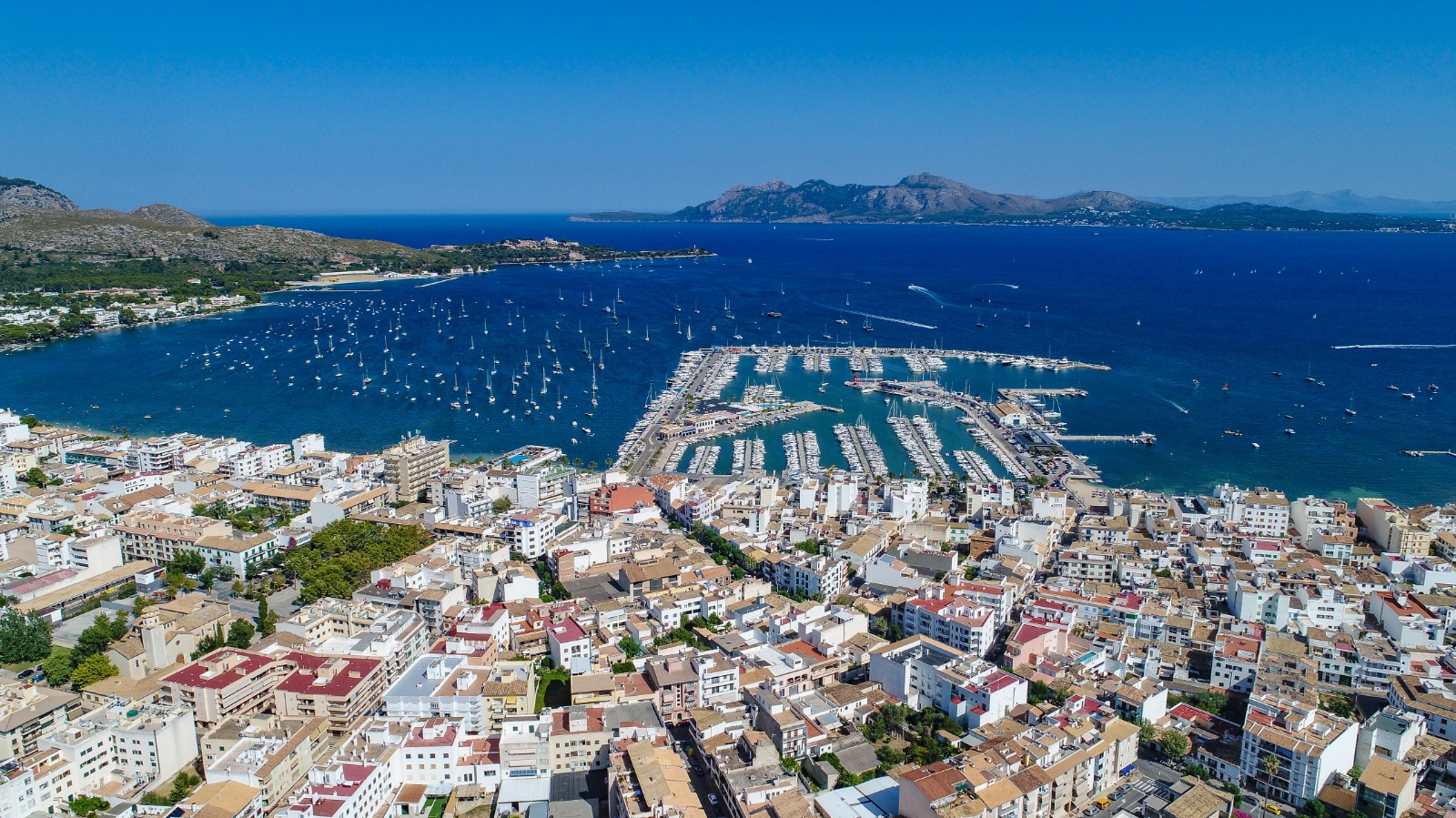
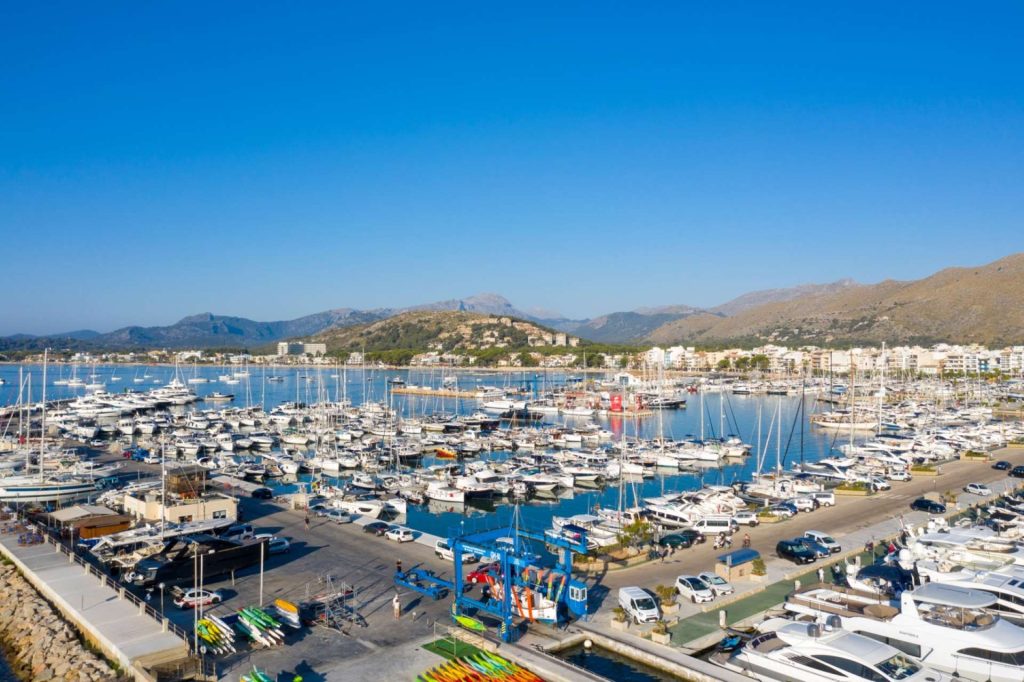
Puerto Pollensa (Port de Pollença) sits on a wide, sheltered bay in the north of Mallorca, backed by the Tramuntana mountains and largely spared the high-rise development that reshaped much of the island’s coastline in the 20th century.
By Iris GrünewaldFounder & CEO, Balearic PropertiesUpdated 5 minutes to read
Share this guide
It has drawn the same kind of international buyer, mostly British, German and Scandinavian, for decades, less for any single attraction than for the combination: a long sandy beach, a working marina and a walkable town centre. Agatha Christie stayed here in the 1930s and set a short story, Problem at Pollensa Bay, in the town. This guide, including its property figures, was last updated in October 2026.
Puerto Pollensa at a glance
Where
North Mallorca, on the Bay of Pollença, in the municipality of Pollença
From Palma Airport
Around 50 km, about 45 to 50 minutes by motorway
Apartment asking price
€6,615 per m² on average, October 2026
House asking price
€6,144 per m² on average, October 2026
Apartment rents
Around €23 per m² a month
Sailing
Reial Club Nàutic Port de Pollença, with a youth sailing school
Why live here
What sets Puerto Pollensa apart from other resorts on the north coast is what is absent as much as what is there: no high-rise towers, no nightlife strip, no unchecked development crowding the seafront. The local authorities have held the line on building density for years, which is part of why the bay still looks recognisably like the fishing port it once was, just with better restaurants.
The setting does a lot of the work. The bay is sheltered enough for calm, reliable sailing conditions most of the year, the beach is long and sandy without the crowding found further south in peak season, and the Tramuntana range, a UNESCO World Heritage landscape, provides a backdrop that is hard to overstate until you have stood on the Pine Walk and looked at it. Add a marina that stays active outside the summer months and a restaurant scene with real depth, and it is easy to see why so many buyers who came for a holiday ended up looking for something more permanent.
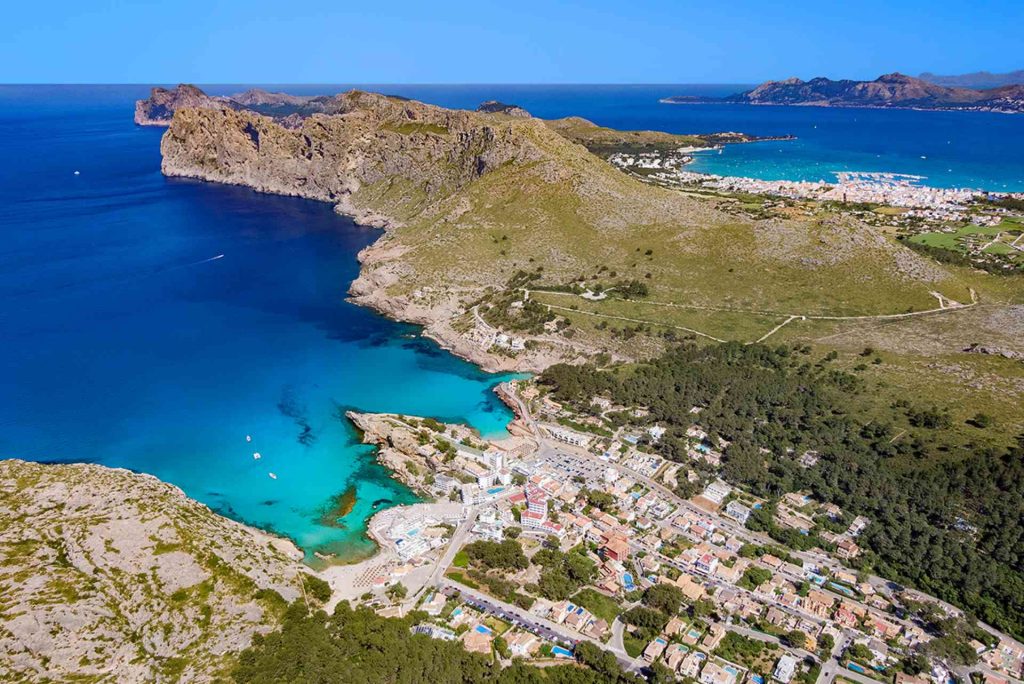
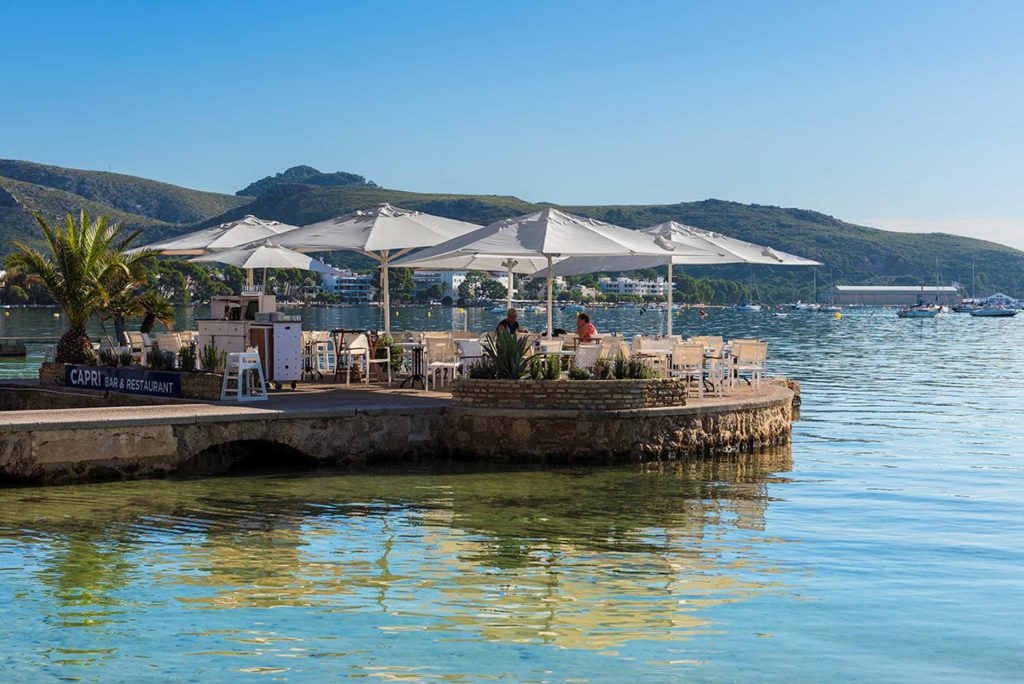
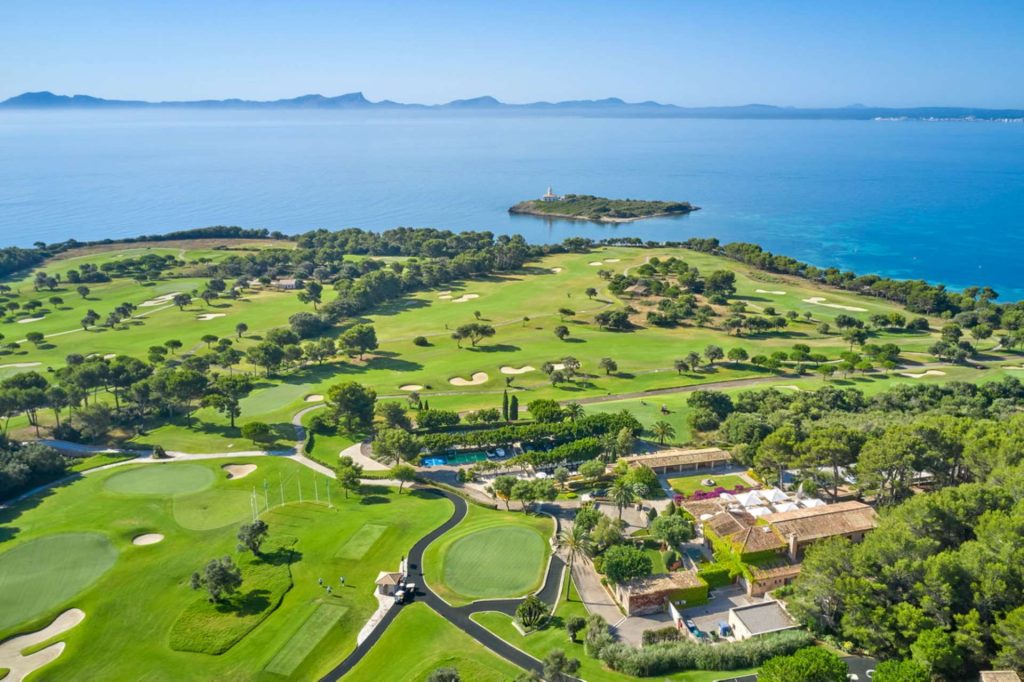
Cala Sant Vicenç and Puerto Pollensa from the air.A seafront restaurant on the Pine Walk.Image courtesy of Alcanada GolfImage courtesy of Reial Club Nàutic Port de Pollença
1 / 4
Beaches
The main beach curves around the full sweep of the bay, a long, sandy stretch that stays swimmable and family-friendly even in August, backed for much of its length by the pine-lined promenade that gives the Pine Walk its name. For something smaller and quieter, Cala Sant Vicenç is a short drive over the hill, with a cluster of coves that suit a slower morning better than the main beach does.
Restaurants and cafés
The dining scene stays open well beyond the summer season, with a concentration of restaurants around the Moll Vell and Moll Nou piers. Seafood is the strong suit, and the port’s restaurants draw a loyal local crowd as much as visitors. The Pine Walk itself is lined with cafés that work equally well for a morning coffee or an evening drink looking out over the bay.
Schools
Families relocating with children have one clear local option: Mallorca International School, based in Crestatx near Sa Pobla, roughly 20 minutes’ drive from Puerto Pollensa, teaching the British curriculum from early years through secondary. It is currently the only international school serving the north of the island; families wanting a wider choice of curriculum (IB, French, German) are generally looking at a 45 to 60 minute commute toward Palma. Pollença town also has Spanish and Catalan public schooling, which some international families choose for the language immersion.
Outdoor activities
Sailing and watersports run through the Reial Club Nàutic Port de Pollença, with a youth sailing school and a full events calendar. Golf is close on both sides: Golf Pollença, a 9-hole course dating to 1986, sits between the port and the town, while the 18-hole Alcanada course, regularly ranked among the best in Europe, is a short drive around the bay. Hikers have the Bóquer Valley trail and the wider Tramuntana range beyond it; cyclists use the coastal roads and the mountain climbs beyond Pollença in roughly equal measure.
Community and international life
Puerto Pollensa’s international community is not a recent arrival. British, German and Scandinavian residents have been coming here for decades, and it is common to meet families on their second or third generation of returning, some now owning the property their parents or grandparents first bought. English and German are widely spoken in shops and restaurants, and the town supports a year-round social scene rather than one that only exists in July and August.
Much of that social life centres on the water: the sailing club runs racing and events through the year, the Pine Walk and the restaurants around the piers act as informal meeting points, and the mid-July Patrona and Carme festivities bring residents and visitors together for open-air concerts and processions.
Who is it for?
Families
A walkable town with a beach on the doorstep; schooling means the international school in Crestatx or a longer commute toward Palma.
Retirees
An established international community and a pace of life that slows noticeably outside summer.
Second-home owners
Lock-and-leave apartments and quieter enclaves such as Bellresguard.
Investors
Rental potential around the port, depending on ETV licence availability.
Sailors
A sheltered bay and an active sailing club in town, including a youth sailing school.
Cyclists and walkers
Flat coastal roads, Tramuntana climbs and the Bóquer Valley within easy reach.
Puerto Pollensa on the map
Everything here is close. Tap a pin to read about the place, filter by what you are looking for, or choose a card below the map to jump to it.
Puerto Pollensa is not a single uniform neighbourhood: the seafront promenade and the residential areas behind it each have their own character and their own kind of buyer. Here is how the main areas compare (see the full range of property in Puerto Pollensa for more).
Pine Walk
Homes
Frontline apartments and penthouses
Suits
Beach access and bay views
The most iconic address in Puerto Pollensa: a seafront promenade lined with mature pine trees, home to the town’s frontline apartments and penthouses. Direct beach access and uninterrupted bay views make this the most sought-after part of the market.
The main destination for buyers after a villa near the beach, a short walk from the main stretch of sand with a noticeably quieter, more residential feel than the town centre. Plots tend to be generous, often 1,000 m² or more, with private pools and gardens standard, and well-priced properties here have a reputation for not staying on the market long.
Close to both the port and the beach, with a mix of villas, apartments and smaller homes set among mature gardens and pine trees. Part of the area sits on flat ground; part rises gently up the hillside, giving a range of sea and mountain outlooks within the same neighbourhood.
Complexes with community pools and hillside villas
Suits
Lock-up-and-leave or elevated views
Sits just behind the Pine Walk and climbs toward the hillside, with the road to Formentor running through it. Lower down, residential complexes with community pools suit lock-up-and-leave ownership; further up, detached villas get elevated views over the bay and town. It shares its name with the Bóquer Valley trail just beyond it.
Bellresguard
Homes
Low-maintenance homes
Suits
A lock-up-and-leave second home
A smaller, quieter enclave known for security and low-maintenance ownership: the natural choice for buyers who want a lock-up-and-leave second home rather than a project.
Apartments in Puerto Pollensa were listed at an average of €6,615 per m² in October 2026, and houses at €6,144 per m². Comparing the twelve months to September 2024 with the twelve months to September 2026, average asking prices rose by about 9% for apartments and 14% for houses. Distance to the sea, views and the exact street matter more to price here than size. For the full price history since 2022 and prices area by area, see property prices in Port de Pollença.
Apartments€6,615/m²Average asking price, Oct 2026
Houses€6,144/m²Average asking price, Oct 2026
Apartments, 2 years+9%Houses +14% over the same periods
Time on market102 daysAverage for apartments listed since Oct 2025
Asking prices in Puerto Pollensa since 2023, € per m²
Quarterly, Q4 2023 to Q3 2026. Hover or tap the chart to read each quarter.
ApartmentsHouses
Show the quarterly figures
Period
Apartments
Houses
Q4 2023
€5,334
€5,091
Q1 2024
€6,049
€5,168
Q2 2024
€5,821
€5,223
Q3 2024
€5,512
€5,090
Q4 2024
€5,657
€5,258
Q1 2025
€5,839
€5,273
Q2 2025
€5,629
€5,305
Q3 2025
€5,923
€5,377
Q4 2025
€6,428
€5,605
Q1 2026
€5,851
€5,690
Q2 2026
€6,349
€6,119
Q3 2026
€6,190
€5,961
What apartments are listed for
Apartments for sale in Puerto Pollensa by asking price, October 2026 (124 listings).
Under €400k
34 · 27%
€400–600k
38 · 31%
€600k–1m
29 · 23%
Over €1m
23 · 19%
How Puerto Pollensa compares with nearby areas
Average asking price per m², as published in each guide (Casafari Area Insights). The areas measured are not identical, so read this as a guide to price levels, not a like-for-like comparison.
Most apartments on the market sit between €300,000 and €600,000, with the middle listing in the €500,000 to €600,000 band, and a smaller premium tier of frontline and sea-view homes above €1 million. Asking rents for apartments average around €23 per m² a month, which against purchase prices gives an indicative gross yield of about 4.2% before costs, taxes and empty periods.
Source: Casafari Area Insights, average asking prices per m² of active listings in the Casafari area of Puerto de Pollença, outliers excluded. Data retrieved 31 October 2026. Asking prices are not final sale prices. For a side-by-side comparison with the old town, see Pollença or Port de Pollença: where to buy property in 2026. For the island-wide picture, see Mallorca property prices by area.
From Pine Walk apartments to Llenaire villas. Our team is based in Pollença town, so get in touch directly with any questions about current availability.
July and August bring the town to its busiest, especially around the mid-July Patrona and Carme festivities, when the road between Pollença and the port can be congested at peak times. Outside those two months the town is markedly quieter but rarely feels closed: restaurants and services stay open through the shoulder seasons.
Palma Airport
around 50 km, about 45 to 50 minutes by motorway
Pollença town
about 6 km, around 10 minutes
Buses
regular connections to Palma, Alcúdia, Sóller and Formentor
Holiday rentals
check the ETV licence early: it affects what a property can be used for and its rental potential
Before you buy in Puerto Pollensa
A few things worth checking before you commit. Each one links to its source.
Formentor in summer
From 15 May to 18 October 2026, 10:00–22:00, private cars cannot use the Formentor road (Ma-2210) beyond the barriers unless authorised. Residents who own property on the restricted stretch can request authorisation from the DGT at least three working days ahead. (DGT – Formentor 2026)
Public transport
There is no train. TIB bus 301 runs Port de Pollença – Pollença – Sa Pobla – Inca – Palma, and got an extra bus for summer 2026. (TIB – bus line 301)
Seafront homes
Under the Coastal Law, a protection easement runs inland from the shore: 20 m where the land was already urban before the law, 100 m where it was not. New residential use is banned inside it. If you look at a home on the water, check where the line falls on that plot. (MITECO – Coastal public domain)
Holiday rentals
Decree-law 4/2025 bans new tourist rental places in apartment buildings across the Balearics, and elsewhere new places can only be activated if the same number is retired first. If rental income is part of the plan, buy a property that already holds a licence and have its number checked. (Govern de les Illes Balears – Decree-law 4/2025)
Checked November 2026. Rules change: confirm them with a lawyer before buying.
FAQs
Is Puerto Pollensa a good place to live year-round?
Yes. Unlike some more purely seasonal resorts, restaurants, shops and services stay open through the quieter months, and the town has a year-round international community rather than one that empties out after summer.
How much does property cost in Puerto Pollensa?
In October 2026 apartments in Puerto Pollensa were listed at an average of €6,615 per m² and houses at €6,144 per m², according to Casafari. Most apartments for sale were priced between €300,000 and €600,000.
Are property prices rising in Puerto Pollensa?
Yes. Comparing the twelve months to September 2024 with the twelve months to September 2026, average asking prices rose by about 9% for apartments and 14% for houses.
Is there an international school near Puerto Pollensa?
Mallorca International School in Crestatx, about 20 minutes away, is currently the only international school serving the north of the island, teaching the British curriculum. Families wanting other curricula generally commute 45 to 60 minutes toward Palma.
What is the difference between Puerto Pollensa and Pollença?
Puerto Pollensa is the coastal port area; Pollença is the historic inland town about six kilometres away. Pollença has a traditional old-town character, while Puerto Pollensa is built around the bay and the beach. Apartments in the port are listed at around 40% more per m² than in the town.
Is Puerto Pollensa good for sailing and watersports?
Yes. The bay is sheltered and calm for most of the year, and the Reial Club Nàutic Port de Pollença runs an active sailing programme, including a youth sailing school, alongside the town’s other watersports.
How far is Puerto Pollensa from Palma airport?
Around 50 km, roughly 45 to 50 minutes by motorway under normal traffic conditions.
Do I need a car to live in Puerto Pollensa?
Not necessarily. The town centre and the Pine Walk are walkable, and regular buses run to Palma, Alcúdia, Sóller and Formentor. A car becomes more useful in hillside areas such as Bóquer, or for golf, hiking and the wider island.
 Deutsch
 English
 Español