 Deutsch
 English
 Español
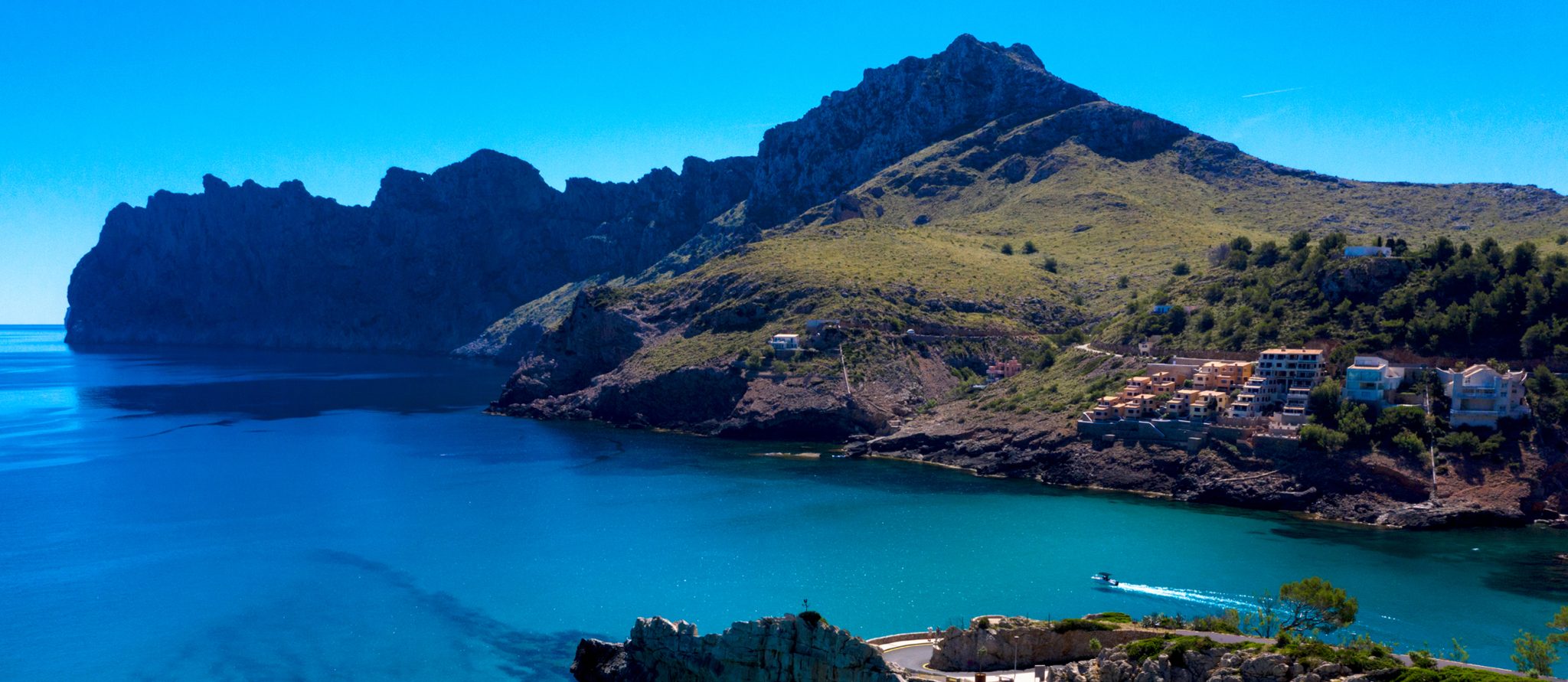
North Mallorca combines some of the island’s most distinctive landscapes with towns that remain genuinely liveable throughout the year. Historic Pollença sits beneath the Tramuntana mountains; Puerto Pollensa opens onto a calm, sheltered bay; Alcúdia brings together a medieval old town and long sandy beaches; while Bonaire, Cala Sant Vicenç and Formentor offer quieter coastal settings with very different characters.
For buyers considering a permanent home, second residence or long-term base in Mallorca, the north is particularly attractive because it offers both established communities and easy access to nature. The choice ranges from old-town houses and apartments to country fincas, family villas, frontline homes and highly private estates.
Where to Live in North Mallorca
Pollença: historic town life and Tramuntana scenery
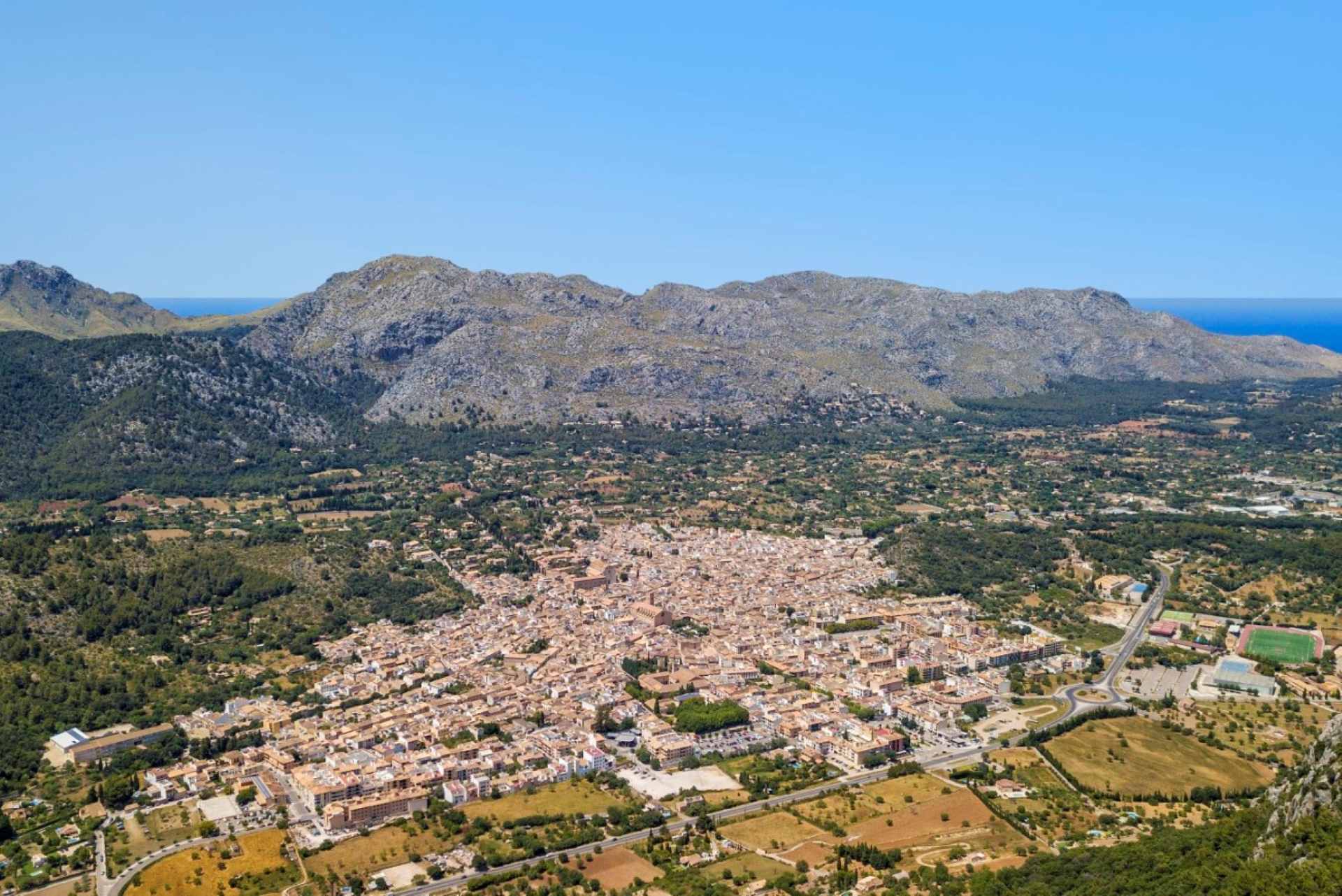
Pollença is one of the north’s strongest choices for year-round living. Its historic centre has a real local rhythm beyond the summer season, with the Plaça Major, Sunday market, cafés, restaurants, galleries and independent shops all within a compact, walkable town. The Calvari steps and Puig de Maria are two of its defining landmarks, while the surrounding countryside quickly opens into olive groves, mountain views and rural lanes.
Property in and around Pollença is unusually varied. In the old town, traditional stone houses and renovated townhouses appeal to buyers who want to walk everywhere. On the outskirts and around La Font, Golf Pollença and the countryside between Pollença and the coast, villas and fincas offer more privacy, gardens and mountain views. Explore our dedicated guide to living in Pollença.
Puerto Pollensa: beach, marina and everyday convenience
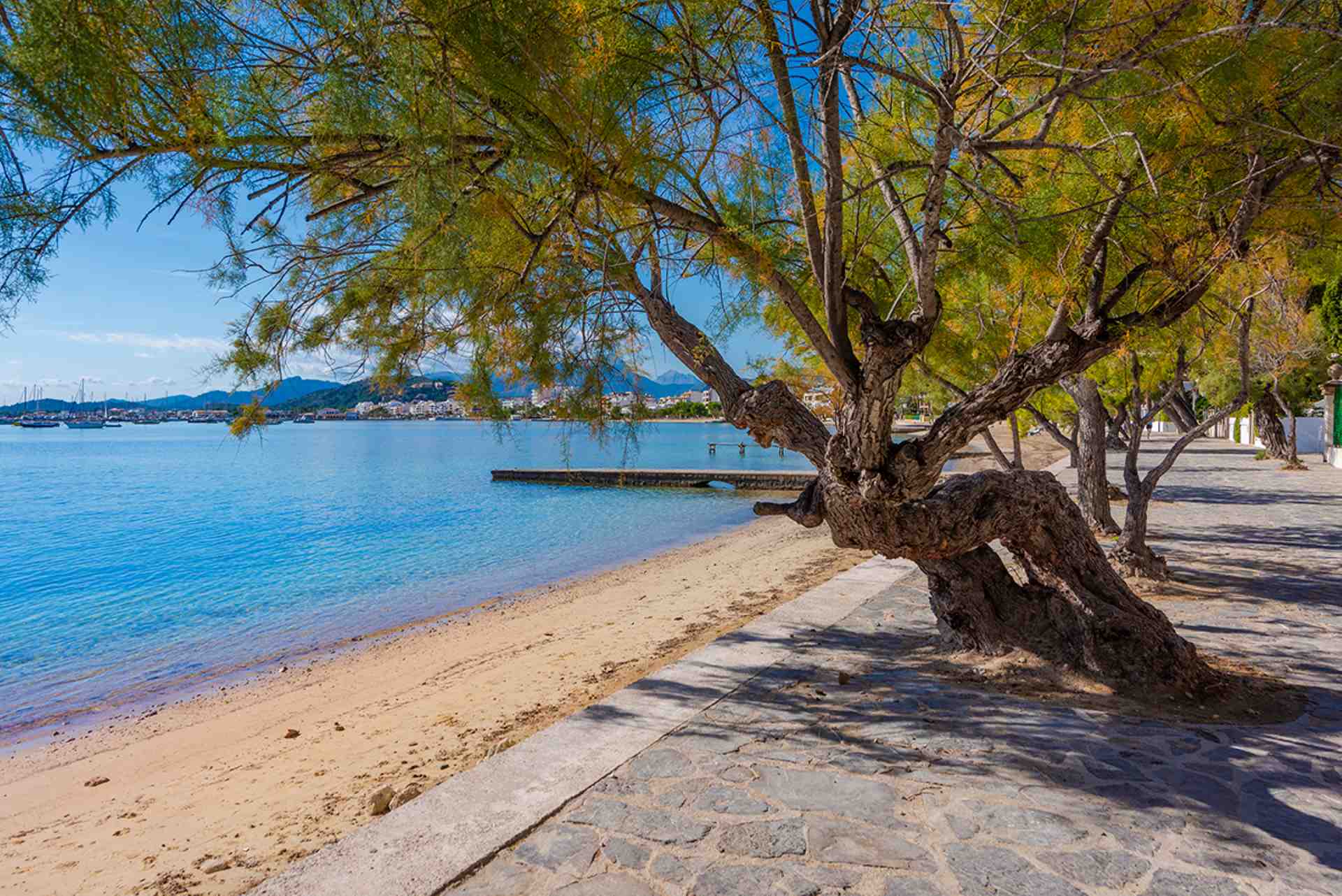
Puerto Pollensa offers a more coastal lifestyle, centred on the beach, marina and long waterfront promenade. The Pine Walk is the best-known address, but the town has several distinct residential areas: Llenaire for easy beach access and a relaxed family atmosphere; Pinaret for proximity to the seafront and centre; Gotmar for villas and elevated positions; and Boquer and Albercutx for mountain and bay views.
The port works particularly well for families and second-home owners who want to minimise driving. Beaches, restaurants, supermarkets, cafés, sailing and everyday services are close at hand, while Pollença Old Town and Alcúdia are a short drive away. Read our full Living in Puerto Pollensa guide.
Alcúdia: medieval heritage and two very different coastlines
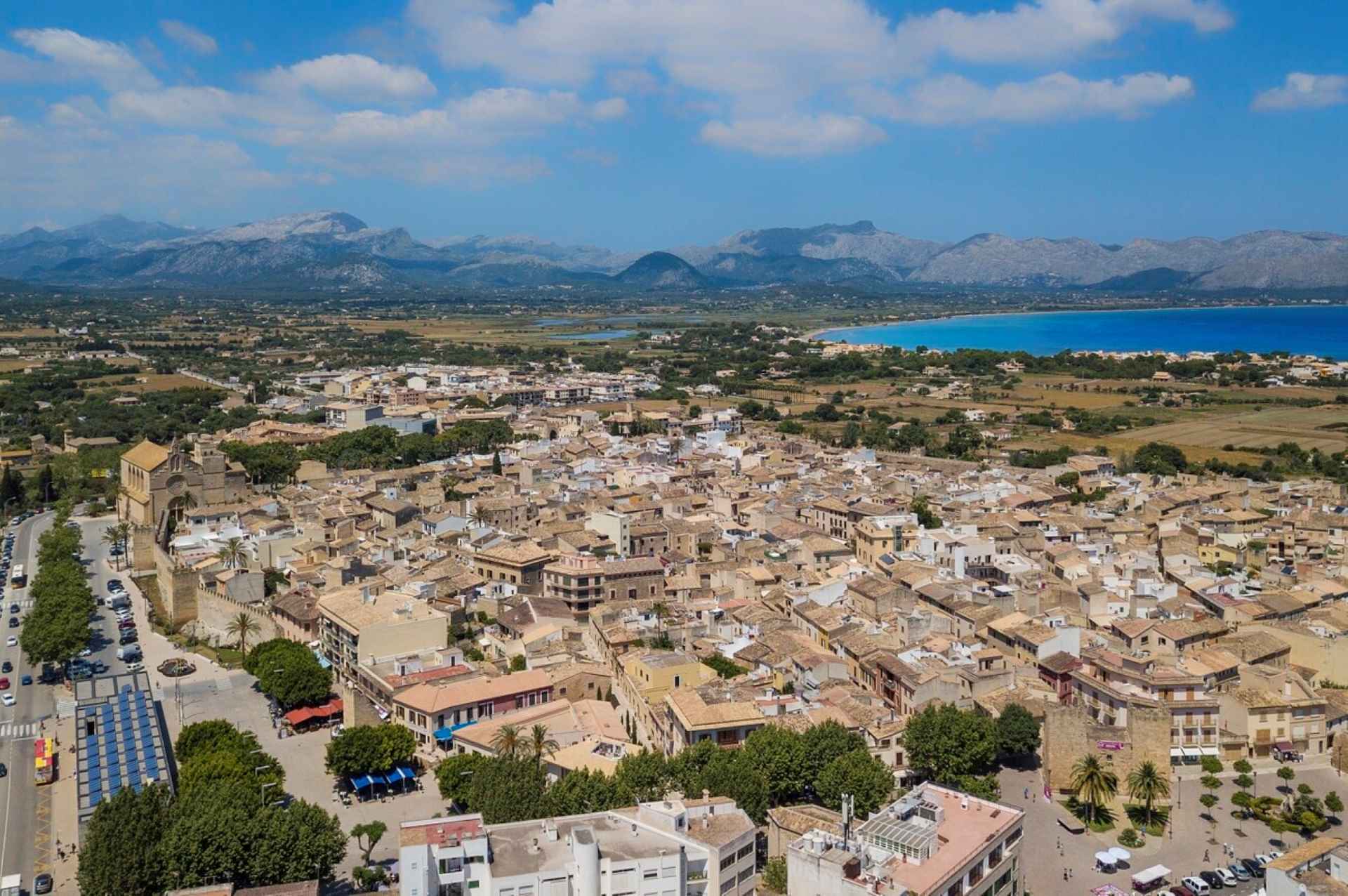
Alcúdia has a different feel again. Inside the restored medieval walls, narrow streets, stone houses, small squares and the twice-weekly market create one of Mallorca’s most atmospheric old towns. Close by are the remains of the Roman city of Pollentia. South of the old town, Port d’Alcúdia and the Bay of Alcúdia provide a long sandy coastline and a much more resort-oriented environment.
For residential buyers, Alcúdia Pueblo, Barcares, Mal Pas, Bonaire and Alcanada each offer a different proposition. The old town suits buyers drawn to character and walkability; the coastal neighbourhoods tend to offer more villas, sea views and outdoor space. See our detailed Living in Alcúdia guide.
Bonaire and Mal Pas: quieter coastal living
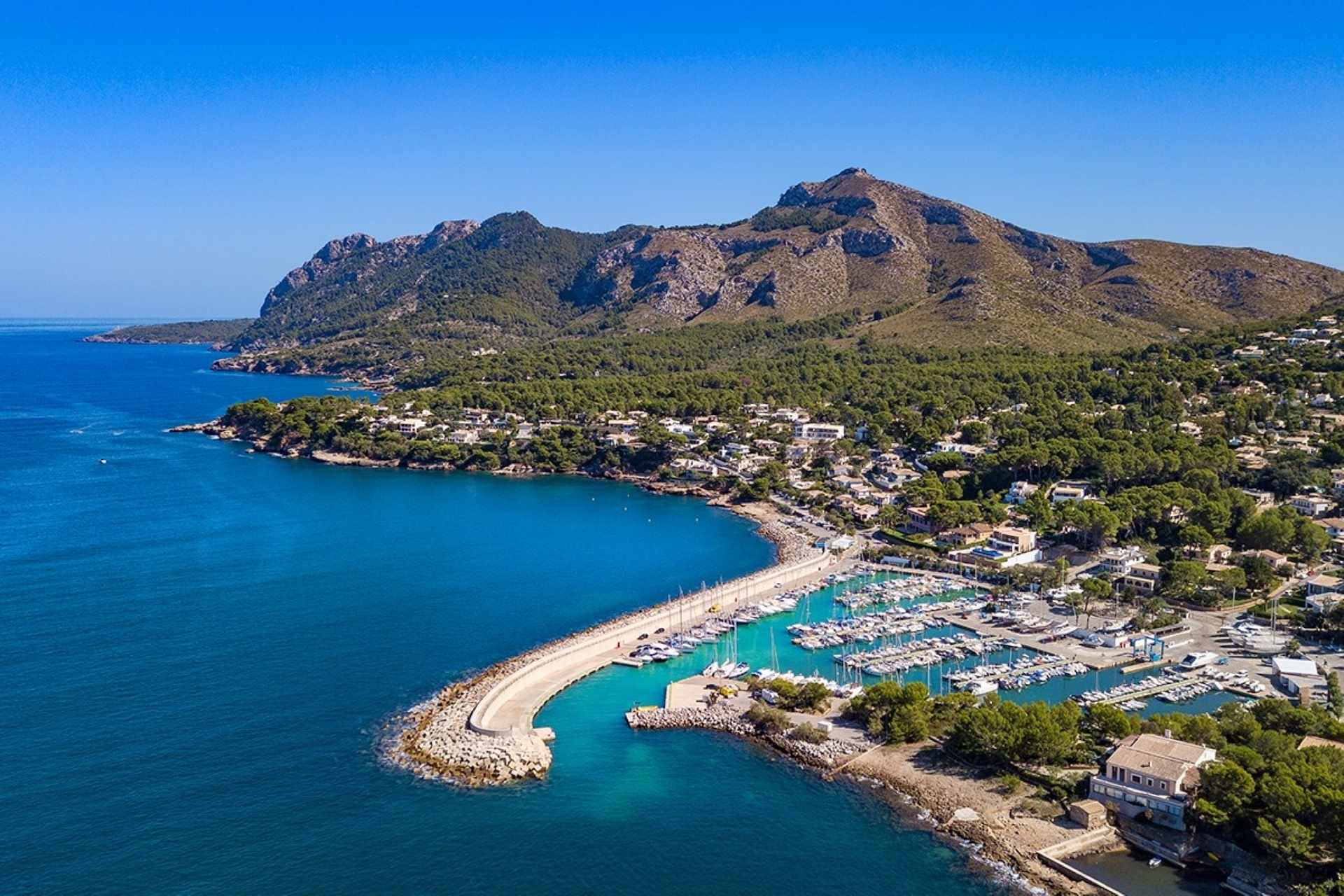
Bonaire and neighbouring Mal Pas are among the north’s most appealing low-density residential areas. Small coves, a marina, pine-covered slopes and views across the Bay of Pollença towards Formentor give the area a distinctly peaceful character. It is close enough to Alcúdia for shopping, schools and restaurants, but feels removed from the busier resort areas.
Formentor: privacy, protected landscape and exceptional coastline
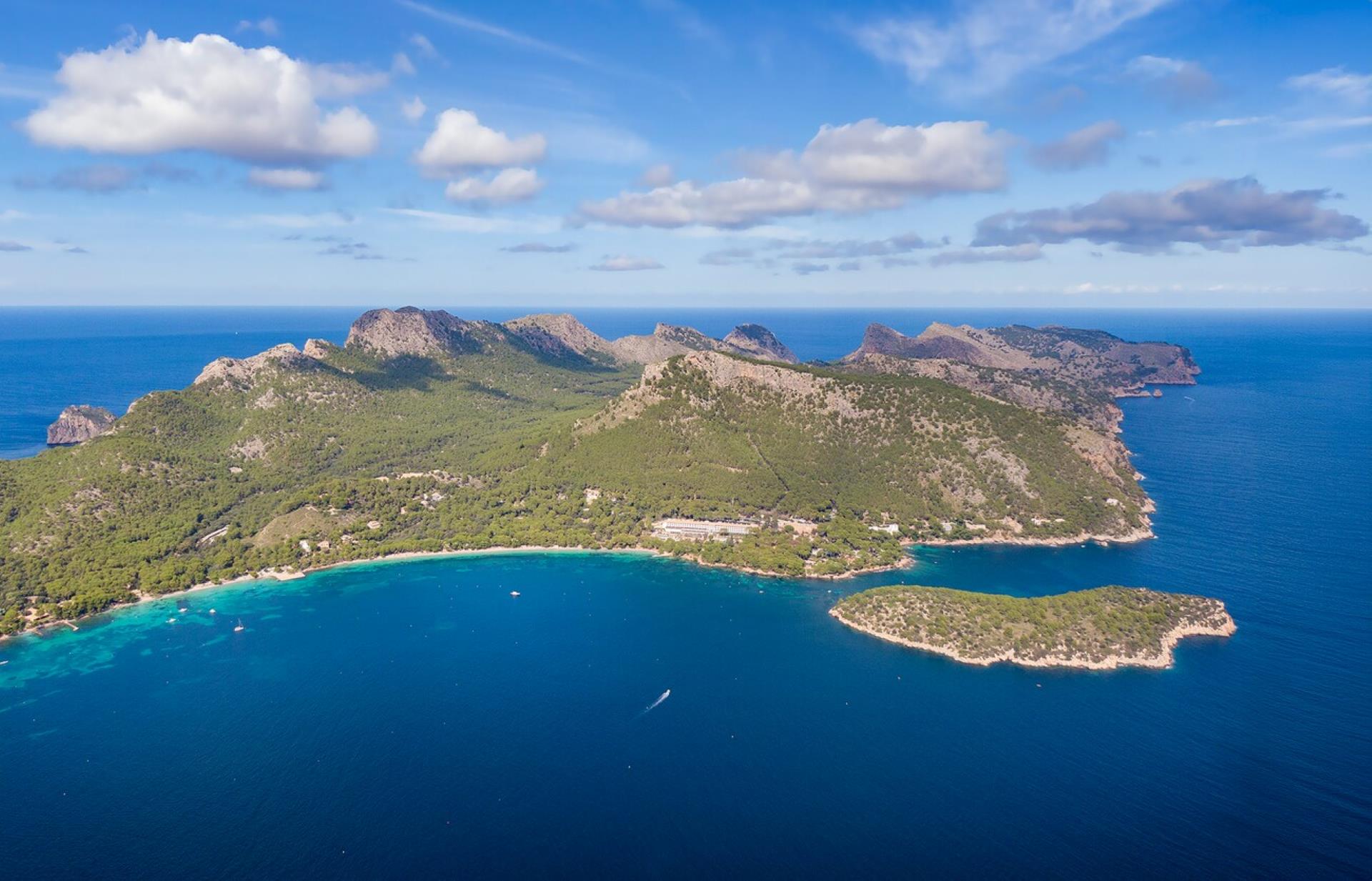
The Formentor peninsula is the north at its most dramatic. The road from Puerto Pollensa climbs through rugged limestone scenery towards Es Colomer, Formentor beach and the lighthouse at Cap de Formentor. Residential opportunities are limited, which is part of the area’s appeal: homes tend to be private villas and estates surrounded by protected landscape, often with extraordinary sea views.
Beaches, Nature and Outdoor Life
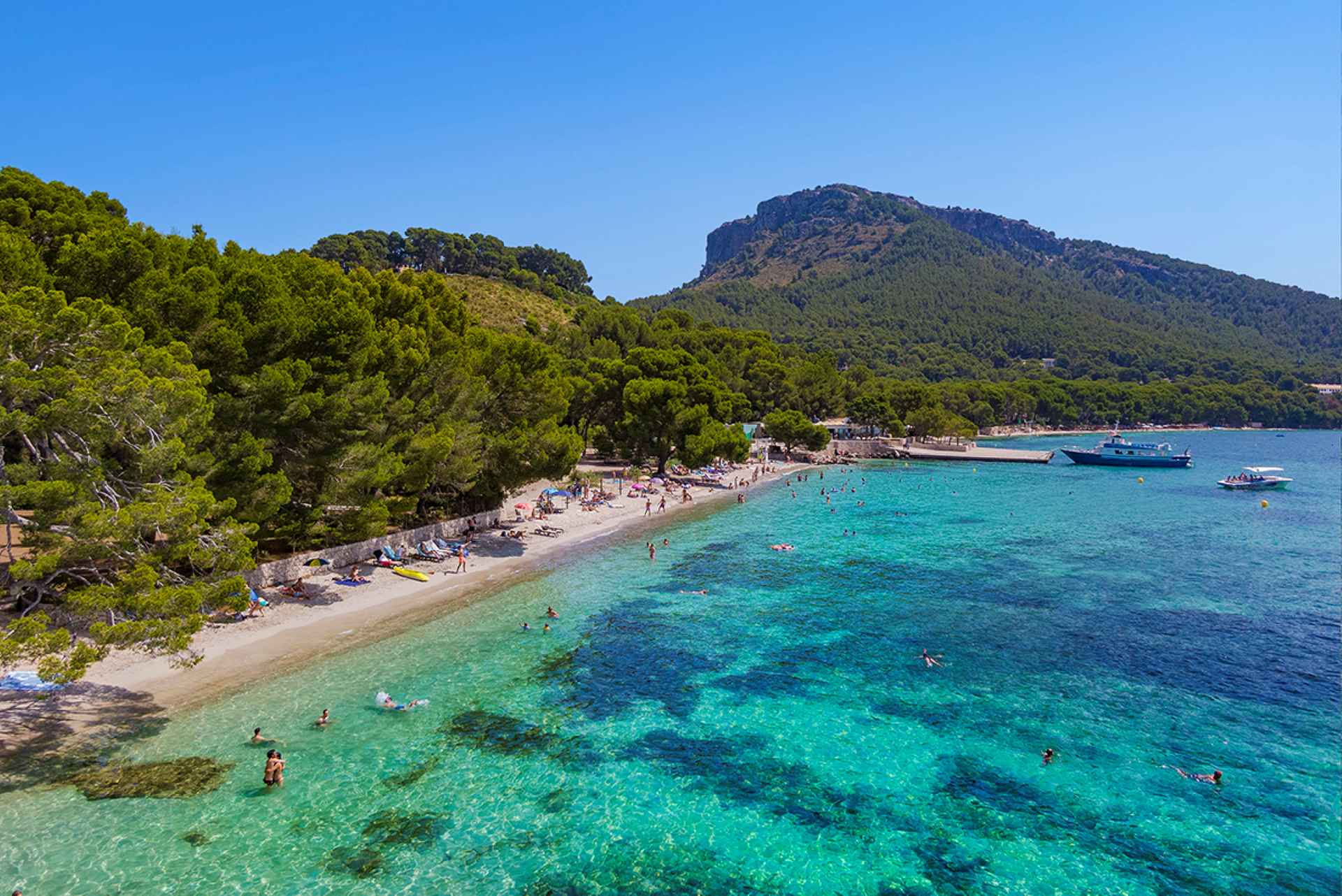
The north works especially well for people who want an outdoor lifestyle. The Bay of Pollença is closely associated with sailing, paddleboarding, kayaking, wind sports and cycling, while the Tramuntana foothills provide hiking routes almost immediately outside Pollença. Cala Sant Vicenç offers a more intimate coastal landscape, with small coves framed by steep mountains.
On the Alcúdia side, the long beaches of Port d’Alcúdia and Playa de Muro are known for shallow water and broad stretches of sand. Behind Playa de Muro lies S’Albufera, Mallorca’s largest wetland and an important habitat for birdlife. Alcanada combines a quieter shoreline with one of the island’s best-known golf settings.
Iris’s Expert View
For buyers in North Mallorca, Iris recommends starting with daily lifestyle rather than the postcode: Pollença for year-round town life and character, Puerto Pollensa for beach access and walkability, and Bonaire or Formentor when privacy, views and a quieter setting are the priority.
Iris Grünewald · Founder & CEO, Balearic Properties
Market Snapshot — September 2026
Pollença municipality: €4,469/m² asking price, +5.3% year on year. Port de Pollença is €4,768/m² (+8.3%), while Pollença Poble is €4,326/m² (+3.5%). Alcúdia municipality: €4,258/m² (+3.1%), with Port d’Alcúdia–Platja d’Alcúdia at €4,524/m² and Ciutat d’Alcúdia at €3,405/m². Source: Fotocasa advertised-listing index, September 2026. These are asking prices, not completed-sale prices.
Iris’s market note: neighbouring micro-locations can behave very differently. Sea views, walkability, plot quality, legal status and condition can move an individual property well away from a municipal average.
Is North Mallorca Good for Year-Round Living?
Yes. Unlike areas that depend almost entirely on summer tourism, Pollença and Alcúdia have substantial permanent populations and remain active throughout the year. Puerto Pollensa is more seasonal, but still has supermarkets, services, cafés and restaurants open outside the main holiday months. This makes the wider north practical for families, remote workers, retirees and international residents who want Mallorca to function as a home rather than only as a summer destination.
Road connections are straightforward: the Ma-13 provides the main route towards Palma, while local roads link Pollença, Puerto Pollensa and Alcúdia in a compact triangle. For many residents, this ability to combine village life, beaches, mountains and everyday services within short distances is the north’s biggest advantage.
Schools and Everyday Services in North Mallorca
Families in the north can choose between local state schools and an international option close to home. Pollença, Puerto Pollensa and Alcúdia all have state primary schools, with secondary schools in Pollença and Alcúdia, so children can study locally in Spanish and Catalan.
For an English-language education, Mallorca International School in Crestatx, between Pollença and Sa Pobla, follows the British curriculum for pupils aged 3 to 16. Families looking for other international or German-curriculum schools usually look towards Palma, roughly 45–50 minutes away via the Ma-13, which is worth factoring into the choice of location. Read more about the international school in North Mallorca.
Day-to-day services are well covered: the main towns have health centres, supermarkets and pharmacies open all year, and the Hospital Comarcal d’Inca serves the north of the island.
What Kind of Property Can You Buy in North Mallorca?
The market changes significantly from one micro-location to another. Pollença Old Town is known for character townhouses, renovation projects and carefully restored homes. Puerto Pollensa has a broad apartment market as well as villas, penthouses and a limited number of frontline properties. The countryside around Pollença offers traditional fincas and larger estates, while Bonaire, Mal Pas and Alcanada are primarily villa locations. Formentor sits at the most exclusive end of the market, where supply is naturally scarce.
Rather than choosing “North Mallorca” as a single market, buyers benefit from comparing the lifestyle of each area first. Someone who wants to walk to restaurants and a weekly market may prefer Pollença; a family focused on the beach and marina may favour Puerto Pollensa; buyers prioritising privacy and sea views may look towards Bonaire, Mal Pas or Formentor.
Frequently Asked Questions about North Mallorca
Which are the main places to live in North Mallorca?
Pollença, Puerto Pollensa and Alcúdia are the three principal centres. Cala Sant Vicenç, Bonaire, Mal Pas, Alcanada and Formentor offer smaller and generally quieter alternatives.
Is Pollença or Puerto Pollensa better for year-round living?
Both can work well. Pollença has a stronger traditional town atmosphere throughout the year, while Puerto Pollensa provides easier access to the beach, marina and waterfront lifestyle. The right choice depends more on daily routine than distance: the two are only a short drive apart.
Where should I look for a villa with sea views?
Elevated parts of Bonaire, Mal Pas, Alcanada, Gotmar and Formentor can offer exceptional sea or bay views. Availability varies considerably because some of these are low-density residential areas with limited supply.
Where can I find a traditional finca?
The countryside around Pollença is one of the strongest areas in the north for traditional stone fincas and country estates, with locations extending towards Campanet, Búger and the foothills of the Tramuntana.
Looking for a home in the north? Explore property for sale in North Mallorca or speak to the Balearic Properties team in Pollença for local guidance on the differences between each area.


