 Deutsch
 English
 Español


Living in Sóller
Sóller does not look like the rest of Mallorca, and there is a specific reason for that. When a citrus blight wiped out much of the valley’s orange and lemon crop in 1865, thousands of Sollerics emigrated to France to rebuild their fortunes in the fruit trade, then came home decades later and built French-style Art Nouveau mansions along the main streets. That imported elegance, paired with a working fishing port, a century-old wooden train, and mountains keeping day-trip crowds at arm’s length, is what makes Sóller feel like a real town rather than a resort. It suits people who want mountains, sea and a functioning high street in one place, without becoming Deià’s smaller, pricier neighbour.
Why Live Here
Sóller works as a place to live largely because of one piece of infrastructure: the road tunnel that opened in February 1997 and has been toll-free for every driver, not just residents, since December 2017. Before it existed, the drive to Palma meant close to an hour over the Coll de Sóller’s hairpin bends. Now it’s a level, three-kilometre run into the capital, and Palma airport, in around 25 to 30 minutes, without cutting yourself off from the island for mountain scenery and a proper town centre. The valley also has its own historic transport, still in daily use rather than kept purely for tourists: the Ferrocarril de Sóller, a narrow-gauge train running the 27 kilometres from Palma since 1912, and the tram connecting the town to Port de Sóller since 1913.
The town itself has what a resort satellite usually lacks: a year-round population of around 13,700 spread across Sóller, Port de Sóller, L’Horta and Biniaraix, two public primary schools (CEIP Es Puig and CEIP Ses Marjades) and a secondary school, IES Guillem Colom Casasnoves, all inside the valley. Compare that with Deià or Valldemossa, a short drive further along the same range: both are smaller and pricier, and lean on Sóller or Palma for most day-to-day services. Sóller has its own doctors, its own weekly market, its own schools and its own working economy that existed long before tourism did. People live here year-round because the town supports that, not only because the views are good.
Lifestyle
Beaches
Sóller is not, first and foremost, a beach town, and it is worth being upfront about that rather than overselling it. Port de Sóller’s horseshoe bay holds the valley’s two real beaches: Platja d’en Repic, a quieter stretch of golden sand favoured by families, and Platja des Través, busier and closer to the tram stop and marina. Both sit inside a sheltered natural harbour, so the water tends to stay calm even when the coast outside is choppier. Anyone who wants Mallorca’s long sweeps of open sand, the kind found around Alcúdia or Puerto Pollença, should treat this as a mountain-and-port lifestyle with good, small beaches attached, not a beach-first move. Our Best Beaches in Mallorca guide covers those options in more depth.
Restaurants & Cafés
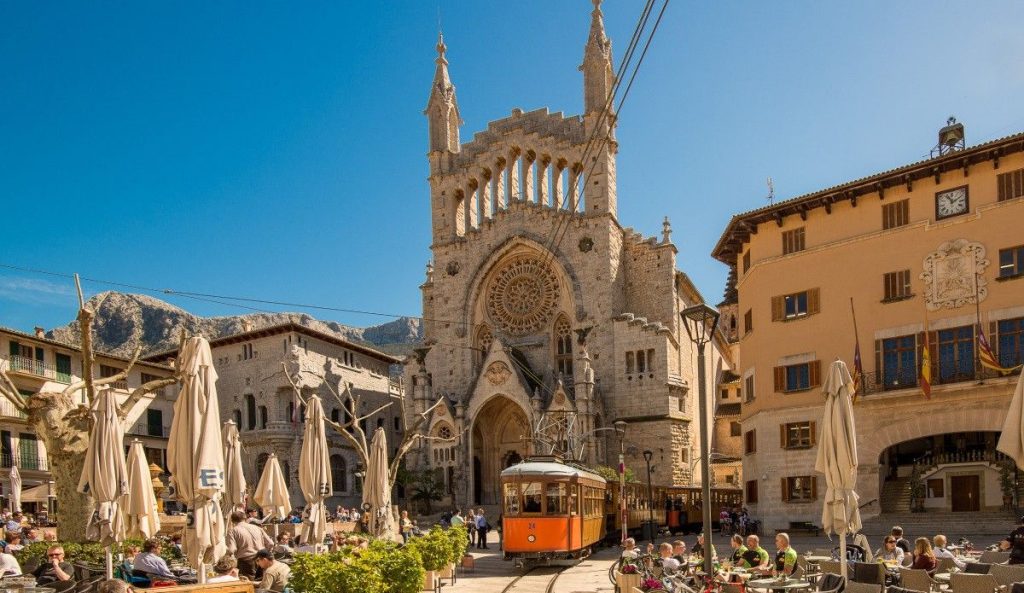
Plaça de la Constitució, the main square in front of Sant Bartomeu church, is where daily life in Sóller happens: café tables spill out under the church facade, and freshly squeezed orange juice from the valley’s own citrus, sold from stalls right on the square, is close to a local institution. The town’s dining leans toward produce-driven Mallorcan cooking, with the citrus and olive groves that surround the valley showing up on menus more directly than in most other parts of the island. Port de Sóller’s promenade adds a second, more seafood-focused dining strip around the harbour, busiest in summer evenings when the fishing boats and yachts share the same stretch of water.
Culture & Heritage
The clearest physical evidence of Sóller’s 19th-century trade with France is Can Prunera, a Modernista mansion built between 1904 and 1911 by a Solleric family who made their fortune in the fruit and liqueur trade in Belfort, now open as a museum with an art collection that runs from Miró to Picasso. It is one of several Art Nouveau buildings along Carrer de sa Lluna and around the main square, alongside Sant Bartomeu church itself, whose facade is attributed to the Catalan architect Joan Rubió i Bellver. The town’s biggest annual event, Es Firó, takes place on the second Monday of May and re-enacts an actual 1561 battle in which the townspeople repelled an attacking pirate fleet; it is a genuinely local celebration rather than one staged for visitors, with residents taking the roles on both sides.
Schools
Families relying on state education have three options inside the valley itself: two public infant and primary schools, CEIP Es Puig and CEIP Ses Marjades, and one public secondary school, IES Guillem Colom Casasnoves, all teaching through the Balearic bilingual Catalan-Spanish curriculum. What Sóller does not have is a British, German or IB-curriculum international school within the valley; those are concentrated around Palma and the southwest coast, which in practice means a commute of roughly 25 to 30 minutes each way through the tunnel for families who want that specific option. It is a genuine trade-off worth weighing honestly rather than glossing over. Compare curricula and admissions directly with each school, and try the daily journey from Sóller before choosing a home.
Outdoor Activities
The Serra de Tramuntana, the mountain range that forms the valley’s walls, was declared a UNESCO World Heritage Cultural Landscape in 2011, recognised for its terraced groves and dry-stone construction as much as for its scenery. That heritage is walkable: the Barranc de Biniaraix, a dry-stone path climbing out of the hamlet of the same name, is one of the best-known routes on the island and forms part of the long-distance GR221. Road cyclists know the valley for the climb up to the Coll de Sóller, a regular fixture on training routes out of Palma. Down at sea level, Port de Sóller’s natural harbour is home to Club Nàutic Sóller, a sailing club founded in 1948, and the Jardí Botànic de Sóller, a botanical garden focused on Balearic and Mediterranean flora, sits just outside the town on the road to the port.
Community & International Life
Sóller’s international community is older than most on the island, and it runs in an unusual direction: the valley’s largest non-Spanish-born population is historically French, a direct legacy of the 19th-century citrus trade, and many of those families have since taken Spanish nationality rather than remaining registered as foreign residents.Among residents without Spanish citizenship, British and German nationals are currently the largest groups, alongside smaller but well-established Swedish and Italian communities, plus a more recent influx of remote workers drawn by the valley’s setting and fast internet.
What holds the different groups together is less any single club and more the rhythm of the town itself: the Saturday market in Plaça de la Constitució, the café culture around the square, and Es Firó in May, which by long tradition pulls in residents of every background rather than staying a purely local or purely foreign event. Port de Sóller’s sailing scene, centred on Club Nàutic Sóller, adds a second, more nautical social circuit, particularly through the warmer months.
Best Areas in Sóller
Sóller Town
The historic centre, built around Plaça de la Constitució and Carrer de sa Lluna, is where the valley’s Modernista architecture and daily café life are concentrated. It suits people who want to walk to a bakery, a doctor and a church square without needing a car for daily errands, and who are drawn to a town with real, working streets rather than a resort strip designed around a beach. Properties for sale in Sóller covers current listings across the town and valley.
Port de Sóller
Three kilometres downhill from the town, connected by the vintage tram, Port de Sóller wraps around a natural harbour with a working marina, a promenade, and the valley’s two small beaches. It has a livelier, more seasonal feel than the town centre, busier with visitors in summer and quieter out of season, and suits buyers who want sea views and boat access without living directly in a beach resort. View Port de Sóller’s available property here.
Fornalutx
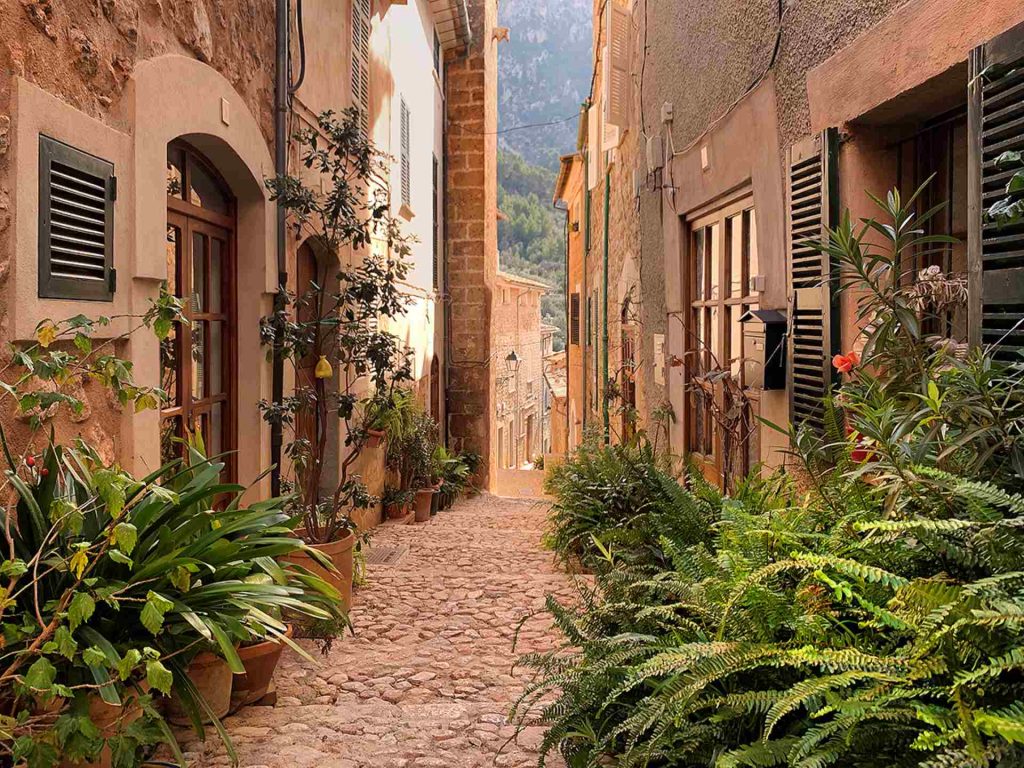
Technically its own municipality rather than a district of Sóller (the two split administratively in 1837, after centuries as one town), Fornalutx is close enough, around seven kilometres and a short drive away, to function as part of the same daily life as the valley below. It has been a member of Spain’s official Association of the Most Beautiful Villages since 2017, and its steep, stone-paved lanes and terraced orange groves are the reason why. It suits buyers drawn to a smaller, quieter, more rural setting, with the caveat that its hillside streets are genuinely steep, which matters for anyone with mobility concerns. View Fornalutx listings here.
Biniaraix
A small hamlet within Sóller’s own municipal boundary, Biniaraix is little more than a square, a church, and a scattering of houses at the foot of the Barranc de Biniaraix hiking route. It has almost no shops or services of its own, which is exactly its appeal for buyers who want genuine rural quiet with the town’s amenities still a short drive or walk away. View Biniaraix listings here.
Things to Know
The valley has one road in and out through the tunnel, which means accidents, breakdowns or roadworks can back up traffic in a way that a town with several access routes would not experience. In high season, that single-road effect combines with day-trippers arriving by the vintage train, which alone carries around a million passengers a year, and by the tram; Sóller town and, in particular, Fornalutx, feel noticeably busier from late spring through early autumn than they do the rest of the year.
Short-term holiday letting in the Balearics operates under an ETV licence system with caps that are set and revised by the regional and municipal authorities; anyone planning to buy with rental income in mind should check current availability and rules for the Sóller valley directly with the local authorities or a local gestor rather than assume a licence will be straightforward to obtain. The valley’s mountain setting also means a slightly different microclimate to the open coast: more shade and shelter from the Tramuntana, and a reputation for being a touch cooler and greener than Palma or the beach resorts, though this is a general pattern rather than a precise, verified figure.
Who Is It For?
- Families: State schooling is genuinely available inside the valley, from infant school through to secondary, which is not true of every part of the island; families wanting a specific international curriculum will need to weigh that against a daily commute through the tunnel.
- Retirees: The town centre is walkable and self-sufficient, with a doctor’s surgery, pharmacy and weekly market on the doorstep, though the steep, stepped streets of the old town and of Fornalutx are worth walking yourself before buying if mobility is a consideration.
- Second-home owners: A working town rather than a seasonal resort, Sóller stays livable and open out of season, which suits owners who want somewhere that still functions in January, not just August.
- Investors: Rental demand exists around the valley’s hiking, cycling and heritage tourism. Despite this, authorities cap and regulate ETV holiday-letting licences, so you should verify their availability rather than assume it.
- Sailing and nautical buyers: Port de Sóller’s natural harbour and Club Nàutic Sóller, founded in 1948, give the port a genuine, long-established sailing culture rather than a marina built purely for tourism.
- Cyclists: The climb to the Coll de Sóller is a fixture of road-cycling routes out of Palma, and the valley sits inside the wider Tramuntana network favoured by serious riders training on the island.
- Heritage and architecture buyers: Sóller’s Modernista buildings, led by Can Prunera, give it a genuinely distinct architectural identity within Mallorca, of particular interest to buyers drawn to the town’s French-influenced history as much as its Mallorcan setting.
Thinking of Buying?
Apartments in Sóller are listed at an average of €6,905 per m² and houses at €5,488 (Casafari, October 2026). To compare Sóller with the rest of the island, see our Mallorca property prices by area.
If Sóller’s combination of mountains, a working port, and an actual town centre sounds like somewhere you could live rather than just visit, the next step is seeing what is currently on the market. At Balearic properties, we cover listings across the town, the port and the surrounding valley, from apartments near Plaça de la Constitució to fincas in the hills toward Fornalutx.
FAQs
Not necessarily inside the town itself, where the centre, the schools and the Saturday market are all within walking distance, and the tram connects the town to Port de Sóller without a car. A car becomes more useful, though close to essential, for reaching Fornalutx, Biniaraix, or anywhere outside the valley, since bus frequency to outlying villages is limited.
Yes, with one honest caveat. The valley has its own public infant, primary and secondary schools, a genuine year-round community, and safe, walkable streets in the town centre. Families who want a British, German or IB international curriculum specifically will need to factor in a commute of around 25 to 30 minutes each way through the tunnel to reach schools clustered near Palma and the southwest coast.
Not administratively. Fornalutx was originally part of Sóller’s municipality but became independent in 1837, so it has its own town hall and mayor. In practice, though, it sits inside the same valley, around seven kilometres from Sóller town, and functions as part of the same day-to-day community, sharing many of the same shops, schools and services.
Sóller town and Port de Sóller both see a significant rise in day-trippers from late spring through early autumn, arriving by the vintage train, the tram, and the road tunnel. Fornalutx, given its small size and single main square, can feel especially busy at peak times. Outside that window, both the town and the port return to a quieter, more local pace.
Living in Alcúdia
Alcúdia is the only town in Mallorca where the medieval walls still form a complete, walkable circuit. They stand just a few hundred metres from the excavated streets of Pollentia, the Roman city that came before them. Even Palma’s walls, once far more extensive, were largely demolished in 1902 to make way for its ring roads. Inside Alcúdia’s walls, a market has set up twice a week on the same paving for centuries. Outside them, the bay curves past a 744-berth marina and Mallorca’s only seaside golf course. Nearby sits one of the largest protected wetlands in the Mediterranean. Few places on the island let you choose between history, coastline and open countryside without changing address.
Why live here
For an international buyer, Alcúdia solves a problem most north-coast towns cannot. It works as a full-time address, not just a summer one. The Ma-13 puts Palma and its airport under an hour away. That matters for anyone still commuting for work, or hosting visitors at short notice. The nearest international school, Mallorca International School in Sa Pobla, is a British-curriculum option roughly twenty minutes inland. As a result, Alcúdia is a rare option in the north for an international education close to home. Families avoid the daily hour-long drive that’s typical elsewhere. A public health centre operates in the old town itself. Hospital Comarcal d’Inca, the regional referral hospital, is about half an hour south.
What makes the case beyond logistics is variety within one municipality. A buyer can choose a townhouse inside the walls, a hillside villa near Bonaire, or a flat by the marina. There’s also a plot near the golf course at Alcanada. All the while, they stay part of the same town, sharing the same market days and festival calendar. Few places in the north let a household weigh history, coastline and countryside so directly, without ever leaving the municipality.
For anyone comparing the north coast, Alcúdia sits within a short drive of Puerto Pollença and Pollença. It’s also within reach of the far more exclusive Formentor, further along the coast. Each of the three strikes a different balance of privacy, character and price.
Lifestyle
Beaches
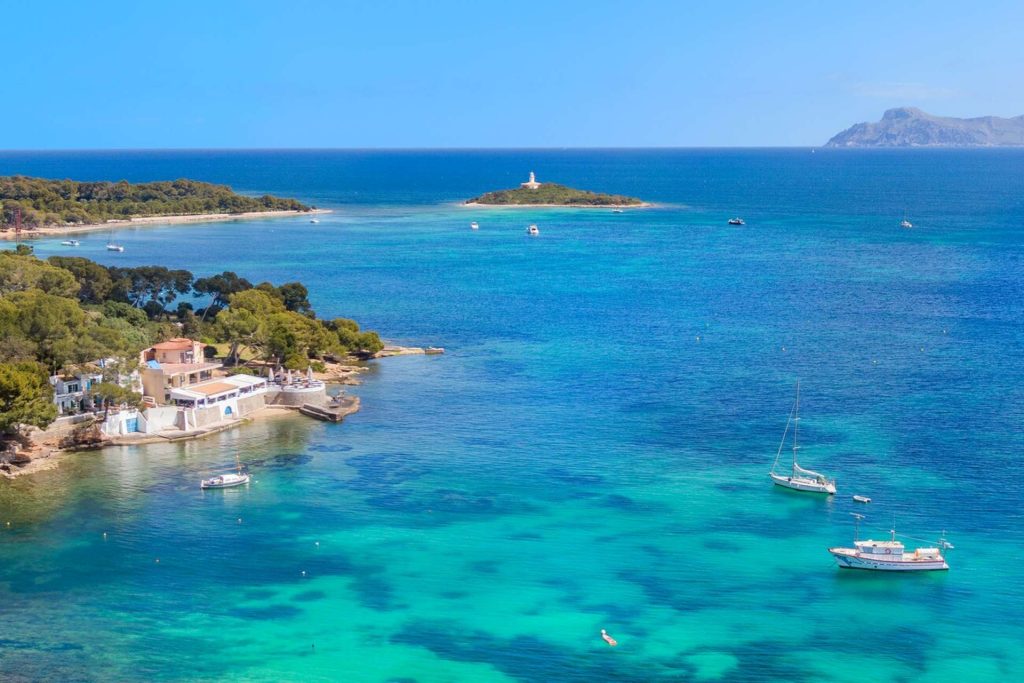
Platja d’Alcúdia runs for several kilometres of fine sand around the bay. It’s the default beach for most residents, easily reached on foot or by bike from Port d’Alcúdia. For something quieter, Mal Pas and the small cove at Aucanada sit below the villa neighbourhoods on the town’s eastern edge. Both are rocky and locals-first, rather than resort beaches. Coll Baix, reached only on foot through pine woods, is the genuine outlier. There’s no road access and no facilities, only cliffs and clear water that keep it from feeling crowded, even in August. Just offshore near the golf course, the small island of Alcanada and its nineteenth-century lighthouse mark the turning point of the bay. For how these compare with the rest of the island, see our Best Beaches in Mallorca guide.
Restaurants & Cafés
The old town’s dining scene concentrates around the Passeig Mare de Déu de la Victòria and the streets near the market. Tapas bars spill onto the pavement on market mornings. Port d’Alcúdia’s marina front carries the more polished end of the scene. That includes Maca de Castro, the area’s Michelin-starred restaurant, alongside Alcanada Golf’s own sea-facing terrace restaurant. Between the two, Alcúdia has both the everyday café culture of a working town, and, on the port side, dining that draws visitors from across the island.
Schools
Mallorca International School, based in Crestatx near Sa Pobla, is the only international school serving the north of the island. It’s the realistic option for Alcúdia families who want a British curriculum without a long daily commute. Most other international schools cluster around Palma and the southwest instead, roughly fifty minutes or more away. Families who prefer full immersion in the Spanish and Catalan system have the town’s state and concertado schools on their doorstep. Compare curricula, admissions and the daily school journey directly with each school before choosing where to live.
Outdoor activities
Club de Golf Alcanada, designed by Robert Trent Jones Jr. and opened in 2003, is Mallorca’s only course built directly on the coast. It has even hosted the Rolex Challenge Tour Grand Final, a DP World Tour event, on its closing holes. The 744-berth Alcudiamar marina anchors a genuine sailing community, from day-sailors to long-term liveaboards. Alongside it, the smaller, private Marina de Bonaire (El Cocodrilo) offers a quieter mooring option a few minutes along the coast. Inland, S’Albufera de Mallorca is the largest wetland in the Balearics. It covers close to 1,700 hectares and is home to over 300 recorded bird species. It also offers flat, largely traffic-free cycling and walking routes that connect Alcúdia to Playa de Muro, without ever touching a main road.
Community & International Life
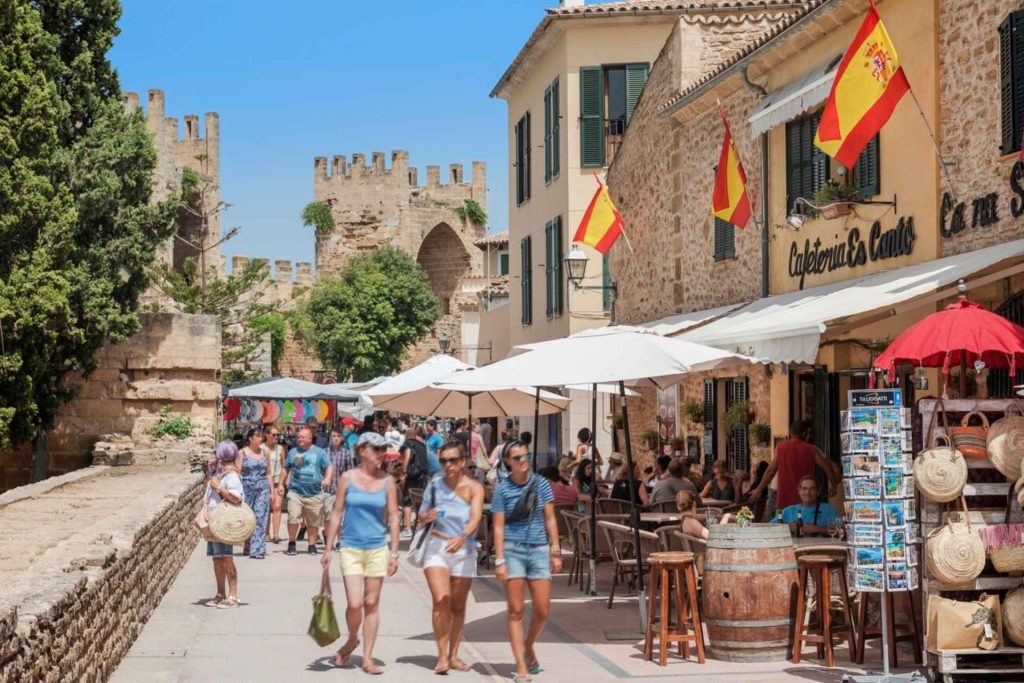
Alcúdia’s international community has deep roots. British and German visitors have been coming here since package tourism took off along this coast in the 1960s and 70s. As a result, a meaningful share of today’s second-home owners are second or third-generation returners, not first-time buyers. That history shows up in daily life more than in any statistic. German and English are spoken as a matter of course in the old town’s cafés and along the port. Meanwhile, the Tuesday and Sunday market, one of the largest and longest-running in Mallorca, draws a genuinely mixed crowd of residents, not only day-trippers.
Sailing forms its own community around the 744-berth Alcudiamar marina, from weekend racers to long-term liveaboards. The town’s festival calendar is anchored by the Festes de Sant Jaume in late July and the Roman-themed Fira d’Alcúdia every October. Both function as a genuine meeting point between local and international residents, rather than a tourist spectacle staged for outsiders. Port d’Alcúdia’s fishing quarter adds its own smaller Sant Pere festival in late June. It centres on a boat procession that longtime residents, whatever their nationality, treat as a fixed point in the year.
Best Areas in Alcúdia
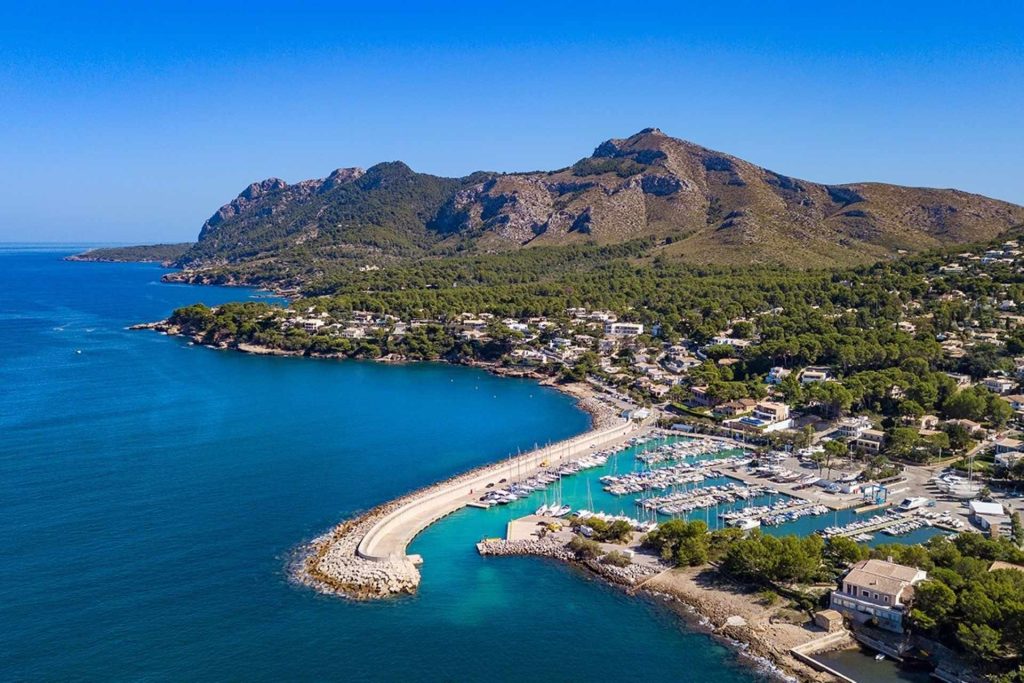
Old Town (within the walls)
Life inside the walls means cobbled streets, a genuine year-round population and the twice-weekly market on your doorstep. It suits buyers who want to walk to everything, and don’t mind trading garden space for character and location. See available property in Alcudia.
Port d’Alcúdia
The working port and main beach strip, busiest in summer and genuinely lively rather than purely residential. It suits buyers who want marina access, restaurants and beach within walking distance. It’s less suited to those who need the quiet of the old town or the hills. See available property in Port d’Alcudia.
Bonaire
Bonaire is an established hillside villa area with its own small marina, Marina de Bonaire (known locally as El Cocodrilo). Built in 1982, it holds around 320 berths for boats up to 17 metres. It’s considerably quieter and more private than the main marina in Port d’Alcúdia. Bonaire suits buyers who want space, sea views toward Pollença, and a mooring close to hand. It still leaves a short drive to the old town and the beaches. See available property in Bonaire.
Mal Pas
The most exclusive of Alcúdia’s residential pockets, tucked between the old town and Bonaire on the eastern coastline. It has direct or near-direct access to the water. It suits buyers who prioritise privacy and sea proximity over walkable amenities. See available property in Mal Pas.
Alcanada
Named for the golf course and the small lighthouse islet just offshore. Alcanada is the quietest and most golf-oriented of Alcúdia’s areas, with villas set among pine and olive groves. It suits buyers who want the course on their doorstep, and are happy being a short drive from everything else. See available property in Alcanada.
Things to know
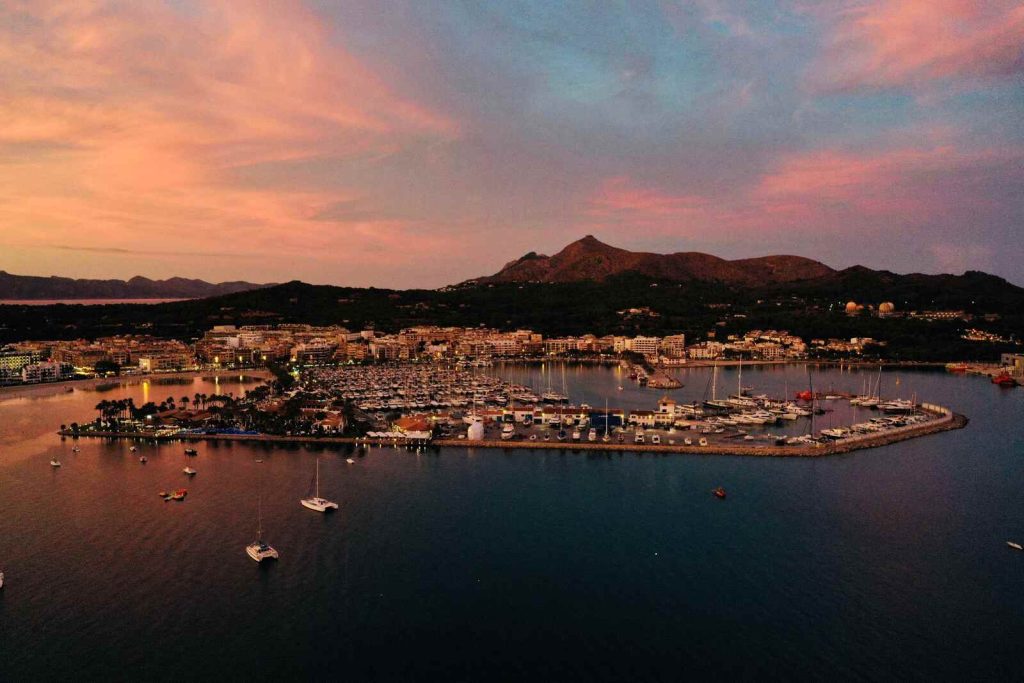
Alcúdia is genuinely seasonal, in a way it’s worth being honest about. Between June and September the population multiplies several times over. The coast road (Ma-12) between the old town and Port d’Alcúdia slows to a crawl at peak times. The Tuesday and Sunday market also extends through most of the historic centre then, rather than just its usual square. Outside July and August, though, the town reverts to a quieter, distinctly local rhythm. This off-season character is exactly what year-round residents describe as the real Alcúdia.
Short-term holiday letting is tightly regulated across Mallorca through the ETV licence system. Licence availability in Alcúdia specifically should be checked directly with the local authorities or a specialist adviser. It shouldn’t be assumed, since caps and rules are revised periodically.
For day-to-day healthcare, the CS Es Safrà health centre sits inside the old town, with a further primary care unit in Port d’Alcúdia. Beyond that, Hospital Comarcal d’Inca, roughly thirty minutes away, handles the specialist and emergency cases the local centres don’t. Palma airport is under an hour via the Ma-13. On top of that, the international community here is well established. English and German are routinely spoken in shops, restaurants and services, not just in high season.
Who is it for?
- Families: Beach access, a safe walkable old town and a nearby international school make this workable as a full-time family base. It’s not just for holidays.
- Retirees: A genuine year-round town, not a summer shell. Daily amenities, a local health centre and an established international community are already in place.
- Second-home owners: Port d’Alcúdia’s tourist infrastructure and the old town’s character both suit a part-time property. It only needs to work a few weeks a year, and stay easy to maintain the rest of the time.
- Investors: Port d’Alcúdia’s established rental demand is a real asset. ETV holiday-letting licence availability needs checking directly, though, rather than assumed, since it changes.
- Sailing & nautical buyers: The 744-berth Alcudiamar marina and Mallorca’s only seaside golf course sit side by side here. Together they give this stretch of coast a genuinely active nautical community, not just moorings.
- Cyclists: Flat routes through S’Albufera and along the coast toward Playa de Muro suit serious riders. There’s no need to leave the municipality.
Thinking of Buying?
Apartments in Alcúdia are listed at an average of €4,592 per m² and houses at €6,936 (Casafari, October 2026). To compare Alcúdia with the rest of the island, see our Mallorca property prices by area.
Alcúdia’s property market spans everything from historic townhouses inside the walls to marina-side apartments and hillside villas. That range is part of what makes the area work for such a wide mix of buyers. For the figures, floorplans and current listings, our team can walk you through what’s actually available.
FAQs
It depends on what you want daily life to feel like. The old town is quieter, more local and walkable, with the market and cafés on your doorstep. Port d’Alcúdia, by contrast, is busier and more geared toward the beach and marina. Restaurants and amenities stay open longer through the season there.
Mallorca International School in nearby Sa Pobla is the only international school serving the north of the island. It’s the practical option for most Alcúdia families, roughly twenty minutes away. Most other international schools are near Palma, closer to fifty minutes or more.
Mostly in a positive way. It gives residents in and around Alcúdia direct access to flat cycling and walking routes. There’s also a genuinely quiet nature reserve just a few minutes from the coast, rather than any real disruption to daily life.
Considerably busier than the rest of the year. The population multiplies several times over between June and September. The coast road between the old town and the port can be slow at peak times too. Outside high season, though, the pace is much closer to a typical small Mallorcan town.
There’s a public health centre inside the old town, plus a further primary care unit in Port d’Alcúdia. Hospital Comarcal d’Inca, the regional hospital, is around half an hour away for anything beyond primary care.
Yes. The Ma-13 motorway puts both under an hour’s drive. That’s one of the reasons Alcúdia works for people who still need to travel for work, not only for retirees or second-home owners.
Living in Formentor
Formentor is not a town. It is a nine kilometre finger of pine forest and limestone cliff at the northern tip of Mallorca, reachable by one winding road or by boat across the Bay of Pollença. Since 1929, when an Argentine art patron built a hotel on its shore, the peninsula has drawn a small, discreet circle of owners rather than a settled population. There is no village square, no daily market, no school run. What Formentor offers instead is seclusion inside a landscape that is almost entirely protected from further development, and a handful of estates that rarely change hands.
Why live here
Formentor suits a very specific kind of buyer: someone who wants privacy measured in kilometres, not walls. The peninsula forms the northeastern tip of the Serra de Tramuntana, the mountain range UNESCO recognised as a World Heritage Cultural Landscape in 2011, and its far half beyond the hotel and a handful of private estates is protected natural land with no realistic prospect of new building. That scarcity is the whole point. Where other parts of Mallorca’s coast have filled in over the decades, Formentor has stayed close to how it looked when the road first reached it in 1925.
Living here full time is impractical for most people; the appeal sits closer to owning a private retreat than a primary residence. Puerto Pollença, with its shops, clinics, marina and international community, is around twenty minutes away by car and effectively serves as the peninsula’s service town. Palma airport is under an hour by car outside the seasonal traffic restrictions. Owners can also reach the peninsula itself by boat from Puerto Pollença or Alcúdia, much as Formentor’s earliest visitors always did. For the right buyer, that combination (genuine wilderness a short drive from a full-service Mediterranean harbour town) is difficult to match anywhere else on the island.
Lifestyle
Beaches
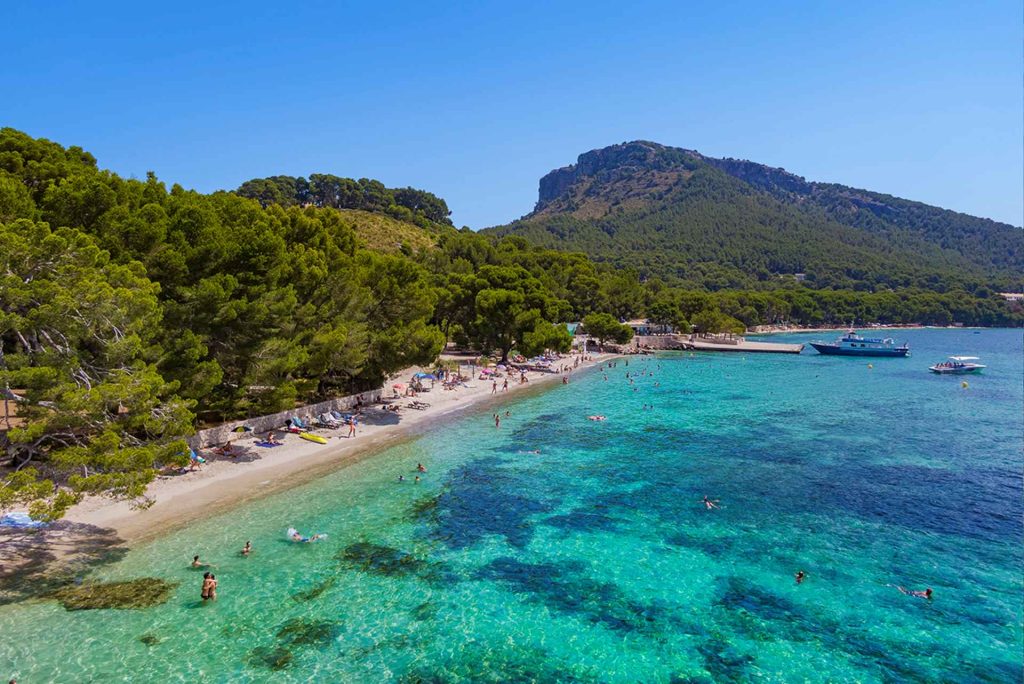
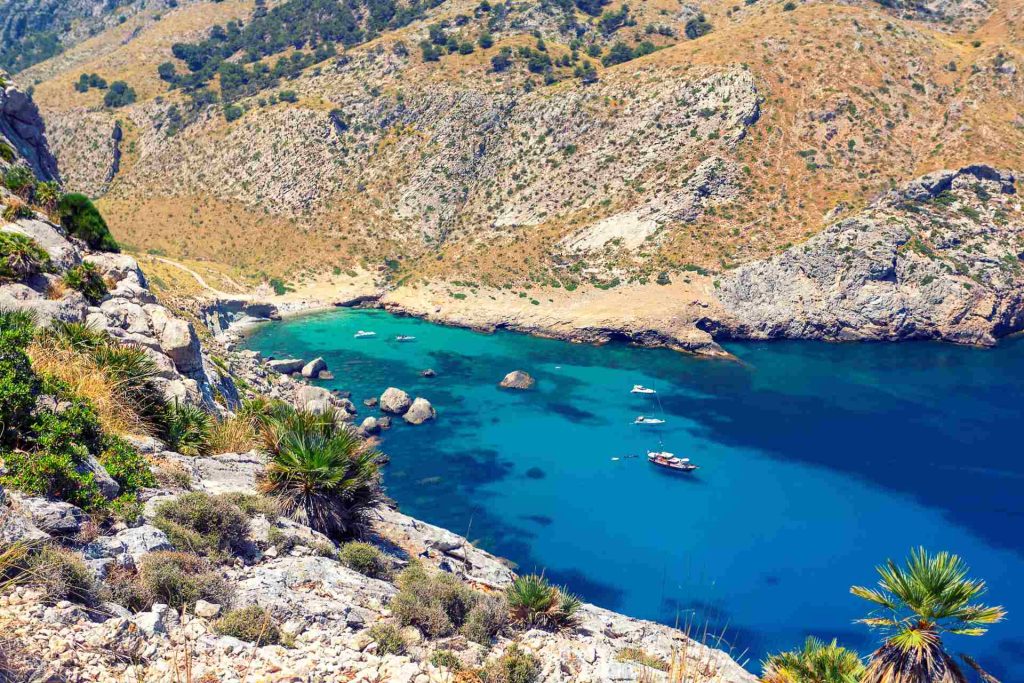
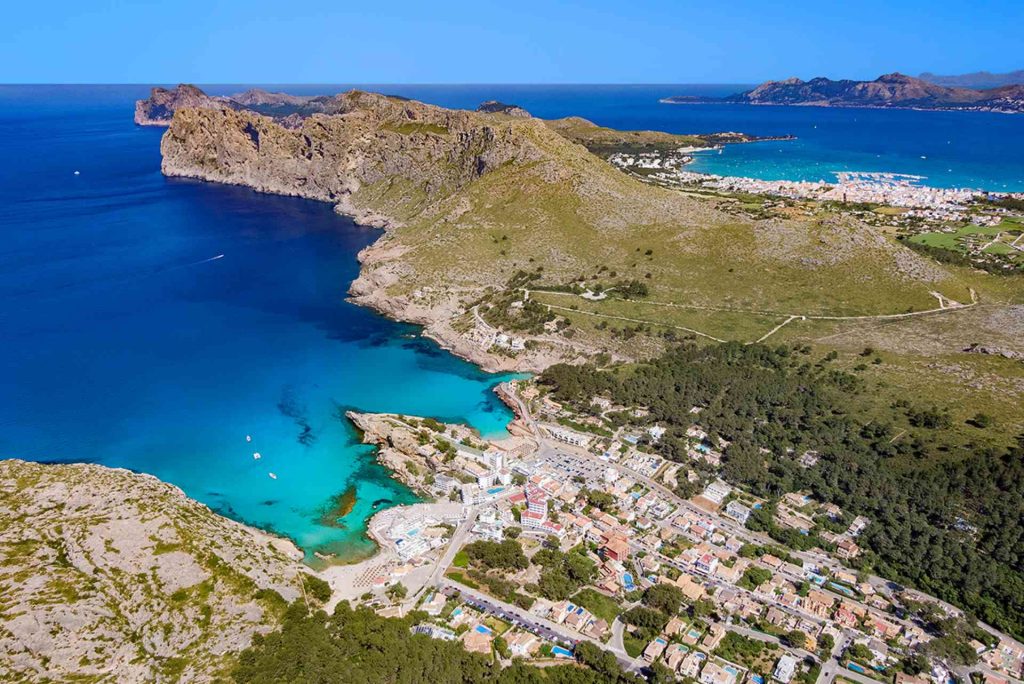
Platja de Formentor is the peninsula’s one proper beach: roughly a kilometre of pale sand backed by pine trees, facing the calm water of Cala Pi de la Posada where the resort itself sits. It is consistently ranked among Mallorca’s best beaches and, in season, draws a genuine crowd of day trippers arriving by boat and bus. For something quieter, Cala Murta is a pebble cove reached only on foot or by sea, around twenty minutes from the nearest car park, with no facilities and rarely more than a scattering of hikers or snorkellers. Cala Figuera, on the peninsula’s northern flank, is smaller again and entirely undeveloped, often described as one of Mallorca’s best coves.
Restaurants & Cafés
Dining directly on the peninsula is limited by design. Four Seasons Resort Mallorca at Formentor (the rebuilt and reopened version of the historic Hotel Formentor) runs several restaurants open to non-guests, from a beachfront seafood spot to a more casual poolside kitchen, plus a bar on Platja de Formentor itself. Beyond the resort, there is little else on the peninsula proper. Most people based here treat Puerto Pollença‘s harbourside restaurant scene, a short drive back along the same road, as their everyday option.
Schools
There are no schools on the Formentor peninsula, and none are realistically coming given the protected status of the land. Families based here send children to the state schools in Pollença or Puerto Pollença, or to Mallorca International School in Crestatx near Sa Pobla, the only international school serving the north of the island, roughly thirty to forty minutes away by car. It is one of the clearest signals that this is not a location built around a daily school run.
Outdoor activities
The road to the lighthouse is one of Mallorca’s best known road cycling climbs, and cyclists ride its bends year round, including during the summer months when the restrictions open the upper road exclusively to them, to pedestrians and to public transport. The clear water around the coves suits snorkelling more than diving, given the depth. Birdwatchers come specifically for Eleonora’s falcons, which breed on the cliffs facing north. Boat access has been part of daily life here since before the road existed: the resort still runs its own transfer service to and from Puerto Pollença, and several of the peninsula’s private properties keep their own moorings.
Community & International Life
Formentor does not have a community in the way Puerto Pollença or Pollença town does. There is no expat association, no weekly market, no fixed circle of neighbours dropping by. What it has instead is a lineage. Since Adan Diehl opened his hotel in 1929, the peninsula has drawn an unusually consistent, if small, cast of international owners and regular visitors, from the writers and Nobel laureates who gathered here for the Formentor literary prize in the 1960s to the string of European royals and film stars who have stayed at the hotel across nearly a century. The handful of private estates outside the resort follow a similar pattern: several have stayed within the same family for generations, changing hands rarely and quietly.
Social life, such as it is, centres on the resort rather than on a village or a club. People here are typically part time residents with an established base elsewhere on the island or in Europe, using Formentor as a private retreat rather than a full time home, and treating Puerto Pollença as their point of contact for everyday social life and errands.
Best Areas in Formentor
Formentor has almost no residential subdivisions in the way Puerto Pollença or Alcúdia do. There are, in practice, two distinct stretches of the peninsula worth knowing.
Around the hotel and Platja de Formentor
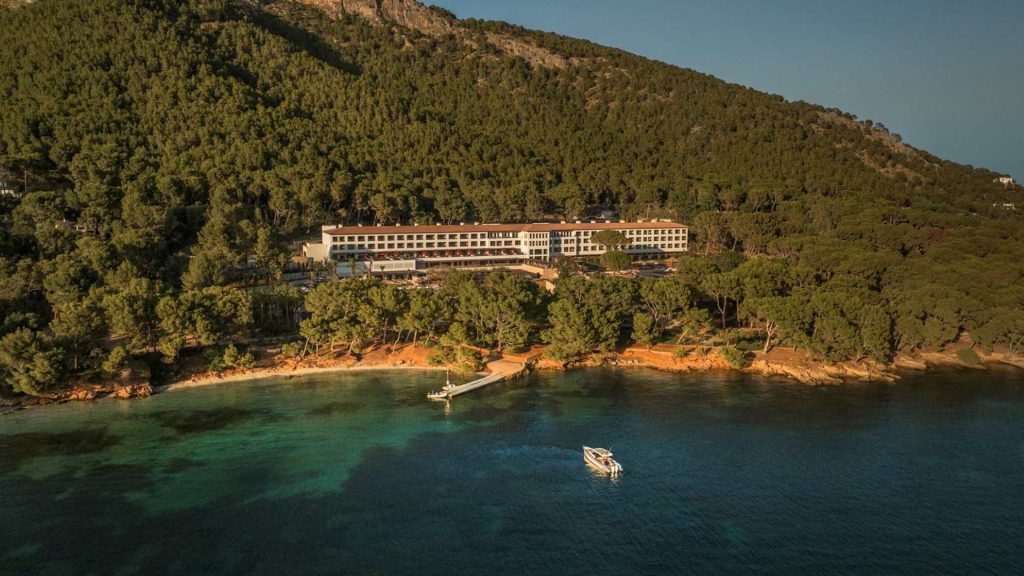
This is the one settled pocket of the peninsula: the resort, the beach it sits on, and a small number of private villas tucked into the pine forest nearby, several with direct sea access or a private mooring. It is the closest thing Formentor has to an address, and its properties rarely come to market.
Cap de Formentor and the protected headland
Beyond the beach, the road climbs through several kilometres of pure natural park toward the lighthouse: cliffs, pine forest, and the Mirador d’Es Colomer viewpoint, with essentially no private land and no prospect of any. It is included here for context rather than opportunity. This end of the peninsula is protected landscape, not a residential area, and buyers should not expect it to become one.
Things to know
Formentor is genuinely hard to reach by private car for part of the year. Since a 2018 pilot scheme cut peak season traffic by around 90 percent, the peninsula road has run under seasonal restrictions, and currently these apply daily from 15 May to mid October, between 10am and 10pm, with only public transport, taxis, authorised vehicles, cyclists and pedestrians allowed through. Residents can certainly apply for an exemption, but the exact dates and terms are reset each year by the Consell de Mallorca, so anyone counting on year round car access should check the current rules before committing to a purchase or a move.
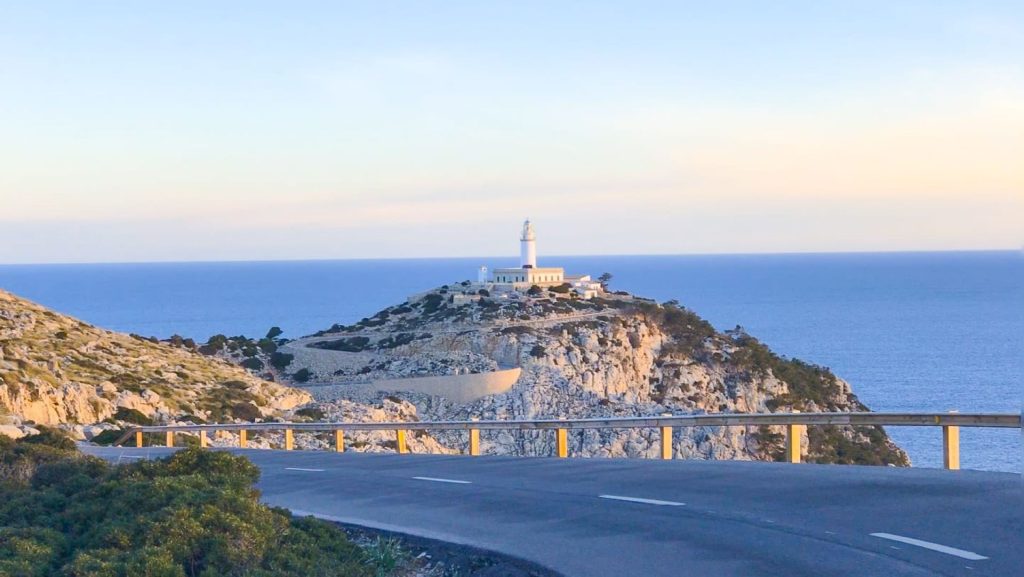
There is no supermarket, pharmacy or general store on the peninsula. Puerto Pollença, roughly twenty minutes away by car outside restricted hours, covers all of that. Nearly the entire peninsula beyond the hotel and a small number of private plots falls within protected Serra de Tramuntana land, which is why the area has stayed largely unchanged for a century and is unlikely to see meaningful new construction. Being the exposed northern tip of the island also means real wind exposure: locals call it the meeting point of the winds, and the Tramuntana can blow hard here even on a calm day back in Puerto Pollença.
Who is it for?
- Second-home owners: Formentor suits someone who wants a private retreat used for a few weeks at a time, not a full time base with daily errands and a school run.
- Sailing & nautical buyers: several of the peninsula’s frontline properties come with direct sea access or a private mooring, and arriving by boat from Puerto Pollença remains a normal, and historic, way in.
- Investors: the appeal here is scarcity rather than yield. Genuinely new stock essentially never appears, which supports long term value, and a number of existing villas operate as high end holiday lets, though any holiday rental licence (ETV) needs to be checked and confirmed for the specific property rather than assumed.
Thinking of Buying?
Formentor sits within the wider Pollença area, where apartments are listed at an average of €6,311 per m² and houses at €6,351 (Casafari, October 2026). Individual Formentor villas vary far more than any average, so see how the area compares in our Mallorca property prices by area.
Formentor may be the rarest micro market covered on this site. With almost the entire peninsula protected and no meaningful new development possible, the small number of villas here change hands infrequently, and each one is genuinely singular rather than one of a comparable set. Our current Formentor listings are the place to start; if total seclusion is more than you need, the wider Pollença property market, within the same bay, offers considerably more everyday convenience.
FAQs
Not in the way most Mallorcan towns have one. Formentor has no village centre and a very small number of private homes, most owned by people who use them as a seasonal retreat rather than a full time residence. Its identity has always been tied more to the historic hotel than to a resident population.
Yes, and it is a genuinely normal way to arrive. Boat transfers between Puerto Pollença and Formentor have been part of the peninsula’s routine since the hotel opened in 1929, when the road itself was not yet finished, and the resort still runs a private boat service today.
No. Everyday services, including a supermarket, pharmacy and post office, are all in Puerto Pollença, about twenty minutes away by car outside the seasonal traffic restrictions.
Outside the restricted season it is. In 2026 the road is closed to private cars daily from 15 May to mid October, between 10am and 10pm, with only public transport, taxis, cyclists, pedestrians and Formentor residents allowed through during those hours. The exact dates are set fresh each year, so this is worth confirming close to your travel or move date.
Yes. The peninsula forms the northeastern tip of the Serra de Tramuntana, which UNESCO recognised as a World Heritage Cultural Landscape in 2011, and almost all of the land beyond the hotel and a small number of private estates is protected from development.
Living in Pollença
Pollença does not try to look like a resort, because it isn’t one. Set inland between two hills, the Puig de Maria and the Calvari, it is a working Mallorcan town with a Sunday market, a 17th-century cloister that has hosted world-class orchestras every summer since 1962, and a coastline it doesn’t actually touch. That last part matters: this is a guide to the town itself, not to Puerto Pollença five minutes down the road, which has its own character and its own guide. Pollença’s appeal is different, and it is worth being specific about why.

A local’s view: Iris Grünewald
Iris Grünewald is CEO of Balearic Properties and a Savills international associate, and she has lived in Pollença for more than 20 years. Featured in Portfolio by Savills’ Insider’s Guide to Pollença, she adds her own favourites to this guide: where she eats, shops and walks. She is also the founder of Pollensina, a collection of nine villas and fincas in Pollença that she has renovated and rents out.
Why live here
Pollença sits at the inland edge of Mallorca’s north, the same region as Alcúdia, but its character owes more to the mountains behind it than the coast. For an international buyer, it offers something rare here: a town that functions the same way in February as in August. Palma airport is around 45 minutes away by the Ma-13, close enough for weekend trips but far enough that Pollença never feels like an extension of the arrivals hall. The old town’s narrow stone streets and low-rise skyline have been protected through decades of planning restraint, so the place a buyer falls for on a viewing trip is largely the place they’ll still be living in a decade later.
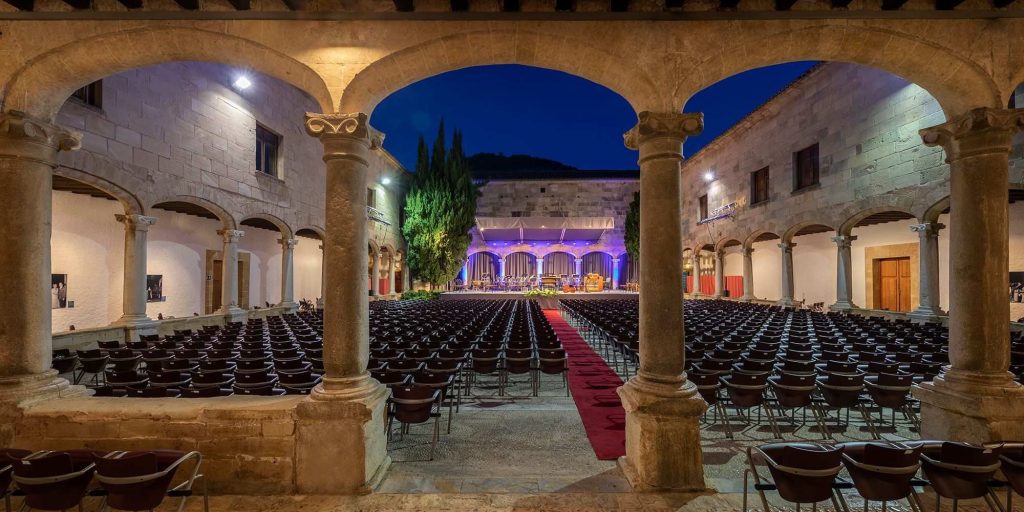
What sets Pollença apart from its coastal neighbours is that its social and cultural life doesn’t switch off with the tourist season. The Festival de Pollença fills the Sant Domingo cloister every summer and has done for over 60 years; Galería Maior and a handful of smaller galleries keep an active exhibition calendar; the Sunday market is a genuine weekly fixture for residents, not a summer-only production. Mallorca International School, the only international school in the north of the island, is around ten minutes away in Crestatx. For buyers who want land and mountain views without losing that ten-minute connection to town, the countryside around La Font and El Vila is the draw. This is a town for people who want to live somewhere, not just holiday there.
Lifestyle
Beaches
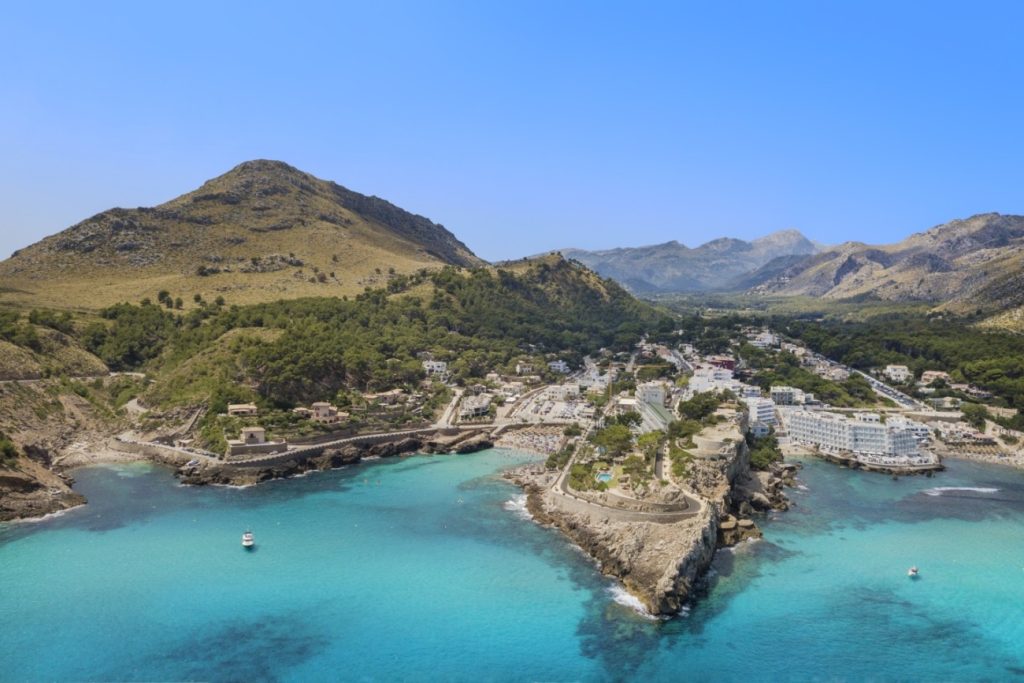
Pollença’s old town sits inland, so there’s no beach on the doorstep, and it would be misleading to pretend otherwise. What it has instead is easy access to two very different stretches of coast. Cala Sant Vicenç, about ten minutes north, is four small coves (Cala Barques, Cala Molins, Cala Clara and Cala Carbó) tucked beneath pine-covered cliffs and the Cavall Bernat ridge, better suited to a quiet swim than a big beach day. Puerto Pollença, five minutes east, has the long sandy bay and the Pine Walk promenade; residents of Pollença treat it as their local beach, even though it’s a separate town with its own guide.
Restaurants & Cafés
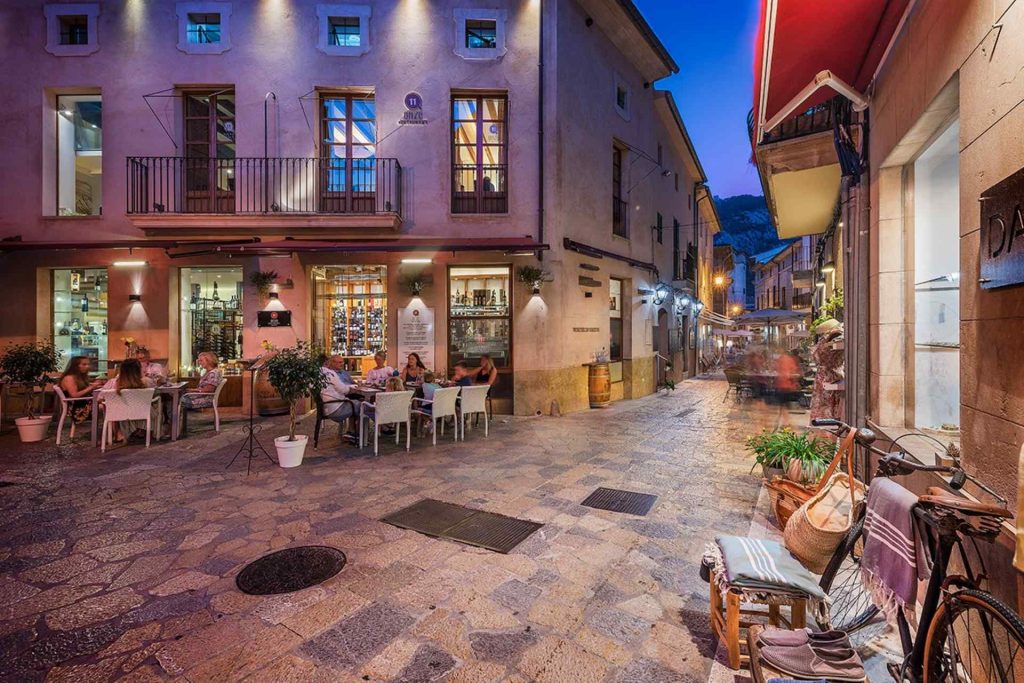
The restaurant scene sits around Plaça Major and the lanes leading off it: family-run Mallorcan kitchens in restored townhouses, tapas terraces that fill up on market mornings, and a handful of more ambitious dining rooms that have opened in the last decade without displacing the older, plainer places locals still use every week. Because Pollença has a genuine year-round population, most of this stays open outside the summer months, which is not something every north-coast town can say.
Iris’s picks: for home-style Mallorcan cooking she recommends Celler El Molí, where the tumbet (the potato, aubergine and pepper dish) is the one to order, along with lechona, slow-roast pork stuffed with rice, peas and onion. For something lighter she likes Onze, an Italian-Mediterranean kitchen, and its grilled scallops in mushroom sauce.
Schools
Mallorca International School (MySchool), in the Crestatx urbanisation around ten minutes from town, follows the British curriculum and is currently the only international school in the north of Mallorca, which has made the surrounding area noticeably more attractive to relocating families over the past few years. Families who want full Spanish or Catalan immersion have several state and concertada schools within the town itself.
Outdoor activities
Golf Pollença is a 9-hole course about two kilometres from town, opened in 1986, with views across the bays of Pollença and Alcúdia and the S’Albufereta nature reserve. Hikers have the Puig de Maria, a 330-metre climb to a 14th-century hermitage around 40 minutes up, and the Boquer Valley, a protected walking route popular with birdwatchers that runs out toward the coast. Cyclists use Pollença as a base for the quieter lanes of the north and for the climb out toward Cap de Formentor, one of the island’s signature routes.
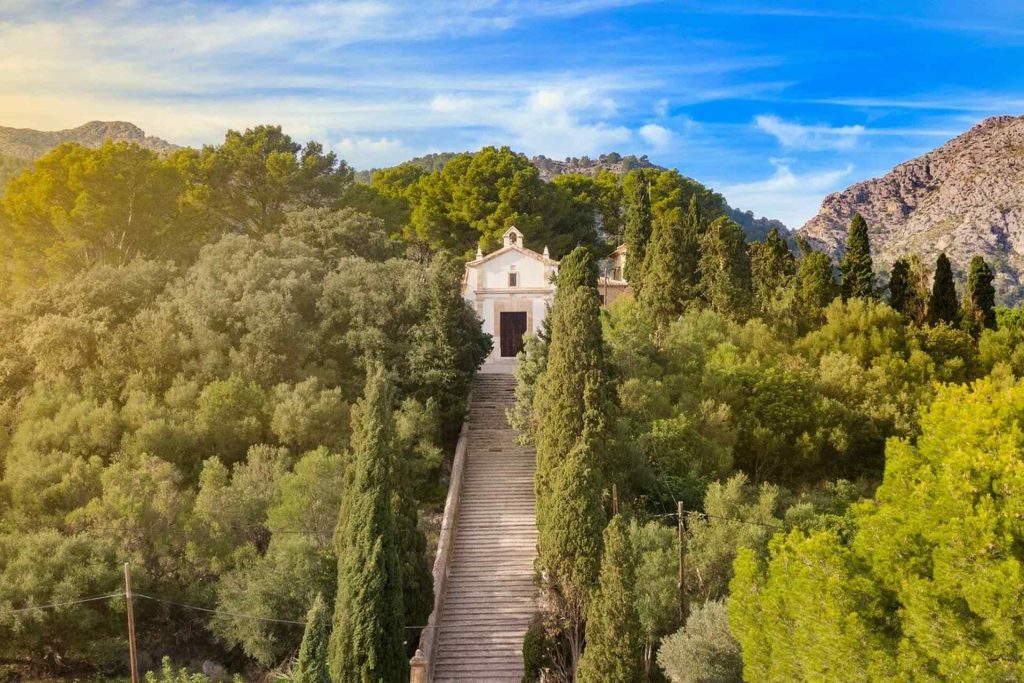
Iris’s own favourite: hiking in the mountains. After more than twenty years here she still calls the Carrer del Calvari, 365 cypress-lined steps up to a chapel, well worth the climb, and when she wants to be on the water she heads down to the bay at Puerto Pollença for kayaking and paddleboarding.
Shopping & local craft
Beyond the Sunday market, Iris sends visitors to a short list of makers: Teixits Vicens for Mallorcan linens woven with centuries-old techniques, ABCO Pottery Studio, a family-run workshop making distinctive ceramics, and Mastrenat, which keeps the art of leather braiding alive in bags, belts, shoes and home accessories. For contemporary art, Galería Maior focuses on local artists.
Community & International Life
Pollença’s international character isn’t a recent development. The Festival de Pollença was founded in 1962 by the British violinist Philip Newman, and the cloister of the Sant Domingo convent has since hosted more than 800 performers, including Mstislav Rostropovich, Yehudi Menuhin and Jessye Norman, as part of a programme that belongs to the European Festivals Association. That kind of institution doesn’t happen without decades of an engaged resident community behind it, and British and German buyers in particular have been part of Pollença’s fabric for that long.
Social life for residents runs through a few recurring fixtures rather than one expat club: the Sunday market at Plaça Major, which locals use as much as visitors do; the summer festival calendar; and a small but active gallery scene anchored by Galería Maior. It is a lower-key, more integrated version of international life than the marina-and-yacht-club model found in Puerto Pollença, and it tends to suit buyers who want to feel part of a town rather than part of a resort.
Iris’s cultural shortlist: the Museu de Pollença, housed in a former convent, for the town’s history through art and archaeology, and the Museu Dionís Bennàssar, in the former home of the Mallorcan painter. In autumn, La Fira de Pollença fills the town with ceramics, jewellery and weaving.
Best Areas in Pollença
Historic Old Town
The streets around Plaça Major and the Calvari steps are where lock-and-leave living happens: townhouses and apartments within walking distance of the market, restaurants and the parish church, all year-round rather than seasonally. It suits buyers who want to step outside and be in the middle of things. View properties in Pollença’s old town.
La Font
An established residential area just outside town known for elevated positions and views back over the bay. It has been one of the most sought-after addresses in Pollença for years, and it’s still a walk of around fifteen minutes into the centre. View properties in La Font.
El Vila
Similar in character to La Font and on the same side of the valley, but closer to the road toward the port, which makes it popular with buyers who want sea views and an easy run down to the restaurants and marina at Puerto Pollença.
Cala Sant Vicenç
Technically its own village rather than a Pollença neighbourhood, but part of the same municipality. Its draw is the coves themselves: compact, residential, and popular with buyers who want to be a short walk from the water without the scale of Puerto Pollença. View properties in Cala Sant Vicenç.
Crestatx
A quiet residential urbanisation on the way toward Sa Pobla, popular with families since Mallorca International School opened nearby, and increasingly asked about for that reason alone. It suits buyers prioritising the school run over proximity to Pollença’s centre, which is still only around ten minutes away.
Vall de Son March
A countryside valley just outside Pollença town, known for finca-style properties set among olive and almond groves with views back toward the Tramuntana. It suits buyers who want genuine rural privacy without losing a short drive into town. View properties in Vall de Son March.
Things to know
The Sunday market fills the old town from 8am to 1.30pm and draws visitors from across the island, so parking is tight and the centre is genuinely busy for those hours, though it’s quiet the rest of the week. Late July and August bring the Festival de Pollença and a fuller cultural calendar, along with more traffic on the single main road connecting Palma, Pollença and Alcúdia; the town itself is calmer than the port in peak season. Notably, the Ajuntament de Pollença (the town council) chose to withdraw Pollença from the “Most Beautiful Villages of Spain” network from January 2025 in favour of its own tourism strategy, a decision that says something about how deliberately the town manages its own profile rather than chasing visitor volume.
The local public health centre is part of the IB-Salut network and is currently being rebuilt on a larger site, expected to roughly triple capacity once complete. Pollença’s international community is long established rather than newly arrived, and the year-round population is meaningfully smaller than the summer influx, which is part of what keeps the town liveable off-season. Anyone planning to let a property short-term should check current holiday-rental (ETV) licence rules for the area before assuming one is available.
Who is it for?
- Families: the only international school in the north of the island is ten minutes away, and the old town itself is walkable and safe for children.
- Retirees: a genuine, year-round town rather than a seasonal one, with an established international community and a walkable centre.
- Second-home owners: lock-and-leave apartments and townhouses in the old town, with Palma airport around 45 minutes away.
- Investors: rental demand holds up around the market, the festival season and the school calendar, though ETV licence availability should always be checked before assuming a property qualifies for holiday letting.
- Culture and arts buyers: the Festival de Pollença and a small but genuine gallery scene make this a more culturally anchored option than most north-coast towns.
- Cyclists: quiet countryside lanes and direct access to the climb toward Cap de Formentor.
Stay before you buy: the Pollensina collection
The best way to find out whether Pollença suits you is to live it for a week. Iris has renovated every house in the Pollensina collection, nine villas and fincas in Pollença that she rents out through Pollensina. A few days in one of them, with the town, the market and the mountains close by, tells you more than any viewing schedule.
Iris knows each of these houses from the renovation onwards, so she can point you to the one that fits the way you want to live, whether that is a family week, a cycling trip or a quiet escape. And if you decide to stay, the Balearic Properties team can show you what is for sale around town.
Thinking of Buying?
The Pollença area has apartments listed at an average of €6,311 per m² and houses at €6,351 (Casafari, October 2026). To see how that compares with the rest of the island, read our Mallorca property prices by area.
Weighing the old town against the coast? Our guide Pollença or Port de Pollença: where to buy property in 2026 compares asking prices, price trends, rents and real homes for sale in both.
Pollença’s property mix runs from lock-and-leave apartments in the old town to countryside estates around La Font, El Vila and Vall de Son March. The right fit depends mostly on whether someone wants to be in the middle of town or a short drive from it, so our Pollença property search is the best starting point for a closer look.
FAQs
Both, depending on the day. The Sunday market and the summer festival bring genuine crowds, but Pollença has a year-round resident population and a working town centre that doesn’t shut down once the visitors leave, which is a real difference from more purely seasonal resorts.
Pollença is the inland, historic town; Puerto Pollença is the coastal town five minutes away, with the marina, the promenade and the beach. Many residents use both, but they suit slightly different buyers: Pollença for town and countryside living, Puerto Pollença for beachfront and marina life.
Yes. Mallorca International School, around ten minutes away in Crestatx, follows the British curriculum and is currently the only international school in the north of the island.
Within the old town, day-to-day life is walkable. A car becomes useful for the beaches, the golf course, the school run to Crestatx, and reaching Palma, since public transport options are limited outside the main bus routes.
The town has its own public health centre within the IB-Salut network, currently being expanded onto a larger site. Private clinics are also available locally and further along the coast.
Yes, noticeably. The summer influx around the market and festival season eases off considerably from autumn, and the town settles into a slower, more local rhythm through the winter months.
Living in Puerto Pollensa
Puerto Pollensa (Port de Pollença) sits on a wide, sheltered bay in the north of Mallorca, backed by the Tramuntana mountains and largely spared the high-rise development that reshaped much of the island’s coastline in the 20th century. It has drawn the same kind of international buyer, mostly British, German and Scandinavian, for decades, less for any single attraction than for the combination: a long sandy beach, a working marina and a walkable town centre. Agatha Christie stayed here in the 1930s and set a short story, Problem at Pollensa Bay, in the town. This guide, including its property figures, was last updated in October 2026.
Puerto Pollensa at a glance
- Where
- North Mallorca, on the Bay of Pollença, in the municipality of Pollença
- From Palma Airport
- Around 50 km, about 45 to 50 minutes by motorway
- Apartment asking price
- €6,615 per m² on average, October 2026
- House asking price
- €6,144 per m² on average, October 2026
- Apartment rents
- Around €23 per m² a month
- Sailing
- Reial Club Nàutic Port de Pollença, with a youth sailing school
Why live here
What sets Puerto Pollensa apart from other resorts on the north coast is what is absent as much as what is there: no high-rise towers, no nightlife strip, no unchecked development crowding the seafront. The local authorities have held the line on building density for years, which is part of why the bay still looks recognisably like the fishing port it once was, just with better restaurants.
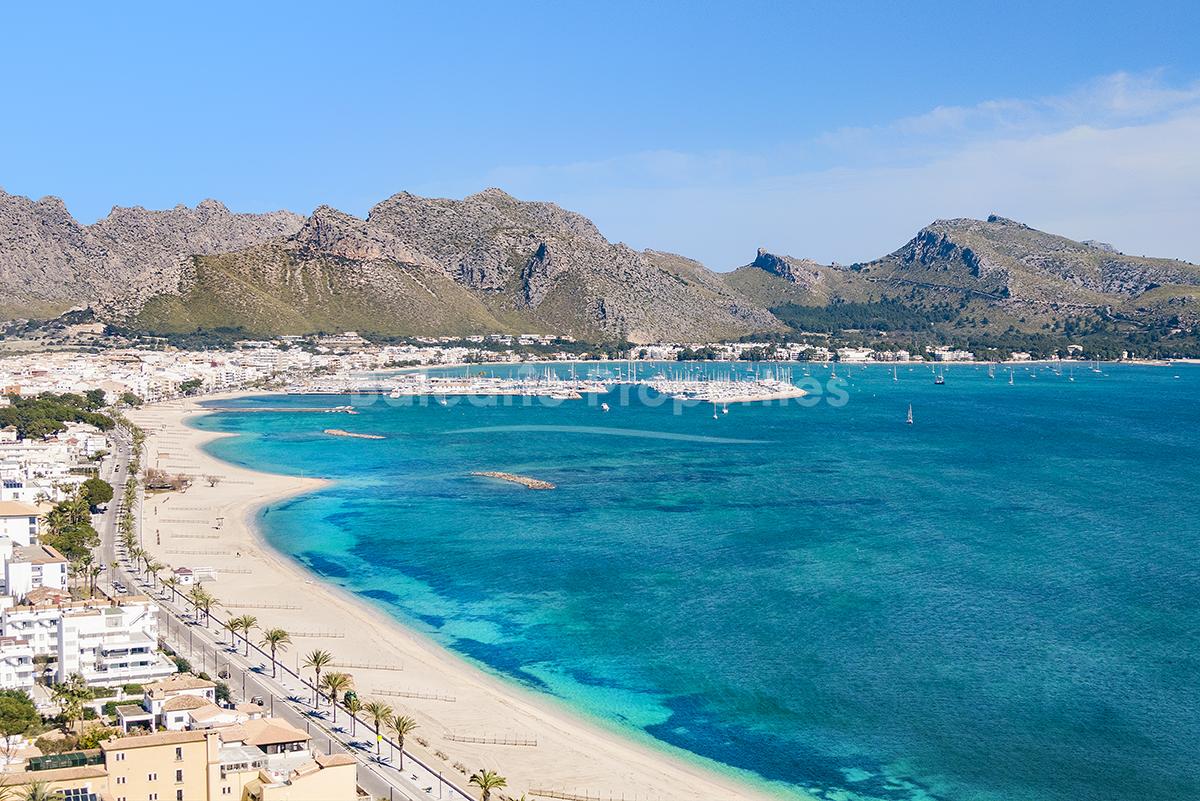
The setting does a lot of the work. The bay is sheltered enough for calm, reliable sailing conditions most of the year, the beach is long and sandy without the crowding found further south in peak season, and the Tramuntana range, a UNESCO World Heritage landscape, provides a backdrop that is hard to overstate until you have stood on the Pine Walk and looked at it. Add a marina that stays active outside the summer months and a restaurant scene with real depth, and it is easy to see why so many buyers who came for a holiday ended up looking for something more permanent.
Puerto Pollensa on the map
Everything here is close. Tap a pin to read about the place, filter by what you are looking for, or choose a card below the map to jump to it.
Positions are approximate. Map data © OpenStreetMap contributors.
Lifestyle
Beaches
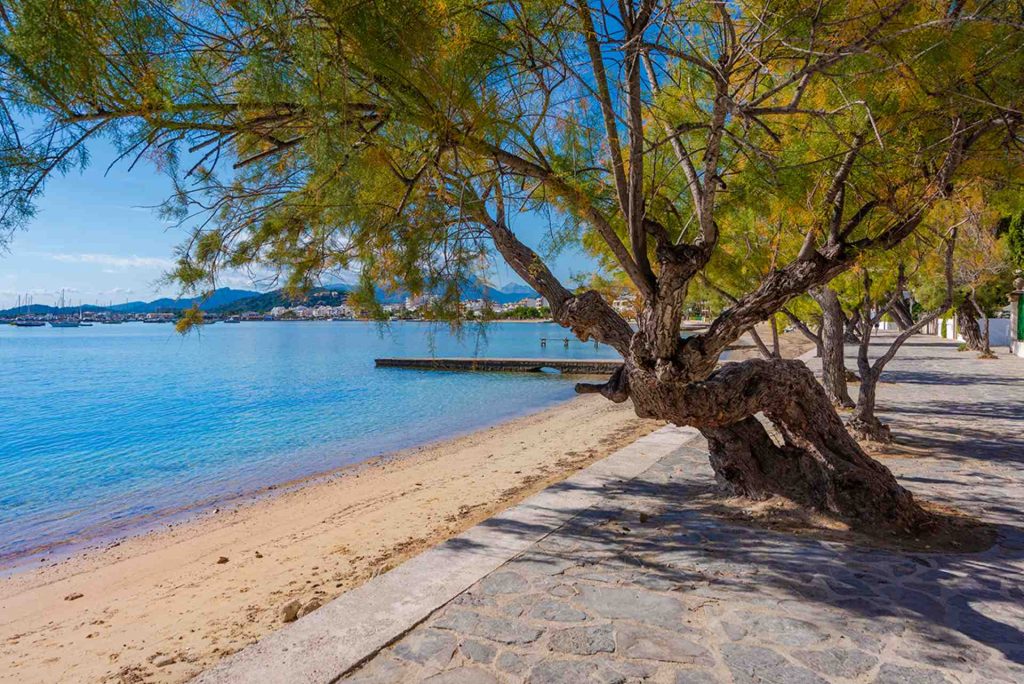
The main beach curves around the full sweep of the bay, a long, sandy stretch that stays swimmable and family-friendly even in August, backed for much of its length by the pine-lined promenade that gives the Pine Walk its name. For something smaller and quieter, Cala Sant Vicenç is a short drive over the hill, with a cluster of coves that suit a slower morning better than the main beach does.
Restaurants and cafés
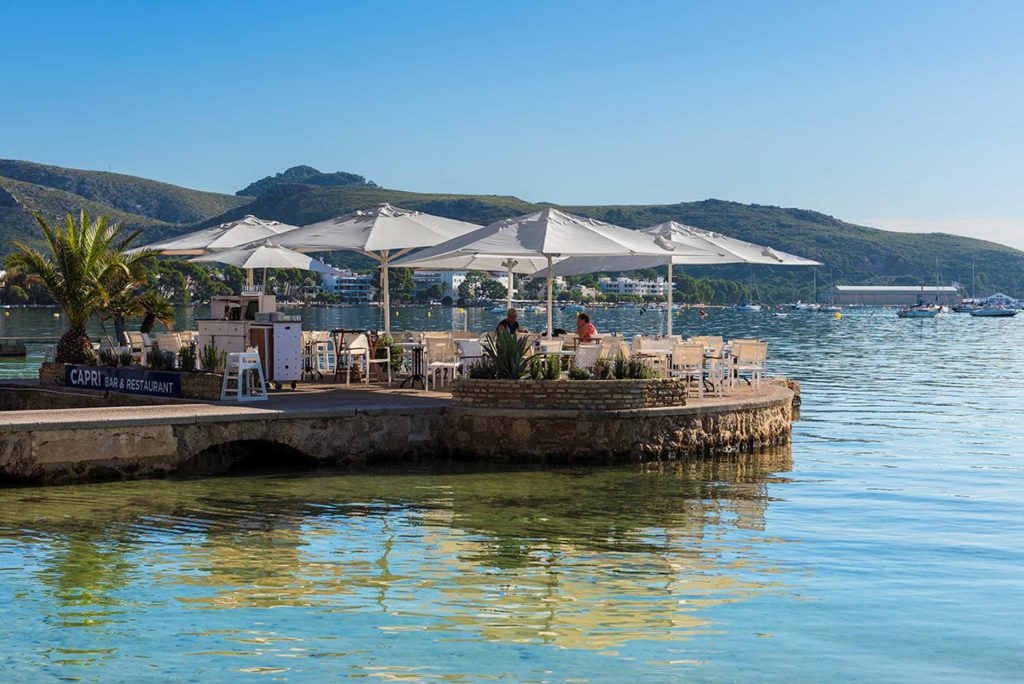
The dining scene stays open well beyond the summer season, with a concentration of restaurants around the Moll Vell and Moll Nou piers. Seafood is the strong suit, and the port’s restaurants draw a loyal local crowd as much as visitors. The Pine Walk itself is lined with cafés that work equally well for a morning coffee or an evening drink looking out over the bay.
Schools
Families relocating with children have one clear local option: Mallorca International School, based in Crestatx near Sa Pobla, roughly 20 minutes’ drive from Puerto Pollensa, teaching the British curriculum from early years through secondary. It is currently the only international school serving the north of the island; families wanting a wider choice of curriculum (IB, French, German) are generally looking at a 45 to 60 minute commute toward Palma. Pollença town also has Spanish and Catalan public schooling, which some international families choose for the language immersion.
Outdoor activities
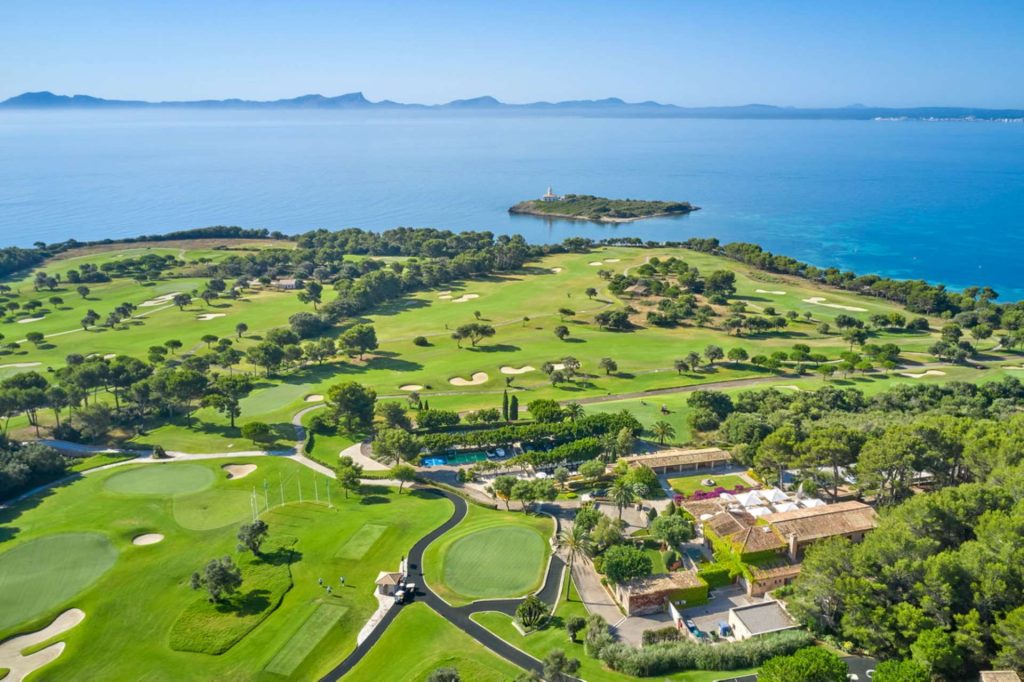
Sailing and watersports run through the Reial Club Nàutic Port de Pollença, with a youth sailing school and a full events calendar. Golf is close on both sides: Golf Pollença, a 9-hole course dating to 1986, sits between the port and the town, while the 18-hole Alcanada course, regularly ranked among the best in Europe, is a short drive around the bay. Hikers have the Bóquer Valley trail and the wider Tramuntana range beyond it; cyclists use the coastal roads and the mountain climbs beyond Pollença in roughly equal measure.
Community and international life
Puerto Pollensa’s international community is not a recent arrival. British, German and Scandinavian residents have been coming here for decades, and it is common to meet families on their second or third generation of returning, some now owning the property their parents or grandparents first bought. English and German are widely spoken in shops and restaurants, and the town supports a year-round social scene rather than one that only exists in July and August.
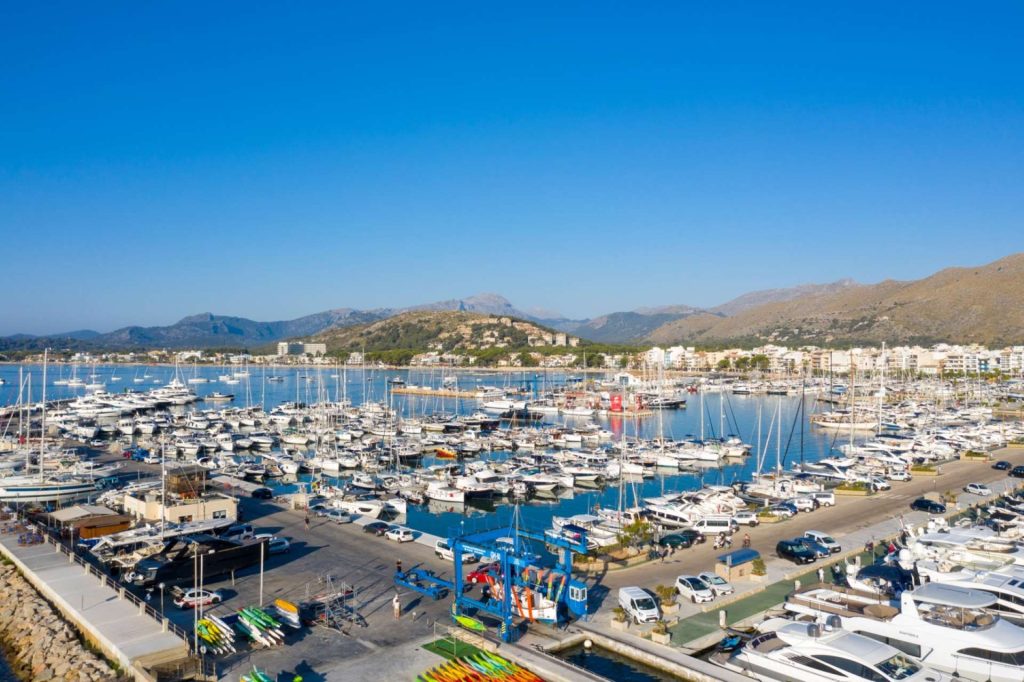
Much of that social life centres on the water: the sailing club runs racing and events through the year, the Pine Walk and the restaurants around the piers act as informal meeting points, and the mid-July Patrona and Carme festivities bring residents and visitors together for open-air concerts and processions.
Puerto Pollensa property prices in 2026
Apartments in Puerto Pollensa were listed at an average of €6,615 per m² in October 2026, and houses at €6,144 per m². Comparing the twelve months to September 2024 with the twelve months to September 2026, average asking prices rose by about 9% for apartments and 14% for houses. Distance to the sea, views and the exact street matter more to price here than size. For the full price history since 2022 and prices area by area, see property prices in Port de Pollença.
Asking prices in Puerto Pollensa since 2023, € per m²
Quarterly, Q4 2023 to Q3 2026. Hover or tap the chart to read each quarter.
Show the quarterly figures
| Quarter | Apartments | Houses |
|---|---|---|
| Q4 2023 | €5,334 | €5,091 |
| Q2 2024 | €5,821 | €5,223 |
| Q4 2024 | €5,657 | €5,258 |
| Q2 2025 | €5,629 | €5,305 |
| Q4 2025 | €6,428 | €5,605 |
| Q2 2026 | €6,349 | €6,119 |
| Q3 2026 | €6,190 | €5,961 |
What apartments are listed for
Apartments for sale in Puerto Pollensa by asking price, October 2026 (124 listings).
Most apartments on the market sit between €300,000 and €600,000, with the middle listing in the €500,000 to €600,000 band, and a smaller premium tier of frontline and sea-view homes above €1 million. Asking rents for apartments average around €23 per m² a month, which against purchase prices gives an indicative gross yield of about 4.2% before costs, taxes and empty periods.
Source: Casafari Area Insights, average asking prices per m² of active listings in the Casafari area of Puerto de Pollença, outliers excluded. Data retrieved 31 October 2026. Asking prices are not final sale prices. For a side-by-side comparison with the old town, see Pollença or Port de Pollença: where to buy property in 2026. For the island-wide picture, see Mallorca property prices by area.
Best areas in Puerto Pollensa
Puerto Pollensa is not a single uniform neighbourhood: the seafront promenade and the residential areas behind it each have their own character and their own kind of buyer. Here is how the main areas compare (see the full range of property in Puerto Pollensa for more).
Pine Walk
The most iconic address in Puerto Pollensa: a seafront promenade lined with mature pine trees, home to the town’s frontline apartments and penthouses. Direct beach access and uninterrupted bay views make this the most sought-after part of the market. View properties on the Pine Walk
Llenaire
The main destination for buyers after a villa near the beach, a short walk from the main stretch of sand with a noticeably quieter, more residential feel than the town centre. Plots tend to be generous, often 1,000 m² or more, with private pools and gardens standard, and well-priced properties here have a reputation for not staying on the market long. View properties in Llenaire
Gotmar
Close to both the port and the beach, with a mix of villas, apartments and smaller homes set among mature gardens and pine trees. Part of the area sits on flat ground; part rises gently up the hillside, giving a range of sea and mountain outlooks within the same neighbourhood. View properties in Gotmar
Bóquer
Sits just behind the Pine Walk and climbs toward the hillside, with the road to Formentor running through it. Lower down, residential complexes with community pools suit lock-up-and-leave ownership; further up, detached villas get elevated views over the bay and town. It shares its name with the Bóquer Valley trail just beyond it.
Bellresguard
A smaller, quieter enclave known for security and low-maintenance ownership: the natural choice for buyers who want a lock-up-and-leave second home rather than a project. View properties in Bellresguard
Things to know
July and August bring the town to its busiest, especially around the mid-July Patrona and Carme festivities, when the road between Pollença and the port can be congested at peak times. Outside those two months the town is markedly quieter but rarely feels closed: restaurants and services stay open through the shoulder seasons.
| Palma Airport | around 50 km, about 45 to 50 minutes by motorway |
| Pollença town | about 6 km, around 10 minutes |
| Buses | regular connections to Palma, Alcúdia, Sóller and Formentor |
| Holiday rentals | check the ETV licence early: it affects what a property can be used for and its rental potential |
Who is it for?
| Families | A walkable town with a beach on the doorstep; schooling means the international school in Crestatx or a longer commute toward Palma. |
| Retirees | An established international community and a pace of life that slows noticeably outside summer. |
| Second-home owners | Lock-and-leave apartments and quieter enclaves such as Bellresguard. |
| Investors | Rental potential around the port, depending on ETV licence availability. |
| Sailors | A sheltered bay and an active sailing club in town, including a youth sailing school. |
| Cyclists and walkers | Flat coastal roads, Tramuntana climbs and the Bóquer Valley within easy reach. |
Properties
Homes in Puerto Pollensa
From Pine Walk apartments to Llenaire villas. Our team is based in Pollença town, so get in touch directly with any questions about current availability.
Explore propertiesProperties by area: Pine Walk · Llenaire · Gotmar · Bellresguard · Pollença
Discover more of Mallorca: Pollença · Alcúdia · Formentor · North Mallorca area guide · all Mallorca area guides
FAQs
Yes. Unlike some more purely seasonal resorts, restaurants, shops and services stay open through the quieter months, and the town has a year-round international community rather than one that empties out after summer.
In October 2026 apartments in Puerto Pollensa were listed at an average of €6,615 per m² and houses at €6,144 per m², according to Casafari. Most apartments for sale were priced between €300,000 and €600,000.
Yes. Comparing the twelve months to September 2024 with the twelve months to September 2026, average asking prices rose by about 9% for apartments and 14% for houses.
Mallorca International School in Crestatx, about 20 minutes away, is currently the only international school serving the north of the island, teaching the British curriculum. Families wanting other curricula generally commute 45 to 60 minutes toward Palma.
Puerto Pollensa is the coastal port area; Pollença is the historic inland town about six kilometres away. Pollença has a traditional old-town character, while Puerto Pollensa is built around the bay and the beach. Apartments in the port are listed at around 40% more per m² than in the town.
Yes. The bay is sheltered and calm for most of the year, and the Reial Club Nàutic Port de Pollença runs an active sailing programme, including a youth sailing school, alongside the town’s other watersports.
Around 50 km, roughly 45 to 50 minutes by motorway under normal traffic conditions.
Not necessarily. The town centre and the Pine Walk are walkable, and regular buses run to Palma, Alcúdia, Sóller and Formentor. A car becomes more useful in hillside areas such as Bóquer, or for golf, hiking and the wider island.
Living in Santa Maria del Camí
Nestled in the centre of Mallorca is Santa Maria, a small, charming town and municipality in the north-east of Palma. This quaint town manages to feel both timeless and contemporary with a compact historic centre, lively weekly markets, close access to the airport and Palma, and is surrounded by the island’s best vineyards. With an increasing number of high-end properties, it’s become a hot-spot for people seeking a quieter, authentic Mallorcan lifestyle without forgoing convenience, authenticity or luxury.
Santa Maria, a village with charm and character
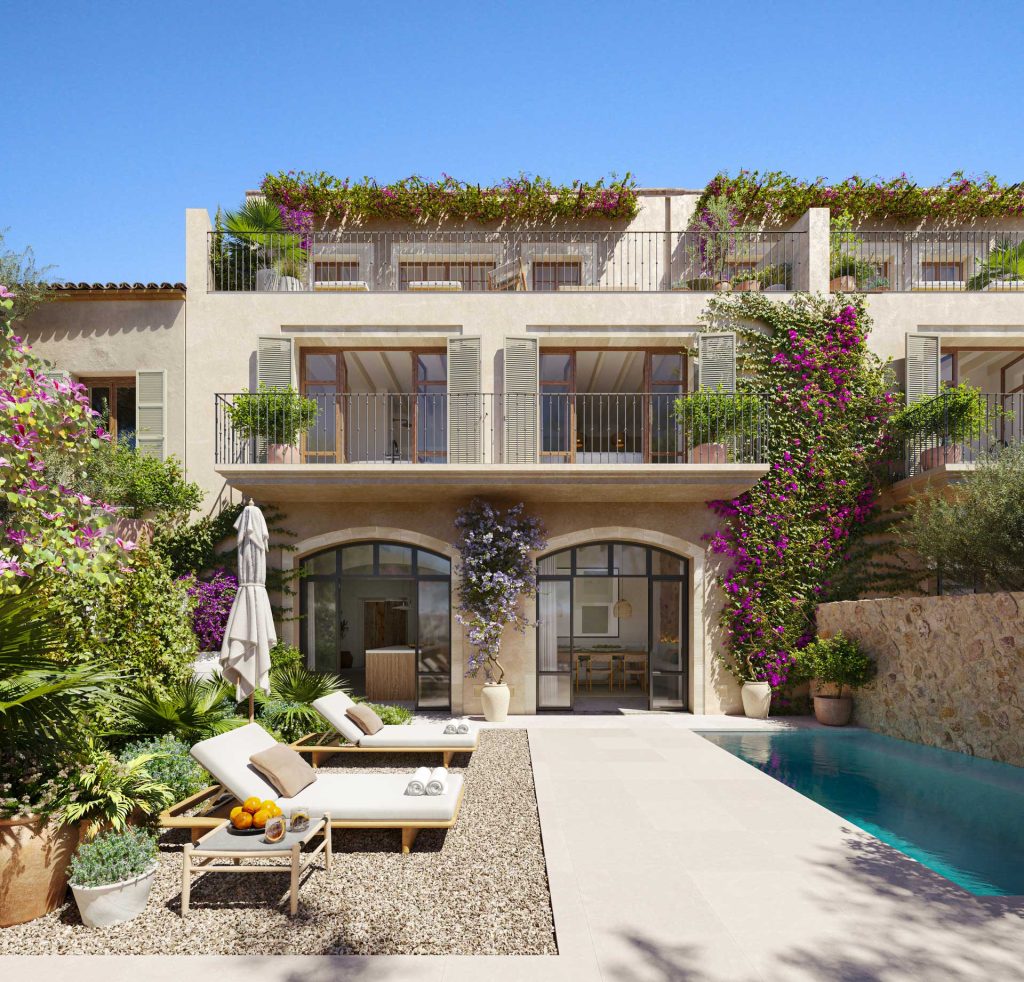
Meticulously renovated townhouse with mountain views, pool and roof terrace in Santa Maria. €2,450,000. View property
Santa Maria retains a distinctly Mallorcan character with white and stone fronted townhouses clustered around a pretty main square, a 13th-century parish church with its public plaza, narrow streets lined with small shops, bakeries, cafés and tapas bars. The town’s social life is active and public, locals gather in the square, the weekly market fills the streets on Sundays and cultural events and fiestas feature throughout the year. For buyers relocating from larger cities, the scale is immediately attractive, everything is walkable, neighbours are familiar faces, and there’s a real sense of community.
Santa Maria location and connectivity
Santa Maria is centrally located within easy reach of Palma and the airport, making it ideal for those who want island tranquillity but need convenient access to the city and international connections. Another key advantage is that Santa Maria is part of the Serveis Ferroviaris de Mallorca (Mallorca rail network), with a reliable train service to Palma and nearby towns, a practical option for commuters or those who prefer to reach the city without driving. In addition, the close proximity to the Serra de Tramuntana mountains provides excellent hiking and cycling routes right on the doorstep, while the island’s western and northern beaches are just a short drive away.
Distance and travel times
- To Palma city centre: about 12–16 miles (20–25 km), typically a 20–30 minute drive depending on traffic.
- Regular train service to Palma takes roughly 20–25 minutes.
- To Palma de Mallorca Airport (PMI): about 12–14 miles (18–22 km), usually a 15–25 minute drive depending on the time of day.
Property types in Santa Maria
The property mix in and around Santa Maria del Camí is diverse, from classic townhouses to traditional fincas scattered across the surrounding countryside set in olive groves or almond orchards. Historic townhouses are usually made from traditional stone or rendered townhouses in the centre, often featuring classic internal courtyards and terraces.
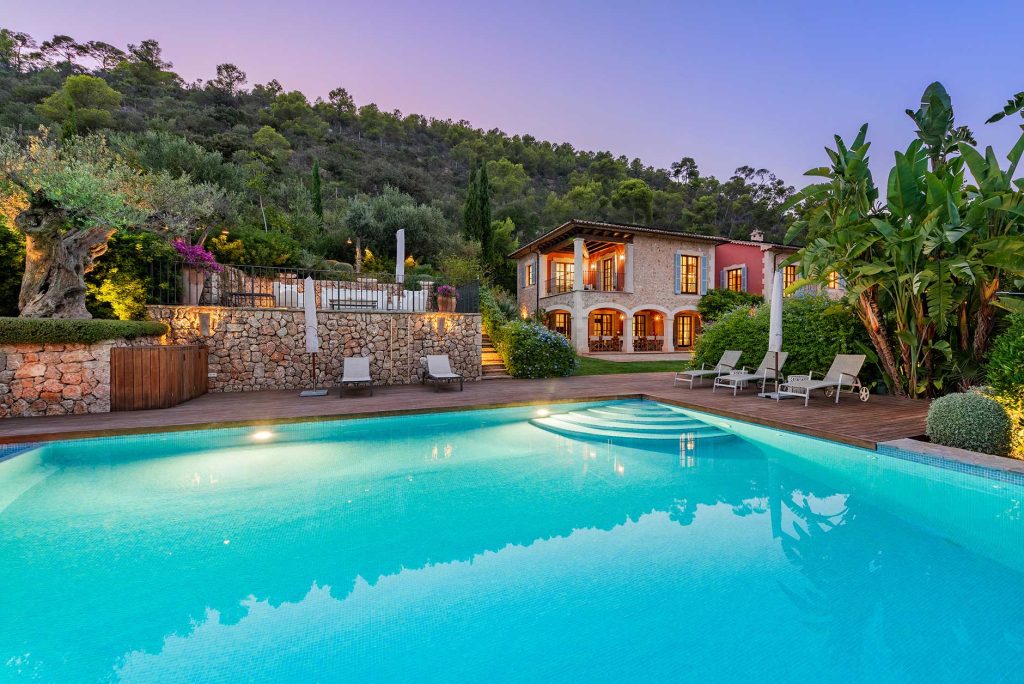
Eco friendly finca with holiday license with far reaching views between Santa Maria and Bunyola. €5,995,000. View property
Many of the fincas have been beautifully restored, blending original features – beamed ceilings, original window shutters and traditional Mallorcan stone walls. However, there is plenty of room for luxury villas, mainly new-builds or refurbished villas, often designed with Mediterranean minimalism, large indoor-outdoor living spaces, designer kitchens, infinity pools and landscaped gardens. Some also include smart-home functionality, private gyms and spa facilities. But for those who want to downsize, small apartments are available close to the centre and new developments that would appeal to those seeking lower-maintenance homes in the town.
Discover our selection of properties in Santa Maria
Daily life in Santa Maria
The town’s small size makes it appealing for those who value a slower pace, morning coffee in the plaza, cycling to nearby vineyards, and weekend markets and cultural events. Daily life combines rural calm with practical amenities. Supermarkets, a selection of independent grocers, specialist food shops and weekly markets provide fresh produce, primarily olives, citrus fruits and seasonal vegetables. Cafés and bistros serve Catalan and Mallorcan cuisine, while a few higher-end restaurants celebrate local wines and excellent farm-to-fork produce.
Health and education services are readily accessible in neighbouring towns and Palma. Santa Maria has public primary and secondary schools serving residents, plus municipal nursery options. The Montessori School of Mallorca in Santa Maria is a private, co-educational international school, offering education from early childhood through to secondary. There also several other international schools throughout Mallorca, including Green Valley, Queen’s College, Baleares International College (BIC) and Agora.
The wine region
While Santa Maria is not a wine town in the same way as nearby Binissalem, it sits in the centre of a rich winemaking area. Binissalem DO (Denominación de Origen) is one of Mallorca’s most respected wine regions, renowned especially for indigenous red grapes like Manto Negro and Mantonegro blends, alongside international varieties adapted to the island’s climate and terrain. The region is known for small to medium-sized producers rather than massive industrial wineries. Many bodegas are open for visits and tastings, offering intimate tours, food-pairing experiences and the chance to meet winemakers and learn about traditional and modern wine-making techniques.
Investment and market considerations
Santa Maria del Camí offers a compelling mixture of traditional Mallorcan life, easy access to Palma, a strong local wine culture and attractive opportunities for luxury living. Whether you’re drawn to a restored finca among olive trees, a stylish townhouse near the plaza, or a contemporary villa with designer finishes and a private pool, the area provides a balanced, high-quality lifestyle rooted in local culture and nature. For anyone looking to combine authentic island living with refined comforts and proximity to the countryside, Santa Maria is an appealing place to call home.
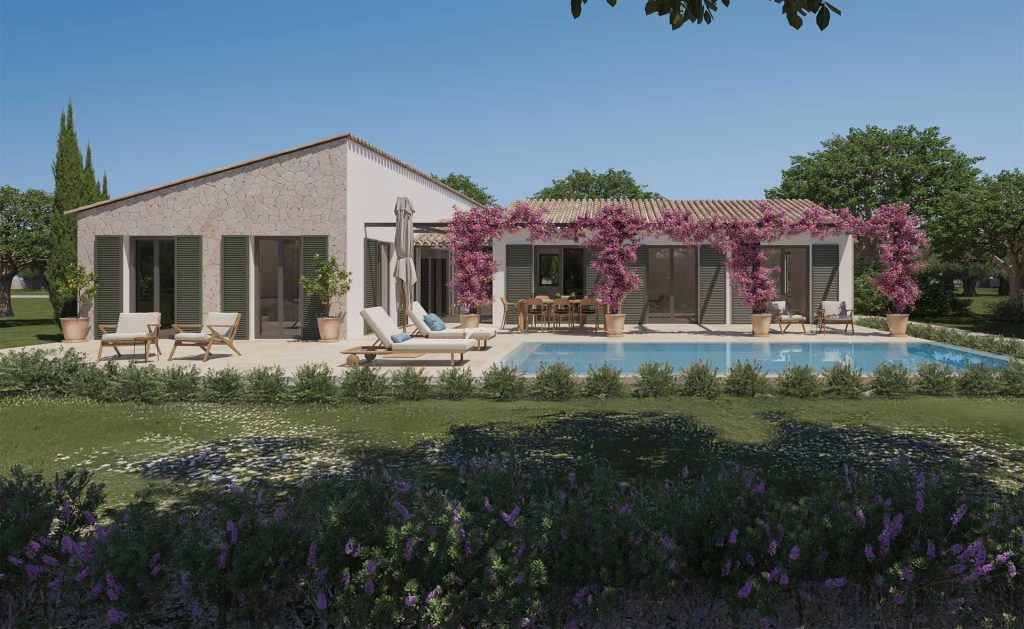
Build your dream home: Land with building license in Santa Maria €790,000. View property
Santa Maria del Camí attracts various buyer profiles, local families, international retirees, second-home owners, and investors seeking holiday rental potential. Market dynamics generally reflect Mallorca’s broader trends, steady demand for well-located, well-presented properties with strong interest in restored fincas and designer villas.
Factors to consider
- Rental potential: Proximity to Palma and the airport makes the town attractive for short-term and seasonal rentals, though local regulations on tourist rentals should be checked.
- Long-term value drivers: Historical charm, central location, access to transport and the wine-tourism appeal are positive value drivers. Quality of renovation and land size are crucial for resale value.
- Legal and buying process: Non-resident buyers should work with local legal advisors to navigate taxes, permits, and any renovation regulations, especially when dealing with listed or historic properties.
Practical tips for prospective residents or buyers
- Visit at different times of year to understand seasonal life, summers are lively and winters more peaceful and authentic.
- Explore both the town centre and surrounding countryside to compare property types and lifestyle options.
- Meet local producers, wineries, olive growers, and chefs, to get a sense of community and local produce.
Continue exploring: see the wider Central Mallorca area guide, compare Mallorca property prices by area and read about living in Mallorca year-round.
Looking to buy or sell in Mallorca?
Balearic Properties is an established, award-winning agency partnered with Savills International.
Is Mallorca a Good Property Investment in 2026?
Market data checked: 18 September 2026. Sources include Spain’s INE Housing Price Index (7 September 2026), the Balearic Government’s new Housing Observatory (17 September 2026), Idealista’s August 2026 asking-price index and the Registrars’ Q2 activity update (25 August 2026). Asking prices, transaction prices and official price indices measure different things and are identified separately below.
Mallorca has firmly established itself as one of Europe’s most desirable property markets, but in 2026 the conversation has shifted. The island is no longer an emerging opportunity — it is a mature, high-demand destination where buyers must be more strategic.
For many investors, the key question is no longer whether Mallorca is attractive, but whether it still offers room for growth and long-term value. The answer is yes, but only if you understand how the market has evolved and what now drives it.
A Market Defined by Stability, Not Speculation
Investment Starts with the Right Area
Mallorca is a collection of micro-markets rather than one investment market. Compare North Mallorca, Southwest Mallorca, Palma, Northwest Mallorca and Central Mallorca, then use our property price comparison by area to put those lifestyle differences into market context.
Over the past decade, Mallorca has transitioned from a relatively accessible Mediterranean market into a premium, supply-constrained environment. Prices have risen steadily, particularly in prime areas, but what is more important is how they have risen.
Unlike markets driven by rapid speculation, Mallorca’s growth has been underpinned by structural demand. Even during periods of economic uncertainty, property values have remained stable or continued to increase at moderate rates.
The latest available indicators still point to rising prices, but the rate depends heavily on the dataset. Spain’s official Housing Price Index recorded a 13.7% year-on-year increase for the Balearic Islands in Q2 2026, while Idealista’s asking-price series showed a 5.1% annual increase in August 2026. These measures are not directly comparable: the official index tracks price change across the region, while portal data reflects advertised stock. Together, they reinforce the need to use dated, source-specific evidence rather than a single headline growth rate.
For investors, this type of environment offers something increasingly rare: predictability.
September 2026 market check. The latest official evidence points to continued price pressure, but also shows why headline asking prices need context. The INE Housing Price Index published on 7 September 2026 recorded a 12.2% annual increase nationally in Q2, while the Balearic Islands registered 13.7%. Meanwhile, Idealista’s August 2026 index placed Balearic asking prices at €5,595/m², up 5.1% year on year and at a new high in that series.
There is an important caveat. On 17 September, the Balearic Government’s new Housing Observatory reported that advertised housing offers across the islands were around 38% above actual transaction prices. That does not mean every listing is overpriced by 38%; it means portal asking-price data and completed-sale data should not be treated as interchangeable.
Activity is also more nuanced than prices alone suggest. The Spanish Registrars’ 25 August 2026 update showed the national Real Estate Activity Index down 1.9% quarter on quarter in Q2, with the sales component down 2.6%, even as prices continued to rise. For Mallorca buyers, this reinforces the importance of looking at the specific micro-market and comparable completed transactions rather than extrapolating from a single island-wide percentage.
The Role of International Buyers
Foreign-buyer context. The Balearic Housing Observatory’s September release also shows the different price segment in which international demand operates: for 2025, the average purchase price reported for foreign buyers was €548,662, compared with €304,120 for Spanish buyers. This is historical transaction evidence rather than a 2026 forecast, but it helps explain why international demand has an outsized influence on the upper end of the Balearic market.
One of the most important factors supporting Mallorca’s property market is its international buyer base. Unlike many regions in Spain, demand here is not primarily driven by local purchasers, but by a diverse mix of foreign investors and second-home buyers.
German, Scandinavian and British buyers have traditionally dominated the market, but in recent years there has been a noticeable increase in interest from the United States and other international markets.
What makes this demand particularly strong is that it is not purely financial. Buyers are not simply looking for returns — they are looking for lifestyle, security and long-term usability. Many intend to use the property themselves, either seasonally or permanently.
This creates a much more resilient market, less vulnerable to short-term economic fluctuations.
Limited Supply and Structural Constraints
If there is one element that truly defines Mallorca as an investment destination, it is the limited availability of land.
The island operates under strict planning regulations, particularly in rural and coastal areas. Large portions of land are protected, and new development is tightly controlled. While this can be frustrating from a development perspective, it is precisely what protects long-term value.
In simple terms, demand continues to grow, but supply cannot expand at the same rate.
This imbalance is not temporary. It is structural, and it is one of the main reasons why property in Mallorca has proven to be such a strong long-term asset.
Not All Areas Perform Equally
A common mistake among investors is to view Mallorca as a single market. In reality, it is made up of multiple micro-markets, each with its own dynamics.
Asking-price data and local market evidence show substantial differences between municipalities and micro-locations. Areas such as the southwest, Palma and parts of the north often sit at higher price points because of accessibility, infrastructure, limited supply and international demand, but performance varies by period and property type.
Other areas may offer lower entry prices and a different buyer profile. Liquidity and future appreciation should be assessed property by property rather than assumed from the area label alone.
For this reason, location and property quality should be assessed together: micro-location, legal status, condition, orientation and long-term usability can all materially affect value.
The Rental Market: Opportunities and Limitations
Rental demand in Mallorca remains strong, particularly for long-term rentals in urban areas such as Palma and established residential zones.
However, the regulatory environment has changed significantly in recent years. Short-term holiday rentals are now heavily restricted, and obtaining licences can be complex or, in some areas, impossible.
This has shifted the investment landscape. While short-term rental strategies can still be viable in specific cases, long-term rentals often provide a more stable and predictable return.
Investors need to approach this segment with a clear understanding of the legal framework, rather than relying on outdated assumptions.
Lifestyle as a Core Investment Driver
What truly differentiates Mallorca from many other property markets is the role that lifestyle plays in sustaining demand. The island offers a combination of climate, safety, accessibility and natural beauty that is difficult to replicate elsewhere in Europe. This creates a type of demand that goes beyond purely financial considerations.
Even when yields fluctuate or growth slows, the intrinsic value of living in Mallorca remains high. This is why the market continues to attract buyers even at elevated price levels.
In many ways, Mallorca should not be viewed as a traditional investment market, but as a hybrid between lifestyle and capital preservation.
Risks and Market Realities
No investment is without risk, and Mallorca is no exception.
The most significant factor to monitor is regulation. There is increasing political pressure in the Balearic Islands to address housing affordability, which could lead to changes affecting foreign buyers or taxation.
Additionally, the high entry price of the market means that margins for error are smaller. Buying the wrong property or overpaying in a secondary location can limit future returns.
New-build and luxury supply varies significantly by municipality and development. Rather than assuming saturation, buyers should compare current competing stock, planning pipeline, specification and resale evidence in the specific micro-market.
So, Is Mallorca Still a Good Investment?
The answer depends entirely on the investor’s approach.
Mallorca is no longer a market where quick gains are easily achieved. It does not reward speculation or short-term strategies.
However, for investors who prioritise long-term stability, capital preservation and consistent demand, it remains one of the strongest property markets in Europe.
The key is to adjust expectations.
This is not about finding undervalued assets in a rising market. It is about securing a position in a market that is already established and likely to remain in demand.
A Long-Term Perspective
Ultimately, investing in Mallorca is less about timing the market and more about understanding it.
The island offers a rare combination of limited supply, international demand and lifestyle appeal. These factors create a level of stability that is increasingly difficult to find elsewhere.
For those willing to take a long-term view, Mallorca continues to represent not just a good investment, but a strategic one.
Continue your research: compare Mallorca property prices by area, review the tax considerations for foreign buyers and follow the Balearic Islands Buying Guide.
Considering Investing in Mallorca?
At Balearic Properties, we work with buyers who are looking beyond short-term opportunities and focusing on long-term value.
Whether the goal is a second home, a relocation or a carefully selected investment, understanding the nuances of the market is essential.
Because in Mallorca, the best decisions are rarely the most obvious ones.
Living in Mallorca Year-Round: What Life Is Really Like Beyond the Summer
Mallorca is often defined by its summer — long days, turquoise waters and a rhythm shaped by the Mediterranean sun.
But to understand the island properly, you have to step beyond that season. Because Mallorca is not built for a few months of the year. It is a place designed, almost quietly, for continuity.
Living in Mallorca year-round is not simply about staying longer. It is about experiencing how the island functions when it is no longer performing for visitors, but settling into its natural pace.
And that is where its real value begins to emerge.
When the Island Slows Down — and Becomes Itself
Where Does Year-Round Life Work Best?
The experience changes significantly by location. Explore North Mallorca for established towns and coastal communities, Palma for the island’s deepest year-round infrastructure, Southwest Mallorca for international services and connectivity, Central Mallorca for village and country life, and Northwest Mallorca for Tramuntana living. Each guide includes Iris Grünewald’s expert perspective for buyers considering the area as a real home rather than only a holiday destination.
By late September, a subtle shift takes place.
The intensity of summer recedes. Roads become quieter. The coastline feels more open. Restaurants and cafés return to a more local rhythm. The island, in a sense, exhales.
For residents, this is not the end of the season — it is the beginning of a different one.
Autumn in Mallorca is often overlooked, yet it is one of the most balanced times of the year. The sea remains warm, the temperatures soften, and the landscape takes on a calmer, more grounded tone.
Winter follows not with harsh conditions, but with clarity. Light becomes sharper. Air feels cleaner. The Serra de Tramuntana reveals a different character — less dramatic, more contemplative.
Spring, in turn, reawakens the island gradually, without the urgency that defines other destinations.
This seasonal variation is not extreme — and that is precisely the point. Mallorca offers change without disruption.
Climate and Light: More Than Just Good Weather
Mallorca’s climate is frequently summarised as “mild” or “sunny”, but these descriptions miss something essential.
What defines the island is not simply temperature, but consistency of light and outdoor possibility.
With over 300 days of sunshine per year, even the winter months allow for an outdoor life that continues rather than pauses.
- January and February often bring clear skies and temperatures between 12–18°C
- Spring arrives early, with longer days and increasing warmth
- Summers are hot, but moderated by sea breezes
- Autumn retains warmth without intensity
Unlike northern European climates, where winter imposes a clear break in lifestyle, Mallorca maintains continuity. Life does not move indoors completely. Movement, social life and daily routines remain connected to the outside.
This has a subtle but significant effect on how people live.
Time feels less fragmented. Days feel longer, even in winter. And the boundary between “seasonal living” and “year-round living” begins to dissolve.
A Stable, Year-Round International Community
Mallorca today is not just a holiday destination — it is a functioning, international place to live.
Over the past decade, the island has attracted a growing number of full-time residents, including:
- Northern European families relocating permanently
- Entrepreneurs and remote professionals
- Second-home owners transitioning into longer stays
Areas such as Pollensa, Palma and the southwest have developed into year-round communities, where services, restaurants and social life continue well beyond the summer months.
This creates a rare balance.
On one hand, Mallorca retains a strong local identity, with traditions, markets and a distinct cultural rhythm. On the other, it offers an international environment where integration is relatively natural.
For many residents, this duality is one of the island’s strongest attributes.
Everyday Living: Simplicity Without Sacrifice
There is a common assumption that island living requires compromise — a reduction in services, connectivity or convenience.
Mallorca challenges that perception.
In practical terms, daily life on the island is both comfortable and efficient:
- An international airport with year-round connections to major European cities
- High-quality public and private healthcare
- Reliable infrastructure and services
- Access to international education
But what changes is not what is available — it is how it is experienced.
Daily routines become less rushed. Distances feel shorter. Activities are less compressed into limited time.
There is a shift away from urgency, without losing functionality.
Education and Family Life in Mallorca
For families considering relocation, education is often one of the defining factors.
Mallorca offers a well-established network of international schools, making it a viable long-term option for those moving from abroad.
Among the most recognised are:
- The Academy International School (British curriculum)
- Bellver International College
- Baleares International College
- Rafa Nadal School
These institutions provide continuity in education while also benefiting from the island’s environment.
However, what distinguishes education in Mallorca is not only the schools themselves, but the broader context in which children grow up.
- Smaller class sizes
- Multicultural environments
- Strong emphasis on languages
- Regular exposure to outdoor activities
Children spend more time outside, less time in transit, and often develop a different relationship with both nature and daily routine.
For many families, this represents a significant shift — not just academically, but in terms of overall quality of life.
Winter: The Island at Its Most Authentic
Winter in Mallorca is often misunderstood by those who only know the island in summer.
It is quieter, certainly. But it is also more defined.
Without the intensity of tourism, the island’s structure becomes clearer. Villages return to their natural rhythm. Local life becomes more visible. The landscape feels more present.
In Palma, cultural life continues throughout the year. Restaurants, galleries and social spaces remain active, though at a more measured pace.
In the countryside and coastal areas, winter introduces a different kind of atmosphere — one that is less about activity and more about presence.
For many long-term residents, this is when Mallorca feels most real.
A Lifestyle Built Around Continuity
Perhaps the most distinctive aspect of living in Mallorca year-round is not any single feature, but the continuity it offers.
The ability to remain outdoors in every season changes the structure of daily life.
- Walking, cycling and hiking remain accessible year-round
- Outdoor dining does not disappear entirely in winter
- Social life adapts, but does not stop
This continuity removes the sense of interruption that characterises life in many other parts of Europe.
There is no clear divide between “summer life” and “winter life”. Instead, there is a gradual transition — one that allows for stability rather than disruption.
The Trade-Offs: Subtle but Real
Living in Mallorca full-time does require adjustment.
Some areas become noticeably quieter during the winter months. Certain seasonal businesses close or reduce hours. Outside Palma, a car is often necessary.
These factors are not limitations as much as they are structural characteristics of the island.
For those expecting a constant urban intensity, they may feel like compromises.
For those seeking a more balanced rhythm, they are often seen differently — as part of what defines Mallorca’s appeal.
From Visitor to Resident
One of the most interesting aspects of Mallorca is how perceptions change over time.
For visitors, the island is defined by experience — beaches, restaurants, landscapes.
For residents, it becomes something else.
Familiar routes gain meaning. Seasons create rhythm. Daily life develops a sense of continuity that is difficult to replicate elsewhere.
Mallorca does not reveal itself immediately. But over time, it becomes less of a destination and more of a framework for living.
A Different Way of Living
Living in Mallorca year-round is not about finding a better version of the same lifestyle.
It is about shifting to a different structure altogether.
Less acceleration.
More consistency.
Less fragmentation.
More presence.
In a world that increasingly prioritises speed and density, Mallorca offers an alternative — one that is quieter, but often more sustainable in the long term.
Considering a Move to Mallorca?
At Balearic Properties, we work with clients who are not just searching for a property, but for a long-term lifestyle decision.
From traditional fincas in the countryside to modern villas by the sea and apartments in Palma, Mallorca offers a range of possibilities — each aligned with a different way of living on the island.
The decision to live here is rarely impulsive. But once made, it is rarely reversed.
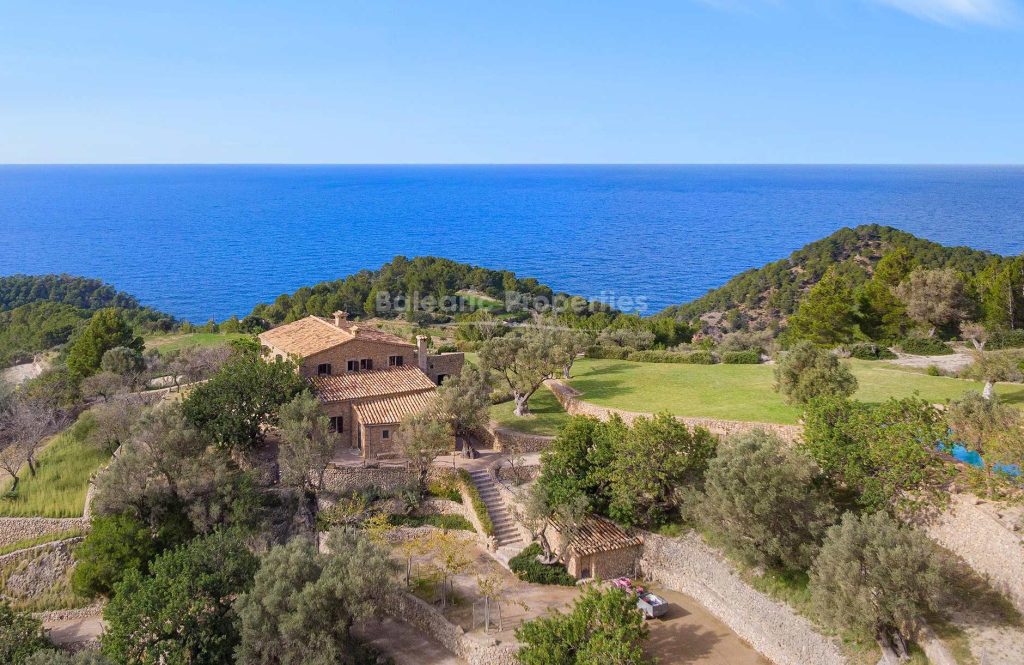
Living in Palma de Mallorca: Neighbourhoods and Property Prices
Over the past decade, Palma has become one of Europe’s most sought-after cities to live in. The Mallorcan capital pairs a historic Mediterranean centre with a cosmopolitan cultural scene, and it does so on a human scale: the Gothic cathedral stands next to the sea, a modern marina runs along the bay, and most of daily life happens within a short walk, cycle or drive.
For international buyers, remote professionals and families relocating to the island, the appeal is the balance. Centuries-old architecture, theatres, galleries, markets, international restaurants and cafés all sit close to the city beaches, and the Serra de Tramuntana is a short drive away.
Palma at a glance
- Where
- Capital of Mallorca, on the Bay of Palma
- From Palma Airport
- Around 15 minutes by car to the centre
- Flights
- Direct to the main European capitals; seasonal routes to New York (Newark) and Abu Dhabi
- Apartment asking price
- €5,838 per m² on average, September 2026
- Price trend
- +18.7% since November 2023; +4.1% in the last year
- Time to sell an apartment
- Around 72 days on the market on average
Why Palma appeals to international buyers
Shopping in Palma mixes international luxury brands, Spanish high-street names and independent boutiques in the narrow streets of the Old Town, alongside local artisan shops. Passeig del Born and Avinguda Jaume III are the main upmarket shopping streets, and El Corte Inglés has two department stores in the city, one on the Avingudes and a smaller one on Jaume III.
Access is a big part of the case. Palma airport is around 15 minutes by car from the city centre and has direct flights to the main European capitals, including London, Paris, Berlin and Madrid. Long-haul options have grown too: United has operated a seasonal route to New York (Newark) since 2022, and in summer 2026 Etihad added a seasonal direct service to Abu Dhabi.
That connectivity, combined with the Mediterranean lifestyle, has drawn a growing international community, and demand covers everything from city apartments to sea-view properties, classic townhouses and luxury villas.
Palma’s property market in numbers
The average asking price for an apartment in Palma rose by 18.7% between November 2023 and September 2026, from €4,918 to €5,838 per square metre. Prices were flat through the winter of 2023–24, climbed almost every month from spring 2024 to a peak of €5,942 per m² in May 2026, and have eased slightly since.
Average asking price of apartments in Palma, € per m²
Monthly, November 2023 to September 2026. Hover or tap the line to read each month.
Show the monthly figures
| Nov 2023 | €4,918 |
| Feb 2024 | €4,884 |
| May 2024 | €4,939 |
| Aug 2024 | €5,138 |
| Nov 2024 | €5,234 |
| Feb 2025 | €5,330 |
| May 2025 | €5,479 |
| Aug 2025 | €5,637 |
| Nov 2025 | €5,662 |
| Feb 2026 | €5,758 |
| May 2026 | €5,942 |
| Aug 2026 | €5,900 |
| Sep 2026 | €5,838 |
Source: Casafari Area Insights, average asking price per m² of apartments for sale in the municipality of Palma de Mallorca, outliers excluded. Data retrieved 30 October 2026.
Prices by neighbourhood
Within the city the gap is wide. Apartments in Portixol–El Molinar and Son Vida are listed at more than €8,000 per m², roughly twice the level of more local districts such as Llevant–La Soledat or Rafal. The Old Town, Génova and the Santa Catalina area sit in between, at €6,600 to €7,600 per m².
| Area | Apartments, €/m² | Houses, €/m² | Rent, €/m² a month | Gross yield* |
|---|---|---|---|---|
| Portixol – El Molinar | 8,160 | 10,063 | 22 | 3.2% |
| Son Vida | 8,201 | 9,116 | 21 | 3.1% |
| Old Town (Ciutat Antiga) | 7,568 | 8,612 | 22 | 3.5% |
| Génova – Bonanova – Sant Agustí | 7,470 | 7,292 | 24 | 3.9% |
| Santa Catalina – Son Armadans – El Terreno | 6,594 | 7,808 | 21 | 3.8% |
| Playa de Palma | 5,360 | 5,420 | 22 | 4.9% |
| Las Avenidas | 4,370 | 5,048 | 18 | 4.9% |
| Llevant – La Soledat | 3,960 | 3,360 | 20 | 6.1% |
Average asking prices of active listings, October 2026. Source: Casafari Area Insights, using Casafari’s area boundaries, which group several neighbourhoods together. *Indicative gross yield for apartments: twelve months of asking rent divided by the asking sale price, both per m², before costs, taxes and empty periods.
How long homes take to sell
Apartments listed in Palma since October 2025 have stayed on the market for an average of 72 days. Cheaper homes move fastest, and time on the market lengthens as prices rise.
| Up to €300,000 | around 55 days (1,099 listings) |
| €300,000 to €500,000 | around 72 days (1,887 listings) |
| €500,000 to €1 million | around 89 days (811 listings) |
| Over €1 million | around 100 days (256 listings) |
A note on these figures: they are asking prices, not the prices homes finally sell for, and time on the market is measured from when a listing appears to when it is withdrawn. Treat them as a guide to the market, not as a valuation of any particular home.
Understanding Palma’s neighbourhoods
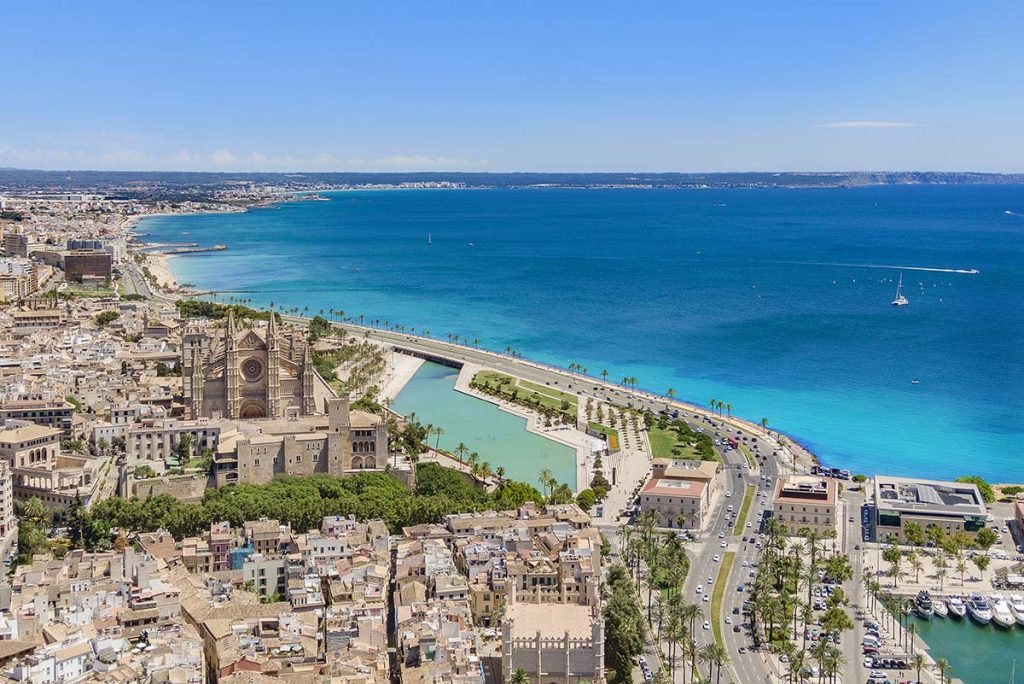
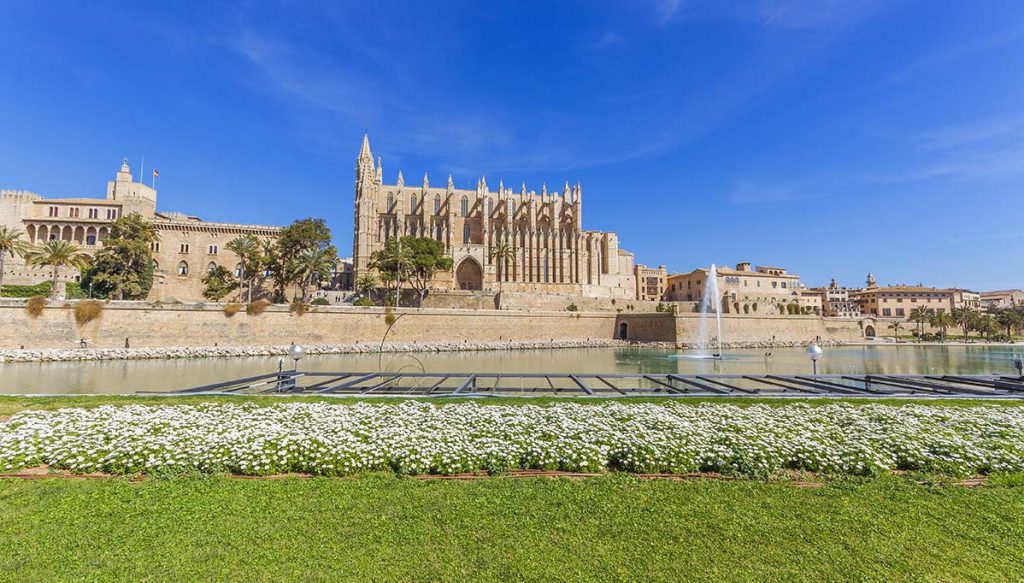
Despite its relatively compact size, Palma offers a real variety of places to live. Broadly, the city divides into historic districts, lively neighbourhoods known for restaurants and culture, seafront areas built around the beach and the marina, quieter residential districts popular with families, and exclusive hillside areas known for villas and panoramic views. Each offers a very different experience of the city.
The Old Town (Casco Antiguo): historic elegance
Apartments €7,568/m² · Houses €8,612/m²
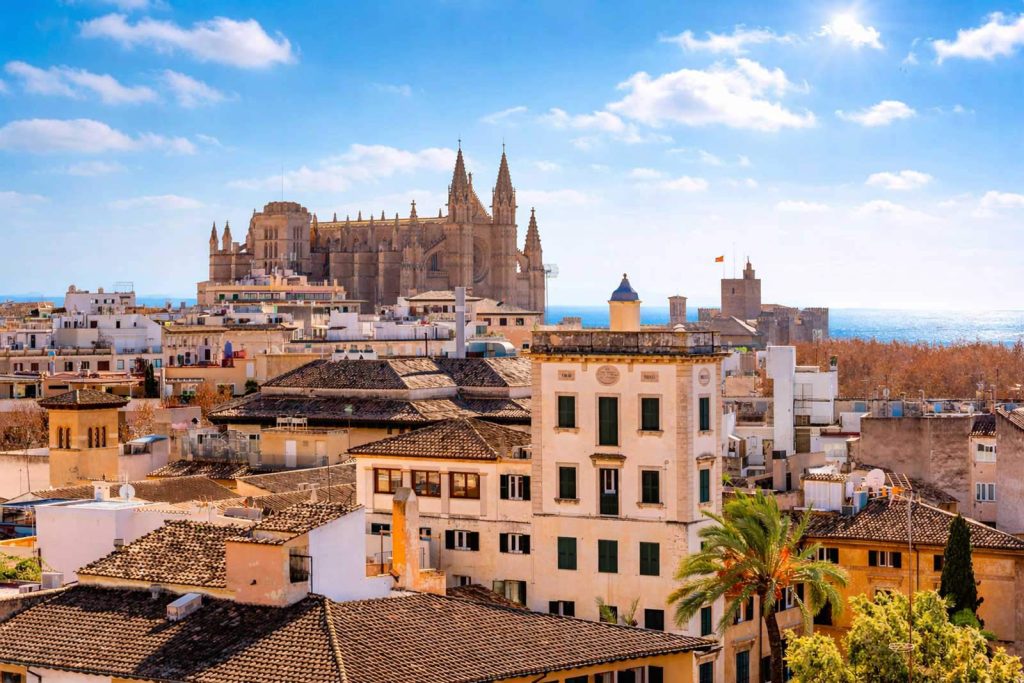
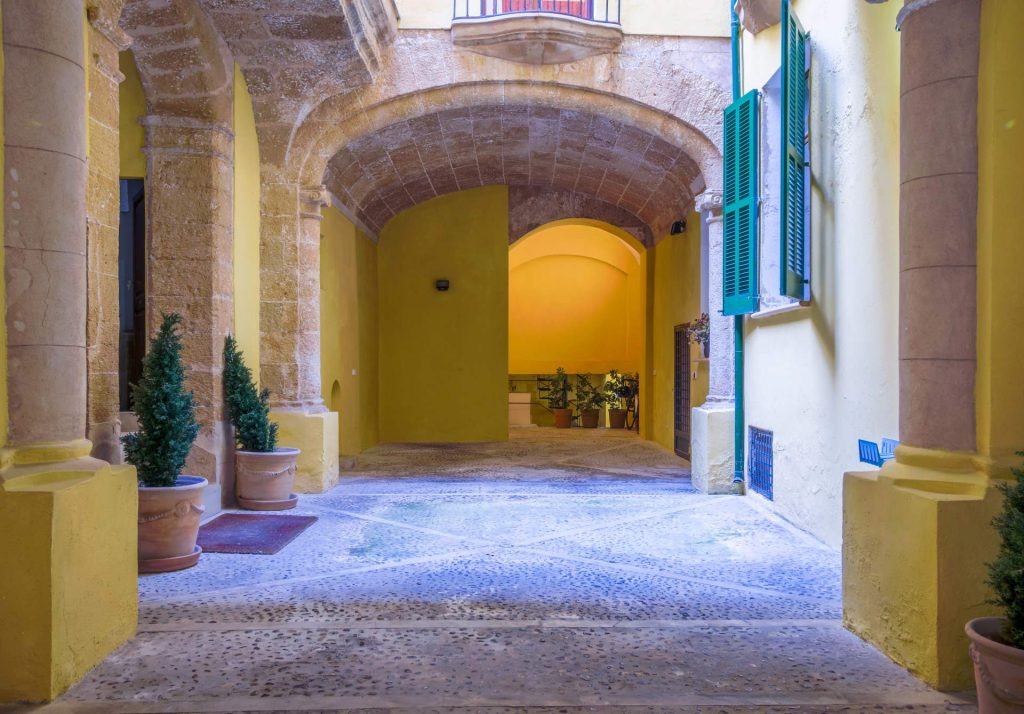
At the heart of the city lies the Casco Antiguo, Palma’s historic Old Town and one of the most prestigious addresses in Mallorca. Narrow cobbled streets run between Gothic churches, café-lined squares, Renaissance palaces and restored townhouses. Many historic buildings have been converted into apartments that combine original features, such as grand entrance halls, vaulted ceilings and private courtyards, with modern interiors, and some have roof terraces looking over the cathedral.
Living in Palma Old Town means being surrounded by culture: La Seu Cathedral, galleries, boutique hotels and shopping streets such as Passeig del Born and Jaume III are all on the doorstep. The area attracts buyers looking for historic character and central convenience, and prices are among the highest in the city. For a closer look at daily life there, see our guide to living in Palma Old Town.
Santa Catalina: Palma’s culinary and cultural hub
Santa Catalina – Son Armadans area: apartments €6,594/m² · houses €7,808/m²
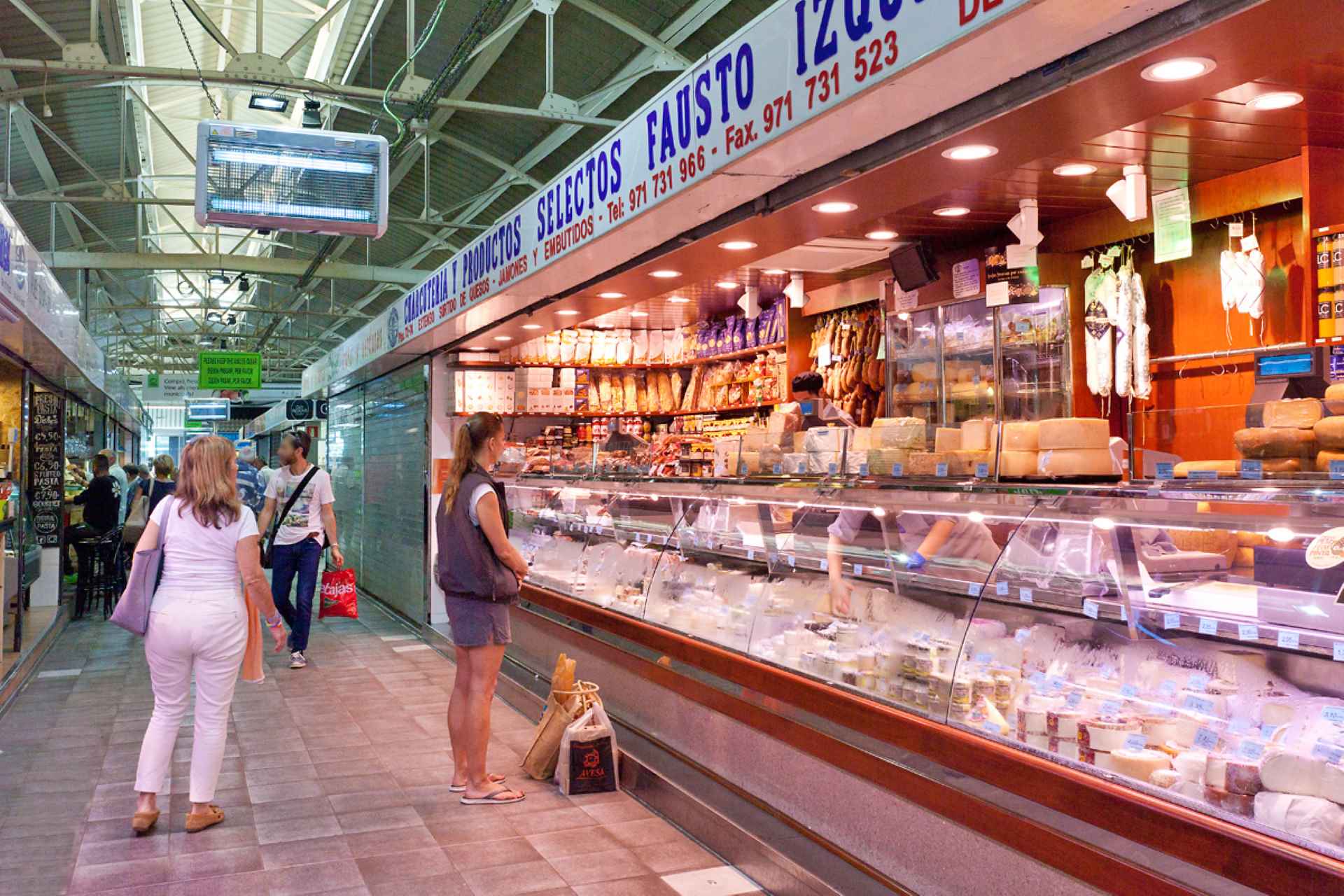
If the Old Town is the soul of the city, Santa Catalina is its liveliest quarter. Just west of the Old Town, this former fishing district has become a busy, international neighbourhood known for its restaurants, cafés, the Palma Sport & Tennis Club and an active social scene.
At its centre is the Mercat de Santa Catalina, one of Palma’s oldest food markets, where chefs and residents buy fresh fish, seasonal produce and Mallorcan specialities. Several of its bars serve tapas, and some will cook fish or seafood bought at the stalls for a small charge. Colourful houses, small balconies and traditional shutters give the streets their character, and many homes have been renovated in recent years while keeping the look of the neighbourhood. For buyers who want restaurants, bars and nightlife close by, Santa Catalina is often considered one of the best areas to live in Palma.
Portixol and El Molinar: seafront living
Apartments €8,160/m² · Houses €10,063/m², the highest in Palma
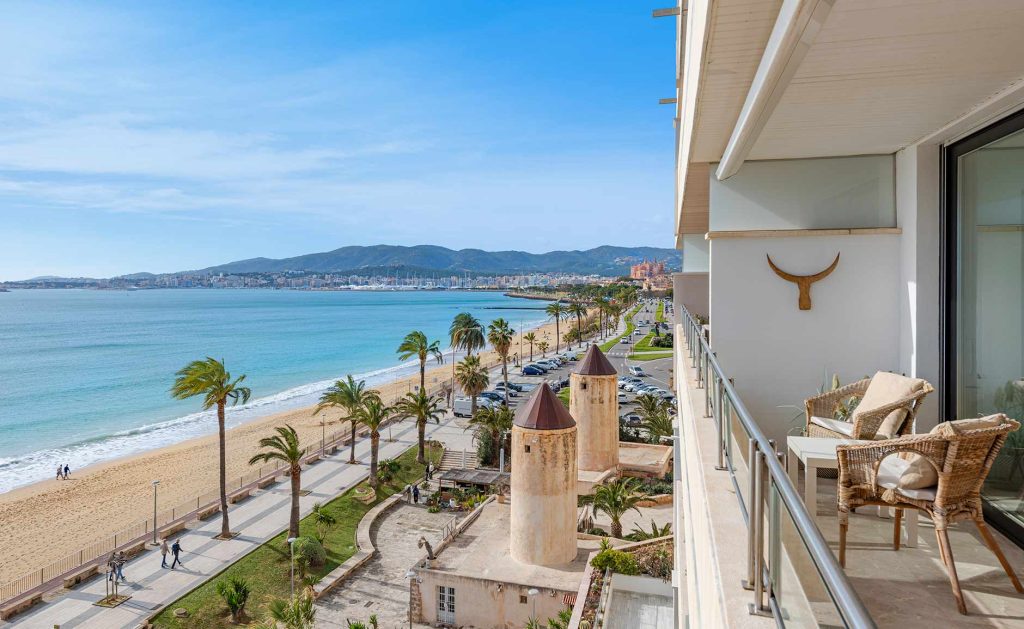
For many people, living in Palma means living near the sea. Just east of the centre, Portixol and El Molinar offer exactly that. Once quiet fishing villages, both have become some of the most desirable residential areas on the island.
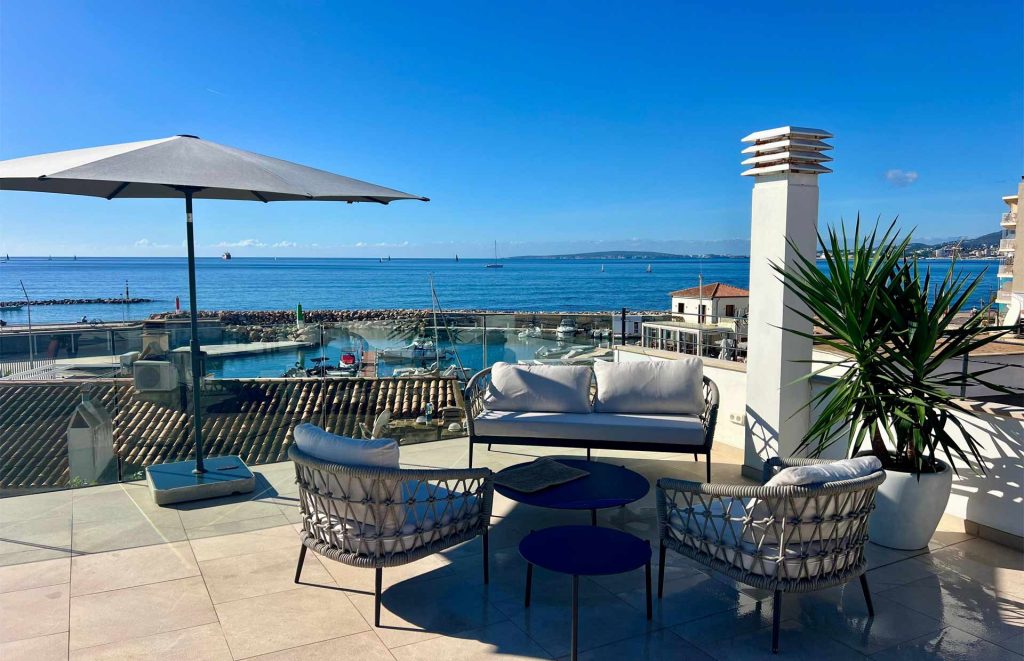
A seafront promenade links them with the city and several beaches, and it is one of Palma’s most scenic routes for cycling and walking. Portixol is known for its restaurants, boutique hotels and waterfront cafés; El Molinar keeps more of its local character and is slightly quieter, which makes it popular with families. Apartments and townhouses with sea views are in high demand, and property in Portixol and El Molinar commands some of the highest prices in Palma.
Son Vida: luxury living above Palma
Apartments €8,201/m² · Houses €9,116/m²
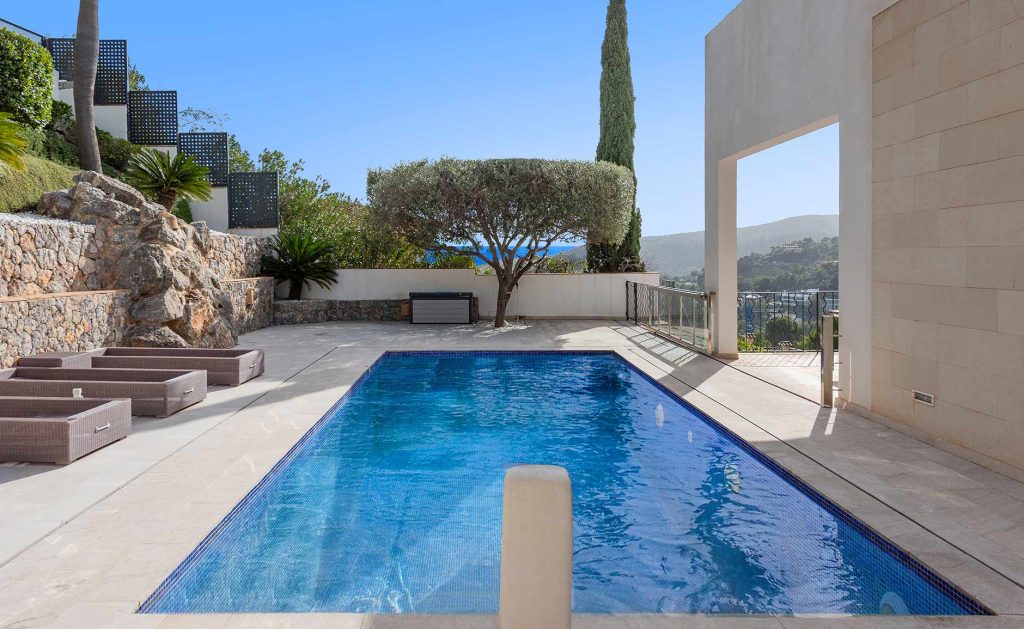
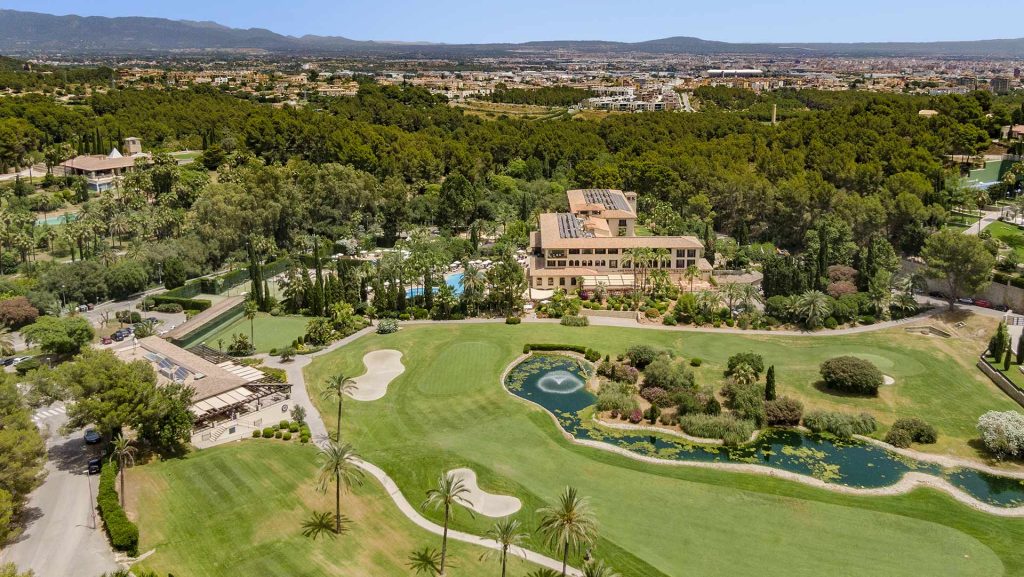
Often called the “Beverly Hills of Mallorca”, Son Vida is Palma’s most exclusive residential area. Set in the hills around ten minutes from the centre, it offers privacy, security and wide views over the Bay of Palma. The area is built around three golf courses and includes some of the island’s best-known five-star hotels. Properties in Son Vida are typically contemporary villas with infinity pools, large terraces and landscaped gardens, many within gated communities, which is why the area appeals to buyers looking for discretion. The trade-off is that it is not within walking distance of the centre.
El Terreno: Palma’s up-and-coming district
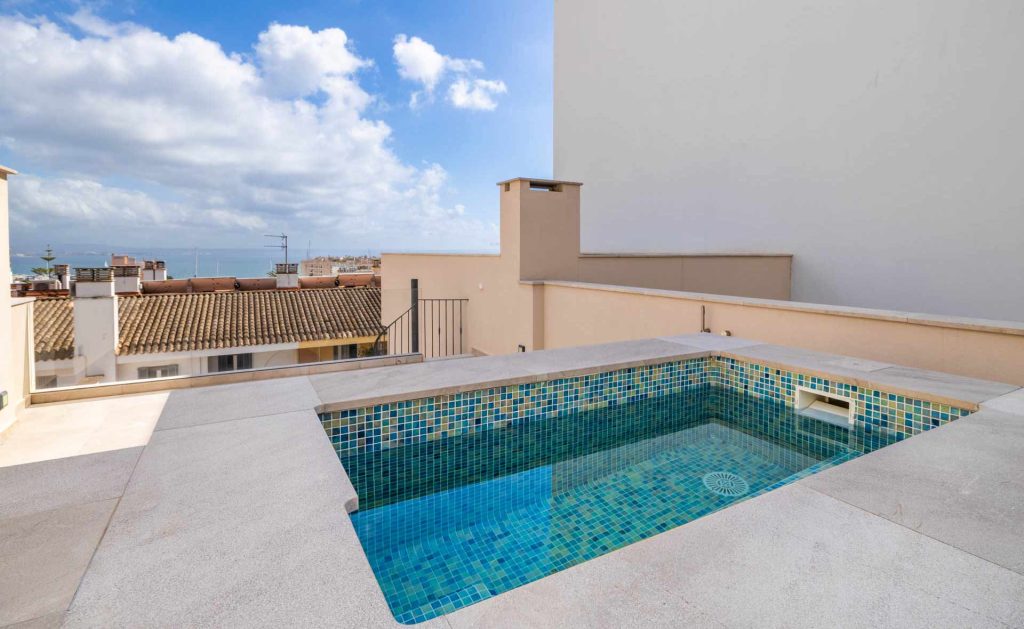
Between the Paseo Marítimo and the Bellver forest, El Terreno has become much more sought after in recent years, partly because prices have traditionally been lower than in other central areas. In the 1960s and 1970s it was known for its nightlife and artistic community, and it is now going through a revival, with new restaurants, galleries and renovated homes. Historic villas and mid-century apartment buildings are being restored, drawing creative professionals and investors who like its character and its easy access to the centre and nearby beaches. Being next to Bellver Castle and its forest park also makes it a good choice for people who want green space without leaving the city.
Son Espanyolet and Son Armadams: quieter residential living
Behind Santa Catalina are two of Palma’s most liveable residential districts, Son Espanyolet and Son Armadams. Both are calm while still within walking distance of the centre and the marina. Son Espanyolet has low-rise houses with terraces and gardens that give it a village feel; Son Armadams is larger, mainly made up of apartment buildings, and popular with families. For buyers who want a quieter life without leaving the city, they strike a good balance.
Génova: village charm above the city
Génova – Bonanova area: apartments €7,470/m² · houses €7,292/m²
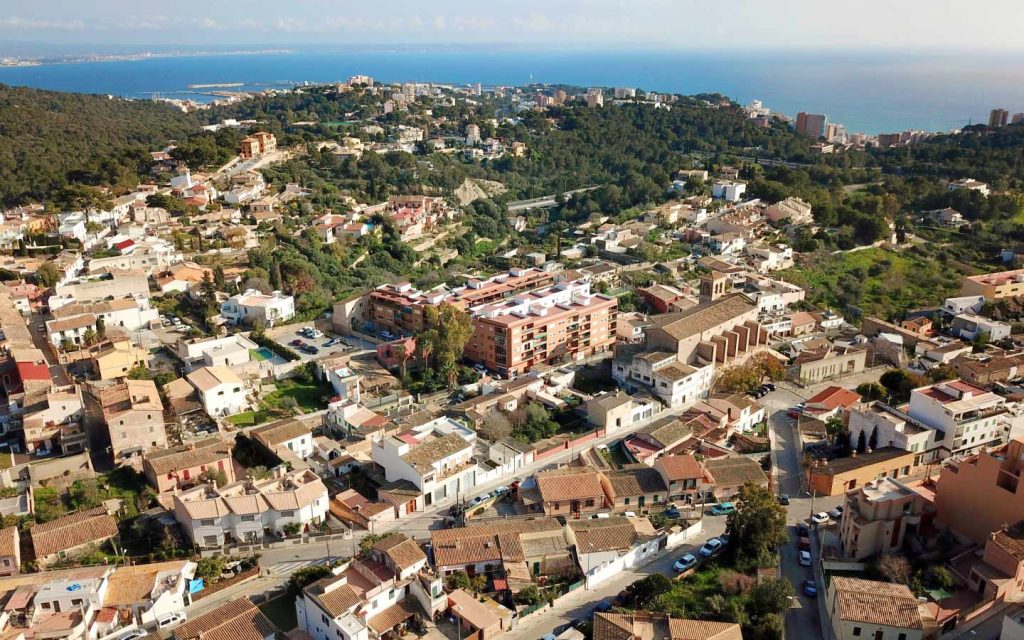
A few minutes’ drive north of the centre, Génova sits in the hills above Palma, surrounded by pine forest and with views out to sea. Although it is part of the city, it feels separate from it: narrow streets, stone houses and family-run restaurants such as the long-established Ca’n Pedro give it a traditional Mallorcan atmosphere. The housing mix combines village houses with newer villas, many with views across the bay, and the nearby mountain trails suit hikers and cyclists. For residents who want a quiet village setting close to city amenities, Génova is a good compromise.
How to choose the best area to live in Palma
The right neighbourhood depends mainly on lifestyle and budget. Buyers drawn to historic architecture and the very centre tend to choose the Old Town; those who want a livelier atmosphere prefer Santa Catalina. For life by the sea, Portixol or El Molinar fit best. Son Vida offers more space, privacy and luxury homes, but not a walk into town. For a quieter, residential and family-friendly setting, Son Armadams, Son Espanyolet or Génova work well, bearing in mind that Génova is further out.
| Historic character | Old Town, from around €7,600/m² for apartments |
| Restaurants and nightlife | Santa Catalina, around €6,600/m² |
| By the sea | Portixol and El Molinar, around €8,200/m² |
| Space and privacy | Son Vida, around €8,200/m² for apartments and €9,100/m² for houses |
| Village feel | Génova, around €7,500/m² |
| Lower entry price | Las Avenidas or Llevant, around €4,000 to €4,400/m² |
Palma’s compact size and transport links mean all of these neighbourhoods remain within easy reach of the centre, the beaches and the airport.
Properties
Homes in Palma
Balearic Properties is an established agency partnered with Savills. Tell us how you want to live in Palma and we will show you what is on the market.
Contact our sales teamProperties by area: Old Town · Santa Catalina · Portixol · Son Vida · Génova
Discover more of Mallorca: Palma area guide · all Mallorca area guides · price comparisons
FAQs
In September 2026 the average asking price for an apartment for sale in Palma de Mallorca was €5,838 per m², according to Casafari. Prices vary widely by area, from around €4,000 per m² in Llevant to more than €8,000 per m² in Portixol and Son Vida.
Yes. The average asking price of apartments in Palma rose 18.7% between November 2023 and September 2026, from €4,918 to €5,838 per m², and 4.1% in the twelve months to September 2026. Prices peaked at €5,942 per m² in May 2026 and have eased slightly since.
Portixol–El Molinar, Son Vida and the Old Town have the highest asking prices in Palma. In October 2026 apartments averaged €8,160 per m² in Portixol–El Molinar, €8,201 in Son Vida and €7,568 in the Old Town, and houses in Portixol–El Molinar averaged €10,063 per m².
Apartments listed in Palma since October 2025 stayed on the market for around 72 days on average. Homes under €300,000 took around 55 days, while those over €1 million took around 100 days.
It depends on lifestyle. The Old Town suits buyers who want historic character, Santa Catalina suits those who want restaurants and nightlife, Portixol and El Molinar suit life by the sea, Son Vida offers space and privacy, and Son Armadams, Son Espanyolet and Génova are quieter and family-friendly.
Balearic Islands Buying Guide
A Complete Guide for International Buyers
Choose the Right Area of Mallorca
Once the buying process is clear, location becomes the key decision. Compare our expert guides to North Mallorca, Northwest Mallorca, Southwest Mallorca, Palma, Central Mallorca, East Mallorca, Southeast Mallorca and South Mallorca. You can also compare property prices by area before narrowing your search.
Mallorca has become one of Europe’s most desirable destinations for international property buyers. With its Mediterranean lifestyle, excellent infrastructure, international schools, and strong property market, the island offers an exceptional combination of lifestyle and long-term value.
This guide explains everything you need to know when buying property in Mallorca as a non-resident.
Why Buy Property in Mallorca?
- Year-round mild climate
- High quality of life and safety
- International airports with direct flights
- Strong and stable real estate market
- Wide variety of properties: villas, fincas, apartments, new developments
- Excellent healthcare and international education
Whether you are looking for a holiday home, a permanent residence or an investment, Mallorca offers long-term appeal.
Can Foreigners Buy Property in Mallorca?
Yes.
There are no restrictions for foreign buyers purchasing property in Mallorca, whether EU or non-EU citizens.
The process is transparent and well regulated, provided you work with experienced local professionals.
The Buying Process Step by Step
1. Define Your Requirements
Location, property type, budget, lifestyle goals and investment objectives.
2. Obtain an NIE Number
The NIE (Número de Identidad de Extranjero) is mandatory to buy property in Spain.
3. Property Search & Viewings
Your agent will shortlist suitable properties and organise viewings, on-site or remotely.
4. Reservation Agreement
Once you find the right property, a reservation agreement is usually signed with a small deposit.
5. Private Purchase Contract
A private contract (Contrato de Arras) is signed and typically involves a 10% deposit.
6. Completion at the Notary
The final deed (Escritura Pública) is signed before a Spanish notary and ownership is transferred.
Costs & Taxes When Buying in Mallorca
Buyers should budget approximately 10–13% of the purchase price for costs and taxes.
Main costs include:
- Property Transfer Tax (resale): approx. 8–11%
- VAT + Stamp Duty (new build): approx. 10–11.5%
- Notary fees
- Land registry fees
- Legal fees
Your advisor should provide a full cost breakdown in advance.
Legal Considerations
It is strongly recommended to work with an independent lawyer who will:
- Verify legal ownership
- Check planning permissions and licenses
- Confirm the property is free of debts or charges
- Review contracts and protect your interests
This is especially important in rural areas or when buying fincas or renovation projects.
Financing & Mortgages
Spanish banks offer mortgages to non-residents, typically up to 60–70% loan-to-value.
Requirements usually include:
- Proof of income
- Credit history
- Bank valuation of the property
Mortgage approval can be arranged before or during the buying process.
Best Areas to Buy in Mallorca
Mallorca offers a wide variety of locations depending on lifestyle preferences:
- Palma & surrounds – urban lifestyle, amenities, year-round living
- South-West Mallorca – luxury villas, marinas, international community
- North Mallorca – natural beauty, traditional towns, beaches
- Central & rural Mallorca – fincas, privacy, countryside living
Choosing the right area is key and should align with your lifestyle and usage plans.
Investment & Rental Potential
Mallorca remains a strong long-term investment market thanks to limited supply and high demand.
Important to note:
- Holiday rentals require a valid tourist licence
- Regulations vary by area and property type
- Long-term rentals remain in high demand
Professional advice is essential to ensure compliance and maximise returns.
Common Mistakes to Avoid
- Not budgeting correctly for taxes and costs
- Skipping legal due diligence
- Buying without understanding rental regulations
- Choosing location based only on price
Working with experienced local professionals helps avoid these pitfalls.
Buying property in Mallorca is straightforward when guided properly. A local expert will help you:
- Access the best properties (including off-market)
- Navigate legal and technical aspects
- Negotiate effectively
- Save time and avoid costly mistakes
Useful next steps: consult our Balearic real-estate glossary, review tax considerations for foreign buyers and compare Mallorca property prices by area.
Start Your Property Search in Mallorca
If you are considering buying property in Mallorca and would like professional guidance, our team is here to help you every step of the way.
Contact us for personalised advice and expert local knowledge.
Why Consider a Country Home for Sale in Mallorca?
Investing in a country home in Mallorca means embracing a slower pace of life. The island’s rural charm, combined with strict building regulations that preserve its natural beauty, makes these homes highly sought after. From restored fincas with rustic appeal to modern estates blending seamlessly with their surroundings, Mallorca’s countryside offers something for everyone.
Over the past decade, Mallorca has seen a growing interest in its countryside properties. These homes are ideal for individuals and families looking for a lifestyle centered around tranquillity, privacy, and nature. They often feature expansive outdoor spaces, including gardens, orchards, and terraces, perfect for enjoying the Mediterranean climate. Unlike urban or coastal properties, country homes in Mallorca offer unmatched seclusion, making them ideal for those seeking a private sanctuary.
The demand for these homes continues to rise due to their unique blend of traditional charm and modern comfort. Many properties have been carefully renovated to include eco-friendly features, aligning with the increasing global emphasis on sustainability. The limited availability of land in Mallorca’s rural areas also ensures that these properties retain their value over time, making them a sound investment.
The Charm of Mallorca’s Countryside
Here are some potential reasons why someone might consider a country home in Mallorca:
- Natural Beauty: Mallorca is renowned for its stunning natural landscapes, including lush forests, rolling hills, and picturesque coastlines. A country home would offer the opportunity to immerse oneself in this natural beauty.
- Peace and Tranquility: Compared to the bustling tourist areas, the Mallorca’s countryside is much quieter and more serene. This makes it an ideal retreat for those seeking peace and relaxation.
- Cultural Experience: Living in the Mallorca’s countryside allows for a deeper cultural experience, with opportunities to engage with local traditions, cuisine, and community life.
- Outdoor Activities: The countryside offers numerous outdoor activities such as hiking, biking, and horseback riding. A country home would be a perfect base from where to explore these activities.
- Privacy and Space: Country homes often come with more land and privacy compared to urban properties. This can be particularly appealing for those who value their personal space and enjoy gardening or entertaining outdoors.
- Investment Potential: Real estate in Mallorca, including country homes, can be a valuable investment. The island’s popularity as a tourist destination means that property values tend to appreciate over time.
- Climate: Mallorca enjoys a Mediterranean climate with mild winters and warm summers, it is an attractive location for year-round living or seasonal retreats.
Overall, a country home in Mallorca offers a unique blend of natural beauty, tranquility, cultural richness, and investment potential, therefore it is a compelling option for many.
Popular Areas to buy your Dream Country Home
Pollença
Pollença is a historic town located in the north of Mallorca. Known for its charming old town, vibrant market, and stunning natural surroundings, Pollença is a popular destination for those seeking a peaceful yet culturally rich environment. The area offers a variety of country homes, from rustic fincas to modern villas, often set amidst olive groves and almond trees. The nearby Sierra de Tramuntana mountains provide breathtaking views and numerous hiking trails, Pollença is an ideal location for nature lovers and outdoor enthusiasts.
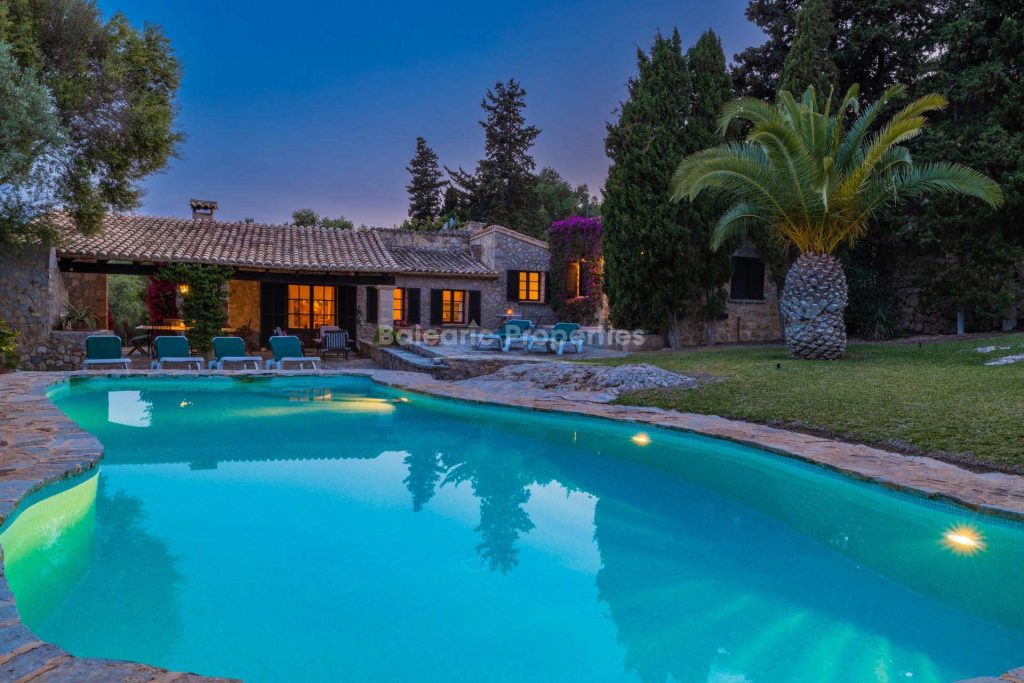
Alcúdia
Alcúdia is a historic town located in the northeast of Mallorca. Known for its medieval walls, charming old town, and stunning natural surroundings, Alcúdia is a popular destination for those seeking a peaceful yet culturally rich environment. The area offers a variety of country homes, from rustic fincas to modern villas, often set amidst olive groves and almond trees. The nearby Sierra de Tramuntana mountains provide breathtaking views and numerous hiking trails, Alcúdia is another ideal location for nature lovers and outdoor enthusiasts.
Santa Margalida
Santa Margalida is a charming town located in the northeast of Mallorca. Known for its picturesque countryside, traditional architecture, and vibrant local culture, Santa Margalida is a popular destination for those seeking a peaceful yet authentic Mallorcan experience. The area offers a variety of country homes, from rustic fincas to modern villas, often set amidst rolling hills and lush farmland. The nearby beaches and coastal areas provide easy access to the island’s amenities, Santa Margalida is an ideal location for those who value both tranquillity and convenience.
Sa Pobla
Sa Pobla is a charming town located in the northeast of Mallorca. Known for its picturesque countryside, traditional architecture, and vibrant local culture, Sa Pobla is a popular destination for those seeking a peaceful yet authentic Mallorcan experience. The area offers a variety of country homes, from rustic fincas to modern villas, often set amidst rolling hills and lush farmland. The nearby beaches and coastal areas provide easy access to the island’s amenities, Sa Pobla is another ideal location for those who value both tranquillity and convenience.
Campanet
Campanet is a charming town located in the north of Mallorca. Known for its picturesque countryside, traditional architecture, and vibrant local culture, Campanet is a popular destination for those seeking a peaceful yet authentic Mallorcan experience. The area offers a variety of country homes, from rustic fincas to modern villas, often set amidst rolling hills and lush farmland. The nearby beaches and coastal areas provide easy access to the island’s amenities, Campanet is an ideal location for those who value both tranquillity and convenience.
Muro
Muro is a charming town located in the northeast of Mallorca. Known for its picturesque countryside, traditional architecture, and vibrant local culture, Muro is a popular destination for those seeking a peaceful yet authentic Mallorcan experience. The area offers a variety of country homes, from rustic fincas to modern villas, often set amidst rolling hills and lush farmland. The nearby beaches and coastal areas provide easy access to the island’s amenities, Muro is an ideal location for those who value both tranquillity and convenience.
Inca
Inca is a charming town located in the central part of Mallorca. Known for its picturesque countryside, traditional architecture, and vibrant local culture, Inca is a popular destination for those seeking a peaceful yet authentic Mallorcan experience. The area offers a variety of country homes, from rustic fincas to modern villas, often set amidst rolling hills and lush farmland. The nearby beaches and coastal areas provide easy access to the island’s amenities, making Inca an ideal location for those who value both tranquillity and convenience.
Binissalem
Binissalem is a charming town located in the western part of Mallorca. Known for its picturesque countryside, traditional architecture, and vibrant local culture, Binissalem is a popular destination for those seeking a peaceful yet authentic Mallorcan experience. The area offers a variety of country homes, from rustic fincas to modern villas, often set amidst rolling hills and lush farmland. The nearby beaches and coastal areas provide easy access to the island’s amenities, therefore Binissalem is an ideal location for those who value both tranquillity and convenience.
Typologies of Country Homes in Mallorca
Mallorca, with its diverse landscapes and natural environments, offers a variety of country homes that cater to different tastes and preferences. Below are four main typologies of country homes in Mallorca, each with unique characteristics and recommendations about the best areas to acquire them.
Country Homes with Sea Views
Country homes with sea views epitomise luxurious living in Mallorca. These properties are often located on hills or cliffs, offering panoramic views of the Mediterranean Sea. The architecture of these homes frequently combines traditional Mallorcan elements, such as stone walls and terracotta roofs, with modern and minimalist designs. Large terraces and infinity pools are common features, allowing residents to enjoy the stunning sunsets and the soothing sound of the sea.
Recommendation for buying a Country Home with Sea Views in Mallorca: The area of Deià is ideal for this type of property. With its breathtaking coastal cliffs and crystal-clear waters, Deià offers an idyllic setting for seaview country homes. Additionally, its proximity to Palma and the island’s main entertainment hubs makes it a highly desirable location.
Country Homes with Mountain Views
For those seeking a deeper connection with nature, country homes with mountain views are a perfect choice. These properties are surrounded by mountainous landscapes, with natural trails and lush vegetation. The architecture is often more rustic, utilizing local materials like stone and wood, which gives them an authentic and cosy appearance.
Recommendation for buying a Country Home with Mountain Views in Mallorca: The area of Valldemossa is ideal for this type of home. With its rolling hills and dense forests, Valldemossa offers a tranquil and serene environment, perfect for those looking to escape the hustle and bustle of urban life. The area is also known for its vibrant artistic and cultural community, adding extra value to the living experience here.
Country Homes with Valley Views
Country homes with valley views offer a combination of natural beauty and privacy. These properties are situated in lower areas, surrounded by green fields and orchards. The architecture tends to be more traditional, with large courtyards and well-maintained gardens. The tranquillity and seclusion of these locations make them ideal for those seeking a more relaxed and stress-free lifestyle.
Recommendation for buying a Country Home with Valley Views in Mallorca: The area of Sóller is perfect for this type of home. With its picturesque valley landscapes and rural atmosphere, Sóller offers a charming and peaceful retreat. The area is known for its orange and lemon groves, adding a touch of authenticity and tradition to the living experience here.
Country Homes with Bay Views
Country homes with bay views combine the beauty of the sea with the convenience of being close to the coast. These properties are often located in coastal areas, with direct views of the Mediterranean’s blue waters. The architecture is frequently modern, with large windows and terraces that maximise the views. The proximity to the beach and coastal entertainment centres makes them ideal for those who enjoy a seaside lifestyle.
Recommendation for buying a Country Home with Bay Views in Mallorca: The area of Port de Pollença is ideal for this type of home. With its vibrant nightlife, renowned restaurants, and stunning beaches, Port de Pollença offers a dynamic coastal lifestyle. Country homes in this area allow you to enjoy the beauty of the bay while being close to all the amenities and activities the island has to offer.
Country Homes in Mallorca: A highly sought-after Investment Opportunity
Country homes in Mallorca have gained significant popularity in the vacation rental market, becoming a highly attractive investment option for both national and international buyers. The demand for this type of property has surged in recent years, driven by the growing interest of tourists seeking more authentic and exclusive travel experiences, away from traditional hotels and crowded tourist areas. Mallorca’s country homes offer precisely that: a tranquil and private retreat, immersed in the natural beauty of the island, allowing visitors to enjoy a more relaxed and authentic lifestyle. This constant demand for vacation rentals not only guarantees a steady income stream for property owners but also offers the flexibility to use the property for personal use during less busy periods.
Investing in a country home in Mallorca is not just an opportunity to enjoy a property in a dream destination, but it also represents a solid financial strategy. Holiday rentals can be a considerable source of income, especially during the summer months when the island receives a constant flow of tourists. This income can be used to cover a significant portion of the mortgage, alleviating the financial burden on owners and improving the investment’s profitability. Additionally, property values in Mallorca tend to appreciate over time, meaning that, in addition to rental income, owners can also benefit from the long-term increase in property value.
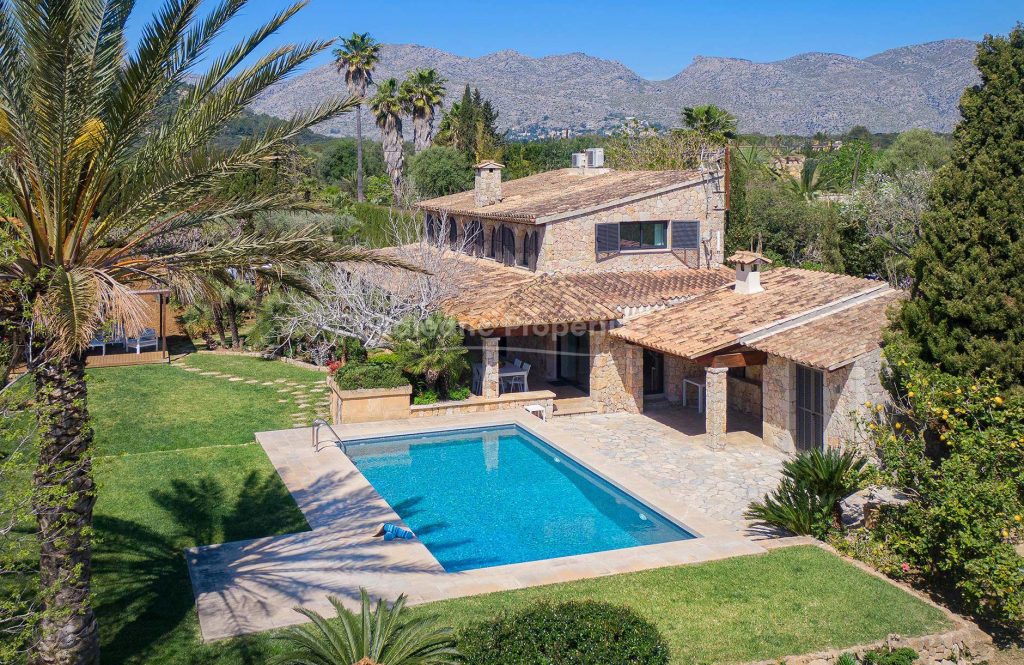
Managing a country home as a holiday rental has also become more accessible than ever, thanks to the proliferation of online platforms that connect owners with travellers worldwide. These platforms facilitate the promotion and management of the property, allowing owners to maximise occupancy and, consequently, their income. Moreover, the rise in sustainable tourism and the search for more personalised experiences have led to an increased demand for unique and authentic accommodation, such as country homes, further enhancing their investment appeal.
In summary, country homes in Mallorca are not only an attractive investment option due to their potential for holiday rental income, but they also offer the opportunity to enjoy a property in one of the world’s most coveted destinations. With the ability to generate significant income and contribute to paying the mortgage, these properties represent a smart financial investment and a gateway to the Mallorca lifestyle.
Continue exploring: compare country living in North Mallorca and Central Mallorca, then follow the practical steps in our Balearic Islands Buying Guide.
Questions and Answers for Buyers in Mallorca
What are the benefits of owning a country home in Mallorca?
Owning a country home in Mallorca allows you to immerse yourself in the island’s serene rural lifestyle. These properties often feature spacious outdoor areas, perfect for enjoying the Mediterranean climate. The strict building regulations in Mallorca’s countryside ensure that the natural beauty of the area is preserved, creating a tranquil and exclusive environment. Additionally, country homes offer a high level of privacy, so they are ideal for those seeking a peaceful retreat. With the growing trend towards sustainable living, many properties include eco-friendly features such as solar panels and water recycling systems, aligning with modern values.
Why is Mallorca’s countryside a good investment?
Investing in Mallorca’s countryside properties is a strategic decision due to the limited availability of land and the increasing demand for rural homes. These properties are highly valued for their exclusivity and unique blend of traditional and modern elements. The real estate market in Mallorca has consistently shown resilience, with country homes offering excellent potential for capital appreciation. Furthermore, the island’s popularity as a destination for relaxation and wellness ensures a steady demand for rental properties, providing an additional income stream for investors.
How do country homes in Mallorca differ from coastal properties?
Country homes in Mallorca offer a distinct lifestyle compared to coastal properties. While coastal homes are often associated with vibrant social scenes and proximity to beaches, country homes prioritise privacy, space, and connection to nature. These properties are typically set on larger plots of land, featuring gardens, orchards, and outdoor living spaces. They provide a tranquil escape from the hustle and bustle of coastal areas while still offering convenient access to the island’s amenities. For those seeking a sustainable and serene lifestyle, Mallorca’s countryside properties are an unparalleled choice.
What are the best areas to buy a country home in Mallorca?
Some of the best areas to buy a country home in Mallorca include Pollença, Alcúdia, Santa Margalida, Sa Pobla, Campanet, Muro, Inca, and Binissalem. Each of these areas offers a unique blend of natural beauty, tranquillity, and cultural richness, therefore they are ideal for those seeking a peaceful retreat in the countryside. Whether you prefer the historic charm of Pollença, the picturesque landscapes of Alcúdia, or the authentic Mallorcan experience of Santa Margalida, there is a location in Mallorca that will provide the perfect setting for your dream country home.
What are the different typologies of country homes in Mallorca?
Mallorca offers a variety of country homes that cater to different tastes and preferences. Some of the main typologies include country homes with sea views, country homes with mountain views, country homes with valley views, and country homes with bay views. Each typology offers unique characteristics and advantages, such as panoramic views, rustic charm, and convenient access to the coast. Whether you prefer the luxury of sea views, the tranquility of mountain views, the privacy of valley views, or the dynamic lifestyle of bay views, there is a country home in Mallorca that will meet your needs.
How can I manage a country home as a holiday rental in Mallorca?
Managing a country home as a holiday rental in Mallorca has become more accessible than ever, thanks to the proliferation of online platforms that connect owners with travellers worldwide. These platforms facilitate the promotion and management of the property, allowing owners to maximise occupancy and, consequently, their income. Additionally, the rise in sustainable tourism and the search for more personalised experiences have led to an increased demand for unique and authentic accommodation, such as country homes, further enhancing their investment appeal. By leveraging these online platforms, owners can easily manage their holiday rental properties and enjoy the benefits of owning a country home in Mallorca.
What are the advantages of sustainable living in Mallorca’s countryside?
Sustainable living in Mallorca’s countryside offers numerous advantages, including reduced environmental impact, lower energy costs, and a healthier lifestyle. Many country homes in Mallorca include eco-friendly features such as solar panels, water recycling systems, and energy-efficient appliances, aligning with the increasing global emphasis on sustainability. By embracing sustainable living, owners can enjoy a more environmentally conscious lifestyle while also benefiting from the natural beauty and tranquility of the island’s countryside.
What are the potential income streams for investing in a country home in Mallorca?
Investing in a country home in Mallorca offers several potential income streams, including holiday rental income, long-term rental income, and capital appreciation. Holiday rental income can be a considerable source of income, especially during the summer months when the island receives a constant flow of tourists. Long-term rental income can provide a steady income stream throughout the year. Additionally, property values in Mallorca tend to appreciate over time, meaning that owners can also benefit from the long-term increase in property value. By leveraging these income streams, investors can enjoy a solid financial investment and a gateway to the Mallorca lifestyle.
How can I find the perfect country home in Mallorca?
Finding the perfect country home in Mallorca requires careful consideration of several factors, including location, budget, and personal preferences. Some of the best areas to buy a country home in Mallorca include Pollença, Alcúdia, Santa Margalida, Sa Pobla, Campanet, Muro, Inca, and Binissalem. Each of these areas offers a unique blend of natural beauty, tranquillity, and cultural richness, making them ideal for those seeking a peaceful retreat in the countryside. Additionally, it is essential to consider your budget and personal preferences when selecting a country home, ensuring that you find a property that meets your needs and enhances your lifestyle.
What are the challenges of owning a country home in Mallorca?
Owning a country home in Mallorca comes with several challenges, including maintenance, isolation, and access to amenities. Country homes often require regular maintenance to ensure that they remain in good condition, which can be time-consuming and costly. Additionally, the countryside can be more isolated than urban areas, which may not be suitable for everyone. However, many country homes in Mallorca offer convenient access to the island’s amenities, including restaurants, shops, and cultural events, providing a perfect balance between rural living and modern convenience.
In summary, Mallorca offers a wide range of country homes that cater to different lifestyles and preferences. Whether you are looking for sea views, mountain views, valley views, or bay views, there is a location in Mallorca that will provide the perfect setting for your dream home.
Living in Mallorca: The Island’s Most Exclusive Art Galleries
Mallorca is far more than turquoise waters and Mediterranean villas: it is one of Europe’s most sophisticated cultural destinations. For decades, the island has attracted artists, collectors, and creative visionaries drawn by its exceptional light, natural beauty, and cosmopolitan lifestyle. Joan Miró spent the last decades of his life in Palma, and his legacy still shapes Mallorca’s enduring reputation as a creative sanctuary.
Today, Palma and its surrounding villages offer a vibrant art ecosystem where world-class galleries, contemporary art foundations, and private collections coexist. For residents and property owners, this cultural richness forms an integral part of the luxury lifestyle that defines living in Mallorca.
This guide explores the most important and exclusive art galleries on the island, spaces where art, architecture, and lifestyle converge.
Gallery RED: Where Contemporary Art Meets International Prestige
Located in the heart of Palma, Gallery RED has rapidly become one of Europe’s most influential contemporary art galleries. Founded by internationally renowned collector Drew Aaron, the gallery presents museum-quality works from iconic artists such as Andy Warhol and Damien Hirst, alongside cutting-edge contemporary talents.
The gallery’s presence has helped elevate Palma’s global standing in the contemporary art market. Its exhibitions attract collectors from Switzerland, Germany, London, and New York, reinforcing Mallorca’s position as an international cultural hub.
For residents, Gallery RED offers more than exhibitions. It provides access to private viewings, art advisory services, and acquisition opportunities — essential elements of the luxury collector lifestyle.
Galería Pelaires: A Historic Institution of European Contemporary Art
Founded in 1969, Galería Pelaires is the oldest contemporary art gallery in Mallorca and one of the most respected in Spain. Located in a historic building in Palma’s Old Town, it has exhibited works by major artists including Joan Miró and Antoni Tàpies.
Pelaires represents the intersection of tradition and innovation, showcasing established international artists alongside emerging contemporary voices. Its carefully curated exhibitions make it a cornerstone of Mallorca’s intellectual and artistic identity.
Owning property near Palma’s historic centre offers privileged access to galleries like Pelaires, placing residents at the heart of the island’s cultural life.
Gerhardt Braun Gallery: Contemporary Art in a Historic Palace
Situated in a beautifully restored 17th-century palacete in Palma, Gerhardt Braun Gallery exemplifies Mallorca’s unique blend of history and modernity. It has hosted exhibitions from internationally acclaimed artists and is widely regarded as one of the island’s most prestigious contemporary art spaces.
Its elegant architectural setting reflects the refined lifestyle associated with Palma’s historic districts, where art, heritage, and luxury real estate coexist seamlessly.
ABA ART LAB: Supporting the Next Generation of International Artists
ABA ART LAB represents the innovative future of Mallorca’s art scene. Located in a sophisticated loft-style space in Palma, the gallery focuses on emerging artists and experimental contemporary works.
The gallery’s commitment to discovery and innovation has made it a key platform for collectors seeking unique and investment-grade contemporary art.
CCA Andratx and Mallorca’s International Art Landscape
Beyond Palma, Mallorca’s cultural influence extends across the island. Institutions such as CCA Andratx and other contemporary art centres have established Mallorca as a recognised destination within the European art world.
These spaces attract international exhibitions, collectors, and cultural events, reinforcing Mallorca’s status as a year-round destination for art and culture.
Art and Lifestyle: Why Cultural Access Defines Luxury Living in Mallorca
Living in Mallorca means enjoying immediate access to a sophisticated cultural ecosystem that rivals major European capitals. The island’s art galleries form part of a broader lifestyle defined by architecture, gastronomy, and design.
Palma’s historic centre, Santa Catalina, and Portixol offer residents the rare opportunity to live within walking distance of internationally respected galleries, museums, and private collections.
This proximity to culture enhances both quality of life and property value, making Mallorca one of the most desirable locations in Europe for discerning international buyers.
Explore the island’s cultural centres: read our guides to Palma, Southwest Mallorca and Deià and Valldemossa.
Mallorca: A Mediterranean Capital of Art, Culture, and Sophisticated Living
Mallorca’s artistic heritage, international gallery network, and creative community make it far more than a holiday destination. It is a place where culture becomes part of everyday life.
For property owners and residents, this cultural richness provides a deeper connection to the island, one defined by inspiration, creativity, and timeless Mediterranean elegance.
Living in Mallorca means living surrounded by beauty, both natural and artistic.