The Best Beaches in Mallorca: A Local Guide, Area by Area
Twenty of Mallorca’s best beaches, area by area: who each one suits, how to get there, what you’ll find, and what it’s like to live nearby.
Updated | By Antonio Fuster, Co-founder, Balearic Properties
Twenty beaches, six coastlines, one island. Tap the map or swipe the cards to find the beach that suits your day, then read on for how to get there and what it is like to live nearby.
North Mallorca: two wide bays and the Formentor peninsula
The north wraps around the bays of Pollença and Alcúdia, where the Tramuntana drops into the sea at Formentor. Shallow water, long promenades and towns that stay open beyond the summer make it the island’s most relaxed coast for families.
Great for: Long walks on fine sand, with shallow water a long way out
Family-friendly
Wild & natural
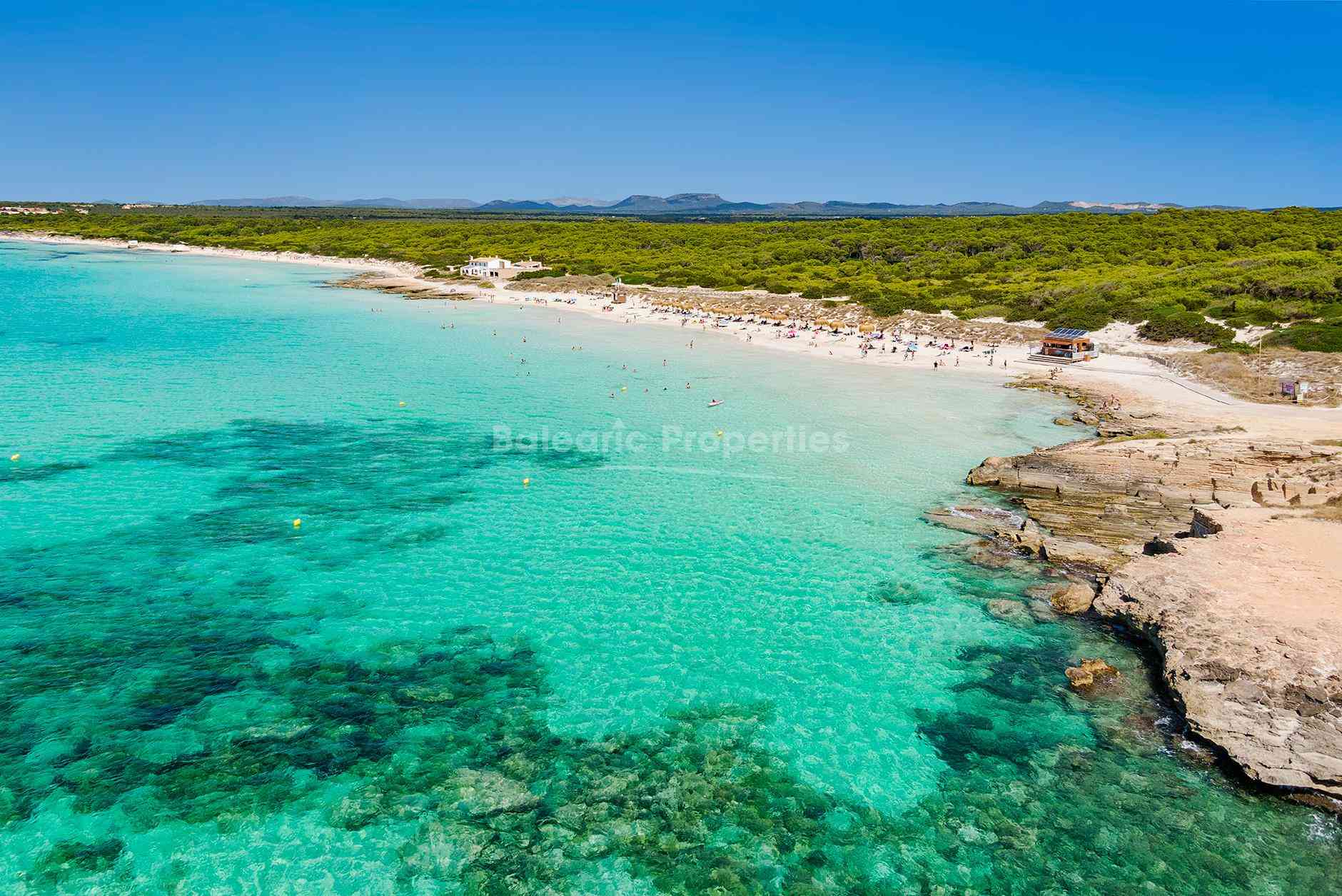
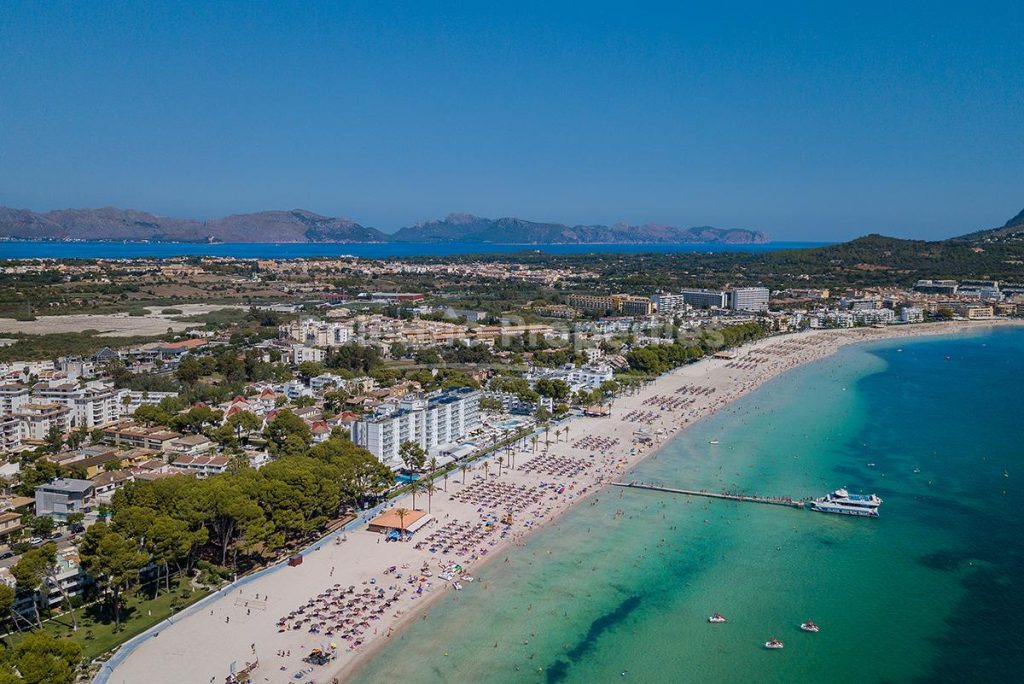
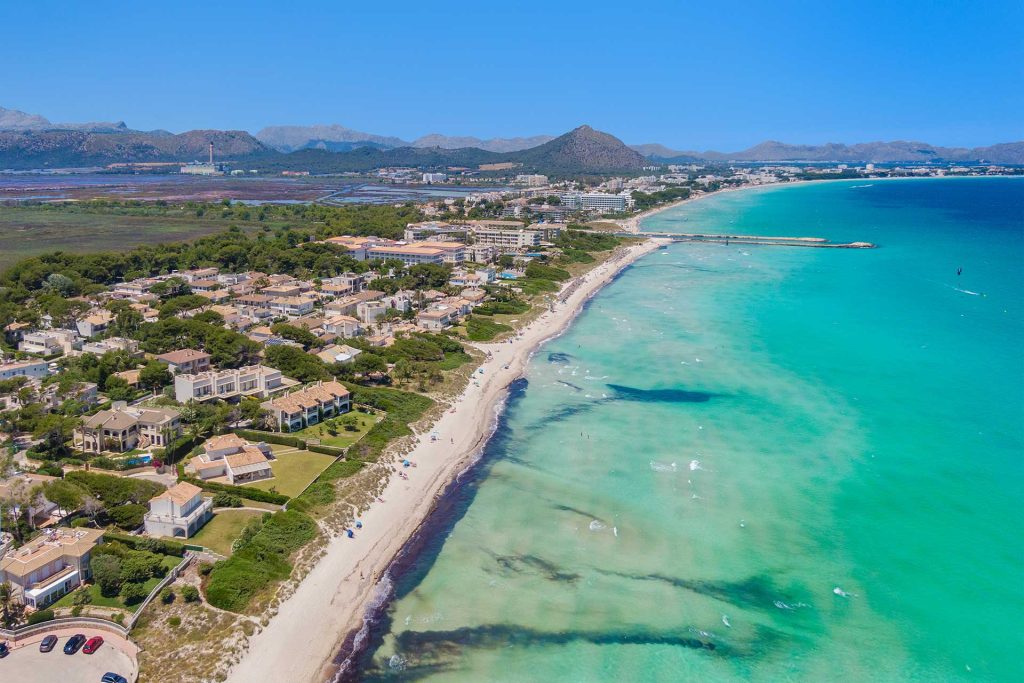
The quieter southern half of the Bay of Alcúdia: several kilometres of fine sand backed by dunes and pine, with the S’Albufera Natural Park just inland. The water stays shallow a long way out, and the stretches furthest from the hotels feel surprisingly wild.
Practical info
Getting there
Car or bus. Wooden boardwalks cross the dunes to the sand.
On the beach
Hotels, beach bars and sunbed hire along the main sectors; few services on the natural stretches.
Good to know
Bring your own shade for the dune sections. S’Albufera is worth an early-morning visit for its birdlife.
Would you like to live nearby?
Between Port d’Alcúdia and Playa de Muro you will find apartments and townhouses a short walk from the sand, and villas with bay views on the higher ground of Bonaire and Mal Pas.
Great for: Small children, watersports and a promenade behind the sand
Family-friendly
The livelier end of the same bay, running from the marina at Port d’Alcúdia towards Playa de Muro. A promenade, restaurants and watersports sit right behind the sand, and the gentle, shallow entry makes it one of the easiest beaches on the island for small children.
Practical info
Getting there
Car or bus. A promenade runs the length of the beach.
On the beach
Sunbed hire, restaurants, watersports and lifeguards in season.
Good to know
Busiest near the marina in July and August; walk south along the bay for more space.
Would you like to live nearby?
Alcúdia’s walled old town lies a short drive inland. Between the town and the port: village houses, marina apartments and family villas, many within walking distance of the beach.
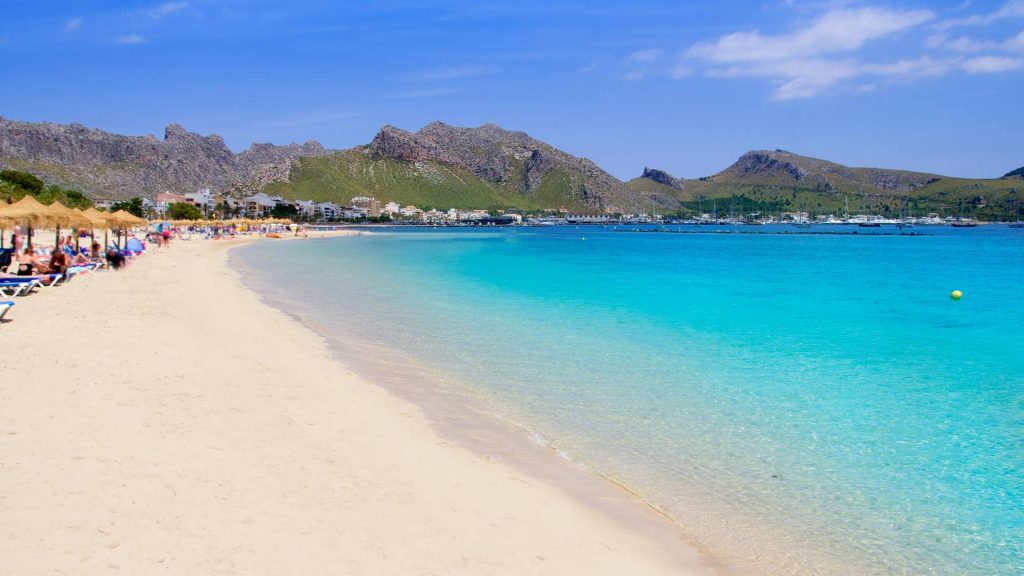
Great for: Calm-water paddleboarding and lunch on the Pine Walk
Family-friendly
Lunch by the sea
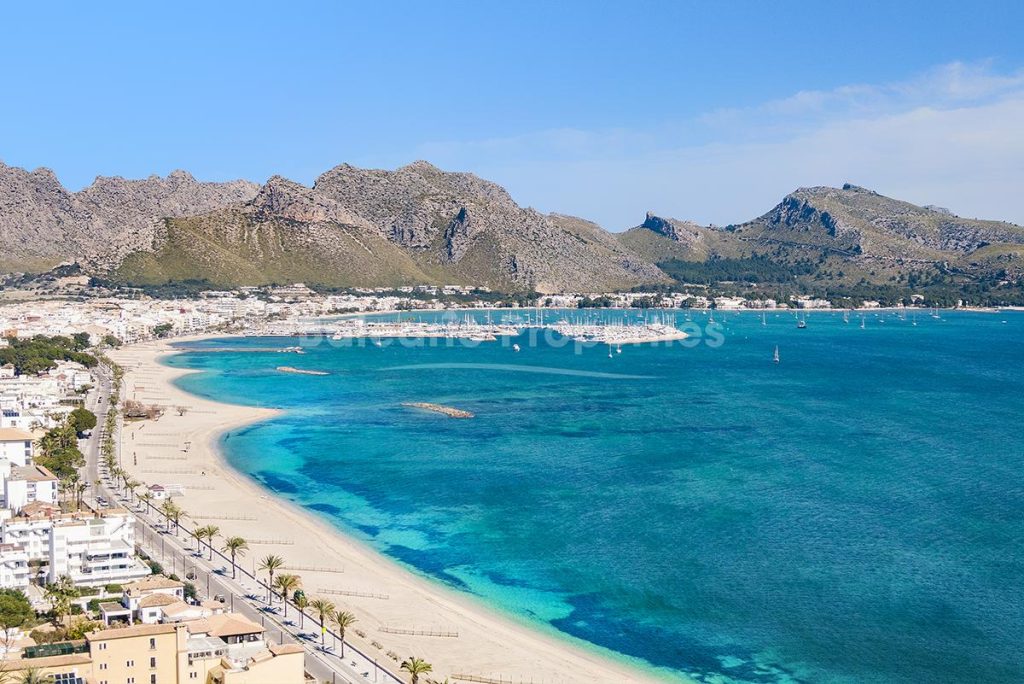
A long, narrow strip of sand inside the sheltered Bay of Pollença, with the pine-shaded seafront walk along the water and the mountains closing the view. The bay is usually calm, which makes it a favourite for paddleboarding and for families who like a café a few steps from the towel.
Practical info
Getting there
In the town itself. Summer parking is tight, so walking or cycling is easier.
On the beach
Sunbed hire, plus cafés and restaurants along the seafront.
Good to know
The end of the beach along the Pine Walk is quieter and shaded in the afternoon.
Would you like to live nearby?
One of the north’s most established addresses: apartments and townhouses near the seafront and villas with bay views on the slopes behind. Pollença old town, a few kilometres inland, adds village houses and fincas.
Great for: Snorkelling in four coves beneath the Cavall Bernat ridge
Hidden coves
Snorkelling
Iconic views
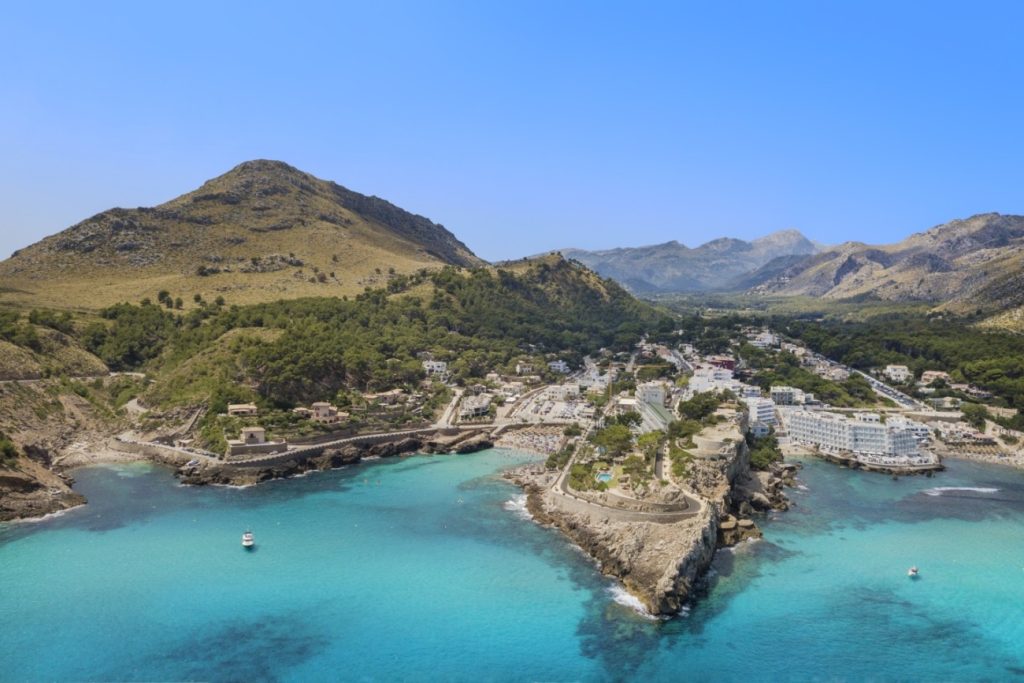
A small village built around four coves, Cala Barques, Cala Clara, Cala Molins and Cala Carbó, framed by the sheer ridge of Cavall Bernat. Clear water and rocky edges make it one of the best places to snorkel in the north.
Practical info
Getting there
Car from Pollença, a short drive. Street parking is limited in summer.
On the beach
Hotels and restaurants in the village; services vary from cove to cove.
Good to know
The coves face north, so waves build when the wind blows from that side. On calm days the water is exceptionally clear.
Would you like to live nearby?
Cala Sant Vicenç is a quiet residential village of villas and apartments a few minutes from Pollença, the nearest town for everyday life.
Great for: Pine shade and calm water on the Formentor peninsula
Snorkelling
Iconic views
Lunch by the sea
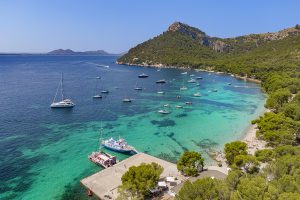
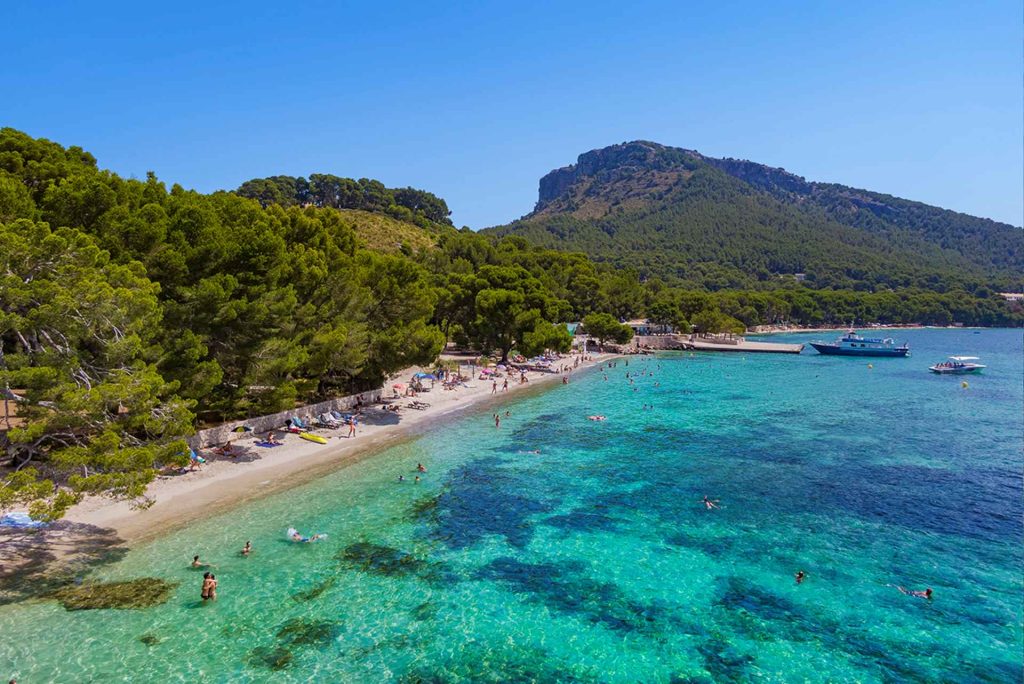
A long ribbon of pale sand on the sheltered side of the Formentor peninsula, with pines reaching almost to the water and views back across the Bay of Pollença to the mountains.
Practical info
Getting there
In 2026, from 15 May to 18 October, private cars were restricted daily from 10:00 to 22:00: you can drive to the beach car park until it fills, then a barrier closes. The TIB 334 bus from Alcúdia and Port de Pollença, or a summer boat from Port de Pollença, avoids the queue. Dates change each year, so check the DGT before you go.
On the beach
Sunbed and umbrella hire, a small bar by the jetty and a hotel on the bay.
Good to know
In summer, arrive before 10:00 or take the bus.
Would you like to live nearby?
Homes on the peninsula itself are very few. Most buyers drawn to Formentor look at Puerto Pollensa and the villa areas around it, a short drive back along the bay.
The east coast is cut into low limestone: narrow inlets with pine woods behind and inland towns a short drive away. Expect coves rather than bays, smaller and wilder, and at their best early or late in the day.
Great for: An undeveloped cove and sea caves, reached on foot
Hidden coves
Wild & natural
Snorkelling
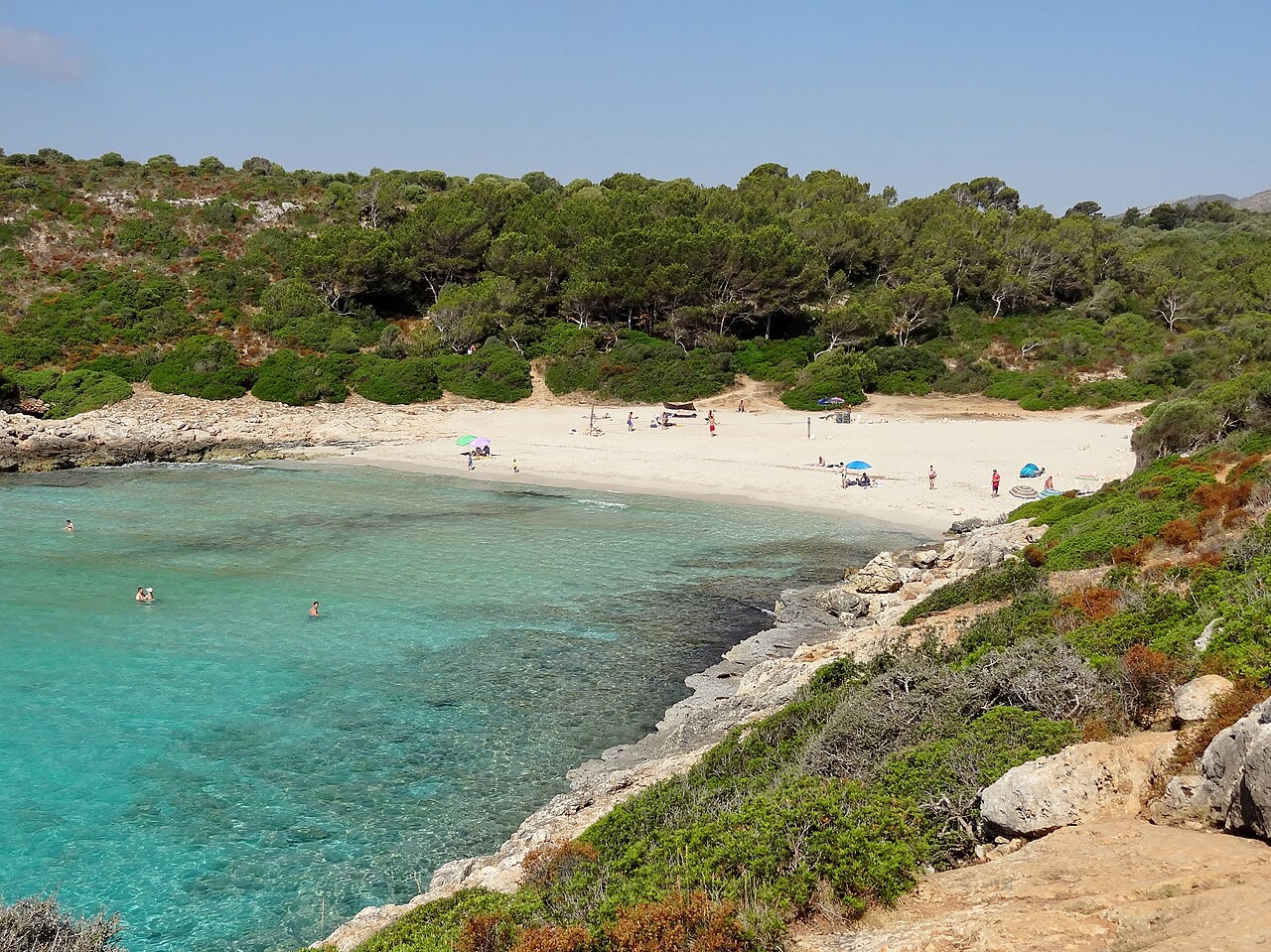
One of the few undeveloped coves left on the east coast: a small golden beach between low cliffs, with sea caves on either side. There are no buildings, no services and no road to the sand, which is precisely its appeal.
Practical info
Getting there
On foot or by boat. The shortest tracks from the Ma-4014 cross private land and roadside parking is informal; the recognised route is a coastal walk of about an hour from Cala Romàntica (S’Estany d’en Mas).
On the beach
Nothing: no bars, toilets or lifeguard.
Good to know
Wear proper shoes, carry water and shade, and take your rubbish home.
Would you like to live nearby?
The coast around Porto Cristo, Cala Murada and Calas de Mallorca, all in the municipality of Manacor, combines sea-view villas near the coves with fincas in the countryside behind.
Great for: Dunes, open sea and wide skies at the island’s north-east tip
Wild & natural
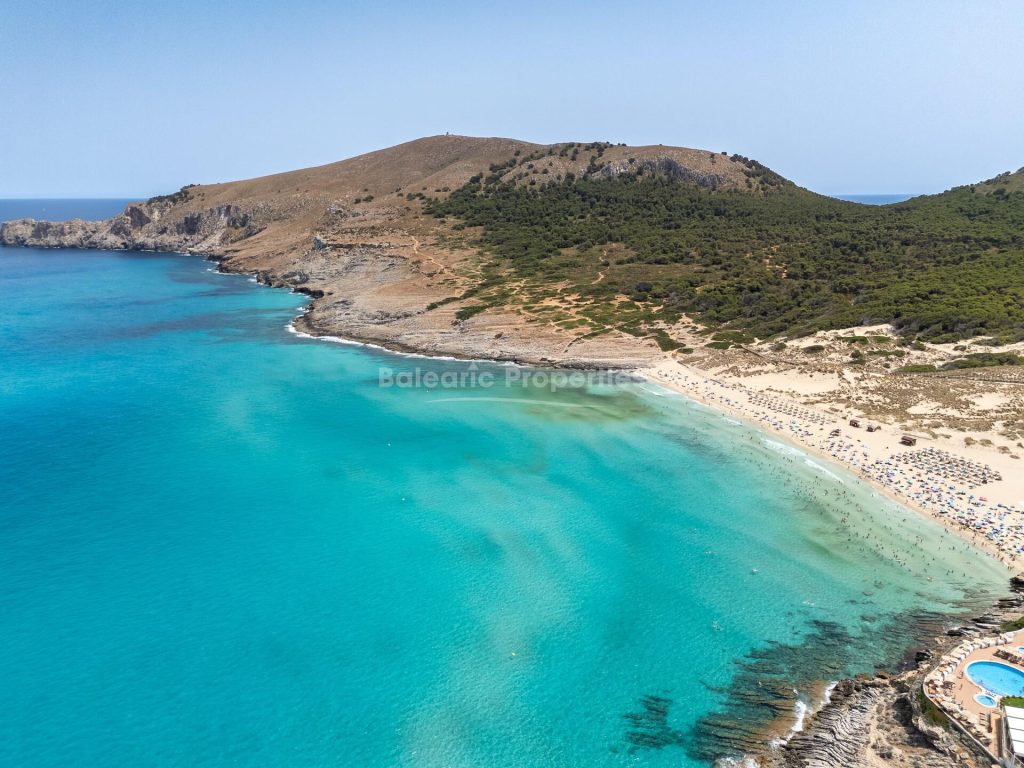
A wide sandy bay backed by dunes at the island’s north-eastern tip, facing the open sea. Protected as a natural area together with neighbouring Cala Agulla, it keeps a wild feel even with a small resort at one end.
Practical info
Getting there
Car, then a short path across the dunes.
On the beach
Lifeguard, sunbed hire and a beach kiosk in season; showers.
Good to know
Open to the north-east, so waves build when the wind is up. Check the flag before swimming.
Would you like to live nearby?
Capdepera and Cala Rajada offer new-build apartments and townhouses, with sea-view villas along the coast towards Canyamel.
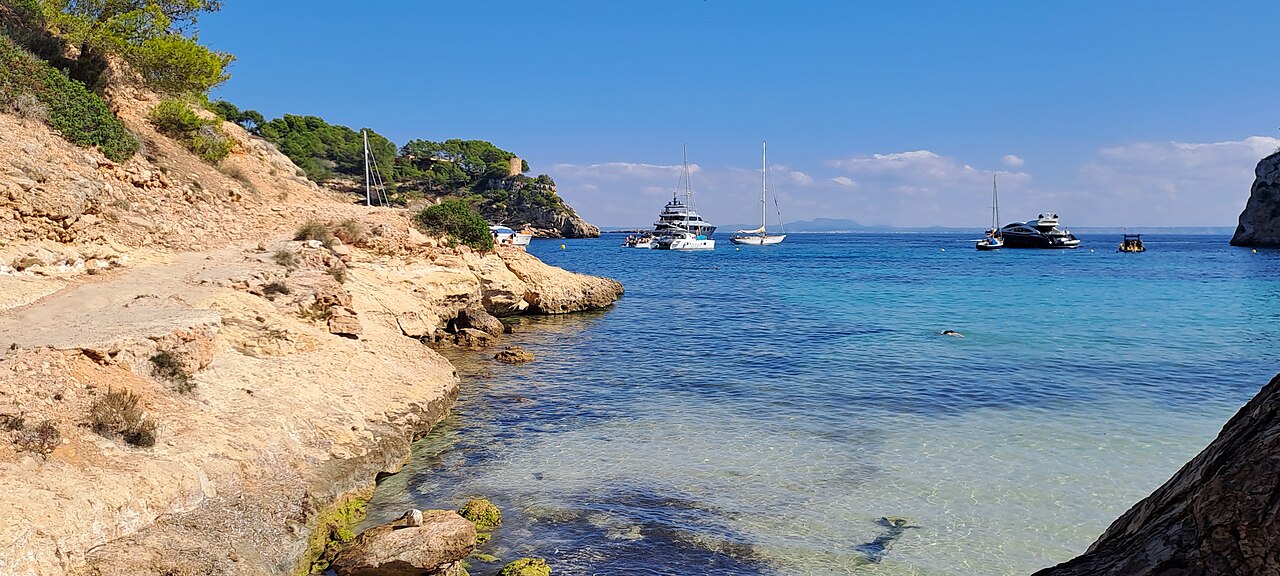
Great for: A calm morning swim in a pine-framed inlet
Hidden coves
Snorkelling
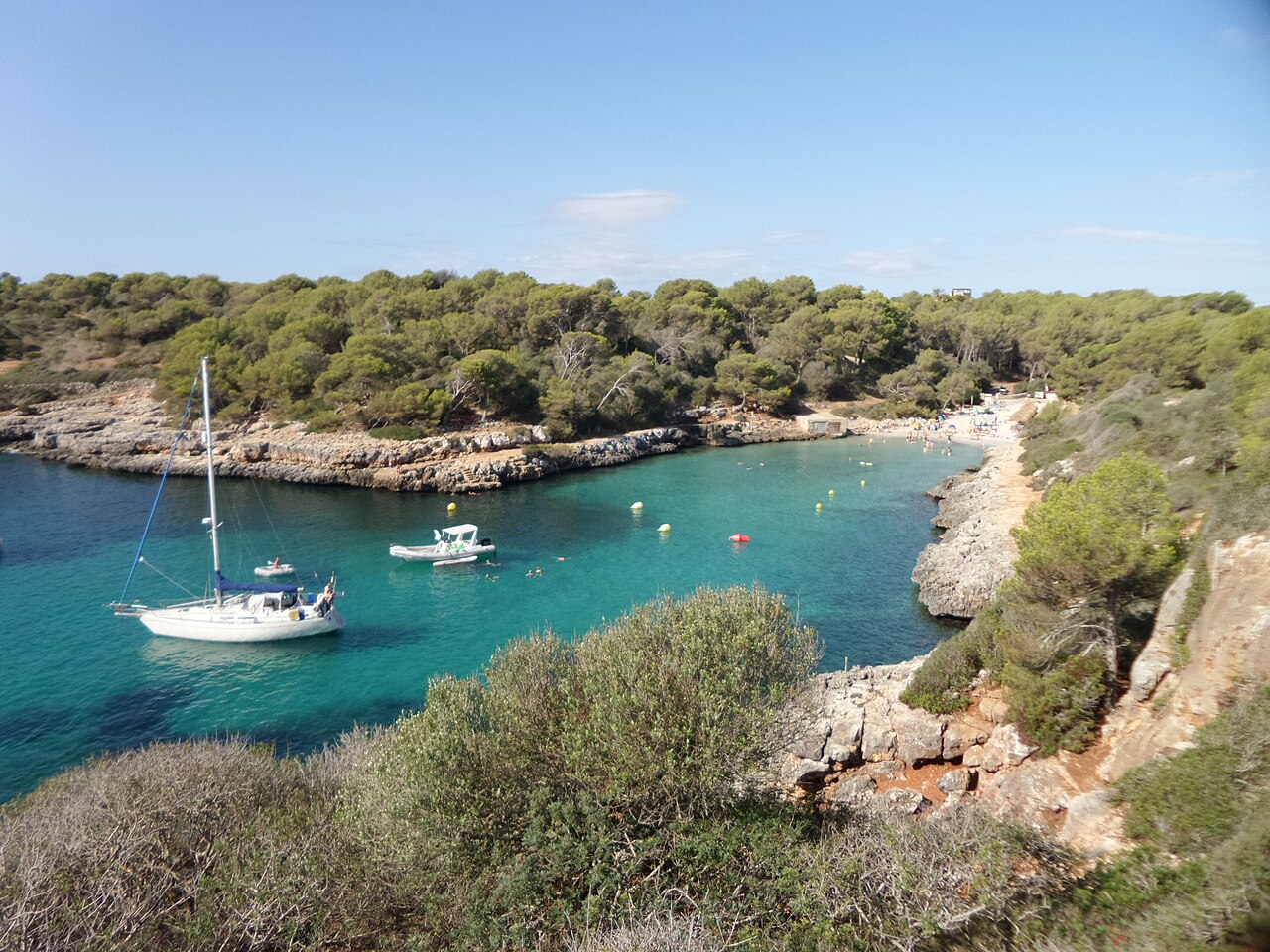
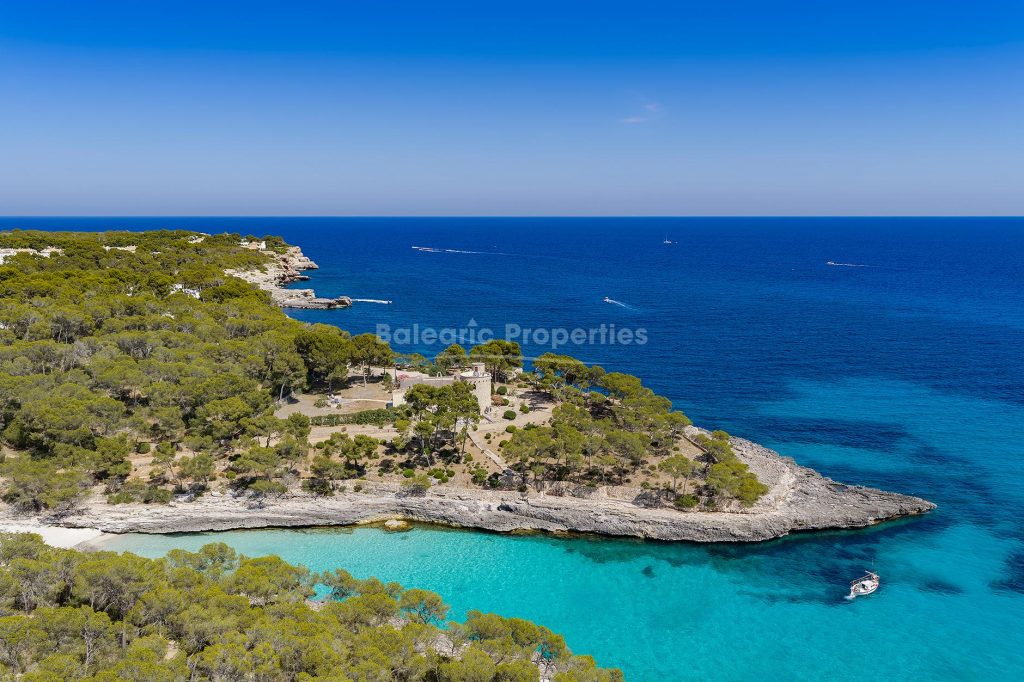
A narrow inlet between Portocolom and Cala d’Or, with a small sandy beach and pines down to the rocks. Calm and clear in the morning; by afternoon the beach bar gives it a relaxed, sociable feel.
Practical info
Getting there
A car park about 500 m away, then a stone staircase down to the beach.
On the beach
A beach bar and showers; a buoyed area for kayaks and paddleboards.
Good to know
Small and popular, so come early in high summer.
Would you like to live nearby?
Nearby Cala d’Or suits lock-up-and-leave buyers, with apartments around the marina and detached villas near Cala Gran.
Around Santanyí the coast becomes a run of turquoise coves set in golden sandstone, with the Mondragó Natural Park at its centre. It is also one of the most sought-after places on the island to own a home: village life inland, the sea close by.
Great for: Turquoise water between cliffs, and old boathouses
Hidden coves
Snorkelling
Iconic views
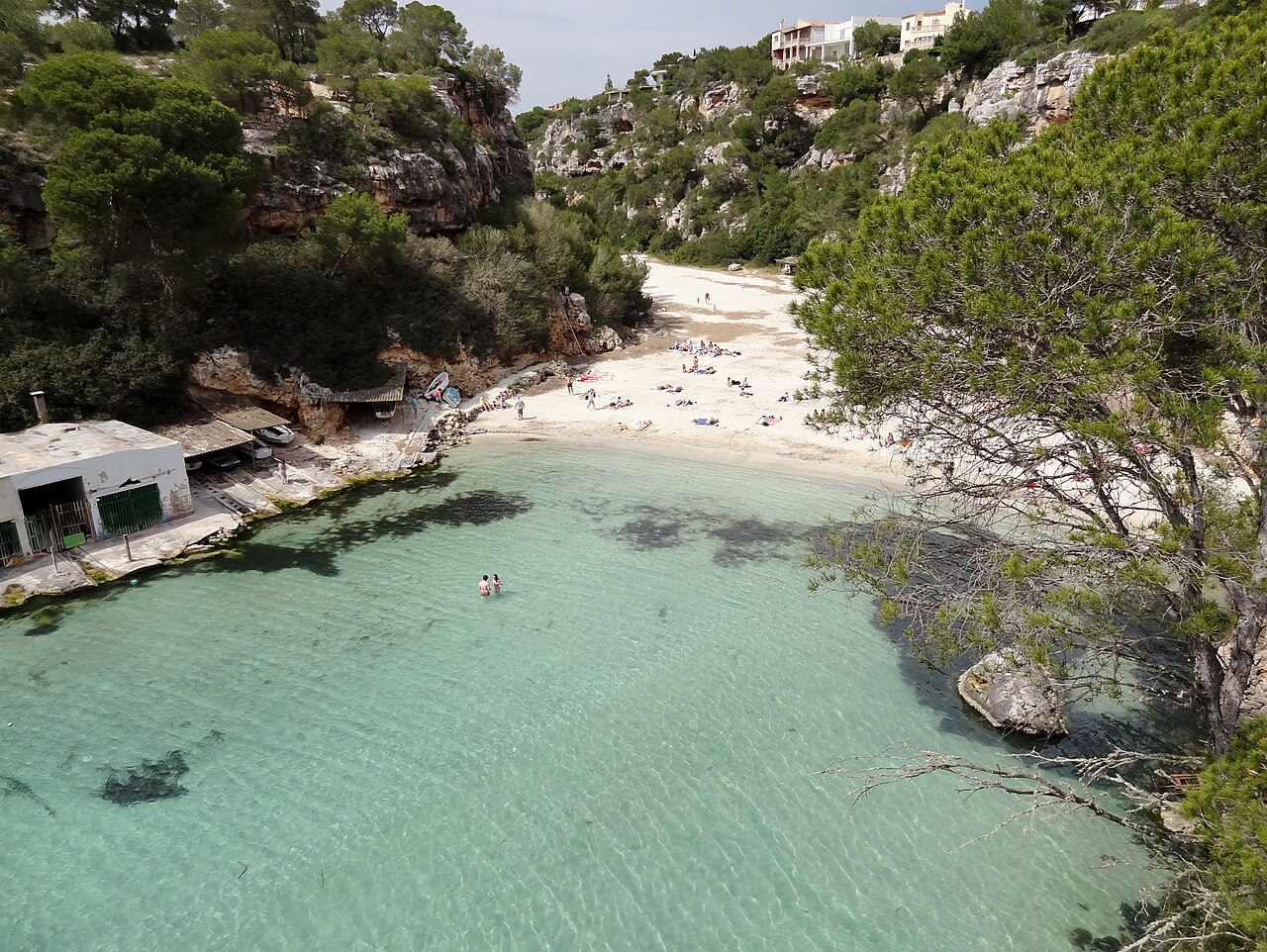
A small sandy cove at the end of a narrow valley, with old boathouses, clear turquoise water and ladders on the rocks for swimmers. Compact and much photographed: in high summer it fills by mid-morning.
Practical info
Getting there
A small free car park right by the cove fills early; a larger free car park at the village entrance means a downhill walk.
On the beach
Beach bar, sunbed hire, toilets and a lifeguard in season.
Good to know
Water shoes help on the rock edges. The natural arch of Es Pontàs is nearby.
Would you like to live nearby?
Es Llombards and Santanyí offer stone village houses, renovated fincas among almond and carob trees, and design-led villas closer to the coast.
Great for: Sheltered coves and marked trails in a natural park
Family-friendly
Wild & natural
Snorkelling
Two sandy coves, Cala Mondragó and S’Amarador, inside the Mondragó Natural Park, protected since 1992. Low sandstone cliffs, pine woods and a small wetland lie behind the beach, and marked trails link the coves.
Practical info
Getting there
Car, signposted from Santanyí. Parking is paid in high season and limited, so arrive early.
On the beach
A restaurant, a bar and toilets at Cala Mondragó; fewer facilities at S’Amarador. Camping is not allowed in the park.
Good to know
Sheltered, shallow and easy to reach: one of the best family coves on this coast.
Would you like to live nearby?
The park’s protection keeps building to a minimum, so homes near Mondragó are rare. Santanyí, Cala Figuera and Portopetro are the nearby villages.
Great for: A string of small sandy coves and a marina
Family-friendly
Lunch by the sea
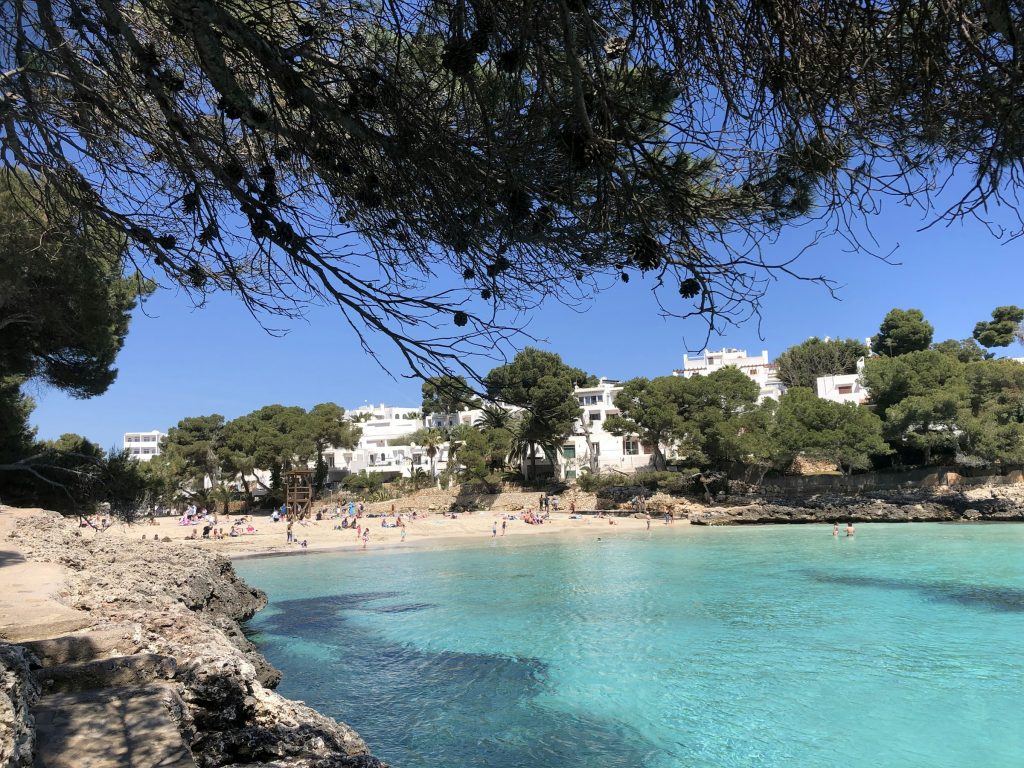
Not one beach but a string of small sandy coves, Cala Gran, Cala Esmeralda and Cala Ferrera among them, linked by a resort of white, low-rise houses and a marina.
Practical info
Getting there
Car, or the local mini-train between the coves.
On the beach
Sunbed hire, restaurants and the marina.
Good to know
Cala Gran is the largest. May, June and September are noticeably quieter.
Would you like to live nearby?
Apartments with community pools near the marina for easy, lock-up-and-leave ownership; detached villas around Cala Gran for families.
South Mallorca: dunes, salt flats and long natural beaches
The south is flat, open and luminous. Its best beaches are long, natural and protected from development, with salt pans behind them and the Cabrera archipelago on the horizon.
Great for: Kilometres of white sand, dunes and salt flats
Family-friendly
Wild & natural
Mallorca’s best-known natural beach: several kilometres of white sand and clear, shallow water, backed by dunes and the salt pans of Es Salobrar. It lies within the protected Es Trenc–Salobrar de Campos natural area, with no promenade or hotels on the sand.
Practical info
Getting there
Car, about 50 minutes from Palma. Paid car parks at Ses Covetes and on the Ses Salines side; some are over a kilometre from the shore.
On the beach
Seasonal beach bars, mainly near the access points.
Good to know
Part of the beach is clothing-optional. Posidonia on the sand is natural and protects the beach.
Would you like to live nearby?
Sa Ràpita and Ses Covetes have a small number of frontline apartments and penthouses. Inland, around Campos, fincas and new country houses sit a short drive from the sand.
Great for: A long, quiet beach with no road and views to Cabrera
Wild & natural
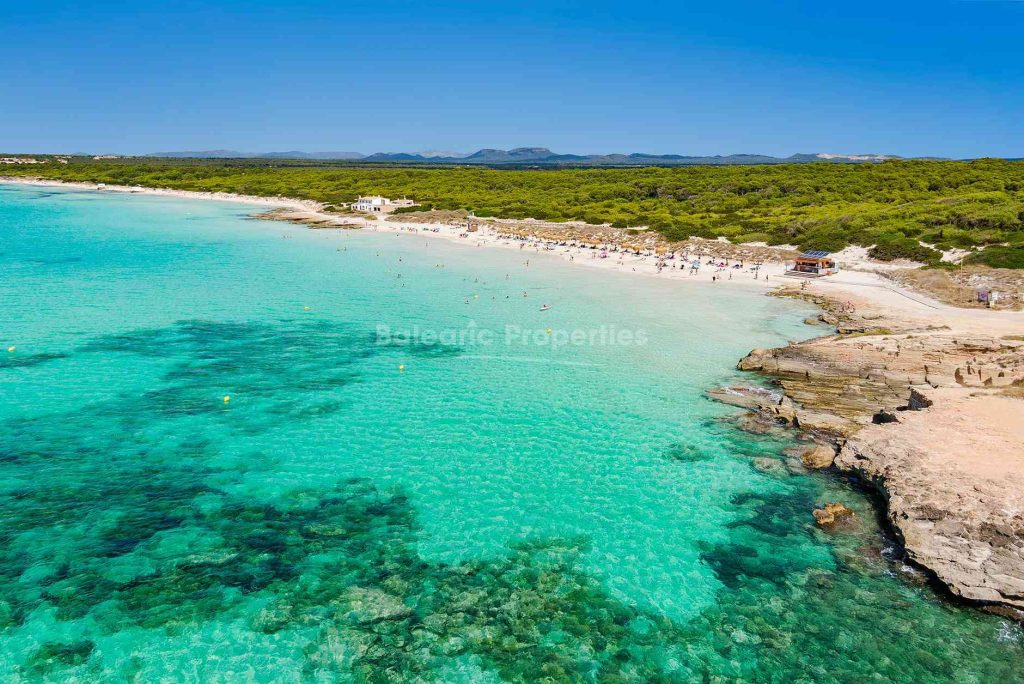
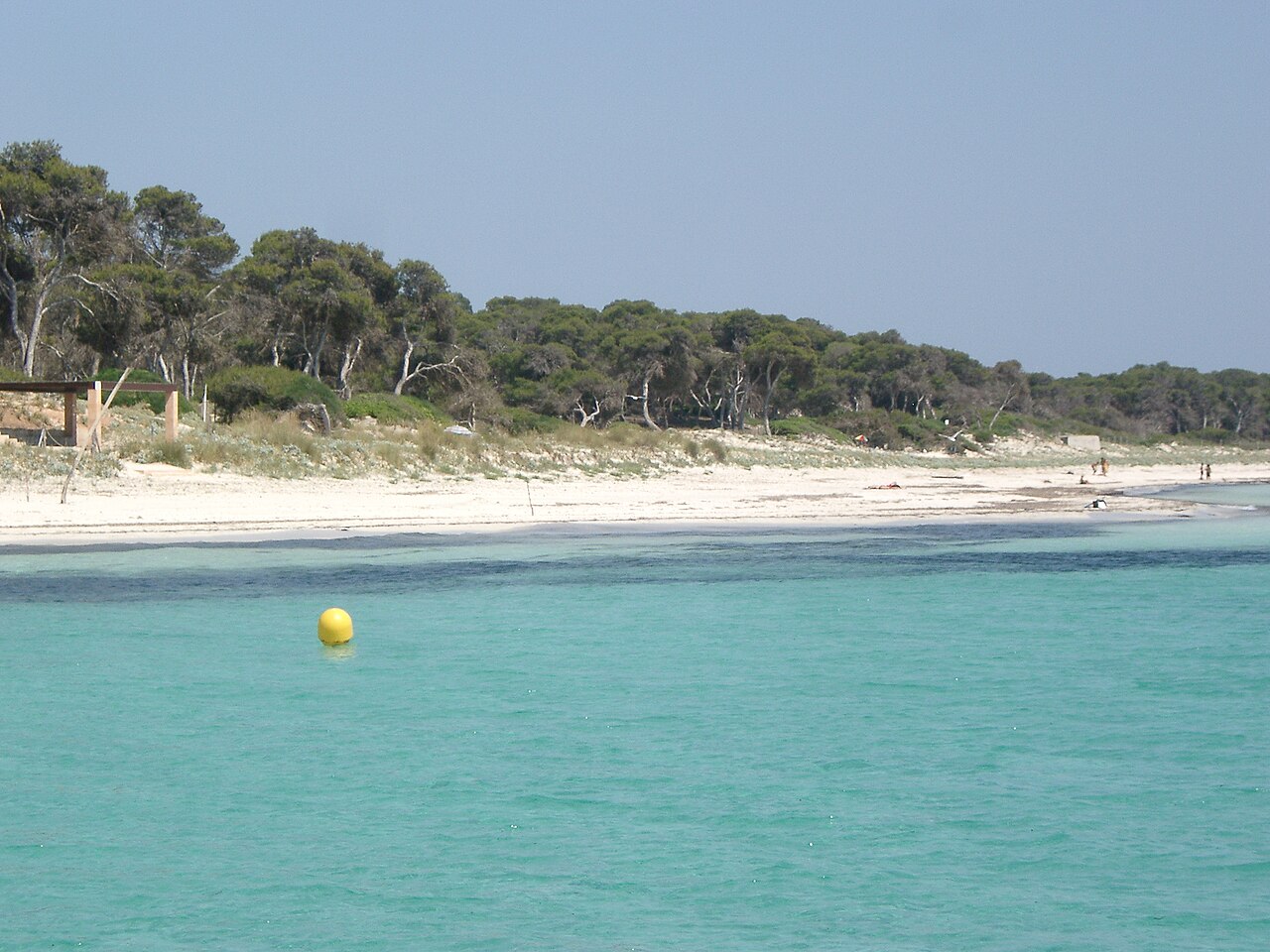
The quieter sister of Es Trenc, on the other side of Colònia de Sant Jordi: a long, undeveloped beach looking across to Cabrera. No road reaches it, which keeps the crowds away.
Practical info
Getting there
On foot from Colònia de Sant Jordi along the coast: about 2.3 km, 30 to 45 minutes each way.
On the beach
None: no bars, toilets, sunbeds or lifeguard.
Good to know
Carry water and take your rubbish back with you. Posidonia can build up after storms.
Would you like to live nearby?
Colònia de Sant Jordi is a small harbour village with apartments and villas close to the sea, and the departure point for boats to the Cabrera National Park.
14
South · Cala Pi (Llucmajor)
Cala Pi
Great for: A fjord-like inlet watched over by a 17th-century tower
Hidden coves
Snorkelling
Iconic views
A slender sandy beach at the end of a fjord-like inlet, walled by cliffs and watched over at its mouth by a 17th-century defence tower. The narrow entrance keeps the water calm.
Practical info
Getting there
Car to the village, then 147 stone steps down. Parking is limited in summer.
On the beach
Very little on the sand itself; restaurants and bars in the village at the top of the steps.
Good to know
Not suitable for buggies or reduced mobility. A clifftop path leads to the Torre de Cala Pi.
Would you like to live nearby?
Around Cala Pi and along the Llucmajor coast there are frontline villas above the inlet and newer homes at Sa Torre and Puig de Ros.
Along the Serra de Tramuntana, a UNESCO World Heritage landscape since 2011, beaches are few, small and spectacular: pebble coves at the foot of the mountains, reached by winding roads or by boat.
Great for: The Torrent de Pareis gorge meeting the sea
Wild & natural
Iconic views
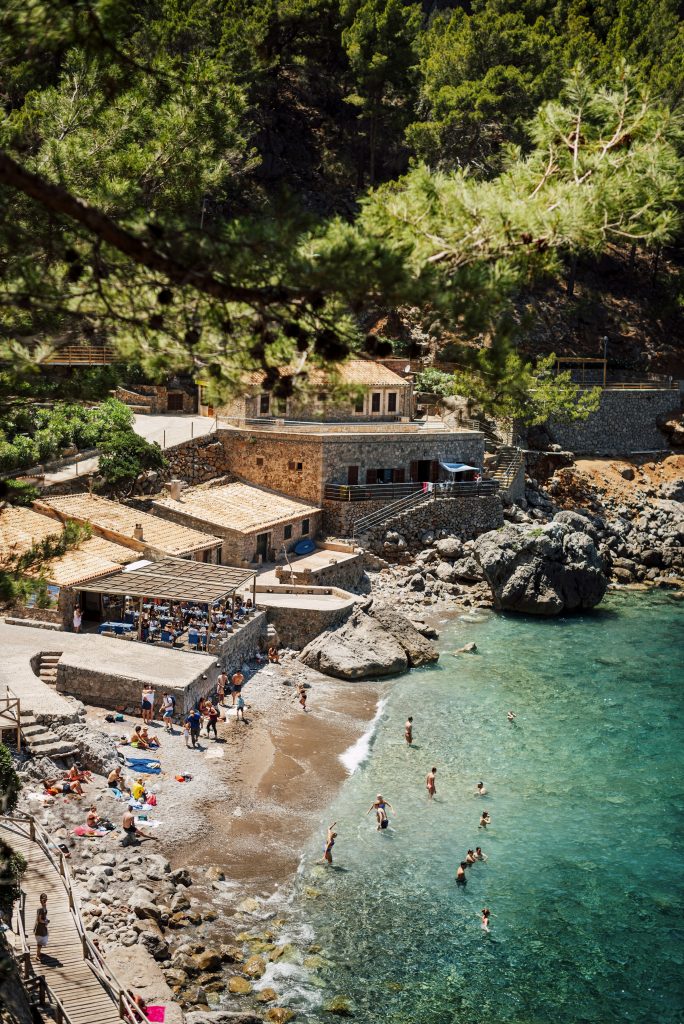
Less a beach than a destination: a tiny harbour and, through tunnels in the rock, the pebble beach where the Torrent de Pareis gorge meets the sea between sheer cliffs.
Practical info
Getting there
A narrow mountain road of tight hairpin bends, or a boat from Port de Sóller, about an hour.
On the beach
Cafés by the harbour; no lifeguard.
Good to know
Crowded at midday when coaches and boats arrive. Come early or late, and only drive if you are comfortable on mountain roads.
16
West · Deià
Cala Deià
Great for: Seafood by the water in a Tramuntana cove
Hidden coves
Lunch by the sea
Iconic views
Snorkelling
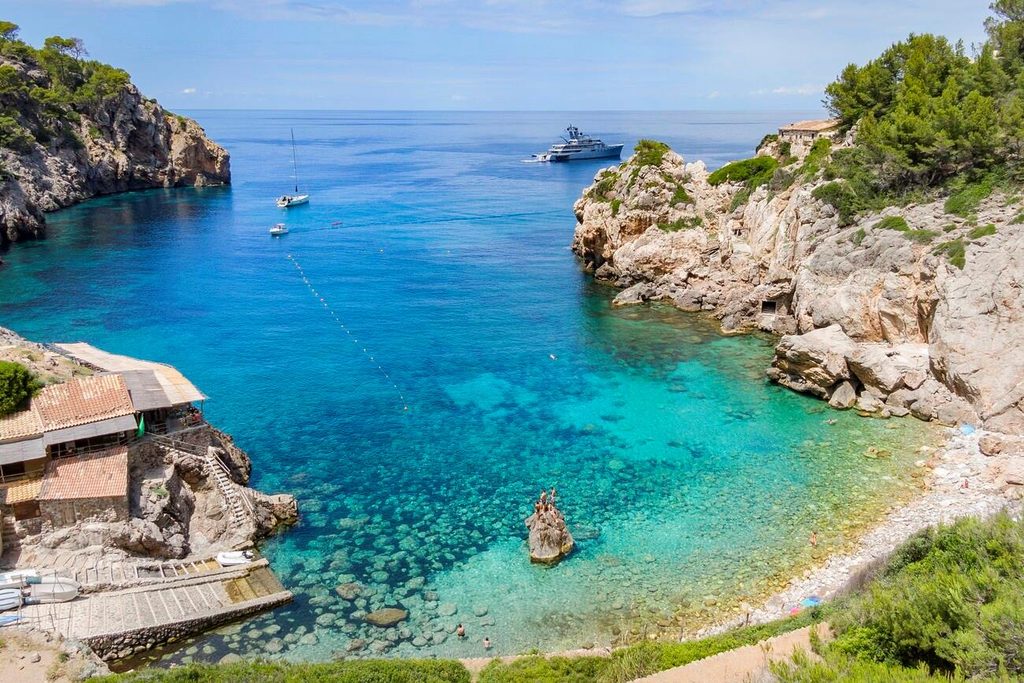
A small rocky cove below the village of Deià, with fishermen’s boathouses, a slipway and seafood restaurants by the water.
Practical info
Getting there
A path down from the village (about 25 minutes) or a narrow road. The small car park has an automatic barrier that closes when it is full.
On the beach
Restaurants, a small jetty and boathouses; no sand.
Good to know
Bring water shoes for the pebbles. Book ahead for lunch in summer.
Would you like to live nearby?
Deià’s stone houses and terraced fincas look out over the sea; homes here are scarce and highly sought after.
Great for: A round natural harbour with year-round life
Family-friendly
Lunch by the sea
Iconic views
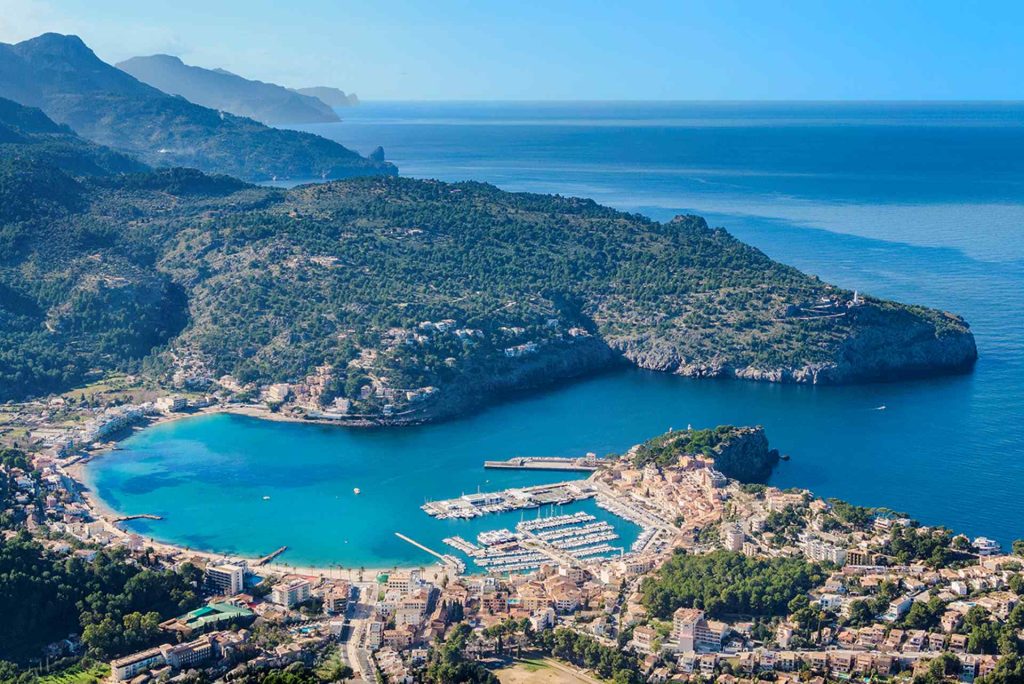
A near-circular natural harbour enclosed by mountains, with two beaches, Platja d’en Repic and Platja des Traves, sheltered water and a seafront promenade. Boat trips leave from here along the Tramuntana coast.
Practical info
Getting there
Car via the Sóller tunnel, or the historic tram from Sóller, running since 1913.
On the beach
Promenade, restaurants, sunbed hire and showers at Platja d’en Repic.
Good to know
Combine the tram with the vintage train from Palma for a day without the car.
Would you like to live nearby?
Sóller and its port have genuine year-round life: 19th-century townhouses in Sóller, fincas among the orange groves of the valley and sea-view villas above the harbour.
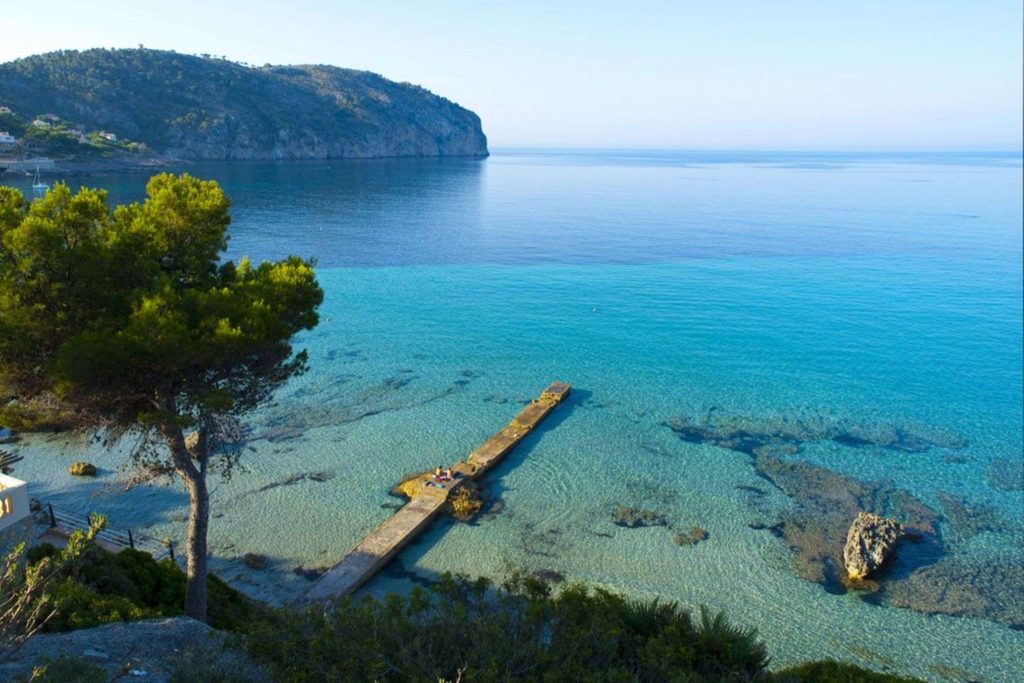
Between Palma and Andratx lies the island’s most established residential coast: sandy bays within half an hour of the city and the airport, with marinas and golf close by.
Great for: A sandy bay with an islet restaurant reached by footbridge
Family-friendly
Lunch by the sea
A small sandy bay near Andratx with a rocky islet in the middle, reached by a wooden footbridge and home to a restaurant that mainly opens from spring to autumn.
Practical info
Getting there
Car, about 25 to 30 minutes from Palma, or bus.
On the beach
Lifeguards, showers and sunbed hire; seafront restaurants.
Good to know
Golf de Andratx sits just behind the village.
Would you like to live nearby?
A small, golf-oriented village of villas on the hillsides, with Port d’Andratx a few minutes away.
In July and August, arrive before 10:00: car parks at small coves such as Cala Llombards, Cala Mondragó and Cala Deià fill early.
Check access rules first. Formentor has seasonal traffic restrictions, and some walk-in coves cross private land; use the recognised routes.
Bring water, food and shade to Cala Varques and Es Carbó, which have no facilities at all.
Pack water shoes for the pebble and rock coves: Sa Calobra, Cala Deià, Cala Llombards and Cala Pi.
Check the flag before swimming. A red flag means no swimming, however calm the water looks.
In protected areas such as Mondragó and Es Trenc, stay on marked paths and take your rubbish home.
Living by the sea in Mallorca
Many people who fall for a beach end up asking what it would be like to live nearby. The answer depends on the town behind it: whether it stays alive in winter, how far it is from Palma and the airport, and what kind of homes exist there.
Beachfront
The home faces the sea directly, with only the public shoreline between you and the water. Very few exist and they carry a clear premium.
Playa de Muro, Playa de Alcúdia and Puerto Pollensa in the north, with their shallow, sheltered water; Palmanova and Camp de Mar in the southwest; Port de Sóller in the west; and, among the smaller coves, Cala Mondragó and Cala d’Or in the southeast.
Which beaches can only be reached on foot?
Cala Varques in the east (a coastal walk of about an hour from Cala Romàntica) and Es Carbó in the south (30 to 45 minutes from Colònia de Sant Jordi). Neither has any facilities, so bring water, food and shade.
Can you drive to Formentor beach?
Outside the summer restriction period, yes. In 2026, from 15 May to 18 October, private cars could reach the beach car park between 10:00 and 22:00 only until it filled, after which a barrier closed the road. The TIB 334 bus from Alcúdia and Port de Pollença, or a summer boat from Port de Pollença, are the easy alternatives. Dates are set each year by the DGT.
Which are the longest beaches in Mallorca?
Playa de Alcúdia and Playa de Muro share one bay in the north and together run for several kilometres. In the south, Es Trenc and Es Carbó are among the island’s longest natural beaches.
Do you have to pay to use the beaches?
No. Beaches in Spain are public. Costs come from some car parks, such as those at Es Trenc and Cala Mondragó in high season, and from hiring sunbeds and umbrellas.
Which beaches are best for snorkelling?
Cala Sant Vicenç, Cala Pi, Cala Llombards, Cala Mondragó, Portals Vells and Cala Varques all have clear water close to the rocks. Calm, windless mornings give the best visibility.
Which beaches are in protected natural areas?
Es Trenc lies in the Es Trenc–Salobrar de Campos natural area; Cala Mondragó and S’Amarador in the Mondragó Natural Park, protected since 1992; Cala Mesquida is protected together with Cala Agulla; and Playa de Muro sits beside the S’Albufera Natural Park.
When is the best time to visit Mallorca’s beaches?
From late spring to early autumn the sea is warm and most beach services are open. July and August are the busiest months; May, June and September are quieter and the water is still pleasant.
What is the difference between a beachfront home and one near the beach?
A beachfront or frontline home faces the sea directly, with only the public shoreline in between. A home near the beach is a short walk or drive away. Frontline homes are far scarcer and priced accordingly, so it is worth being clear which you are looking for.
Practical details checked in October 2026 against official sources, including the Balearic Islands tourism board (illesbalears.travel), Spain’s official tourism site (spain.info) and the DGT for Formentor access. Services and parking change with the season, so check locally before you travel. Map outline: Natural Earth. Some photos: Unsplash.
Additional photography credits:Cala Varques: Olaf Tausch, CC BY 3.0; Cala Sa Nau: Xxlstier, CC BY-SA 4.0; Es Carbó: mateu mulet, CC BY 3.0; Cala Pi: Olaf Tausch, CC BY 3.0; Portals Vells: Rudolfo Kithera, CC0 1.0. Via Wikimedia Commons. Images resized for the web and displayed with responsive cropping; no other edits. The Cala Sa Nau image and its adaptations remain under CC BY-SA 4.0.
 Deutsch
 English
 Español


 1