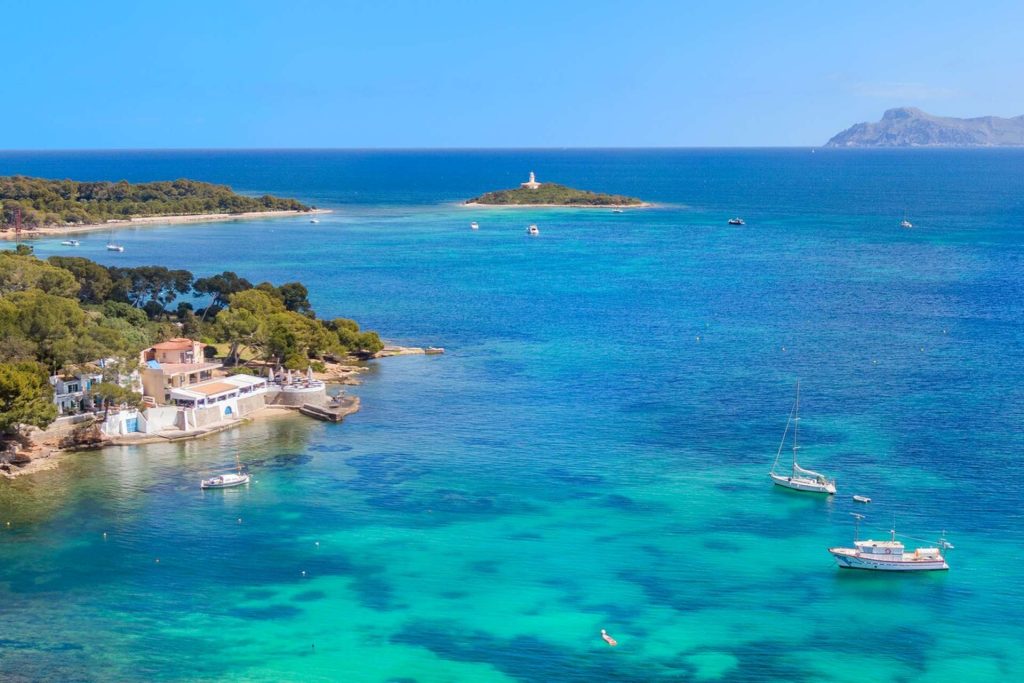
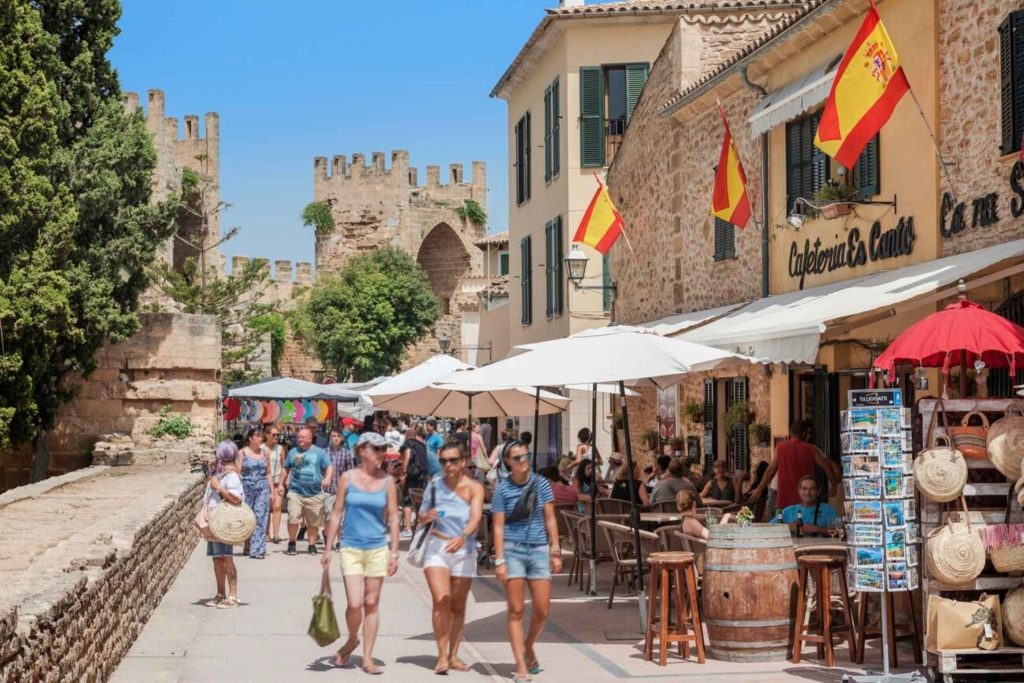
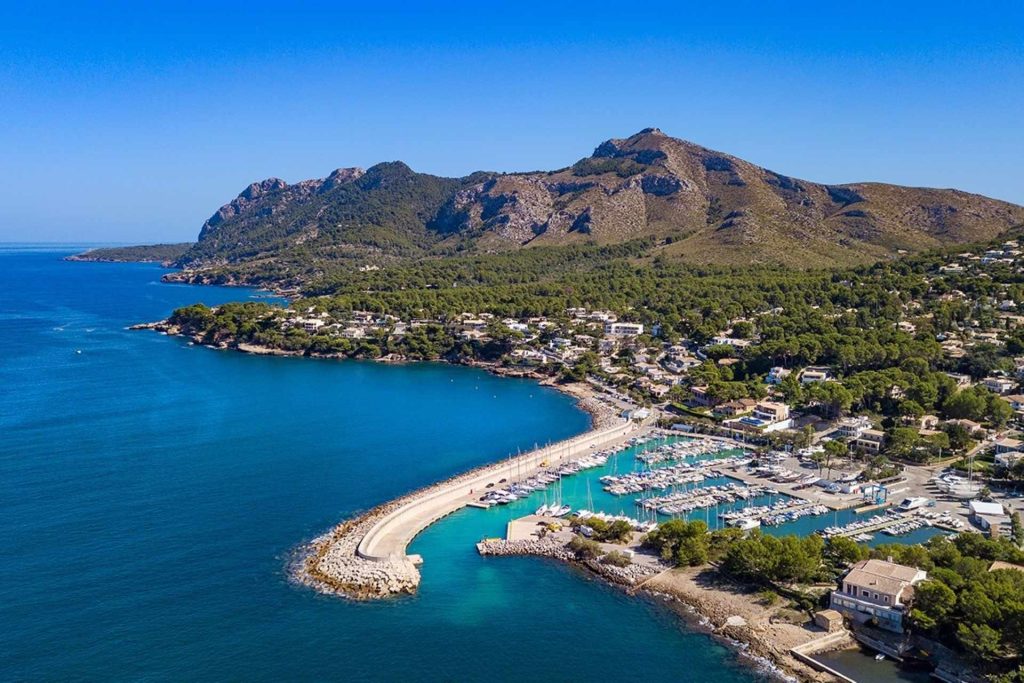
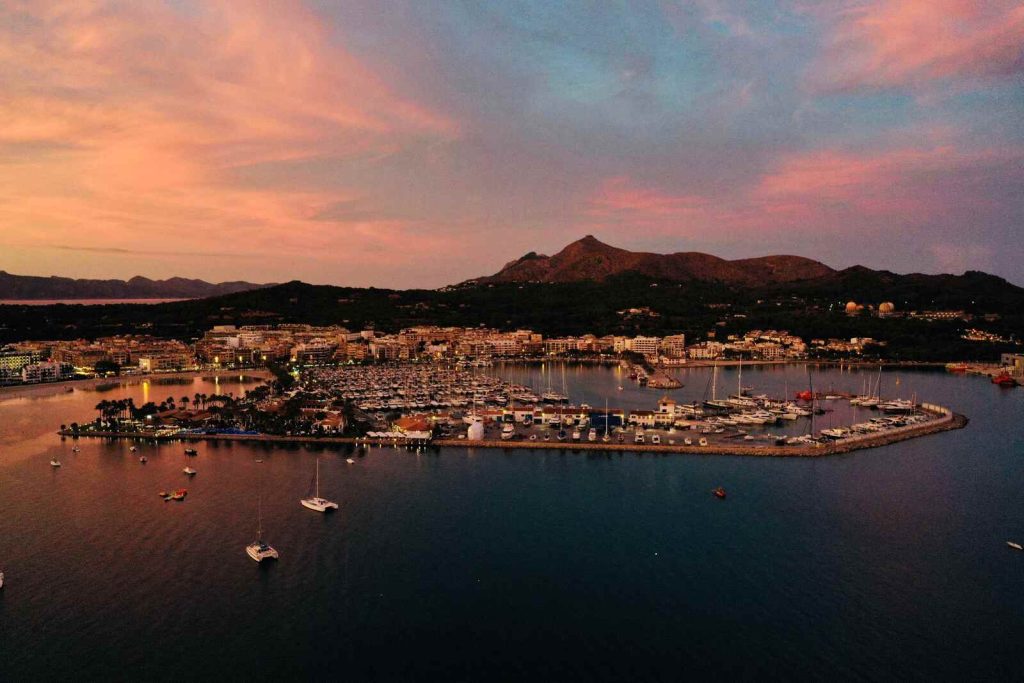
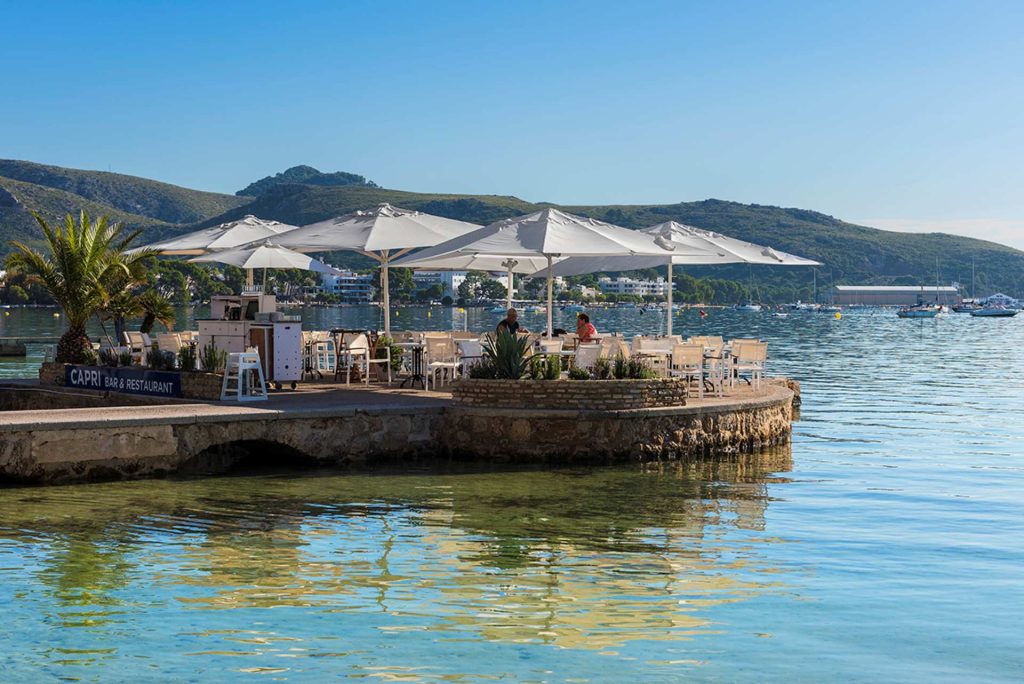
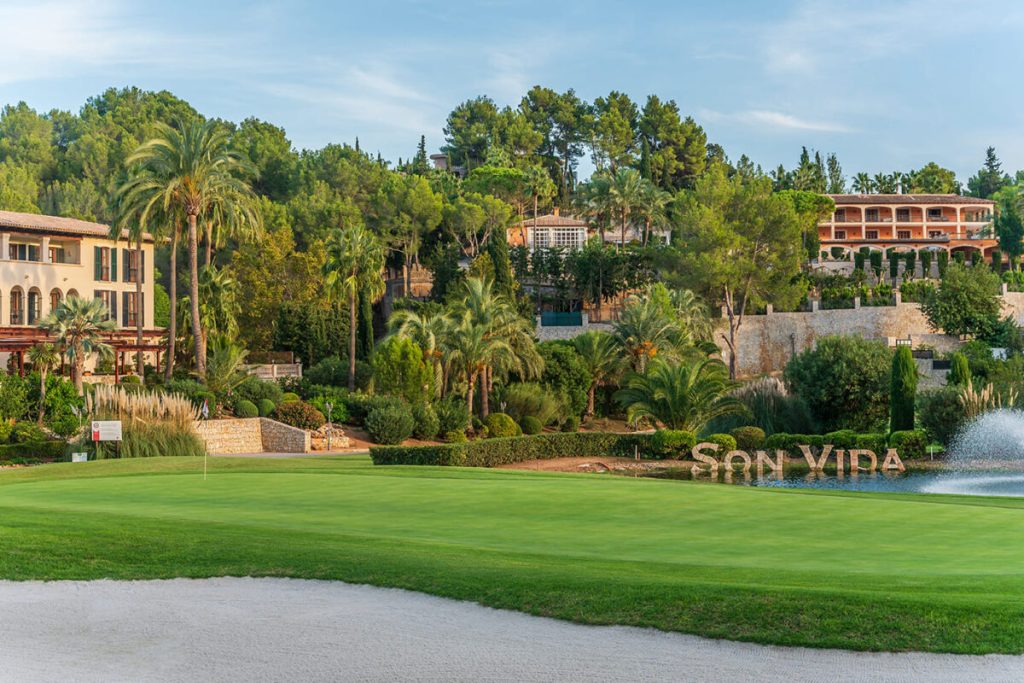
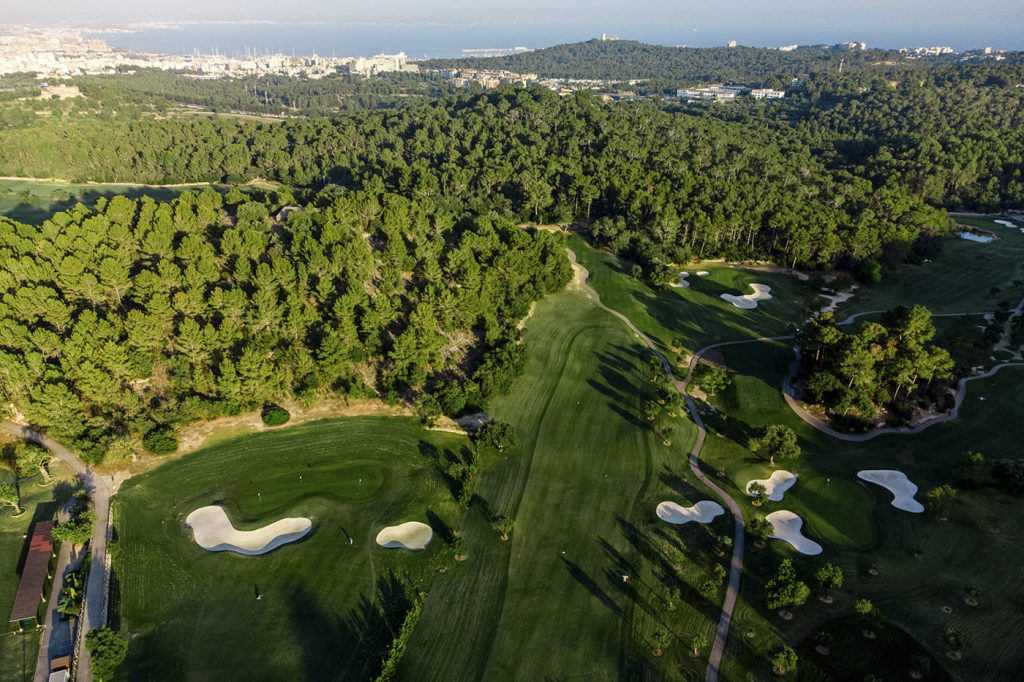
Michelin Star Restaurants in Mallorca 2026: The Full Map
A week after the MICHELIN Guide handed three Mallorcan hotels its Two Keys, the island’s restaurants are back in the spotlight. Here is where Mallorca’s starred tables are today, what each one stands for, and what they tell you about the places around them.
The current MICHELIN Guide Spain 2026 lists ten starred restaurants in Mallorca, holding eleven stars between them. Only one, Voro in Canyamel, holds two, and it is the sole two-star address in the Balearic Islands. Four kitchens also carry the Green Star, the guide’s award for sustainable gastronomy.
What stands out is not the number but the geography. Only three of the ten are in Palma. The rest are spread across the Tramuntana, the north coast, the east and the southwest, often in the same villages where international buyers are looking for homes.
10starred restaurants
11MICHELIN stars
4Green Stars
The island’s only two stars
Voro ★★
Cap Vermell Grand Hotel, Canyamel · Chef Álvaro Salazar
Salazar serves a single tasting menu, no à la carte, built around modern, creative Mediterranean cooking. The restaurant sits in its own building within the Cap Vermell estate, which this month moved up to Two MICHELIN Keys. That makes Canyamel one of the few places in Spain where a two-star kitchen and a Two Key hotel share the same address.
Book well ahead: it is a small room and opens only for dinner, several evenings a week.
One-star restaurants, area by area
Palma
Marc Fosh ★
Old town, Palma
Light, seasonal Mediterranean cooking from the first British chef to earn a MICHELIN star in Spain. A reliable choice for a business lunch or a first starred dinner on the island.
DINS Santi Taura ★
Old town, Palma
Santi Taura reworks old Mallorcan recipes and culinary memory into a precise tasting menu. The most Mallorcan of the starred kitchens in the capital.
Zaranda ★
Hotel Es Princep, Palma · Chef Fernando P. Arellano
Expressive, contemporary cooking inside Es Princep, itself a One MICHELIN Key hotel overlooking the old city walls. See our guide to living in Palma Old Town.
Tramuntana and the north
Béns d’Avall ★ + Green Star
Sóller coast · Jaume and Benet Vicens
A family restaurant on the cliffs above the sea, cooking modern Mallorcan food largely from its own garden and local growers. One of the most spectacular terraces on the island, and a short drive from Sóller.
Maca de Castro ★
Port d’Alcúdia · Chef Maca de Castro
A starred kitchen since 2012, with a tasting menu that changes with the harvest and a strong focus on the island’s biodiversity. More on living in Alcúdia.
Fusion19 ★
Playa de Muro
Creative cooking that mixes Mediterranean produce with Asian technique, a short drive from the Alcúdia and Pollensa bays.
Southwest and south
Es Fum ★
St. Regis Mardavall, Costa d’en Blanes
Refined, seasonal fine dining on the Calvià coast, close to Puerto Portals and the international schools.
Sa Clastra ★
Castell Son Claret, Es Capdellà · Chef Jordi Cantó
A young Mallorcan chef reinterpreting island cooking through childhood memory. The hotel holds One MICHELIN Key.
Andreu Genestra ★ + Green Star
Llucmajor · Chef Andreu Genestra
Local, farm-driven cooking that has earned both a star and a Green Star since moving to Llucmajor.
Green Stars: where the produce leads
Four Mallorcan kitchens hold the MICHELIN Green Star. Two also have a regular star: Béns d’Avall and Andreu Genestra. The other two are recognised for sustainability alone.
Terrae
Port de Pollença · Chef David Rivas · New Green Star in 2026
The island’s newest MICHELIN distinction, a tasting menu built on local farms and fishermen in the heart of the Pollensa bay. Discover living in Pollença.
Ca na Toneta
Caimari · Chef María Solivellas
A village restaurant at the foot of the Serra, cooking from its own garden and the seasons of the Tramuntana.
Seven of Mallorca’s ten starred kitchens are outside Palma. On this island, the best table is often a drive into the villages, not a walk across town.
Where stars and keys meet
The MICHELIN Guide rates restaurants and hotels separately, but in Mallorca the two increasingly overlap. Voro sits inside Cap Vermell (Two Keys), Zaranda inside Es Princep (One Key) and Sa Clastra inside Castell Son Claret (One Key). For owners and buyers, this cluster of recognised hotels and restaurants is part of what sustains year-round demand in areas like Canyamel, Palma’s old town and the southwest.
The next edition will be revealed at the MICHELIN Guide Spain 2027 gala in Huesca on 24 November 2026. We will update this guide with any new Mallorcan stars. For more places to eat beyond the starred list, read our guide to Mallorca’s best restaurants.
Living close to the island’s best tables
From a townhouse in Palma’s old town to a finca near Sóller or a villa on the Pollensa bay, our team can show you properties within easy reach of Mallorca’s starred restaurants.
How many Michelin-starred restaurants are there in Mallorca?
In the MICHELIN Guide Spain 2026, Mallorca has ten starred restaurants with eleven stars in total: Voro with two stars and nine restaurants with one.
Which restaurant in Mallorca has two Michelin stars?
Voro, at the Cap Vermell Grand Hotel in Canyamel, led by chef Álvaro Salazar. It is the only two-star restaurant in the Balearic Islands.
Which Michelin-starred restaurants are in Palma?
Marc Fosh, DINS Santi Taura and Zaranda, all with one star.
What is a Michelin Green Star?
An award for restaurants leading in sustainable gastronomy. In Mallorca, Terrae, Andreu Genestra, Béns d’Avall and Ca na Toneta hold one.
When are the next Michelin stars announced?
The MICHELIN Guide Spain 2027 will be presented in Huesca on 24 November 2026.
Distinctions from the MICHELIN Guide Spain 2026, checked September 2026. Restaurants may close seasonally; confirm opening days and book directly with each restaurant.
Tax considerations for foreign buyers
Tax information checked: 18 September 2026. Balearic regional purchase-tax figures below have been cross-checked against the current Agència Tributària de les Illes Balears (ATIB) guidance and the June 2026 legislative update. Tax treatment depends on personal circumstances; independent advice remains essential.
Buying a home in Mallorca, Ibiza or Menorca is refreshingly open to international buyers — there
are no restrictions on foreign ownership, and the purchase process itself is well established. What
catches many buyers off guard is not the purchase itself, but everything the Spanish tax system
expects from them afterwards: the taxes due at completion, the ones due every single year they own
the property, and the ones due if they eventually sell. This guide sets out what those actually are.
This is general information, not personalised tax advice. Rates and thresholds are reviewed
periodically by both the national and Balearic tax authorities — always confirm current figures with
an independent tax advisor (asesor fiscal) or gestor before signing anything.
For a step-by-step walkthrough of the purchase itself — NIE number, reservation contract, arras,
notary completion — see our Balearic Islands Buying Guide.
This section focuses only on what you pay to whom.
Resale property: Impuesto de Transmisiones Patrimoniales (ITP)
Resale homes in the Balearic Islands are taxed under ITP, a regional transfer tax applied on a
progressive scale rather than a single flat rate. As checked in September 2026, ATIB publishes the following general progressive scale for transfers of real estate. See the current ATIB ITP rates:
Portion of the price
Rate
Up to €400,000
8%
€400,000 – €600,000
9%
€600,000 – €1,000,000
10%
€1,000,000 – €2,000,000
12%
Above €2,000,000
13%
The tax is calculated by tramos — each portion of the price is taxed at its own bracket rate, not
the whole price at the top rate. Reduced rates and bonifications exist for qualifying purchases of a habitual home, but the eligibility rules are specific. Following the June 2026 changes, ATIB confirms that the maximum property-value threshold used for certain housing tax benefits is €331,859.70 in Mallorca and Menorca and €378,211.68 in Ibiza and Formentera for taxable events from 14 June 2026. The benefit itself may apply only to a defined portion of the tax base and depends on conditions such as age, first-home status or family circumstances. See the ATIB June 2026 update and confirm eligibility with your advisor before relying on a reduced rate or bonification.
New-build property: IVA + AJD
New-build homes bought directly from a developer are taxed differently: 10% VAT (IVA) plus AJD
(stamp duty), generally 1.5% in the Balearic Islands — together broadly in line with what’s outlined
in our Buying Guide. Reduced AJD rates and exemptions can apply to specific categories of buyer, so
treat this as a starting estimate rather than a quote.
Other one-off costs
Budget separately for notary fees, land registry fees and your lawyer’s fees — together these
typically add another 1–2%, on top of the tax itself.
2. Taxes due every year you own the property
This is the part that surprises many overseas owners: even if you never rent the property out, a
non-resident owner can still have an annual Spanish tax liability, through imputed rental income.
IBI — the local property tax
Impuesto sobre Bienes Inmuebles is the Spanish equivalent of council tax, billed annually by the
town hall (ayuntamiento) and based on the property’s cadastral value. The rate is set locally, so it
varies by municipality — your notary or gestor will confirm the exact amount for the specific
property before completion.
IRNR — non-resident income tax
If you’re not a Spanish tax resident, you must file an annual non-resident tax return (Modelo 210)
even when the property earns no income. Spain treats a second home as generating “imputed income” —
a notional rent set at 1.1% of the property’s cadastral value (2% if that value hasn’t been officially
revised in the last decade or so) — and taxes it accordingly:
19% for tax residents of the EU, Iceland, Norway and Liechtenstein
24% for everyone else, including UK residents post-Brexit
If you do let the property out, actual rental income is taxed at the same rates — but with an
important asymmetry: EU/EEA owners can deduct expenses directly tied to the rental (management fees,
repairs, community fees for the let period); non-EU owners generally cannot, which meaningfully
changes the net return for British, American and other non-EU landlords.
3. Taxes due when you eventually sell
If you’re a non-resident seller, two separate charges apply — Spanish tax residents follow a
different regime (via their regular IRPF return) and aren’t subject to either of these:
3% withholding — the buyer is legally required to withhold 3% of the sale price
and pay it directly to the tax office on your behalf (Modelo 211), as a deposit against your
eventual capital gains bill.
19% capital gains tax on the actual profit, calculated once your final tax
return is filed — if the 3% withheld turns out to be more than you owe, the difference is refunded;
if it’s less, you settle the balance.
Separately, the seller (not the buyer) is also usually liable for plusvalía municipal, a local tax
on the increase in the land’s cadastral value over the ownership period. It’s set by each town hall
individually, so there’s no single figure to quote here — your gestor calculates it at the point of
sale.
A note on wealth tax
This is where high-value buyers should pay closer attention. Owning property in Spain above
certain thresholds can bring you into scope for Impuesto sobre el Patrimonio (wealth tax) and,
depending on the size of your worldwide assets, Spain’s Temporary Solidarity Tax on Large Fortunes.
Exemptions differ significantly by residency status and by autonomous community — the Balearic
Islands, for residents, currently apply a considerably higher exempt minimum than most of Spain — so
this is genuinely case-by-case. For anyone buying at the upper end of the market, we’d recommend
sitting down with a tax advisor before completion, not after.
Getting it right from the start
None of this is a reason to be cautious about buying in the Balearics — it’s simply the paperwork
that comes with owning property in a country that isn’t your own. Every buyer we work with is
connected with an independent lawyer and tax advisor as part of the process, precisely so there are
no surprises at completion or at tax time the following spring.
Robert Graves came to Deià in 1929 and never really left; Chopin and George Sand spent one difficult winter in Valldemossa’s monastery a century earlier and left behind Mallorca’s most famous piece of music-history tourism. Two mountain villages, ten minutes apart on the same stretch of the Serra de Tramuntana, both shaped as much by the artists and writers who settled here as by the terraced hillsides themselves. This is not a beach-and-marina lifestyle. It suits people drawn to stone houses, olive groves and a genuinely international creative community, in a setting protected as UNESCO World Heritage rather than developed into resort infrastructure.
Why live here
Deià and Valldemossa sit inside the Serra de Tramuntana, inscribed by UNESCO in 2011 as a Cultural Landscape World Heritage Site, which means the terraced, dry-stone mountainside around both villages is a protected landscape by law, not just by reputation. That protection is part of the appeal: neither village has been allowed to sprawl, so the view a buyer sees today is close to the one Robert Graves or Archduke Ludwig Salvator saw a century ago. Valldemossa is around 20 kilometres and a 25-minute drive from Palma; Deià is a little further, around 29 kilometres and 35 minutes, along the same MA-10 mountain road. Both are close enough for a working link to Palma without feeling like a suburb of it, and the same road continues on to Sóller, the larger valley town most people pair with Deià and Valldemossa when house-hunting this stretch of coast.
The two villages have drawn foreign writers, painters and musicians for close to a century, starting with Archduke Ludwig Salvator of Austria in the 19th century and continuing through Robert Graves from 1929 onward, and that legacy still shapes daily life: small galleries, a genuine literary and artistic community, and a slower pace built around the mountains rather than the coast. It’s a lifestyle bought deliberately, not by default, and it suits people who want that trade specifically.
Lifestyle
Beaches
Neither village has a resort beach, and that’s by design. Cala Deià is a small pebble cove at the bottom of a steep path below Deià, with a couple of simple beach restaurants open in season. Llucalcari, a scattered hamlet between Deià and Sóller, has an even smaller, quieter cove reached on foot. Valldemossa’s own coastline at Port de Valldemossa is a tiny rocky landing with a handful of boat moorings rather than a beach at all. Swimming here means small coves, not sand.
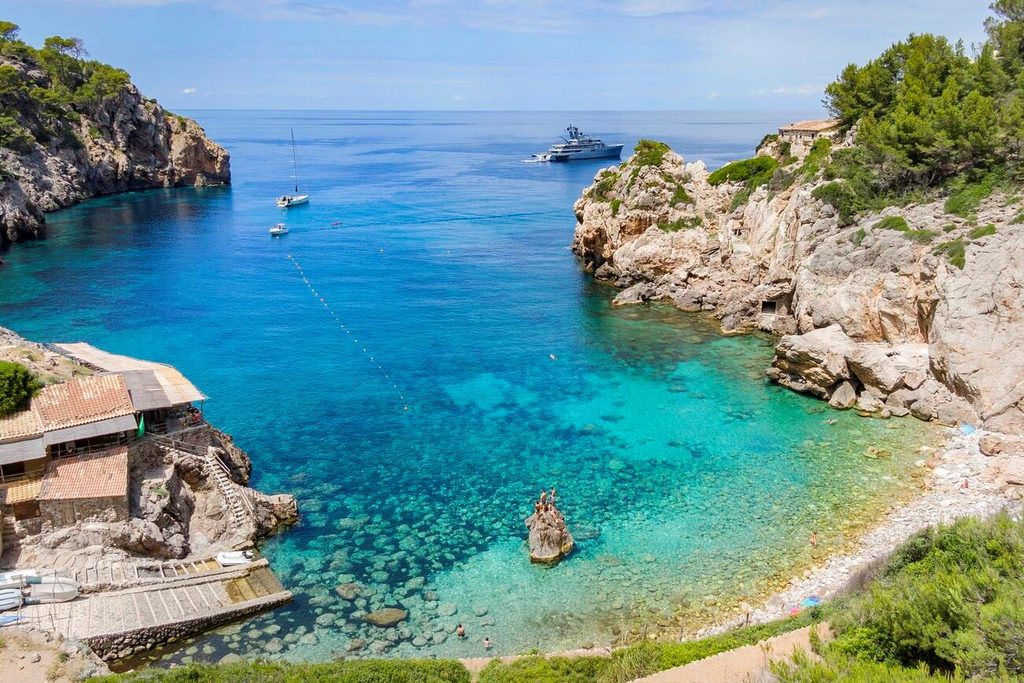
Tranquil Cala Deià cove with majestic turquoise water.
Restaurants & Cafés
Sa Fonda, in Deià, has been the village’s informal social hub for decades, more bar than restaurant and long associated with the artists’ colony that grew up around Graves. The village has also long punched above its weight for serious dining, although its fine-dining scene has changed considerably in recent years. Valldemossa’s dining is smaller in scale and clustered around the Cartuja monastery, serving the steady flow of day visitors as much as residents, with a handful of quieter, more local options away from the main square.
Schools
Neither village has an international school. Families choosing to live here typically either use the local Balearic public school (each village has its own small primary school) or commute toward Palma, Bunyola or Santa Maria del Camí for other options, including the international schools clustered closer to the capital. It’s a genuine consideration for a family with school-age children: this is a lifestyle built around the village and the landscape, not around proximity to international schooling.
Outdoor activities
The GR221 long-distance trail, Mallorca’s principal hiking route through the Tramuntana, runs directly through both villages, and the mountains behind Deià and Valldemossa offer some of the range’s best hiking without needing to travel further into the Sóller valley. Road cycling is a major draw: the coastal MA-10 through Deià and Valldemossa forms part of the Mallorca 312, the island’s best-known long-distance cyclosportive, and the same stretch of road is used by professional teams during winter training camps. There’s no golf course or marina in either village, this is hiking and cycling country, not a nautical one.
Community & International Life
The international community here traces back further than almost anywhere else on the island. Archduke Ludwig Salvator settled in the area in the late 19th century, buying up estates including Son Marroig and Miramar between Deià and Valldemossa; Robert Graves arrived in 1929, built his house Ca n’Alluny in 1932, and, apart from the Spanish Civil War years, lived and worked there until his death in 1985.
That legacy drew a steady stream of writers, painters and musicians through the 20th century, and the pattern holds today: a smaller, more culturally engaged international community than the coastal resorts, weighted toward creative professionals, retirees and second-home owners who restore old fincas rather than build new. The Fundació Robert Graves, based at Ca n’Alluny since the house opened as a museum in 2006, still runs literary events and hosts researchers, giving the community an actual institutional anchor rather than just a shared reputation.
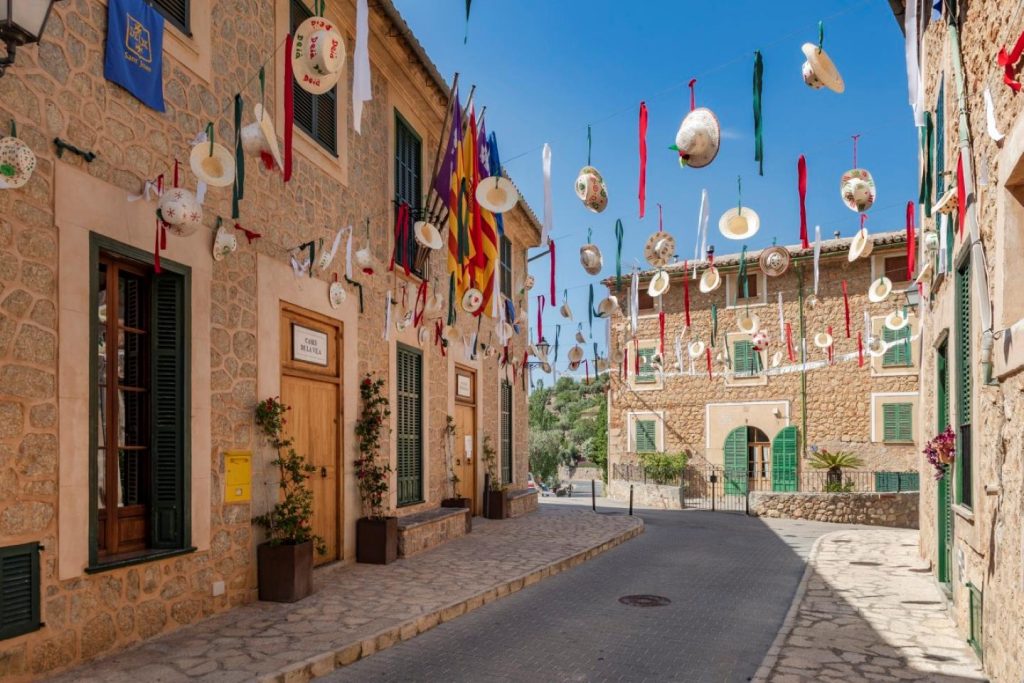
Typical Mallorcan decorations during Deia’s local celebrations.
Best Areas in Deià and Valldemossa
Deià village
The steep, stone-built centre climbing up to the parish church and cemetery where Robert Graves is buried. Deià is the most sought-after and prestigious pocket of the two villages, prized for its views, its walkability and its concentration of galleries, restaurants and long-established international residents.
Llucalcari
A scattered hamlet on the coast between Deià and Sóller, quieter and more private than the village centre, with a handful of houses reached by narrow lanes and its own small cove below. It suits buyers who want the Deià landscape without the village’s day-trip traffic.
Valldemossa village
Built around the Real Cartuja monastery where Chopin and George Sand spent the winter of 1838 to 1839, Valldemossa is the more visited of the two villages by day but keeps a genuine year-round population once the coach tours leave in the late afternoon. Good for buyers who want history and services within walking distance.
Miramar and the coast toward S’Estaca
The narrow coastal strip between Valldemossa and Deià, home to Son Marroig, the Archduke’s former estate, and S’Estaca, the historic property associated with Michael Douglas and Catherine Zeta-Jones. Properties here are rare and largely isolated, suited to buyers prioritising privacy and sea views above walking access to either village.
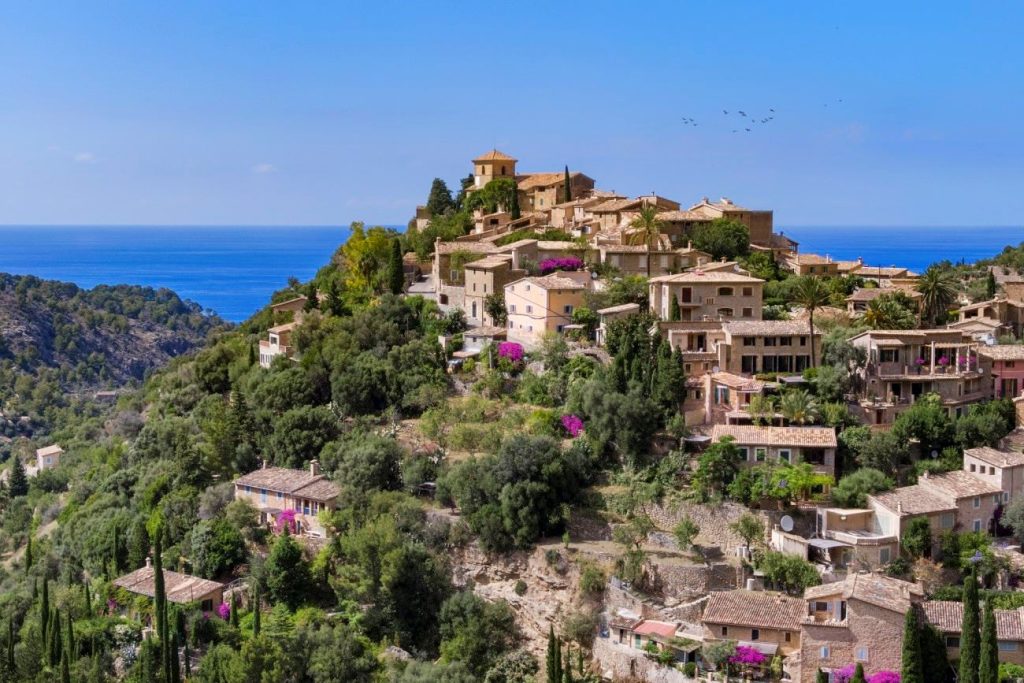
Aerial view of Deià’s hillside properties with the Mediterranean Sea in the background.
Things to know
Valldemossa in particular sees heavy day-trip traffic in high season, with coach parties visiting the Cartuja monastery from mid-morning to late afternoon; Deià sees less coach traffic but its single main street through the village centre gets genuinely congested on summer weekends. The MA-10 connecting both villages to Sóller and Palma is narrow and winding by nature, not a road built for volume, so journey times can run longer than the distance suggests during peak season. Neither village has a large supermarket, residents typically drive to Sóller or Palma for a full weekly shop.
Holiday-rental licensing (ETV) applies here as elsewhere in the Balearics, restored fincas are popular rental properties, but current rules restrict which building types qualify and how new licences are allocated, so this needs checking property by property rather than assumed. The permanent, year-round population in both villages is genuinely small, well below the summer visitor numbers, which is part of what keeps the pace of life slow outside the day-trip hours.
Who is it for?
Families: possible, but only with realistic expectations: neither village has an international school, so the choice is the small local Balearic public school in Deià or Valldemossa itself, or a genuine daily commute toward Palma, Bunyola or Santa Maria del Camí for other options. It suits families who want the village and mountain life enough to build schooling around it, not those who need an international school on the doorstep.
Retirees: a slower, village-centred pace with genuine community and services within walking distance, at the cost of being further from a hospital-scale healthcare centre than the coast.
Second-home owners: a long-established pattern of foreign ownership going back nearly a century, mostly in restored stone houses and fincas rather than new-build villas.
Art & culture buyers: the single most literal fit for these two villages, home to Robert Graves’s legacy in Deià and the Chopin and George Sand story in Valldemossa, with a living gallery and studio scene to match.
Investors: restored fincas let well to visitors drawn by the same landscape and history, but confirm current ETV licence eligibility for the specific property before assuming rental income.
Cyclists: the Deià-Valldemossa stretch of the MA-10 is part of the Mallorca 312 route and a genuine winter training destination for road cyclists.
Thinking of Buying?
If this mountain lifestyle sounds like the right fit, the next step is seeing what’s actually available across Deià and Valldemossa. Explore the full range of property for sale in Deià or browse Valldemossa listings to get a feel for current stock.
Is it easy to get around Deià and Valldemossa without a car?
Not really, day to day. Each village is walkable in itself, but getting between them, to Sóller, or to Palma for anything beyond basic shopping means driving the MA-10, since public transport along this route is limited and not built around resident routines.
Are there international schools nearby?
No, not directly in either village. Families typically use the local Balearic public school in Deià or Valldemossa, or commute toward Palma, Bunyola or Santa Maria del Camí for other options, so this is worth planning around before committing to school-age children living here full time.
Is there a real year-round community, or is it mostly holiday homes?
Both villages have a genuine, if small, year-round population, including families whose roots in the area go back generations, alongside the international residents and second-home owners the villages are known for. It’s a real community, just a compact one.
Are there restrictions on renovating a property here?
Both villages sit inside the UNESCO-protected Serra de Tramuntana, and Valldemossa’s historic centre carries additional heritage protections around the Cartuja, so renovation and building work typically needs sign-off from the local ayuntamiento beyond standard planning permission. Anyone considering restoring a finca or historic house here should check the specific rules with the council and a local architect before buying, rather than assuming standard renovation timelines apply.
Living in Santa Ponsa
In September 1229, King Jaume I of Aragon landed his invasion fleet in the bay at Santa Ponsa to begin the conquest of Mallorca, and the town still marks the spot with a monument and an annual re-enactment. Eight centuries on, that same bay is a family-oriented residential town built around three golf courses, a working marina and a permanent international population rather than a summer-only resort strip. Santa Ponsa suits buyers who want organised, resort-grade infrastructure (golf, sailing, schools) inside a genuine year-round community, and its own quieter, more residential character sets it apart from the nightlife economy of its immediate neighbour, Magaluf.
Why live here
Santa Ponsa sits within the municipality of Calvià, around 25 to 30 kilometres and a 20 to 30 minute drive from Palma’s airport via the Ma-1 motorway, close enough for a genuinely practical commute or regular flights. The town was built up from the 1970s around Golf Santa Ponsa, whose first course opened in 1977 as the second golf course built in Mallorca and has since hosted the European Tour seven times, drawing names like Seve Ballesteros and José María Olazábal. That golf-and-marina infrastructure, now three 18-hole courses and the Club Náutico Santa Ponsa marina, gives the town a level of organised sport and leisure that smaller villages simply don’t have.
It also has a school run that actually works: Agora Portals International School and King Richard III College, both British-curriculum schools, sit around 15 to 20 minutes away in Portals Nous, and Santa Ponsa itself has its own local public and semi-private schools for families choosing Spanish and Catalan immersion. Combined with year-round shops, a health centre and a supermarket, Santa Ponsa functions as a self-sufficient town rather than a satellite that empties out after August.
Lifestyle
Beaches
Platja de Santa Ponça, the main town beach, is a broad, gently shelving bay that suits families with young children, with the Sa Caleta cove and its Jaume I landing monument at its southern end. A short walk or drive along the coast brings smaller, quieter coves, and boat trips from the marina reach the protected Malgrats Islands just offshore, popular for snorkelling.
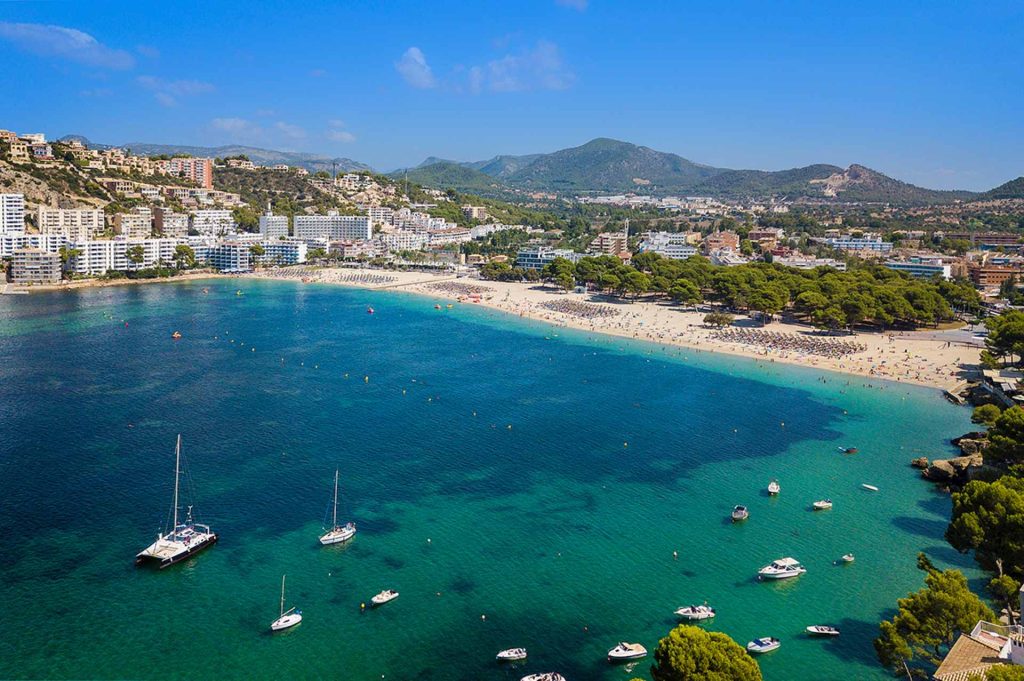
Santa Ponsa’s main beach, a wide sandy strip with clear turquoise waters.
Restaurants & Cafés
The marina and beachfront promenade carry Santa Ponsa’s main restaurant strip, a practical mix of Spanish, Italian and international family dining rather than a high-end scene, reflecting the town’s resident-and-family character over a see-and-be-seen one. Residents wanting a more upscale night out typically drive the short distance to Puerto Portals or Port Adriano, both within easy reach along the coast.
Schools
Agora Portals International School and King Richard III College, both in Portals Nous within Calvià, are the two main international options families use, roughly 15 to 20 minutes from Santa Ponsa by car. For families choosing full Spanish and Catalan immersion, or a shorter local school run, Santa Ponsa has its own public primary and secondary schools directly in town.
Outdoor activities
Golf is the town’s defining activity: Golf Santa Ponsa’s three 18-hole courses (Golf Santa Ponsa I, open to visitors; II and III, members only) anchor a genuine golfing community rather than a single course people play occasionally. The Club Náutico Santa Ponsa marina supports sailing, motorboating and watersports, and the flat coastal roads around the bay make for easy family cycling, distinct from the steep mountain climbs further along the coast toward Andratx.
Santa Ponsa’s international community grew up alongside the golf development from the 1970s onward, and British, German and Scandinavian residents remain a settled, established presence rather than a recent arrival, many now into a second generation of family ownership. The community organises itself substantially around the golf clubs and the yacht club, both of which run active social and sporting calendars beyond the courses and moorings themselves, giving residents a genuine year-round social structure rather than a seasonal one. The one date that pulls the whole town, historic Mallorcan families and international residents alike, together is the Festes del Rei en Jaume each September, a weekend of parades, a medieval market and a re-enactment of the 1229 landing organised by the Ajuntament de Calvià, and it is as close as Santa Ponsa comes to a defining civic identity distinct from its neighbours along this stretch of coast.
Best Areas in Santa Ponsa
Nova Santa Ponsa
Nova Santa Ponsa is a villa-led residential area built up around and between the golf courses, favoured by families and golf buyers who want space, private pools and a quieter, more suburban feel than the seafront.
Puerto de Santa Ponça (the marina front)
Apartments and townhouses close to the marina and main beach, walkable to restaurants and the yacht club, suited to buyers who want to be in the middle of daily life without a car for every errand.
Santa Ponsa town centre
The older, more local core of the town, with the year-round shops, schools and health centre that make Santa Ponsa function as a genuine town rather than a resort, popular with families and retirees who want proximity to everyday services.
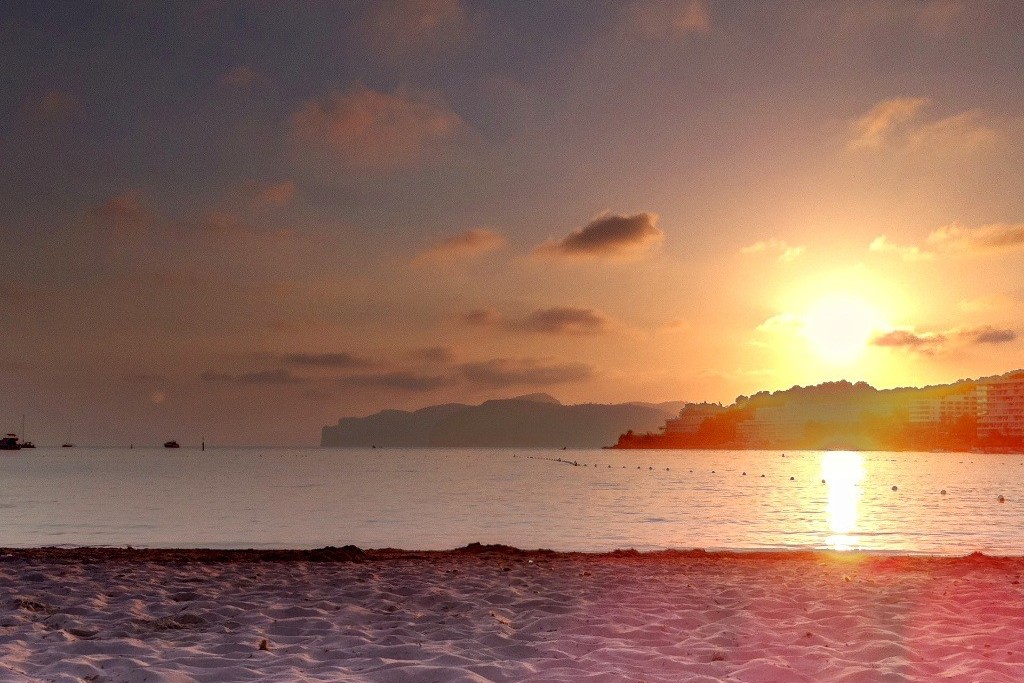
Beautiful sunset from Santa Ponsa’s sandy beach.
Things to know
July and August bring real crowding to the beach and marina, and traffic on the Ma-1 and the roads into town can back up at peak commuting hours even outside high season, since Calvià’s coast carries a lot of through-traffic. Santa Ponsa sits close to Magaluf, a short drive along the coast, which brings the convenience of nearby nightlife and larger shopping without Santa Ponsa itself sharing that resort’s character, the two towns feel distinctly different once you’re actually in them.
Holiday-rental licensing (ETV) follows the same Balearic-wide rules as elsewhere on the island, current regulation restricts which property types qualify and limits how new licences are issued, so check the specific rules for a property before assuming a rental licence transfers or is available. Santa Ponsa’s year-round population is larger and more stable than the smaller coastal or mountain towns further along Mallorca’s coast, which is part of why it supports full-time schools, a health centre and permanent shops rather than a seasonal economy.
Who is it for?
Families: international schools a short drive away, local schools directly in town, a family-friendly main beach and safe, low-traffic residential streets in Nova Santa Ponsa.
Retirees: year-round infrastructure (health centre, shops, services) rather than a seasonal-only town, plus an established international community and an easy Palma airport run.
Second-home owners: decades of settled foreign ownership and a well-organised leisure infrastructure (golf, marina, restaurants) that requires no real effort to plug into.
Golf buyers: three 18-hole courses with a genuine tournament pedigree, hosting the European Tour seven times, and a villa stock built specifically around fairway and golf-course-frontline living.
Sailing & nautical buyers: the Club Náutico Santa Ponsa marina offers moorings and a sailing community, with the larger Puerto Portals and Port Adriano marinas both within easy reach.
Investors: strong rental demand given the family and golf draw, but confirm current ETV licence eligibility for the specific property type before assuming rental income.
If Santa Ponsa’s mix of golf, marina and family infrastructure sounds like the right fit, the next step is seeing what’s actually on the market across Nova Santa Ponsa, the marina front and the town centre. Explore the full range of property for sale in Santa Ponsa to get a feel for current stock.
Is Santa Ponsa a good base for a family with school-age children?
Yes, it’s one of the more practical family bases on this coast: international schools are 15 to 20 minutes away in Portals Nous, local Spanish and Catalan schools sit directly in town, and the main beach and residential streets are genuinely family-friendly rather than geared toward nightlife.
What’s the golf and sailing scene like?
Substantial rather than casual. Golf Santa Ponsa runs three 18-hole courses and has hosted the European Tour seven times, and the Club Náutico Santa Ponsa marina supports an active sailing and boating community, both organised around clubs with real social calendars rather than pay-and-play facilities alone.
Is Santa Ponsa quiet, or does it get busy with tourists?
It gets genuinely busy in July and August, particularly around the beach and marina, but it has a stable year-round population and full-time infrastructure (schools, a health centre, shops) that keep it functioning as a real town rather than emptying out once summer ends.
How far is Santa Ponsa from Palma and the airport?
The airport is roughly 25 to 30 kilometres away, a 20 to 30 minute drive via the Ma-1 motorway, and Palma itself is a similar or slightly shorter run, making it a practical base for regular travel or city access.
Living in Palma Old Town
Palma Old Town photographs like a place built for a week’s holiday. La Seu’s Gothic spires catch the evening light. Honey-stone lanes fan out from Plaça Major, and a Michelin star sits tucked behind the cathedral. Living here is different. Since 2018, Palma City Council has barred new tourist rental licences in every apartment building in the city. Spain’s Supreme Court upheld that ban in 2023. Old Town flats stay in the hands of people who actually live in them, not a rotating cast of weekend guests. That single rule shapes daily life more than any landmark: quiet Sunday mornings on Carrer de la Portella, a baker who knows your order, neighbours on the stairwell instead of suitcases.
Why live here
Few places on the island put a resident within walking distance of quite so much. The district is known in Spanish as Casco Antiguo. La Seu Cathedral sits about ten minutes from most front doors on foot; its construction began in 1229 and it wasn’t consecrated until 1601. Passeig del Born is just as close for shopping, and so is Mercat de l’Olivar for the weekly food shop. Ca’n Pere Antoni, Palma’s nearest city beach, is a short walk further on. Palma Airport sits roughly 8 kilometres out, a 15 to 20 minute taxi ride or a direct A1 bus into Plaça Espanya. That keeps international connections genuinely close, not just theoretically close.
The Old Town’s real appeal for a resident, rather than a visitor passing through, is that the density which makes it walkable also makes it social. Neighbours run into each other at the market or on the Born, not only at organised expat events. Es Baluard, the city’s contemporary art museum, occupies a restored 16th-century sea bastion. Every September, the Nit de l’Art turns the same streets residents live on into a free, open-air gallery, with dozens of galleries and museums open until close to midnight. It’s a rare combination: genuine, working history alongside a live cultural calendar, in a district small enough to cross on foot in half an hour.
Lifestyle
Beaches
The Old Town itself has no beach within its walls, which is worth being upfront about. What it has instead is Ca’n Pere Antoni, Palma’s closest city beach, roughly a 10 to 15 minute walk past the Cathedral and through Parc de la Mar. It’s a 750-metre stretch of fine sand with a Blue Flag award, showers, toilets and summer lifeguard cover. A cycling and running promenade runs behind it for kilometres along the bay. Further along the same coastline, Portixol and Ciutat Jardí offer a quieter, more residential seafront for anyone who finds the closer stretch too busy in July and August.
Restaurants and Cafés
Food here runs from market stalls to Michelin stars within a few streets of each other. Mercat de l’Olivar, trading since 1951, anchors daily shopping and a reliable lunch, with counters for fish, Balearic cheese and cured meats alongside small bars serving them on the spot. DINS Santi Taura, a short walk from the Cathedral, holds a Michelin star for reworked traditional Mallorcan dishes. Marc Fosh carries the same distinction nearby. For something more local in rhythm, Sa Gerreria hosts La Ruta Martiana every Tuesday evening, an informal tapas route through several neighbourhood bars that draws Palma residents more than tour groups.
The Old Town’s cultural weight starts with La Seu Cathedral, begun in 1229 on the site of the city’s former mosque and not fully consecrated until 1601. Antoni Gaudí led an interior restoration in the early 20th century, and Mallorcan artist Miquel Barceló redesigned one of its chapels in 2007. Facing the cathedral across the square, the Royal Palace of La Almudaina blends Moorish and Gothic construction and remains an official royal residence. The Banys Àrabs, a small surviving bathhouse from the city’s Moorish period, sits in a quiet garden nearby.
For contemporary art, Es Baluard occupies a restored 16th-century bastion and holds work by Miró, Picasso and Barceló. The surrounding Puig de Sant Pere and La Llotja neighbourhoods have built a genuine gallery scene around it, on streets like Carrer de Sant Feliu. Every September, that same scene goes public for Nit de l’Art, when Palma’s galleries and museums open free until around midnight.
Schools
There’s no international school inside the Old Town itself, which is worth knowing before house-hunting with children. Colegio Luis Vives, a Spanish-curriculum school, sits right in the city centre. Queen’s College, a British-curriculum school founded in 1977, is a short drive away near central Palma. Most of the island’s other international options cluster to the southwest of the city instead. That includes Bellver International College in Cala Major, founded in 1950, and the Lycée Français International de Palma. Either way, it means a daily commute of 15 to 25 minutes by car or school bus rather than a walk. Families set on a Spanish or Catalan-medium education on foot are better served here than families who want a British or IB curriculum.
Outdoor Activities
The Old Town’s outdoor life runs along the water rather than through green space. Real Club Náutico de Palma, founded in 1948, is moored directly opposite the Cathedral. It’s the base for the Copa del Rey MAPFRE regatta each July or August and the PalmaVela in spring. Its promenade, though, is open to anyone for a walk regardless of membership. The Passeig Marítim running along the bay is Palma’s main cycling and running route, well used by both residents and the island’s road-cycling community. The Old Town’s own cobbled lanes, though, are built for walking rather than riding. Parc de la Mar, the lake and gardens directly below the Cathedral walls, is the closest thing the district has to a park, and it hosts open-air events through the summer.
Community and International Life
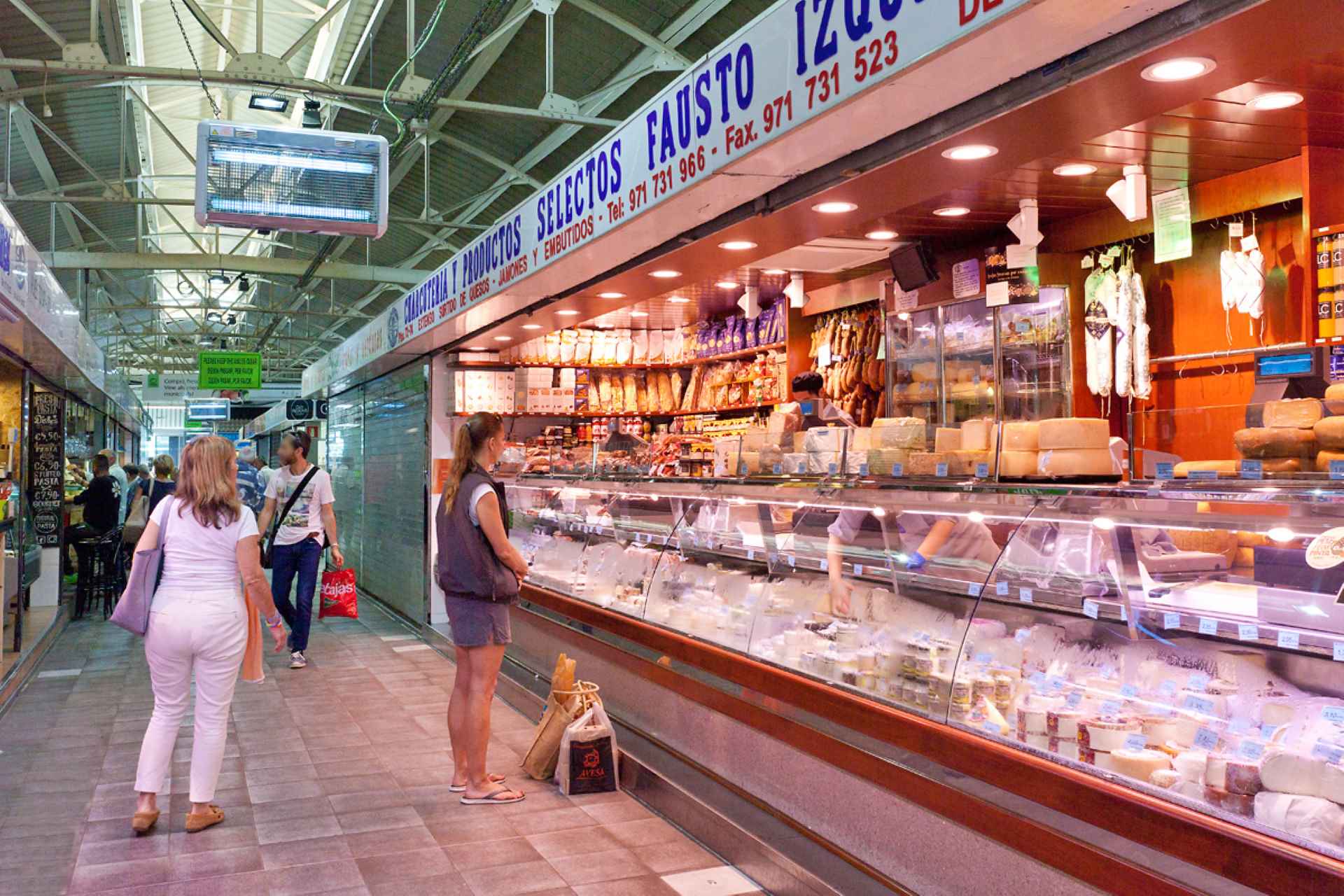
Santa Catalina’s iconic local food market.
It’s worth separating the Old Town’s community from its immediate neighbour. Santa Catalina, just outside the old city walls, has become Palma’s real hub for younger digital nomads and remote workers. It has its own food market and a dense café and co-working scene. The Old Town itself skews differently: a long-settled Mallorcan population living alongside international second-home owners and retirees, many from Germany, the UK and Scandinavia. A smaller but genuine cluster of art-world residents lives around Puig de Sant Pere and La Llotja too. Palma as a whole has a well-established British expat community and hosts a US consulate.
Additionally, Spain’s digital nomad visa, in place since 2023, has brought a newer wave of remote workers into the city as well. Social life here runs through the same channels as it does for any resident. There’s the market, the Tuesday tapas route through Sa Gerreria, and, once a year, the Nit de l’Art, an informal, citywide open house. Anyone weighing this against a slower, more coastal pace may also want our guide to Living in Puerto Pollensa.
Best Areas in Palma Old Town
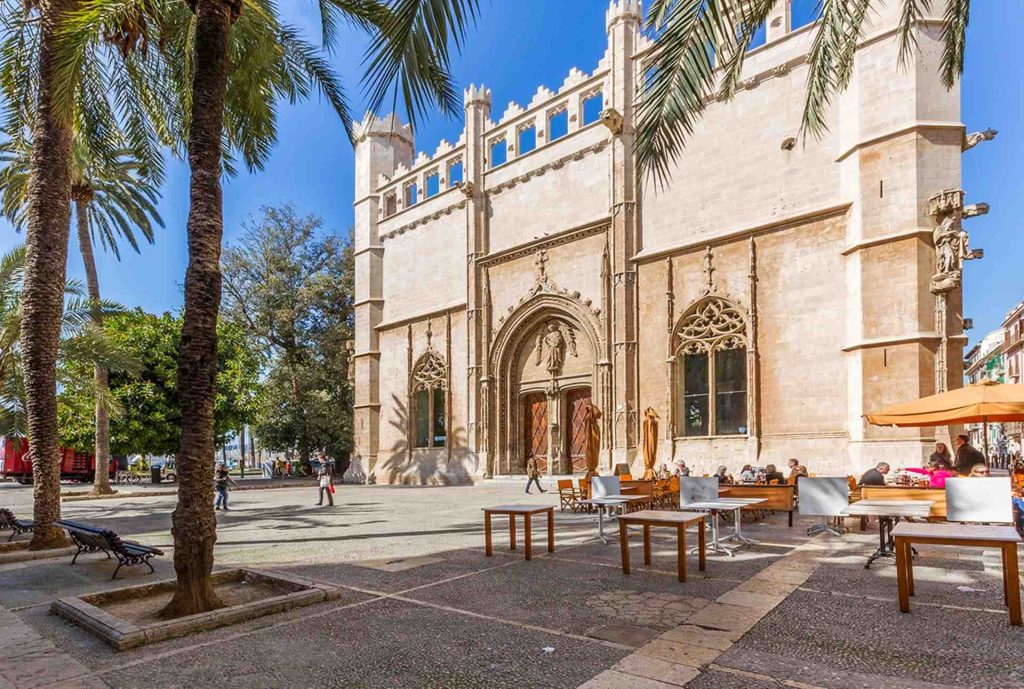
Gothic style merchants’ exchange Sa Llotja, that gives name to the neighborhood around it.
Sa Calatrava
One of the Old Town’s oldest and quietest quarters, Sa Calatrava sits between the Cathedral and the sea. Its stone mansions and narrow lanes stay largely free of through traffic. The Banys Àrabs and the Convent of Santa Clara, where the resident nuns still sell homemade sweets, are both here. It suits residents who want a genuine ten-minute walk to La Seu without the evening noise of the Old Town’s livelier corners. It also sits among the closest quarters to Ca’n Pere Antoni beach.
Puig de Sant Pere
A former fishing and shipbuilding neighbourhood built against the old city walls, Puig de Sant Pere has become the centre of Palma’s contemporary art scene. Es Baluard anchors it, alongside a run of independent galleries along Carrer de Sant Feliu. Small hotels, restaurants and workshops sit alongside long-term residents in a district still shaped by its working-class history. It suits buyers who want the Old Town’s culture without its most touristic streets.
Sa Llotja
Named for the 15th-century merchants’ exchange at its centre, Sa Llotja is the Old Town’s liveliest quarter after dark, dense with tapas bars, seafood restaurants and a handful of late-night spots. Daytime life is calmer, built around small shops and the Passeig de Sagrera waterfront. It suits residents who want to be in the middle of things and don’t mind a livelier soundtrack on weekend nights.
Sa Gerreria
Once one of the Old Town’s more overlooked corners, Sa Gerreria has spent the past decade filling in with new restaurants, small squares and a mix of restored and still-unrenovated buildings. The Tuesday-night Ruta Martiana tapas crawl runs through here. It suits buyers drawn to a neighbourhood still visibly in transition, with a more local, less polished feel than La Llotja or Jaume III.
Jaume III and Passeig del Born
The Old Town’s grand boulevard, lined with international fashion houses, sits beside the more traditional Passeig del Born. Between them they form Palma’s equivalent of a high street: cosmopolitan, well-lit and busy with cafés built for people-watching. It suits residents who want ground-floor retail and restaurant life directly outside their door, and it sits closest to the Plaça d’Espanya transport hub for trips across the island.
Things to Know
The single most important practical fact for anyone considering the Old Town is the tourist rental rule. Palma has banned new short-term rental licences for apartments citywide since 2018, a decision the Spanish Supreme Court upheld in 2023. As of late 2025, the city has gone further and stopped issuing any new tourist rental licences at all, even for detached houses. The total is capped at the roughly 639 permits already active, and those will expire without renewal. In practice, this means an Old Town apartment is bought to live in, not to run as a short-term let. It also means the district’s daily rhythm is set by residents rather than weekly guest turnover.
Cruise-ship day-trippers and the peak May-to-September crowds around La Seu and Passeig del Born remain a real, seasonal fact of life, though. The Old Town is largely car-unfriendly by design. Streets are narrow, parking is scarce and expensive, and most residents walk, cycle or use the city bus network rather than drive. Many of its buildings carry heritage protection, which affects what renovation work is permitted, and it’s worth checking with the local administration before buying with major renovation plans in mind. The airport sits around 8 kilometres out, a 15 to 20 minute taxi ride, or a direct bus into Plaça Espanya.
Who is it for?
Second-home owners: The combination of walkability, restaurants and culture in a small radius makes the Old Town an easy base for a few weeks a year, without needing a car.
Retirees: The daily market, the pharmacy and a Sunday coffee all sit within walking distance, though narrow streets and older buildings without lifts are worth checking property by property.
Investors: The 2018 apartment rental ban, upheld in 2023, and the city’s move to stop issuing any new tourist licences from late 2025, mean this isn’t a short-term-let market. Long-term residential rental demand is real given the district’s popularity, but it should be the basis for any return calculation, not holiday-let income.
Sailing and nautical buyers: Real Club Náutico de Palma sits directly on the Old Town’s edge, opposite the Cathedral, putting a working marina and a regatta calendar within walking distance of home.
Art and culture buyers: Es Baluard, the Puig de Sant Pere and La Llotja gallery scene, and the annual Nit de l’Art all point the same way. This is one of the few Mallorcan neighbourhoods with a genuine, resident art community alongside the historic architecture.
Families: Workable for families set on a Spanish or Catalan-medium education near Colegio Luis Vives. Less straightforward for those wanting a British or IB curriculum, which generally means a 15 to 25 minute commute southwest of the city.
Thinking of Buying?
Heritage protection and a tight, historic footprint keep genuinely renovated Old Town stock limited, and demand from both Mallorcan and international buyers has stayed consistent regardless of season. For a look at what’s currently available, our Palma Old Town property listings are a good starting point, and our team is on hand to talk through what a specific building or street actually means for day-to-day life here.
Most residents don’t use one day to day. The district is compact and walkable, public buses connect it to the rest of Palma, and parking is limited and often expensive. A car becomes more useful for trips beyond the city, to the north coast or the Tramuntana mountains, than for daily life inside the walls.
Are there international schools within walking distance?
Not directly. Colegio Luis Vives offers a Spanish curriculum in the city centre, and Queen’s College is a short drive from the Old Town. Most of the island’s British and IB-curriculum international schools are based southwest of Palma instead, in areas like Cala Major and Portals Nous, a 15 to 25 minute commute.
What’s the healthcare situation like?
Palma’s public hospitals and the main private clinics serving the international community are all a short drive from the Old Town, and several private practices in the centre have English-speaking doctors. As with anywhere in Spain, non-residents should sort out either public healthcare registration or private insurance as part of any move. It’s worth getting current, specific advice rather than relying on general guidance, since coverage rules can change.
Is the Old Town family-friendly?
It works for some families and less well for others. There’s no real green space or private outdoor area with most apartments, and school options directly on foot are limited to Spanish-medium education. Families who prioritise walkability, culture and being close to grandparents visiting by plane tend to do well here. Families set on a big garden or a British-curriculum school within walking distance usually look elsewhere in Palma or along the coast.
Living in Sóller
Sóller does not look like the rest of Mallorca, and there is a specific reason for that. When a citrus blight wiped out much of the valley’s orange and lemon crop in 1865, thousands of Sollerics emigrated to France to rebuild their fortunes in the fruit trade, then came home decades later and built French-style Art Nouveau mansions along the main streets. That imported elegance, paired with a working fishing port, a century-old wooden train, and mountains keeping day-trip crowds at arm’s length, is what makes Sóller feel like a real town rather than a resort. It suits people who want mountains, sea and a functioning high street in one place, without becoming Deià’s smaller, pricier neighbour.
Why Live Here
Sóller works as a place to live largely because of one piece of infrastructure: the road tunnel that opened in February 1997 and has been toll-free for every driver, not just residents, since December 2017. Before it existed, the drive to Palma meant close to an hour over the Coll de Sóller’s hairpin bends. Now it’s a level, three-kilometre run into the capital, and Palma airport, in around 25 to 30 minutes, without cutting yourself off from the island for mountain scenery and a proper town centre. The valley also has its own historic transport, still in daily use rather than kept purely for tourists: the Ferrocarril de Sóller, a narrow-gauge train running the 27 kilometres from Palma since 1912, and the tram connecting the town to Port de Sóller since 1913.
The town itself has what a resort satellite usually lacks: a year-round population of around 13,700 spread across Sóller, Port de Sóller, L’Horta and Biniaraix, two public primary schools (CEIP Es Puig and CEIP Ses Marjades) and a secondary school, IES Guillem Colom Casasnoves, all inside the valley. Compare that with Deià or Valldemossa, a short drive further along the same range: both are smaller and pricier, and lean on Sóller or Palma for most day-to-day services. Sóller has its own doctors, its own weekly market, its own schools and its own working economy that existed long before tourism did. People live here year-round because the town supports that, not only because the views are good.
Lifestyle
Beaches
Sóller is not, first and foremost, a beach town, and it is worth being upfront about that rather than overselling it. Port de Sóller’s horseshoe bay holds the valley’s two real beaches: Platja d’en Repic, a quieter stretch of golden sand favoured by families, and Platja des Través, busier and closer to the tram stop and marina. Both sit inside a sheltered natural harbour, so the water tends to stay calm even when the coast outside is choppier. Anyone who wants Mallorca’s long sweeps of open sand, the kind found around Alcúdia or Puerto Pollença, should treat this as a mountain-and-port lifestyle with good, small beaches attached, not a beach-first move. Our Best Beaches in Mallorca guide covers those options in more depth.
Restaurants & Cafés
Plaça de la Constitució, the main square in front of Sant Bartomeu church, is where daily life in Sóller happens: café tables spill out under the church facade, and freshly squeezed orange juice from the valley’s own citrus, sold from stalls right on the square, is close to a local institution. The town’s dining leans toward produce-driven Mallorcan cooking, with the citrus and olive groves that surround the valley showing up on menus more directly than in most other parts of the island. Port de Sóller’s promenade adds a second, more seafood-focused dining strip around the harbour, busiest in summer evenings when the fishing boats and yachts share the same stretch of water.
Culture & Heritage
The clearest physical evidence of Sóller’s 19th-century trade with France is Can Prunera, a Modernista mansion built between 1904 and 1911 by a Solleric family who made their fortune in the fruit and liqueur trade in Belfort, now open as a museum with an art collection that runs from Miró to Picasso. It is one of several Art Nouveau buildings along Carrer de sa Lluna and around the main square, alongside Sant Bartomeu church itself, whose facade is attributed to the Catalan architect Joan Rubió i Bellver. The town’s biggest annual event, Es Firó, takes place on the second Monday of May and re-enacts an actual 1561 battle in which the townspeople repelled an attacking pirate fleet; it is a genuinely local celebration rather than one staged for visitors, with residents taking the roles on both sides.
Schools
Families relying on state education have three options inside the valley itself: two public infant and primary schools, CEIP Es Puig and CEIP Ses Marjades, and one public secondary school, IES Guillem Colom Casasnoves, all teaching through the Balearic bilingual Catalan-Spanish curriculum. What Sóller does not have is a British, German or IB-curriculum international school within the valley; those are concentrated around Palma and the southwest coast, which in practice means a commute of roughly 25 to 30 minutes each way through the tunnel for families who want that specific option. It is a genuine trade-off worth weighing honestly rather than glossing over. Compare curricula and admissions directly with each school, and try the daily journey from Sóller before choosing a home.
Outdoor Activities
The Serra de Tramuntana, the mountain range that forms the valley’s walls, was declared a UNESCO World Heritage Cultural Landscape in 2011, recognised for its terraced groves and dry-stone construction as much as for its scenery. That heritage is walkable: the Barranc de Biniaraix, a dry-stone path climbing out of the hamlet of the same name, is one of the best-known routes on the island and forms part of the long-distance GR221. Road cyclists know the valley for the climb up to the Coll de Sóller, a regular fixture on training routes out of Palma. Down at sea level, Port de Sóller’s natural harbour is home to Club Nàutic Sóller, a sailing club founded in 1948, and the Jardí Botànic de Sóller, a botanical garden focused on Balearic and Mediterranean flora, sits just outside the town on the road to the port.
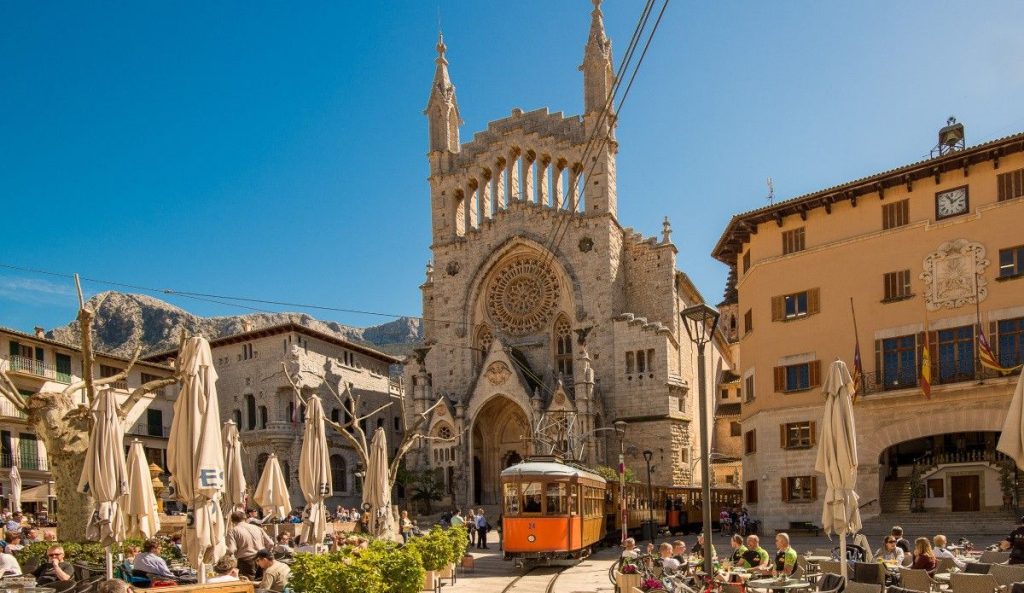
Sant Bartomeu church and Soller’s famous train, Soller Old Town.
Community & International Life
Sóller’s international community is older than most on the island, and it runs in an unusual direction: the valley’s largest non-Spanish-born population is historically French, a direct legacy of the 19th-century citrus trade, and many of those families have since taken Spanish nationality rather than remaining registered as foreign residents.Among residents without Spanish citizenship, British and German nationals are currently the largest groups, alongside smaller but well-established Swedish and Italian communities, plus a more recent influx of remote workers drawn by the valley’s setting and fast internet.
What holds the different groups together is less any single club and more the rhythm of the town itself: the Saturday market in Plaça de la Constitució, the café culture around the square, and Es Firó in May, which by long tradition pulls in residents of every background rather than staying a purely local or purely foreign event. Port de Sóller’s sailing scene, centred on Club Nàutic Sóller, adds a second, more nautical social circuit, particularly through the warmer months.
Best Areas in Sóller
Sóller Town
The historic centre, built around Plaça de la Constitució and Carrer de sa Lluna, is where the valley’s Modernista architecture and daily café life are concentrated. It suits people who want to walk to a bakery, a doctor and a church square without needing a car for daily errands, and who are drawn to a town with real, working streets rather than a resort strip designed around a beach. Properties for sale in Sóller covers current listings across the town and valley.
Port de Sóller
Three kilometres downhill from the town, connected by the vintage tram, Port de Sóller wraps around a natural harbour with a working marina, a promenade, and the valley’s two small beaches. It has a livelier, more seasonal feel than the town centre, busier with visitors in summer and quieter out of season, and suits buyers who want sea views and boat access without living directly in a beach resort. View Port de Sóller’s available property here.
Fornalutx
Technically its own municipality rather than a district of Sóller (the two split administratively in 1837, after centuries as one town), Fornalutx is close enough, around seven kilometres and a short drive away, to function as part of the same daily life as the valley below. It has been a member of Spain’s official Association of the Most Beautiful Villages since 2017, and its steep, stone-paved lanes and terraced orange groves are the reason why. It suits buyers drawn to a smaller, quieter, more rural setting, with the caveat that its hillside streets are genuinely steep, which matters for anyone with mobility concerns. View Fornalutx listings here.
Biniaraix
A small hamlet within Sóller’s own municipal boundary, Biniaraix is little more than a square, a church, and a scattering of houses at the foot of the Barranc de Biniaraix hiking route. It has almost no shops or services of its own, which is exactly its appeal for buyers who want genuine rural quiet with the town’s amenities still a short drive or walk away. View Biniaraix listings here.
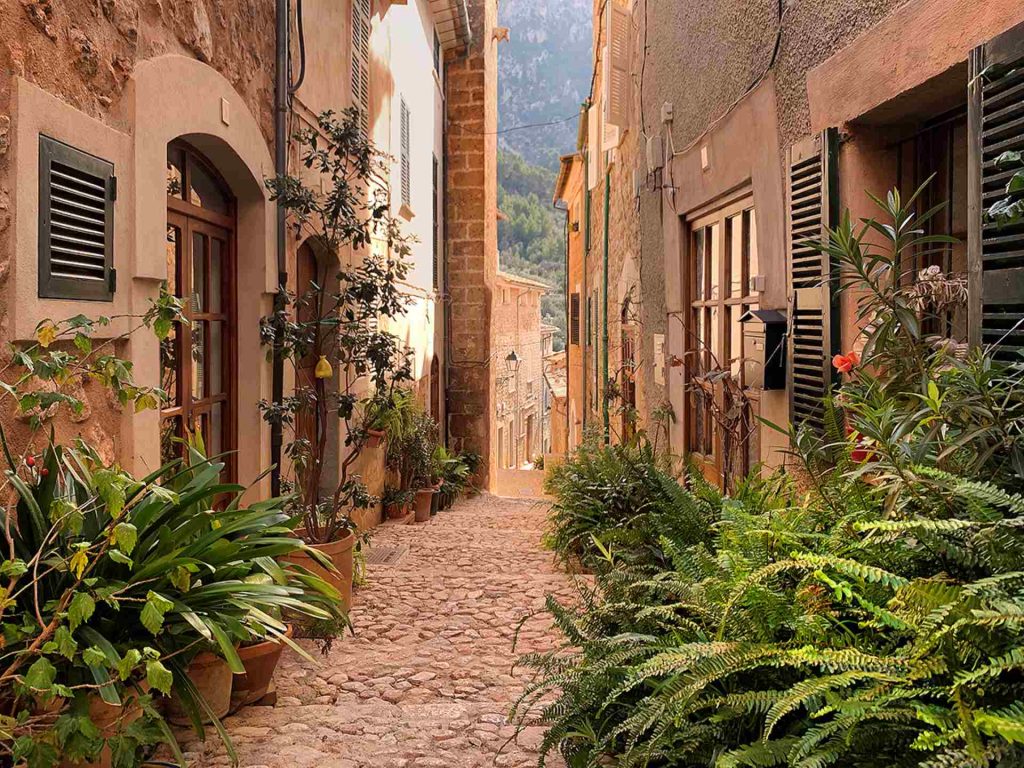
Stone-paved streets of Fornalutx village.
Things to Know
The valley has one road in and out through the tunnel, which means accidents, breakdowns or roadworks can back up traffic in a way that a town with several access routes would not experience. In high season, that single-road effect combines with day-trippers arriving by the vintage train, which alone carries around a million passengers a year, and by the tram; Sóller town and, in particular, Fornalutx, feel noticeably busier from late spring through early autumn than they do the rest of the year.
Short-term holiday letting in the Balearics operates under an ETV licence system with caps that are set and revised by the regional and municipal authorities; anyone planning to buy with rental income in mind should check current availability and rules for the Sóller valley directly with the local authorities or a local gestor rather than assume a licence will be straightforward to obtain. The valley’s mountain setting also means a slightly different microclimate to the open coast: more shade and shelter from the Tramuntana, and a reputation for being a touch cooler and greener than Palma or the beach resorts, though this is a general pattern rather than a precise, verified figure.
Who Is It For?
Families: State schooling is genuinely available inside the valley, from infant school through to secondary, which is not true of every part of the island; families wanting a specific international curriculum will need to weigh that against a daily commute through the tunnel.
Retirees: The town centre is walkable and self-sufficient, with a doctor’s surgery, pharmacy and weekly market on the doorstep, though the steep, stepped streets of the old town and of Fornalutx are worth walking yourself before buying if mobility is a consideration.
Second-home owners: A working town rather than a seasonal resort, Sóller stays livable and open out of season, which suits owners who want somewhere that still functions in January, not just August.
Investors: Rental demand exists around the valley’s hiking, cycling and heritage tourism. Despite this, authorities cap and regulate ETV holiday-letting licences, so you should verify their availability rather than assume it.
Sailing and nautical buyers: Port de Sóller’s natural harbour and Club Nàutic Sóller, founded in 1948, give the port a genuine, long-established sailing culture rather than a marina built purely for tourism.
Cyclists: The climb to the Coll de Sóller is a fixture of road-cycling routes out of Palma, and the valley sits inside the wider Tramuntana network favoured by serious riders training on the island.
Heritage and architecture buyers: Sóller’s Modernista buildings, led by Can Prunera, give it a genuinely distinct architectural identity within Mallorca, of particular interest to buyers drawn to the town’s French-influenced history as much as its Mallorcan setting.
Thinking of Buying?
If Sóller’s combination of mountains, a working port, and an actual town centre sounds like somewhere you could live rather than just visit, the next step is seeing what is currently on the market. At Balearic properties, we cover listings across the town, the port and the surrounding valley, from apartments near Plaça de la Constitució to fincas in the hills toward Fornalutx.
Not necessarily inside the town itself, where the centre, the schools and the Saturday market are all within walking distance, and the tram connects the town to Port de Sóller without a car. A car becomes more useful, though close to essential, for reaching Fornalutx, Biniaraix, or anywhere outside the valley, since bus frequency to outlying villages is limited.
Is Sóller a good base for a family with children?
Yes, with one honest caveat. The valley has its own public infant, primary and secondary schools, a genuine year-round community, and safe, walkable streets in the town centre. Families who want a British, German or IB international curriculum specifically will need to factor in a commute of around 25 to 30 minutes each way through the tunnel to reach schools clustered near Palma and the southwest coast.
Is Fornalutx actually part of Sóller?
Not administratively. Fornalutx was originally part of Sóller’s municipality but became independent in 1837, so it has its own town hall and mayor. In practice, though, it sits inside the same valley, around seven kilometres from Sóller town, and functions as part of the same day-to-day community, sharing many of the same shops, schools and services.
Does Sóller get crowded in summer?
Sóller town and Port de Sóller both see a significant rise in day-trippers from late spring through early autumn, arriving by the vintage train, the tram, and the road tunnel. Fornalutx, given its small size and single main square, can feel especially busy at peak times. Outside that window, both the town and the port return to a quieter, more local pace.
Living in Alcúdia
Alcúdia is the only town in Mallorca where the medieval walls still form a complete, walkable circuit. They stand just a few hundred metres from the excavated streets of Pollentia, the Roman city that came before them. Even Palma’s walls, once far more extensive, were largely demolished in 1902 to make way for its ring roads. Inside Alcúdia’s walls, a market has set up twice a week on the same paving for centuries. Outside them, the bay curves past a 744-berth marina and Mallorca’s only seaside golf course. Nearby sits one of the largest protected wetlands in the Mediterranean. Few places on the island let you choose between history, coastline and open countryside without changing address.
Why live here
For an international buyer, Alcúdia solves a problem most north-coast towns cannot. It works as a full-time address, not just a summer one. The Ma-13 puts Palma and its airport under an hour away. That matters for anyone still commuting for work, or hosting visitors at short notice. The nearest international school, Mallorca International School in Sa Pobla, is a British-curriculum option roughly twenty minutes inland. As a result, Alcúdia is a rare option in the north for an international education close to home. Families avoid the daily hour-long drive that’s typical elsewhere. A public health centre operates in the old town itself. Hospital Comarcal d’Inca, the regional referral hospital, is about half an hour south.
What makes the case beyond logistics is variety within one municipality. A buyer can choose a townhouse inside the walls, a hillside villa near Bonaire, or a flat by the marina. There’s also a plot near the golf course at Alcanada. All the while, they stay part of the same town, sharing the same market days and festival calendar. Few places in the north let a household weigh history, coastline and countryside so directly, without ever leaving the municipality.
For anyone comparing the north coast, Alcúdia sits within a short drive of Puerto Pollença and Pollença. It’s also within reach of the far more exclusive Formentor, further along the coast. Each of the three strikes a different balance of privacy, character and price.
Lifestyle
Beaches
Platja d’Alcúdia runs for several kilometres of fine sand around the bay. It’s the default beach for most residents, easily reached on foot or by bike from Port d’Alcúdia. For something quieter, Mal Pas and the small cove at Aucanada sit below the villa neighbourhoods on the town’s eastern edge. Both are rocky and locals-first, rather than resort beaches. Coll Baix, reached only on foot through pine woods, is the genuine outlier. There’s no road access and no facilities, only cliffs and clear water that keep it from feeling crowded, even in August. Just offshore near the golf course, the small island of Alcanada and its nineteenth-century lighthouse mark the turning point of the bay. For how these compare with the rest of the island, see our Best Beaches in Mallorca guide.
Aucanada beach with the island of Aucanada and its lighthouse in the background.
Restaurants & Cafés
The old town’s dining scene concentrates around the Passeig Mare de Déu de la Victòria and the streets near the market. Tapas bars spill onto the pavement on market mornings. Port d’Alcúdia’s marina front carries the more polished end of the scene. That includes Maca de Castro, the area’s Michelin-starred restaurant, alongside Alcanada Golf’s own sea-facing terrace restaurant. Between the two, Alcúdia has both the everyday café culture of a working town, and, on the port side, dining that draws visitors from across the island.
Schools
Mallorca International School, based in Crestatx near Sa Pobla, is the only international school serving the north of the island. It’s the realistic option for Alcúdia families who want a British curriculum without a long daily commute. Most other international schools cluster around Palma and the southwest instead, roughly fifty minutes or more away. Families who prefer full immersion in the Spanish and Catalan system have the town’s state and concertado schools on their doorstep. Compare curricula, admissions and the daily school journey directly with each school before choosing where to live.
Outdoor activities
Club de Golf Alcanada, designed by Robert Trent Jones Jr. and opened in 2003, is Mallorca’s only course built directly on the coast. It has even hosted the Rolex Challenge Tour Grand Final, a DP World Tour event, on its closing holes. The 744-berth Alcudiamar marina anchors a genuine sailing community, from day-sailors to long-term liveaboards. Alongside it, the smaller, private Marina de Bonaire (El Cocodrilo) offers a quieter mooring option a few minutes along the coast. Inland, S’Albufera de Mallorca is the largest wetland in the Balearics. It covers close to 1,700 hectares and is home to over 300 recorded bird species. It also offers flat, largely traffic-free cycling and walking routes that connect Alcúdia to Playa de Muro, without ever touching a main road.
Community & International Life
Alcúdia’s international community has deep roots. British and German visitors have been coming here since package tourism took off along this coast in the 1960s and 70s. As a result, a meaningful share of today’s second-home owners are second or third-generation returners, not first-time buyers. That history shows up in daily life more than in any statistic. German and English are spoken as a matter of course in the old town’s cafés and along the port. Meanwhile, the Tuesday and Sunday market, one of the largest and longest-running in Mallorca, draws a genuinely mixed crowd of residents, not only day-trippers.
Sailing forms its own community around the 744-berth Alcudiamar marina, from weekend racers to long-term liveaboards. The town’s festival calendar is anchored by the Festes de Sant Jaume in late July and the Roman-themed Fira d’Alcúdia every October. Both function as a genuine meeting point between local and international residents, rather than a tourist spectacle staged for outsiders. Port d’Alcúdia’s fishing quarter adds its own smaller Sant Pere festival in late June. It centres on a boat procession that longtime residents, whatever their nationality, treat as a fixed point in the year.
Best Areas in Alcúdia
Aerial view of Bonaire’s coastline and private marina.
Old Town (within the walls)
Life inside the walls means cobbled streets, a genuine year-round population and the twice-weekly market on your doorstep. It suits buyers who want to walk to everything, and don’t mind trading garden space for character and location. See available property in Alcudia.
Port d’Alcúdia
The working port and main beach strip, busiest in summer and genuinely lively rather than purely residential. It suits buyers who want marina access, restaurants and beach within walking distance. It’s less suited to those who need the quiet of the old town or the hills. See available property in Port d’Alcudia.
Bonaire
Bonaire is an established hillside villa area with its own small marina, Marina de Bonaire (known locally as El Cocodrilo). Built in 1982, it holds around 320 berths for boats up to 17 metres. It’s considerably quieter and more private than the main marina in Port d’Alcúdia. Bonaire suits buyers who want space, sea views toward Pollença, and a mooring close to hand. It still leaves a short drive to the old town and the beaches. See available property in Bonaire.
Mal Pas
The most exclusive of Alcúdia’s residential pockets, tucked between the old town and Bonaire on the eastern coastline. It has direct or near-direct access to the water. It suits buyers who prioritise privacy and sea proximity over walkable amenities. See available property in Mal Pas.
Alcanada
Named for the golf course and the small lighthouse islet just offshore. Alcanada is the quietest and most golf-oriented of Alcúdia’s areas, with villas set among pine and olive groves. It suits buyers who want the course on their doorstep, and are happy being a short drive from everything else. See available property in Alcanada.
Things to know
Aerial view of Alcudiamar marina at sunset.
Alcúdia is genuinely seasonal, in a way it’s worth being honest about. Between June and September the population multiplies several times over. The coast road (Ma-12) between the old town and Port d’Alcúdia slows to a crawl at peak times. The Tuesday and Sunday market also extends through most of the historic centre then, rather than just its usual square. Outside July and August, though, the town reverts to a quieter, distinctly local rhythm. This off-season character is exactly what year-round residents describe as the real Alcúdia.
Short-term holiday letting is tightly regulated across Mallorca through the ETV licence system. Licence availability in Alcúdia specifically should be checked directly with the local authorities or a specialist adviser. It shouldn’t be assumed, since caps and rules are revised periodically.
For day-to-day healthcare, the CS Es Safrà health centre sits inside the old town, with a further primary care unit in Port d’Alcúdia. Beyond that, Hospital Comarcal d’Inca, roughly thirty minutes away, handles the specialist and emergency cases the local centres don’t. Palma airport is under an hour via the Ma-13. On top of that, the international community here is well established. English and German are routinely spoken in shops, restaurants and services, not just in high season.
Who is it for?
Families: Beach access, a safe walkable old town and a nearby international school make this workable as a full-time family base. It’s not just for holidays.
Retirees: A genuine year-round town, not a summer shell. Daily amenities, a local health centre and an established international community are already in place.
Second-home owners: Port d’Alcúdia’s tourist infrastructure and the old town’s character both suit a part-time property. It only needs to work a few weeks a year, and stay easy to maintain the rest of the time.
Investors: Port d’Alcúdia’s established rental demand is a real asset. ETV holiday-letting licence availability needs checking directly, though, rather than assumed, since it changes.
Sailing & nautical buyers: The 744-berth Alcudiamar marina and Mallorca’s only seaside golf course sit side by side here. Together they give this stretch of coast a genuinely active nautical community, not just moorings.
Cyclists: Flat routes through S’Albufera and along the coast toward Playa de Muro suit serious riders. There’s no need to leave the municipality.
Thinking of Buying?
Alcúdia’s property market spans everything from historic townhouses inside the walls to marina-side apartments and hillside villas. That range is part of what makes the area work for such a wide mix of buyers. For the figures, floorplans and current listings, our team can walk you through what’s actually available.
Is the old town or Port d’Alcúdia better for year-round living?
It depends on what you want daily life to feel like. The old town is quieter, more local and walkable, with the market and cafés on your doorstep. Port d’Alcúdia, by contrast, is busier and more geared toward the beach and marina. Restaurants and amenities stay open longer through the season there.
What’s the school situation like for international families?
Mallorca International School in nearby Sa Pobla is the only international school serving the north of the island. It’s the practical option for most Alcúdia families, roughly twenty minutes away. Most other international schools are near Palma, closer to fifty minutes or more.
Does S’Albufera Natural Park affect daily life for nearby residents?
Mostly in a positive way. It gives residents in and around Alcúdia direct access to flat cycling and walking routes. There’s also a genuinely quiet nature reserve just a few minutes from the coast, rather than any real disruption to daily life.
How busy does Alcúdia get in summer?
Considerably busier than the rest of the year. The population multiplies several times over between June and September. The coast road between the old town and the port can be slow at peak times too. Outside high season, though, the pace is much closer to a typical small Mallorcan town.
What healthcare is available in Alcúdia?
There’s a public health centre inside the old town, plus a further primary care unit in Port d’Alcúdia. Hospital Comarcal d’Inca, the regional hospital, is around half an hour away for anything beyond primary care.
Is Alcúdia well connected to Palma and the airport?
Yes. The Ma-13 motorway puts both under an hour’s drive. That’s one of the reasons Alcúdia works for people who still need to travel for work, not only for retirees or second-home owners.
Living in Formentor
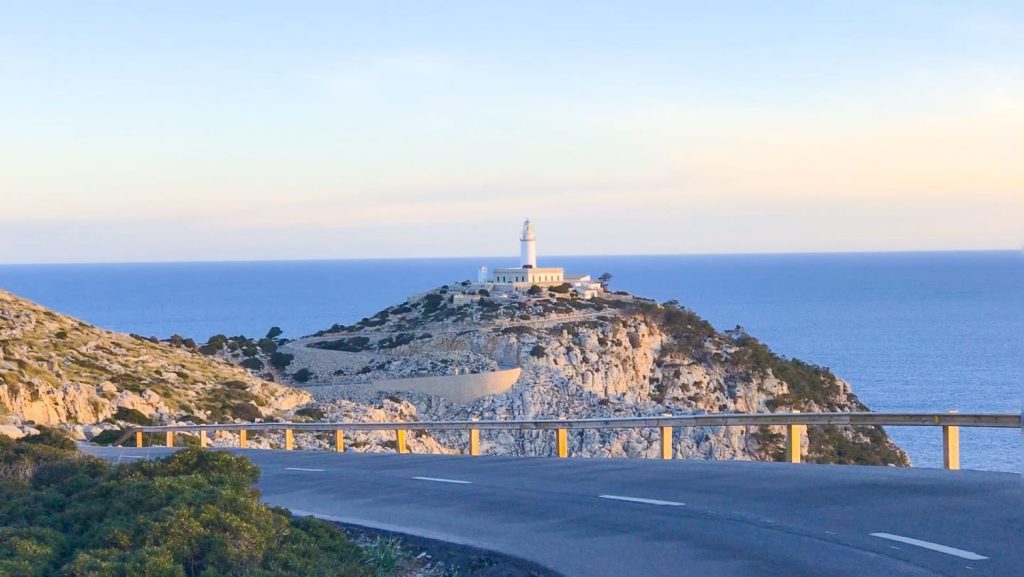
Formentor is not a town. It is a nine kilometre finger of pine forest and limestone cliff at the northern tip of Mallorca, reachable by one winding road or by boat across the Bay of Pollença. Since 1929, when an Argentine art patron built a hotel on its shore, the peninsula has drawn a small, discreet circle of owners rather than a settled population. There is no village square, no daily market, no school run. What Formentor offers instead is seclusion inside a landscape that is almost entirely protected from further development, and a handful of estates that rarely change hands.
Why live here
Formentor suits a very specific kind of buyer: someone who wants privacy measured in kilometres, not walls. The peninsula forms the northeastern tip of the Serra de Tramuntana, the mountain range UNESCO recognised as a World Heritage Cultural Landscape in 2011, and its far half beyond the hotel and a handful of private estates is protected natural land with no realistic prospect of new building. That scarcity is the whole point. Where other parts of Mallorca’s coast have filled in over the decades, Formentor has stayed close to how it looked when the road first reached it in 1925.
Living here full time is impractical for most people; the appeal sits closer to owning a private retreat than a primary residence. Puerto Pollença, with its shops, clinics, marina and international community, is around twenty minutes away by car and effectively serves as the peninsula’s service town. Palma airport is under an hour by car outside the seasonal traffic restrictions. Owners can also reach the peninsula itself by boat from Puerto Pollença or Alcúdia, much as Formentor’s earliest visitors always did. For the right buyer, that combination (genuine wilderness a short drive from a full-service Mediterranean harbour town) is difficult to match anywhere else on the island.
Lifestyle
Beaches
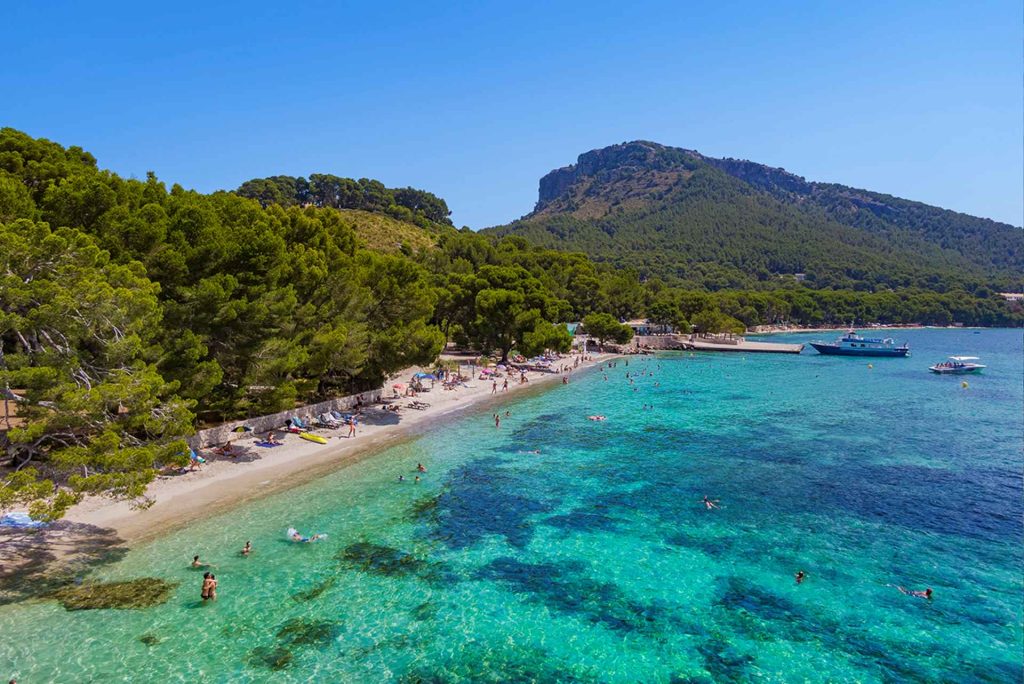
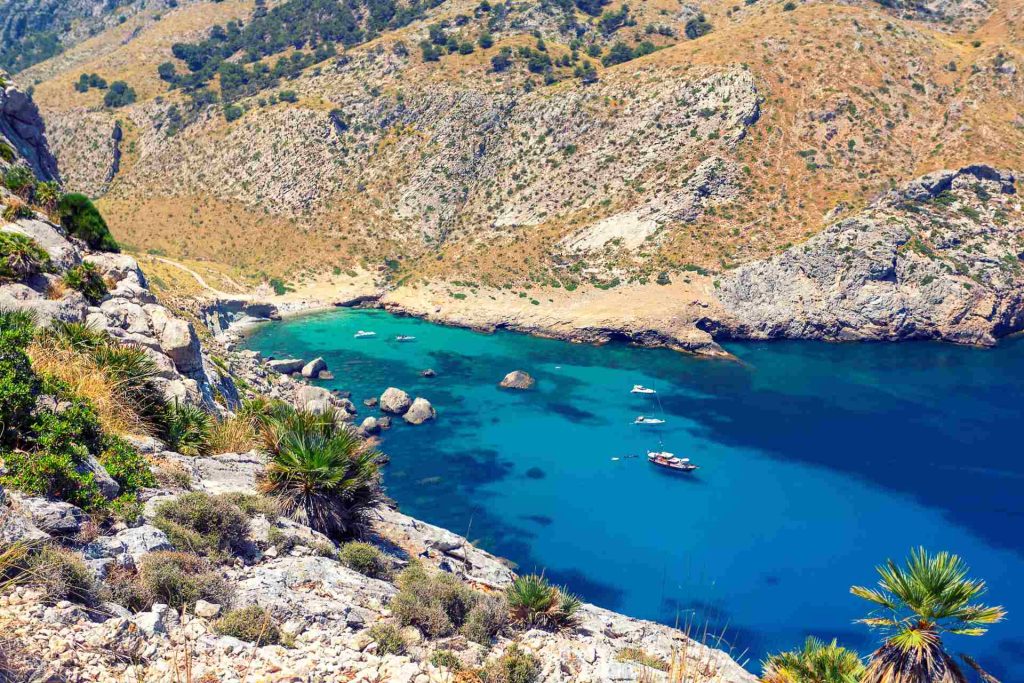
Platja de Formentor is the peninsula’s one proper beach: roughly a kilometre of pale sand backed by pine trees, facing the calm water of Cala Pi de la Posada where the resort itself sits. It is consistently ranked among Mallorca’s best beaches and, in season, draws a genuine crowd of day trippers arriving by boat and bus. For something quieter, Cala Murta is a pebble cove reached only on foot or by sea, around twenty minutes from the nearest car park, with no facilities and rarely more than a scattering of hikers or snorkellers. Cala Figuera, on the peninsula’s northern flank, is smaller again and entirely undeveloped, often described as one of Mallorca’s best coves.
Platja de Formentor’s pale sand and gorgeous turquoise water.
Restaurants & Cafés
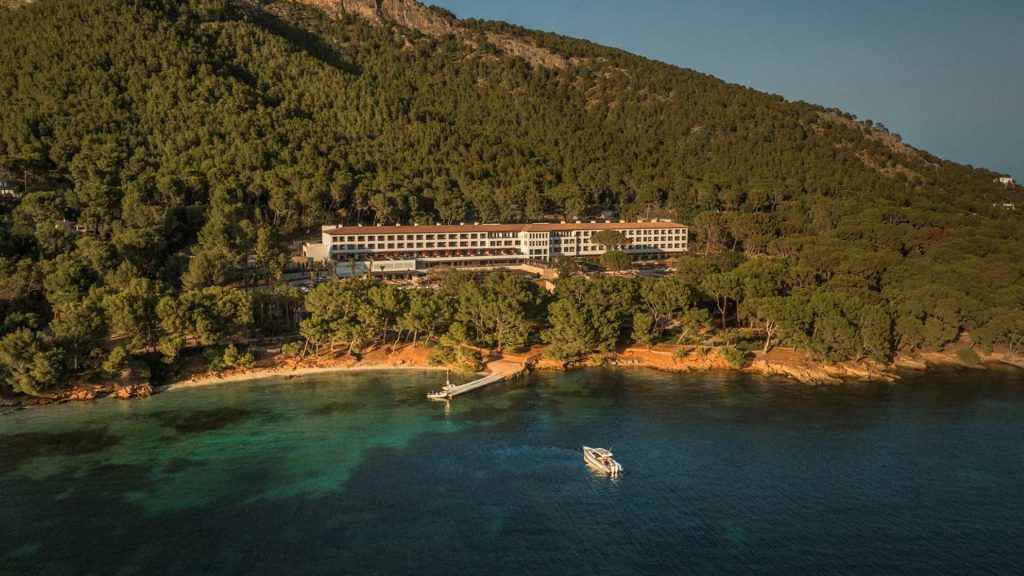
Dining directly on the peninsula is limited by design. Four Seasons Resort Mallorca at Formentor (the rebuilt and reopened version of the historic Hotel Formentor) runs several restaurants open to non-guests, from a beachfront seafood spot to a more casual poolside kitchen, plus a bar on Platja de Formentor itself. Beyond the resort, there is little else on the peninsula proper. Most people based here treat Puerto Pollença‘s harbourside restaurant scene, a short drive back along the same road, as their everyday option.
Schools
There are no schools on the Formentor peninsula, and none are realistically coming given the protected status of the land. Families based here send children to the state schools in Pollença or Puerto Pollença, or to Mallorca International School in Crestatx near Sa Pobla, the only international school serving the north of the island, roughly thirty to forty minutes away by car. It is one of the clearest signals that this is not a location built around a daily school run.
Outdoor activities
The road to the lighthouse is one of Mallorca’s best known road cycling climbs, and cyclists ride its bends year round, including during the summer months when the restrictions open the upper road exclusively to them, to pedestrians and to public transport. The clear water around the coves suits snorkelling more than diving, given the depth. Birdwatchers come specifically for Eleonora’s falcons, which breed on the cliffs facing north. Boat access has been part of daily life here since before the road existed: the resort still runs its own transfer service to and from Puerto Pollença, and several of the peninsula’s private properties keep their own moorings.
Community & International Life
Formentor does not have a community in the way Puerto Pollença or Pollença town does. There is no expat association, no weekly market, no fixed circle of neighbours dropping by. What it has instead is a lineage. Since Adan Diehl opened his hotel in 1929, the peninsula has drawn an unusually consistent, if small, cast of international owners and regular visitors, from the writers and Nobel laureates who gathered here for the Formentor literary prize in the 1960s to the string of European royals and film stars who have stayed at the hotel across nearly a century. The handful of private estates outside the resort follow a similar pattern: several have stayed within the same family for generations, changing hands rarely and quietly.
Social life, such as it is, centres on the resort rather than on a village or a club. People here are typically part time residents with an established base elsewhere on the island or in Europe, using Formentor as a private retreat rather than a full time home, and treating Puerto Pollença as their point of contact for everyday social life and errands.
Formentor has almost no residential subdivisions in the way Puerto Pollença or Alcúdia do. There are, in practice, two distinct stretches of the peninsula worth knowing.
Around the hotel and Platja de Formentor
This is the one settled pocket of the peninsula: the resort, the beach it sits on, and a small number of private villas tucked into the pine forest nearby, several with direct sea access or a private mooring. It is the closest thing Formentor has to an address, and its properties rarely come to market.
Cap de Formentor and the protected headland
Beyond the beach, the road climbs through several kilometres of pure natural park toward the lighthouse: cliffs, pine forest, and the Mirador d’Es Colomer viewpoint, with essentially no private land and no prospect of any. It is included here for context rather than opportunity. This end of the peninsula is protected landscape, not a residential area, and buyers should not expect it to become one.
Things to know
Formentor is genuinely hard to reach by private car for part of the year. Since a 2018 pilot scheme cut peak season traffic by around 90 percent, the peninsula road has run under seasonal restrictions, and currently these apply daily from 15 May to mid October, between 10am and 10pm, with only public transport, taxis, authorised vehicles, cyclists and pedestrians allowed through. Residents can certainly apply for an exemption, but the exact dates and terms are reset each year by the Consell de Mallorca, so anyone counting on year round car access should check the current rules before committing to a purchase or a move.
View of Formentor’s Lighthouse from the road, courtesy of epicroadrides.com
There is no supermarket, pharmacy or general store on the peninsula. Puerto Pollença, roughly twenty minutes away by car outside restricted hours, covers all of that. Nearly the entire peninsula beyond the hotel and a small number of private plots falls within protected Serra de Tramuntana land, which is why the area has stayed largely unchanged for a century and is unlikely to see meaningful new construction. Being the exposed northern tip of the island also means real wind exposure: locals call it the meeting point of the winds, and the Tramuntana can blow hard here even on a calm day back in Puerto Pollença.
Who is it for?
Second-home owners: Formentor suits someone who wants a private retreat used for a few weeks at a time, not a full time base with daily errands and a school run.
Sailing & nautical buyers: several of the peninsula’s frontline properties come with direct sea access or a private mooring, and arriving by boat from Puerto Pollença remains a normal, and historic, way in.
Investors: the appeal here is scarcity rather than yield. Genuinely new stock essentially never appears, which supports long term value, and a number of existing villas operate as high end holiday lets, though any holiday rental licence (ETV) needs to be checked and confirmed for the specific property rather than assumed.
Cala Figuera seen from above
Thinking of Buying?
Formentor may be the rarest micro market covered on this site. With almost the entire peninsula protected and no meaningful new development possible, the small number of villas here change hands infrequently, and each one is genuinely singular rather than one of a comparable set. Our current Formentor listings are the place to start; if total seclusion is more than you need, the wider Pollença property market, within the same bay, offers considerably more everyday convenience.
Is there a permanent residential community in Formentor?
Not in the way most Mallorcan towns have one. Formentor has no village centre and a very small number of private homes, most owned by people who use them as a seasonal retreat rather than a full time residence. Its identity has always been tied more to the historic hotel than to a resident population.
Can I get to Formentor by boat instead of driving?
Yes, and it is a genuinely normal way to arrive. Boat transfers between Puerto Pollença and Formentor have been part of the peninsula’s routine since the hotel opened in 1929, when the road itself was not yet finished, and the resort still runs a private boat service today.
Are there shops or a pharmacy in Formentor?
No. Everyday services, including a supermarket, pharmacy and post office, are all in Puerto Pollença, about twenty minutes away by car outside the seasonal traffic restrictions.
Is the Formentor road open to private cars all year?
Outside the restricted season it is. In 2026 the road is closed to private cars daily from 15 May to mid October, between 10am and 10pm, with only public transport, taxis, cyclists, pedestrians and Formentor residents allowed through during those hours. The exact dates are set fresh each year, so this is worth confirming close to your travel or move date.
Is Formentor part of a protected natural area?
Yes. The peninsula forms the northeastern tip of the Serra de Tramuntana, which UNESCO recognised as a World Heritage Cultural Landscape in 2011, and almost all of the land beyond the hotel and a small number of private estates is protected from development.
Living in Pollença
Pollença does not try to look like a resort, because it isn’t one. Set inland between two hills, the Puig de Maria and the Calvari, it is a working Mallorcan town with a Sunday market, a 17th-century cloister that has hosted world-class orchestras every summer since 1962, and a coastline it doesn’t actually touch. That last part matters: this is a guide to the town itself, not to Puerto Pollença five minutes down the road, which has its own character and its own guide. Pollença’s appeal is different, and it is worth being specific about why.
A local’s view: Iris Grünewald
Iris Grünewald is CEO of Balearic Properties and a Savills international associate, and she has lived in Pollença for more than 20 years. Featured in Portfolio by Savills’ Insider’s Guide to Pollença, she adds her own favourites to this guide: where she eats, shops and walks. She is also the founder of Pollensina, a collection of nine villas and fincas in Pollença that she has renovated and rents out.
Why live here
Pollença sits at the inland edge of Mallorca’s north, the same region as Alcúdia, but its character owes more to the mountains behind it than the coast. For an international buyer, it offers something rare here: a town that functions the same way in February as in August. Palma airport is around 45 minutes away by the Ma-13, close enough for weekend trips but far enough that Pollença never feels like an extension of the arrivals hall. The old town’s narrow stone streets and low-rise skyline have been protected through decades of planning restraint, so the place a buyer falls for on a viewing trip is largely the place they’ll still be living in a decade later.
What sets Pollença apart from its coastal neighbours is that its social and cultural life doesn’t switch off with the tourist season. The Festival de Pollença fills the Sant Domingo cloister every summer and has done for over 60 years; Galería Maior and a handful of smaller galleries keep an active exhibition calendar; the Sunday market is a genuine weekly fixture for residents, not a summer-only production. Mallorca International School, the only international school in the north of the island, is around ten minutes away in Crestatx. For buyers who want land and mountain views without losing that ten-minute connection to town, the countryside around La Font and El Vila is the draw. This is a town for people who want to live somewhere, not just holiday there.
Lifestyle
Beaches
Pollença’s old town sits inland, so there’s no beach on the doorstep, and it would be misleading to pretend otherwise. What it has instead is easy access to two very different stretches of coast. Cala Sant Vicenç, about ten minutes north, is four small coves (Cala Barques, Cala Molins, Cala Clara and Cala Carbó) tucked beneath pine-covered cliffs and the Cavall Bernat ridge, better suited to a quiet swim than a big beach day. Puerto Pollença, five minutes east, has the long sandy bay and the Pine Walk promenade; residents of Pollença treat it as their local beach, even though it’s a separate town with its own guide.
Restaurants & Cafés
The restaurant scene sits around Plaça Major and the lanes leading off it: family-run Mallorcan kitchens in restored townhouses, tapas terraces that fill up on market mornings, and a handful of more ambitious dining rooms that have opened in the last decade without displacing the older, plainer places locals still use every week. Because Pollença has a genuine year-round population, most of this stays open outside the summer months, which is not something every north-coast town can say.
Iris’s picks: for home-style Mallorcan cooking she recommends Celler El Molí, where the tumbet (the potato, aubergine and pepper dish) is the one to order, along with lechona, slow-roast pork stuffed with rice, peas and onion. For something lighter she likes Onze, an Italian-Mediterranean kitchen, and its grilled scallops in mushroom sauce.
Schools
Mallorca International School (MySchool), in the Crestatx urbanisation around ten minutes from town, follows the British curriculum and is currently the only international school in the north of Mallorca, which has made the surrounding area noticeably more attractive to relocating families over the past few years. Families who want full Spanish or Catalan immersion have several state and concertada schools within the town itself.
Outdoor activities
Golf Pollença is a 9-hole course about two kilometres from town, opened in 1986, with views across the bays of Pollença and Alcúdia and the S’Albufereta nature reserve. Hikers have the Puig de Maria, a 330-metre climb to a 14th-century hermitage around 40 minutes up, and the Boquer Valley, a protected walking route popular with birdwatchers that runs out toward the coast. Cyclists use Pollença as a base for the quieter lanes of the north and for the climb out toward Cap de Formentor, one of the island’s signature routes.
Iris’s own favourite: hiking in the mountains. After more than twenty years here she still calls the Carrer del Calvari, 365 cypress-lined steps up to a chapel, well worth the climb, and when she wants to be on the water she heads down to the bay at Puerto Pollença for kayaking and paddleboarding.
Shopping & local craft
Beyond the Sunday market, Iris sends visitors to a short list of makers: Teixits Vicens for Mallorcan linens woven with centuries-old techniques, ABCO Pottery Studio, a family-run workshop making distinctive ceramics, and Mastrenat, which keeps the art of leather braiding alive in bags, belts, shoes and home accessories. For contemporary art, Galería Maior focuses on local artists.
Community & International Life
Pollença’s international character isn’t a recent development. The Festival de Pollença was founded in 1962 by the British violinist Philip Newman, and the cloister of the Sant Domingo convent has since hosted more than 800 performers, including Mstislav Rostropovich, Yehudi Menuhin and Jessye Norman, as part of a programme that belongs to the European Festivals Association. That kind of institution doesn’t happen without decades of an engaged resident community behind it, and British and German buyers in particular have been part of Pollença’s fabric for that long.
Social life for residents runs through a few recurring fixtures rather than one expat club: the Sunday market at Plaça Major, which locals use as much as visitors do; the summer festival calendar; and a small but active gallery scene anchored by Galería Maior. It is a lower-key, more integrated version of international life than the marina-and-yacht-club model found in Puerto Pollença, and it tends to suit buyers who want to feel part of a town rather than part of a resort.
Iris’s cultural shortlist: the Museu de Pollença, housed in a former convent, for the town’s history through art and archaeology, and the Museu Dionís Bennàssar, in the former home of the Mallorcan painter. In autumn, La Fira de Pollença fills the town with ceramics, jewellery and weaving.
Best Areas in Pollença
Historic Old Town
The streets around Plaça Major and the Calvari steps are where lock-and-leave living happens: townhouses and apartments within walking distance of the market, restaurants and the parish church, all year-round rather than seasonally. It suits buyers who want to step outside and be in the middle of things. View properties in Pollença’s old town.
La Font
An established residential area just outside town known for elevated positions and views back over the bay. It has been one of the most sought-after addresses in Pollença for years, and it’s still a walk of around fifteen minutes into the centre. View properties in La Font.
El Vila
Similar in character to La Font and on the same side of the valley, but closer to the road toward the port, which makes it popular with buyers who want sea views and an easy run down to the restaurants and marina at Puerto Pollença.
Cala Sant Vicenç
Technically its own village rather than a Pollença neighbourhood, but part of the same municipality. Its draw is the coves themselves: compact, residential, and popular with buyers who want to be a short walk from the water without the scale of Puerto Pollença. View properties in Cala Sant Vicenç.
Crestatx
A quiet residential urbanisation on the way toward Sa Pobla, popular with families since Mallorca International School opened nearby, and increasingly asked about for that reason alone. It suits buyers prioritising the school run over proximity to Pollença’s centre, which is still only around ten minutes away.
Vall de Son March
A countryside valley just outside Pollença town, known for finca-style properties set among olive and almond groves with views back toward the Tramuntana. It suits buyers who want genuine rural privacy without losing a short drive into town. View properties in Vall de Son March.
Things to know
The Sunday market fills the old town from 8am to 1.30pm and draws visitors from across the island, so parking is tight and the centre is genuinely busy for those hours, though it’s quiet the rest of the week. Late July and August bring the Festival de Pollença and a fuller cultural calendar, along with more traffic on the single main road connecting Palma, Pollença and Alcúdia; the town itself is calmer than the port in peak season. Notably, the Ajuntament de Pollença (the town council) chose to withdraw Pollença from the “Most Beautiful Villages of Spain” network from January 2025 in favour of its own tourism strategy, a decision that says something about how deliberately the town manages its own profile rather than chasing visitor volume.
The local public health centre is part of the IB-Salut network and is currently being rebuilt on a larger site, expected to roughly triple capacity once complete. Pollença’s international community is long established rather than newly arrived, and the year-round population is meaningfully smaller than the summer influx, which is part of what keeps the town liveable off-season. Anyone planning to let a property short-term should check current holiday-rental (ETV) licence rules for the area before assuming one is available.
Who is it for?
Families: the only international school in the north of the island is ten minutes away, and the old town itself is walkable and safe for children.
Retirees: a genuine, year-round town rather than a seasonal one, with an established international community and a walkable centre.
Second-home owners: lock-and-leave apartments and townhouses in the old town, with Palma airport around 45 minutes away.
Investors: rental demand holds up around the market, the festival season and the school calendar, though ETV licence availability should always be checked before assuming a property qualifies for holiday letting.
Culture and arts buyers: the Festival de Pollença and a small but genuine gallery scene make this a more culturally anchored option than most north-coast towns.
Cyclists: quiet countryside lanes and direct access to the climb toward Cap de Formentor.
Stay before you buy: the Pollensina collection
The best way to find out whether Pollença suits you is to live it for a week. Iris has renovated every house in the Pollensina collection, nine villas and fincas in Pollença that she rents out through Pollensina. A few days in one of them, with the town, the market and the mountains close by, tells you more than any viewing schedule.
Iris knows each of these houses from the renovation onwards, so she can point you to the one that fits the way you want to live, whether that is a family week, a cycling trip or a quiet escape. And if you decide to stay, the Balearic Properties team can show you what is for sale around town.
Pollença’s property mix runs from lock-and-leave apartments in the old town to countryside estates around La Font, El Vila and Vall de Son March. The right fit depends mostly on whether someone wants to be in the middle of town or a short drive from it, so our Pollença property search is the best starting point for a closer look.
Is Pollença touristy, or does it feel like a real town to live in?
Both, depending on the day. The Sunday market and the summer festival bring genuine crowds, but Pollença has a year-round resident population and a working town centre that doesn’t shut down once the visitors leave, which is a real difference from more purely seasonal resorts.
What’s the difference between living in Pollença and Puerto Pollença?
Pollença is the inland, historic town; Puerto Pollença is the coastal town five minutes away, with the marina, the promenade and the beach. Many residents use both, but they suit slightly different buyers: Pollença for town and countryside living, Puerto Pollença for beachfront and marina life.
Are there international schools near Pollença?
Yes. Mallorca International School, around ten minutes away in Crestatx, follows the British curriculum and is currently the only international school in the north of the island.
Do you need a car to live in Pollença?
Within the old town, day-to-day life is walkable. A car becomes useful for the beaches, the golf course, the school run to Crestatx, and reaching Palma, since public transport options are limited outside the main bus routes.
What’s healthcare like in Pollença?
The town has its own public health centre within the IB-Salut network, currently being expanded onto a larger site. Private clinics are also available locally and further along the coast.
Is Pollença quiet in winter?
Yes, noticeably. The summer influx around the market and festival season eases off considerably from autumn, and the town settles into a slower, more local rhythm through the winter months.
Living in Puerto Pollensa
Puerto Pollensa sits on a wide, sheltered bay in the north of Mallorca, backed by the Tramuntana mountains and largely spared the high-rise development that reshaped much of the island’s coastline in the 20th century. It has drawn the same kind of international buyer, mostly British, German and Scandinavian, for decades, less for any single attraction than for the combination: a long sandy beach, a working marina, and a walkable town centre. Agatha Christie stayed here in the 1930s and set a short story, Problem at Pollensa Bay, in the town, an early sign of the pull this stretch of coast has held over its visitors for the best part of a century.
Why live here
What sets Puerto Pollensa apart from other resorts on the north coast is what’s absent as much as what’s there: no high-rise towers, no nightlife strip, no unchecked development crowding the seafront. The local authorities have held the line on building density for years, which is part of why the bay still looks recognisably like the fishing port it once was, just with better restaurants.
The setting does a lot of the work. The bay is sheltered enough for calm, reliable sailing conditions most of the year, the beach is long and sandy without the crowding you’d find further south in peak season, and the Tramuntana range, a UNESCO World Heritage landscape, provides a backdrop that’s hard to overstate until you’ve stood on the Pine Walk and looked at it. Add a marina that stays genuinely active outside the summer months and a restaurant scene with real depth rather than just tourist turnover, and it’s easy to see why so many buyers who came for a holiday ended up looking for something more permanent.
Lifestyle
Beaches
The main beach curves around the full sweep of the bay, a long, sandy stretch that stays genuinely swimmable and family-friendly even in August, backed for much of its length by the pine-lined promenade that gives the Pine Walk its name. For something smaller and quieter, Cala Sant Vicenç is a short drive over the hill, with a cluster of coves that suit a slower morning better than the main beach does.
Aerial view of both Cala Sant Vicenç and Puerto Pollensa.
Restaurants & Cafés
The dining scene stays open and active well beyond the summer season, with a real concentration of restaurants around the Moll Vell and Moll Nou piers. Seafood is the strong suit, unsurprisingly, and the port’s restaurants draw a loyal local crowd as much as visitors. The Pine Walk itself is lined with cafés that work equally well for a morning coffee or an evening drink looking out over the bay.
Schools
Families relocating with children have one clear local option: Mallorca International School, based in Crestatx near Sa Pobla, roughly 20 minutes’ drive from Puerto Pollensa, teaching the British curriculum from early years through secondary. It’s currently the only international school serving the north of the island; families wanting a wider choice of curriculum (IB, French, German) are generally looking at a 45 to 60 minute commute toward Palma. Pollença town itself also has Spanish/Catalan public schooling, which some international families choose for the language immersion.
Outdoor activities
Sailing and watersports run through the Reial Club Nàutic Port de Pollença, the town’s sailing club, with a youth sailing school and a full events calendar. Golf is close on both sides: Golf Pollença, a 9-hole course dating to 1986, sits right at the edge of town, while the 18-hole Alcanada course, regularly ranked among the best in Europe, with the Alcanada lighthouse visible from most of its holes, is a short drive around the bay. Hikers have the Boquer Valley trail, a well-known route from the edge of town up through the valley to a wild, secluded beach, and the wider Tramuntana range beyond it. Cyclists use the coastal roads and the mountain climbs beyond Pollença in roughly equal measure, and the Pine Walk itself remains the default for an easy morning walk or run.
Puerto Pollensa’s international community isn’t a recent arrival. British, German and Scandinavian residents have been coming here for decades, and it’s common to meet families on their second or third generation of returning, some now owning the same property their parents or grandparents first bought. That continuity shows up in daily life: English and German are widely spoken in shops and restaurants, and the town supports a genuine year-round social scene rather than one that only exists in July and August.
Much of that social life centres on the water. The Reial Club Nàutic Port de Pollença anchors a real sailing community, with racing, a youth sailing school and a calendar of events that runs through the year, not just summer. On land, the Pine Walk and the restaurants around Moll Vell and Moll Nou function as the town’s informal meeting points, and the mid-July Patrona and Carme festivities pull residents and visitors alike into open-air concerts and processions that feel distinctly local rather than staged for tourists.
Puerto Pollensa isn’t a single uniform neighbourhood: the seafront promenade and the residential areas behind it each have their own character and their own kind of buyer. Here’s how the main areas compare (see the full range of property in Puerto Pollensa for more):
Pine Walk
The most iconic address in Puerto Pollensa: a seafront promenade lined with mature pine trees, home to the town’s frontline apartments and penthouses. Direct beach access and uninterrupted bay views make this the most sought-after part of the market. View properties on the Pine Walk
Llenaire
The main destination for buyers after a villa near the beach, a short walk from the main stretch of sand with a noticeably quieter, more residential feel than the town centre. Plots tend to be generous, often 1,000 m² or more, with private pools and gardens standard, and well-priced properties here have a reputation for not staying on the market long. View properties in Llenaire
Gotmar
Close to both the port and the beach, with a mix of villas, apartments and smaller homes set among mature gardens and pine trees. Part of the area sits on flat ground; part rises gently up the hillside, giving a range of sea and mountain outlooks within the same neighbourhood. View properties in Gotmar
Boquer
Sits just behind the Pine Walk and climbs toward the hillside, with the road to Formentor running through it. Lower down, residential complexes with community pools suit lock-up-and-leave ownership; further up, detached villas get elevated views over the bay and town. It shares its name with the Boquer Valley hiking trail just beyond it.
Bellresguard
A smaller, quieter enclave known for security and low-maintenance ownership: the natural choice for buyers who want a lock-up-and-leave second home rather than a project. View properties in Bellresguard
Part of Puerto Pollensa’s famous Pine Walk
Things to know
July and August bring the town to its busiest, especially around the mid-July Patrona and Carme festivities, when the road between Pollença and the port gets genuinely congested at peak times. Outside those two months, the town is markedly quieter but rarely feels closed: restaurants and services stay open through the shoulder seasons in a way some more purely seasonal resorts don’t manage.
Holiday-rental licensing (the ETV licence) is a real factor for anyone considering letting a property, and it affects both what a property can legally be used for and its rental potential, so it’s worth checking early with any property under consideration. Access is straightforward: Puerto Pollensa is roughly 50 km from Palma and the airport, about 45 to 50 minutes by motorway under normal traffic, with regular bus connections to Palma, Alcúdia, Sóller and Formentor for those without a car.
Who is it for?
Families: A genuine, walkable town with a beach on the doorstep, though schooling means either the one international option in Crestatx or a longer commute toward Palma.
Retirees: An established, decades-deep international community and a pace of life that slows down noticeably outside summer.
Second-home owners: A lock-and-leave property that works for seasonal use without the upkeep of a full-time residence, particularly in quieter enclaves such as Bellresguard.
Investors: Genuine rental potential around the port, though this depends on ETV licence availability and should be checked before buying with rental income in mind.
Sailing and nautical buyers: A sheltered bay and an active sailing club right in town, including a youth sailing school.
Cyclists: Flat coastal roads and serious Tramuntana climbs within a short ride of home.
If you’re ready to see what’s actually on the market, our Puerto Pollensa and Pollença property listings are updated regularly across the areas covered here, from Pine Walk apartments to Llenaire villas. Our team is based in Pollença town rather than managing this market remotely from Palma, so get in touch directly with any questions about current availability.
Is Puerto Pollensa a good place to live year-round?
Yes. Unlike some more purely seasonal resorts, restaurants, shops and services stay open through the quieter months, and the town has a genuine year-round international community rather than one that empties out after summer.
Is there an international school near Puerto Pollensa?
Mallorca International School in Crestatx, about 20 minutes away, is currently the only international school serving the north of the island, teaching the British curriculum. Families wanting other curricula generally commute 45 to 60 minutes toward Palma.
What’s the difference between Puerto Pollensa and Pollença?
Puerto Pollensa is the coastal port area; Pollença is the historic inland town a few kilometres away. They’re often treated as one area for property purposes, but Pollença has more of a traditional old-town character, while Puerto Pollensa is built entirely around the bay and the beach.
Is Puerto Pollensa good for sailing and watersports?
Yes. The bay is sheltered and calm for most of the year, and the Reial Club Nàutic Port de Pollença runs an active sailing programme, including a youth sailing school, alongside the town’s other watersports.
How far is Puerto Pollensa from Palma airport?
Around 50 km, roughly 45 to 50 minutes by motorway under normal traffic conditions.
Do I need a car to live in Puerto Pollensa?
Not necessarily. The town centre and the Pine Walk are entirely walkable, and regular buses run to Palma, Alcúdia, Sóller and Formentor. A car becomes more useful if you’re based in one of the hillside areas like Boquer, or want easy access to golf, hiking or the wider island.
The Best Hotels in Mallorca
Editorial selection checked on 19 September 2026 against official hotel information and the MICHELIN Guide hotel directory.
Mallorca now offers an unusually broad choice of exceptional hotels: historic estates in the Tramuntana, discreet coastal retreats, design-led townhouses and full-service resorts. The best choice depends less on a universal ranking than on the part of the island you want to experience and the rhythm you want from your stay.
The Best Hotels in Mallorca at a Glance
Hotel
Area
Best for
Four Seasons Resort Mallorca at Formentor
Formentor
Beach, privacy and a complete resort stay
La Residencia, A Belmond Hotel
Deià
Art, village life and Tramuntana character
Cap Rocat
Cala Blava
Seclusion, architecture and romance
Mandarin Oriental Punta Negra
Calvià
Contemporary coastal luxury near Palma
Son Net
Puigpunyent
Historic-estate atmosphere and countryside
Can Ferrereta
Santanyí
Boutique design and southeast Mallorca
Es Racó d’Artà
Artà
Nature, wellness and a slower pace
Can Cera and Nobis Hotel Palma
Palma Old Town
Culture, restaurants and city breaks
Four Seasons Resort Mallorca at Formentor
Formentor is one of Mallorca’s most recognisable landscapes, where pine forest, mountain and sea meet at the northern end of the island. The Four Seasons is the natural choice for travellers who want a highly serviced resort without losing the sense of place that makes the peninsula special. It works particularly well for longer stays, families and guests who want the beach, restaurants, wellness and activities within one setting.
The location is deliberately removed from the island’s busier centres, which is part of its appeal. Before booking, consider whether you want to spend most of your time at the resort or use it as a base for Pollença, Puerto Pollensa and the wider north. Our guide to living in Formentor and North Mallorca area guide explain the character of the peninsula in more detail.
La Residencia, A Belmond Hotel, Deià
La Residencia is closely associated with Deià itself: stone buildings, terraced gardens, mountain views and a strong connection to art. Its greatest advantage is that the hotel experience extends into one of Mallorca’s most distinctive villages. Guests can combine the privacy of the property with restaurants, galleries and walks through Deià rather than remaining inside a self-contained resort.
Choose it for atmosphere, cultural character and access to the northwest coast. The terrain is steep and the area can be busy at peak moments, so travellers who prioritise flat promenades or quick motorway access may prefer another part of the island. See our Deià and Valldemossa guide for the practical side of the location.
Cap Rocat, Cala Blava
Cap Rocat occupies a former fortress on the Bay of Palma and feels intentionally private. The architecture and setting are the principal experience: stone, sea views and a strong sense of separation from everyday life. It is particularly suited to couples and travellers who value tranquillity, design and staying within a carefully controlled environment.
Cala Blava is on the quieter side of the Bay of Palma, with the city and airport accessible by car. It offers a useful contrast to hotels inside Palma: close enough for an evening in the capital, but designed for retreat rather than urban energy.
Mandarin Oriental Punta Negra, Mallorca
Mandarin Oriental Punta Negra welcomed its first guests in June 2026 following the transformation of the historic Hotel Punta Negra site. Set on the Calvià coast near Puerto Portals, it combines a major international hotel brand with direct access to the southwest coast. The official opening information confirms 131 rooms and suites, wellness facilities and several dining concepts across the resort.
This is the most relevant new arrival for travellers seeking contemporary resort luxury within easy reach of Palma, marinas, golf and the established southwest residential market. It is also a useful base from which to compare Portals, Bendinat, Santa Ponsa and Port d’Andratx. Read our Southwest Mallorca area guide before deciding where to spend most of your time.
Son Net, Puigpunyent
Son Net is a restored 17th-century estate at the foot of the Serra de Tramuntana, around 20 minutes from Palma according to the hotel. Its gardens, vineyard and orchards make it feel rural, while the proximity to the capital keeps it practical for guests who do not want to choose between countryside and city.
It suits travellers drawn to traditional architecture, generous interiors and a quieter estate atmosphere. Puigpunyent also gives access to walking and mountain scenery without the longer journey required for parts of the northwest coast.
Can Ferrereta, Santanyí
Can Ferrereta is a refined boutique option in Santanyí, one of southeast Mallorca’s most attractive year-round towns. It is well placed for guests who want design, art and a small-hotel atmosphere while remaining close to Cala Santanyí, Cala Figuera, Mondragó and the coves of the southeast.
The appeal lies in using the hotel as part of the town rather than treating it as an isolated resort. Santanyí has a market, restaurants and an established international community, making it a sensible area to test if you are also considering a home in the southeast. Our Southeast Mallorca guide compares the coast with the inland villages.
Es Racó d’Artà
Es Racó d’Artà is best understood as a landscape-led retreat rather than a conventional luxury hotel. The emphasis is on nature, calm, wellness and the slower character of northeast Mallorca. It will appeal to travellers who want space and a sense of discovery more than nightlife or immediate access to Palma.
Artà and the northeast remain distinct from the island’s more developed resort corridors. That difference is precisely the attraction, but it also means allowing more time for journeys. See our East Mallorca area guide for Artà, Manacor and the northeast coast.
Boutique Hotels in Palma Old Town
For a city stay, Can Cera and Nobis Hotel Palma represent two different expressions of Palma Old Town. Can Cera has the intimacy of a historic townhouse, while Nobis brings a more contemporary design language to a medieval building. Both place guests within walking distance of the cathedral, galleries, restaurants and the waterfront.
A Palma hotel is the strongest choice for a short break without a car or for combining property viewings with culture and dining. Parking, room size and street noise vary widely in historic buildings, so the precise room category and location inside the hotel matter. Explore the neighbourhood through our Palma Old Town guide.
How to Choose the Right Mallorca Hotel
For beach and resort facilities: Formentor or Punta Negra.
For village character: La Residencia in Deià or Can Ferrereta in Santanyí.
For privacy: Cap Rocat.
For country-estate atmosphere: Son Net.
For nature and wellness: Es Racó d’Artà.
For restaurants and culture without a car: Palma Old Town.
Iris’s Expert View
Iris Grünewald recommends using a hotel stay as a practical test of an area, especially if you are considering buying a home in Mallorca. Spend time outside the property: make the drive you would use regularly, visit the nearest town in the morning and evening, and notice how the location feels once the day visitors have left. A beautiful hotel can introduce you to an area, but daily convenience, access and the surrounding community determine whether it also works as a home.
Frequently Asked Questions
Which area of Mallorca is best for a first visit?
Palma is the easiest base for a short visit because it combines culture, restaurants and transport. For a longer stay, choose the area that matches your priorities: the north for beaches and family life, the Tramuntana for scenery and villages, or the southwest for marinas and easy access to Palma.
Which Mallorca hotels are best for couples?
Cap Rocat and La Residencia are particularly strong for atmosphere and privacy. Can Ferrereta and the boutique hotels of Palma also work well for couples who prefer to explore restaurants and town life on foot.
Which hotels are best for exploring property areas?
Choose a hotel in the area you are genuinely considering rather than commuting across the island each day. Formentor works for the north, Palma for the city and central connections, Punta Negra for the southwest, Can Ferrereta for the southeast and Es Racó d’Artà for the northeast.
Mallorca: A Paradise for Golf and Luxury Property Investment
Mallorca has long been far more than a sun-and-sea destination. For a growing number of discerning, internationally minded buyers, the island represents something deeper: a lifestyle where golf, Mediterranean nature and residential exclusivity combine into a proposition unmatched anywhere else in Europe.
With a wide network of golf courses spread across almost every part of the island, Mallorca has established itself as one of the most complete golf destinations in the Mediterranean. It is no coincidence that several of the areas with the best courses are also among the island’s most sought-after residential locations.
Palma and surroundings: Where golf is lived with distinction
Son Vida Golf: The most historic course, the most exclusive neighbourhood
Inaugurated in 1964, Son Vida Golf is the oldest course on the island and one of the most storied in Spain. Originally designed by F. W. Hawtree and redesigned by Kurt Rossknecht in 2001, it hosted the European Tour’s Balearic Open in 1990 and 1994 and offers a tight, undulating layout that demands concentration on every hole.
Beyond the game, Son Vida is synonymous with residential exclusivity. The neighbourhood surrounding it (frequently compared to the Beverly Hills of Mallorca) is home to some of the most spectacular villas on the island, with infinity pools, panoramic views over the Bay of Palma and gated communities with concierge services. For those seeking a prime property in the capital, Son Vida is the natural starting point.
Golf Son Muntaner: European standards at the heart of the island
Part of the exclusive Arabella Golf complex, Son Muntaner is one of the most technically demanding courses in Mallorca and has hosted world-class events including the Mallorca Golf Open 2022 and the Mallorca Ladies Golf Open 2023. With immaculate greens and the distinction of belonging to the European Tour Destinations network, this is a course for golfers who pursue perfection with every swing. In 2025 it was voted Spain’s Best Golf Course at the World Golf Awards, and a centuries-old olive tree is preserved between its fairways.
The residential surroundings offer high-end properties with direct views over the greens, while the proximity to Palma ensures immediate access to all the amenities of the capital.
Golf Son Quint: The newest course, the most breathtaking view
The most recently built course within the Arabella complex delivers an unforgettable moment at the 8th hole: positioned at the highest point of the layout, players tee off with the Cathedral of Palma directly in their line of sight, one of the most memorable views in European golf. Traditional dry-stone walls are very much in play, lending the course a distinctly Mallorcan character.
Situated on the northern boundary of Son Vida, the course is a key reference point for buyers seeking high-end properties that combine privacy, views and seamless connectivity with the city.
Son Gual Golf: The connoisseurs’ choice
Just 12 kilometres from Palma on the road towards Manacor, Son Gual consistently ranks among the finest courses in Spain. Designed by Thomas Himmel across 156 hectares of Mallorcan countryside, it combines generous fairways with intelligently positioned hazards that reward strategic thinking on every shot.
The surrounding Mallorcan estate, with views to the sierra and an atmosphere of absolute tranquillity, provides the ideal setting for rustic luxury properties: restored farmhouses, country houses with land and lifestyle projects rooted in nature.
T Golf & Country Club: A classic reinvented in Calvià
Comprehensively renovated, T Golf has become one of the most elegant courses in the Calvià area. Its restaurant, modern facilities and the quality of its greens firmly establish it as one of the leading venues in the south-west of the island.
The surrounding areas of Calvià and Bendinat offer a combination that is hard to rival: proximity to T Golf, direct access to the sea and close links to international schools, a triple draw for international families choosing Mallorca as their permanent home.
The South-West: Santa Ponsa and the legacy of the European Tour
Santa Ponsa Golf Club: History, championships and community
One of the most storied courses in Spain in terms of competitive heritage. Santa Ponsa I has hosted six European Tour events and has welcomed legends such as Ballesteros, Langer and Olazábal to its fairways. Designed by Folco Nardi in 1977, its classic parkland layout with broad fairways and immaculate greens makes it suitable for all levels, whilst remaining genuinely challenging for those chasing a strong scorecard.
Santa Ponsa is also a well-established international community, with an active social calendar, frequent club tournaments and a strong sense of belonging amongst European residents. Its properties, from detached villas to townhouses with course views, offer competitive value within Mallorca’s luxury market.
Real Golf de Bendinat: Sophistication between the pines and the sea
A course with a personality all of its own: pine-lined fairways, artistically sculpted bunkers and water hazards that add both tension and beauty to the round. Bendinat’s gently rolling terrain offers a different rhythm to the island’s larger tournament venues, more intimate and more refined. The adjacent residential area is one of the most sought-after in the south-west, with properties enjoying privacy, sea views and a strategic position between Palma and the Calvià coastline.
The North: The grandeur of golf on the Mediterranean
Golf Alcanada: The most iconic golf image in Spain
If there is one course in Mallorca that leaves an immediate and lasting impression, it is Alcanada. Designed by Robert Trent Jones Jr. and positioned directly on the waterfront in the Bay of Alcúdia, it delivers a visual experience without equal: the Alcanada lighthouse, visible from much of the course, is one of the most photographed landmarks in European golf. The club hosts the Rolex Challenge Tour Grand Final, which returns for its sixth edition in October 2026.
The northern area, including Alcúdia, Port d’Alcúdia and the Alcanada coastline, is experiencing significant growth in the luxury second-home market. Seafront properties with views across the bay and privileged access to the course are in high demand.
The East: Nature, tranquillity and golf with character
Capdepera Golf: The island’s best-kept secret
Tucked between Artà and Capdepera, hidden within a spectacular mountain valley, Capdepera Golf is one of the most distinctive courses in Mallorca. Its long fairways, some as narrow as corridors, demand a precision that leaves no room for error. Six lakes integrated into Dan Maples’ design add both difficulty and beauty to the round. Its higher holes offer sweeping views across the valley to the coast.
The Artà and Capdepera area is one of the most authentic on the island, with well-preserved rural architecture and truly singular properties: working estates with land, restored village houses and residential projects that embrace the landscape rather than impose upon it. For the buyer seeking peace and authenticity without compromising on quality, this area is an essential reference.
The Centre and South: Accessibility and quality without compromise
Son Antem Golf Resort: Two courses, one strategic location
Just minutes from Palma Airport, in Llucmajor, Son Antem offers two distinct courses: the East course, more forgiving for higher-handicap players, and the West course, more demanding and technical. An ideal choice for those who value logistical convenience without sacrificing the quality of the golfing experience.
Golf Park Mallorca Puntiró: The course at the heart of the island
Ten kilometres from Palma, in the peaceful village of Puntiró, Golf Park Mallorca Puntiró offers an 18-hole course with a practice facility and restaurant offers an accessible and enjoyable experience. Its setting, in the agricultural heartland of the island, makes it particularly well suited to those seeking rural properties with good connections to the capital.
Related area guides: explore property and lifestyle in Palma, Santa Ponsa and Alcúdia, three of Mallorca’s principal golf locations.
Golf and property in Mallorca: The combination that holds its value
Mallorca is not simply a golf holiday destination. It is a place where golf has become an integral part of the permanent lifestyle of a growing international community, and that is reflected in demand for homes near the best courses.
Properties situated within golf environments, or with privileged access to high-quality courses, attract steady interest from international buyers, although every property should still be assessed individually. It is not merely about square metres or views: it is about belonging to a lifestyle ecosystem that combines sport, nature, gastronomy and community.
For buyers who want golf to be part of everyday life, Mallorca offers a genuine choice of locations, from Palma and the southwest to the north and east. Explore our luxury properties for sale in Mallorca to see what is available near your preferred course.
Are you looking for a property close to one of these courses? Our team of specialist advisers would be delighted to help you find the option that best suits your lifestyle and investment goals.
The Ultimate Guide to Mallorca’s Best Beaches
Best Beaches in Mallorca & Where to Live by the Sea
Mallorca has long been one of the most desirable destinations in the Mediterranean. Beyond its natural beauty, the island also offers outstanding opportunities for those looking to buy a home by the sea.
With more than 550 kilometres of coastline, Mallorca combines crystal-clear waters, diverse landscapes and exclusive residential areas. From hidden coves surrounded by cliffs to long sandy beaches with all amenities, the island offers a lifestyle that balances privacy, comfort and accessibility.
For many international buyers, this is exactly what makes Mallorca so appealing not just as a holiday destination, but as a place to invest and enjoy year-round living.
Below, we explore some of the best beaches in Mallorca by area, helping you understand where to live, invest and experience the island at its best.
North Mallorca: Space, Comfort and Family Living
The north of Mallorca is known for its wide beaches, open views and relaxed atmosphere. It’s particularly popular with families and buyers looking for comfort, space and well-developed infrastructure.
Playa de Muro
Playa de Muro offers kilometres of fine sand and shallow waters, making it one of the most complete beaches on the island.
Its family-friendly setting and proximity to schools and services have made this area increasingly attractive for those looking for modern apartments, beachfront homes and solid rental investments.
Playa de Alcúdia
One of the longest beaches in Mallorca, Playa de Alcúdia combines a lively atmosphere with plenty of restaurants and leisure options.
It’s a great choice for buyers seeking coastal living with strong rental demand, especially in well-located apartments close to the sea.
Cala Formentor
Surrounded by pine forests and overlooking the Tramuntana mountains, Cala Formentor offers a more exclusive and tranquil setting.
Properties here are limited, making it a sought-after location for those looking for privacy and high-end villas with sea views.
Why invest in the north: spacious properties, family-friendly environment and consistent holiday rental demand.
East Mallorca: Privacy, Nature and Authentic Charm
The east coast is characterised by small coves and unspoilt surroundings. It’s one of the best areas for those seeking peace, nature and a slower pace of life.
Cala Varques
Accessible only on foot, Cala Varques remains largely untouched.
This type of location attracts buyers looking for large plots, fincas and private villas away from busy tourist areas.
Cala Mesquida
Known for its dunes and open sea views, Cala Mesquida offers a more dynamic landscape while preserving its natural character.
Nearby properties appeal to those looking for long-term value in natural surroundings.
Cala Sa Nau
Small and surrounded by Mediterranean vegetation, Cala Sa Nau is ideal for a more tranquil lifestyle.
It’s particularly suited to second homes and boutique-style properties.
Why invest in the east: lower density, privacy and growing demand for authentic Mediterranean living.
Southeast Mallorca: Iconic Coves and High-End Living
The southeast, especially around Santanyí, has become one of the most desirable areas on the island. It combines traditional charm with high-end real estate and stunning coastal scenery.
Cala Llombards
One of the most photographed coves in Mallorca, Cala Llombards offers turquoise waters framed by cliffs and pine trees.
Nearby homes, particularly renovated villas, are in high demand among buyers looking for design-led properties near the sea.
Cala Mondragó
Located within a protected natural park, Cala Mondragó stands out for its preserved landscape.
Building restrictions mean properties here are limited and tend to hold their value over time.
Cala d’Or
Cala d’Or combines small coves with a marina, restaurants and a lively atmosphere.
It’s a popular choice for those looking for holiday homes, apartments and a more social lifestyle.
Why invest in the southeast: strong international demand and a good balance between lifestyle and investment.
South Mallorca: Open Landscapes and Natural Beauty
The south of Mallorca offers some of the island’s most unspoilt beaches, with protected areas and wide open landscapes.
Es Trenc
Famous for its white sand and turquoise waters, Es Trenc is one of the most iconic beaches in Mallorca.
Its protected status limits development, making nearby properties scarce and increasingly valuable.
Es Carbó
More remote and peaceful, Es Carbó is ideal for those looking to escape the crowds.
Properties in this area appeal to buyers seeking privacy and nature.
Cala Pi
With its narrow entrance between cliffs, Cala Pi is one of the most unique spots on the island.
Homes here often combine traditional charm with distinctive settings.
Why invest in the south: limited supply and strong long-term appreciation potential.
West Mallorca: Scenic Views and Exclusive Living
The west coast, shaped by the Tramuntana mountains, offers some of the most dramatic scenery in Mallorca and a more exclusive atmosphere.
Sa Calobra
One of the most striking locations on the island, surrounded by cliffs and accessed via a winding mountain road.
Cala Deià
A small, well-known cove with a bohemian feel, popular among artists and international residents.
Properties here include stone houses and luxury villas in privileged settings.
Port de Sóller
One of the few wider beaches in the west, with a charming harbour and year-round appeal.
It’s a strong choice for those looking for primary residences or high-end second homes.
Why invest in the west: exclusivity, natural surroundings and premium property market.
Southwest Mallorca: Prime Location for Luxury Living
The southwest is widely considered the most established and sought-after area, thanks to its proximity to Palma and excellent infrastructure.
Palmanova
With easy access and full amenities, Palmanova is a practical option for coastal living.
It’s popular among buyers looking for modern apartments with sea views and rental potential.
Camp de Mar
Known for its more refined and relaxed atmosphere, Camp de Mar is ideal for luxury villas and golf properties.
Portals Vells
A quieter area with small coves and natural surroundings, just a short drive from more exclusive marinas.
Perfect for those who want tranquillity while staying close to premium services.
Why invest in the southwest: strong international demand and some of the highest-value properties on the island.
Related area guides: explore North Mallorca, Alcúdia and Formentor for a closer look at year-round life beside some of the island’s best beaches.
Living and Investing in Mallorca
Mallorca is not only a place to visit, but a place to live and invest. The island offers a stable real estate market, supported by limited land availability and consistent international demand.
Coastal properties, in particular, continue to attract buyers looking for both lifestyle and long-term value.
Find Your Property by the Sea
Each area of Mallorca offers a different way to experience the Mediterranean from vibrant coastal towns to quiet, natural surroundings.
If you are considering buying a home here, we can help you explore the most suitable areas and present a selection of carefully chosen properties that match your lifestyle and investment goals.
 Deutsch
 English
 Español