 Deutsch
 English
 Español
The Ultimate Guide to Mallorca’s Best Restaurants
Mallorca has matured into a true culinary destination, one where tradition, talented chefs, and the quality of Mediterranean ingredients merge. From Palma’s cosmopolitan centre to the island’s rugged coasts and tranquil countryside, each restaurant showcases its own flair and flavours.
As well as a whole host of international cuisines, the island also boasts a wide variety of Michelin-starred restaurants, where the food, location and atmosphere offer amazing experiences. So, whether you’re at the breath-taking cliff-top setting of Béns d’Avall, or Marc Fosh, tucked away in a stylish converted convent in the heart of historic Palma, the island has something to offer everyone.
What makes Mallorca’s restaurants so special
From Palma to Port d’Alcúdia, Mallorca’s best kitchens honour Mediterranean roots with the freshest of ingredients from the sea, farms and vineyards. With a wide selection of fish and seafood, locally sourced meats, vegetables, cheeses, wines, and of course the finest quality olive oil, creative chefs combine true Mediterranean cooking with international inspiration to produce fresh and exciting dishes.
Sustainability and local food producers are a priority for many chefs on the island and several Michelin-starred restaurants prioritise zero-km produce; in the 2026 guide, Andreu Genestra and Béns d’Avall also hold a Michelin Green Star for sustainability, meaning your meal is as local and environmentally conscious as possible.
What makes Mallorca exceptional is not simply the number of Michelin stars, but the authenticity behind them. Chefs here cook with respect for the land, for tradition and for the seasons. Mallorca is no longer just a beautiful place to visit. It is a place to taste, explore and return to, one remarkable plate at a time.
Fine Dining in Palma
Palma has evolved into a serious culinary capital. Within its historic streets you’ll find an abundance of restaurants that rival Europe’s best, in contemporary, traditional and Michelin-star dining. When it comes to food, Palma is a destination for restaurants showcasing unique Balearic culinary innovation as well as world-class fine dining.
Marc Fosh
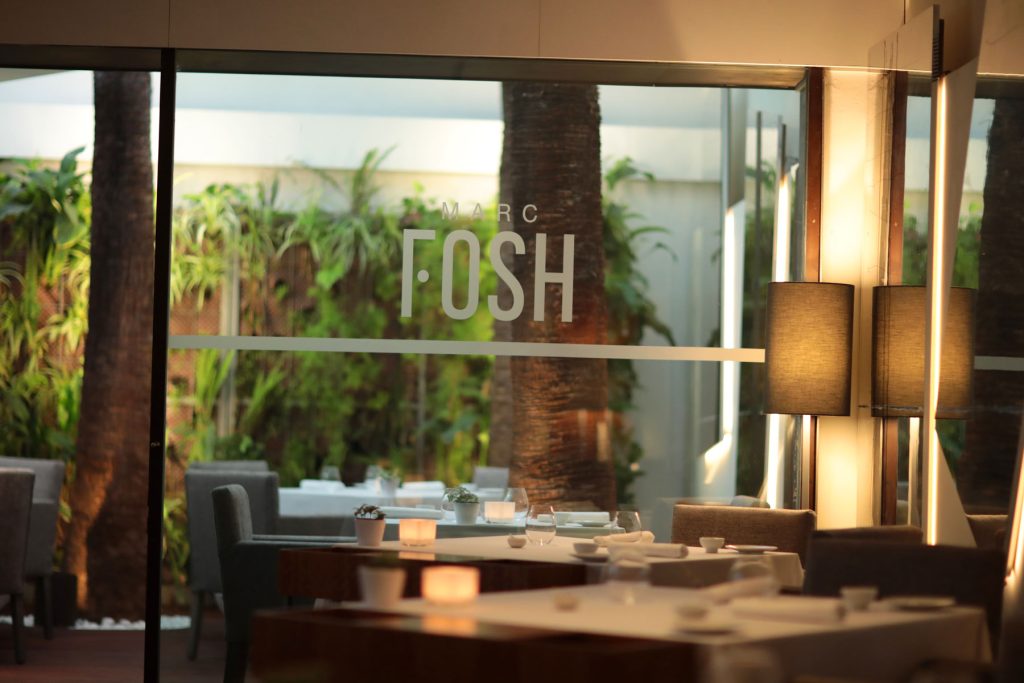
Set inside the elegant Convent de la Missió in Palma’s Old Town, Marc Fosh remains one of the island’s most celebrated fine-dining addresses. In 2002 Marc Fosh became the first British chef in Spain to be awarded a Michelin star and his current eponymous restaurant earned a Michelin-star in late 2014. His modern Mediterranean tasting menus continue to define refined island cuisine. Expect impeccably plated seafood, seasonal vegetables and carefully selected meats, all elevated with subtle technique and thoughtful wine pairings. It’s a destination for special occasions, with an intimate private dining room for those seeking exclusivity.
Address: Carrer de la Missió, 7A, 07003 Palma de Mallorca
Zaranda
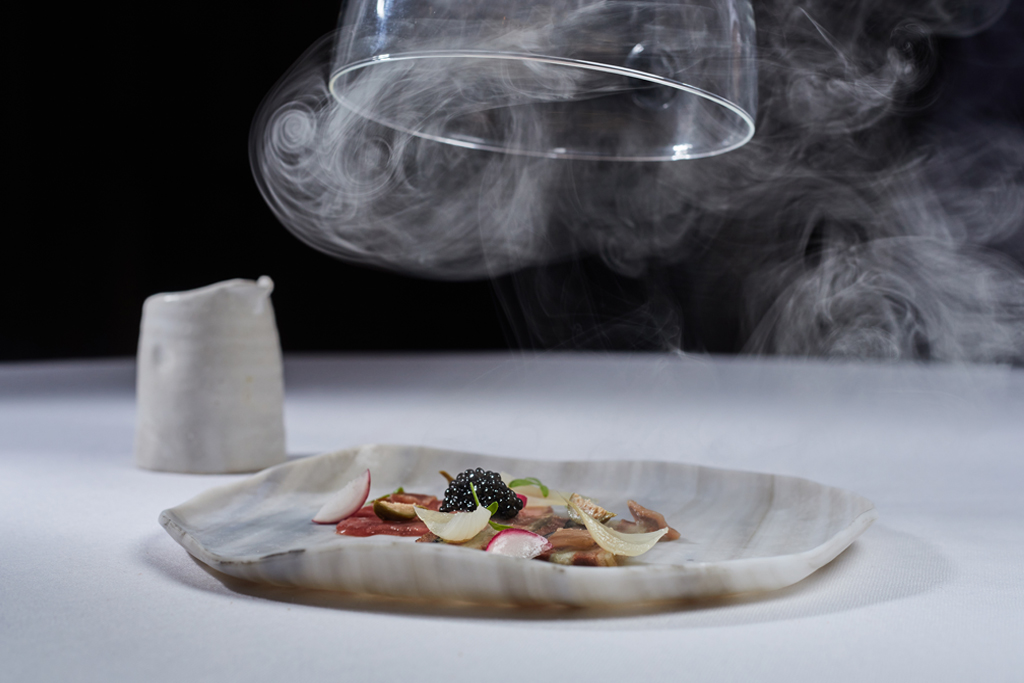
Located within the boutique Es Princep Hotel, Zaranda delivers an intimate fine-dining experience shaped by chef Fernando Pérez Arellano’s meticulous vision. Multi-course tasting menus blend regional ingredients with global sophistication, presented with precision and artistry. Their wine selection is exceptional, making it a haven for serious gastronomes.
Address: Hotel Es Princep, Carrer Bala Roja 1, 07001 Palma de Mallorca
DINS Santi Taura
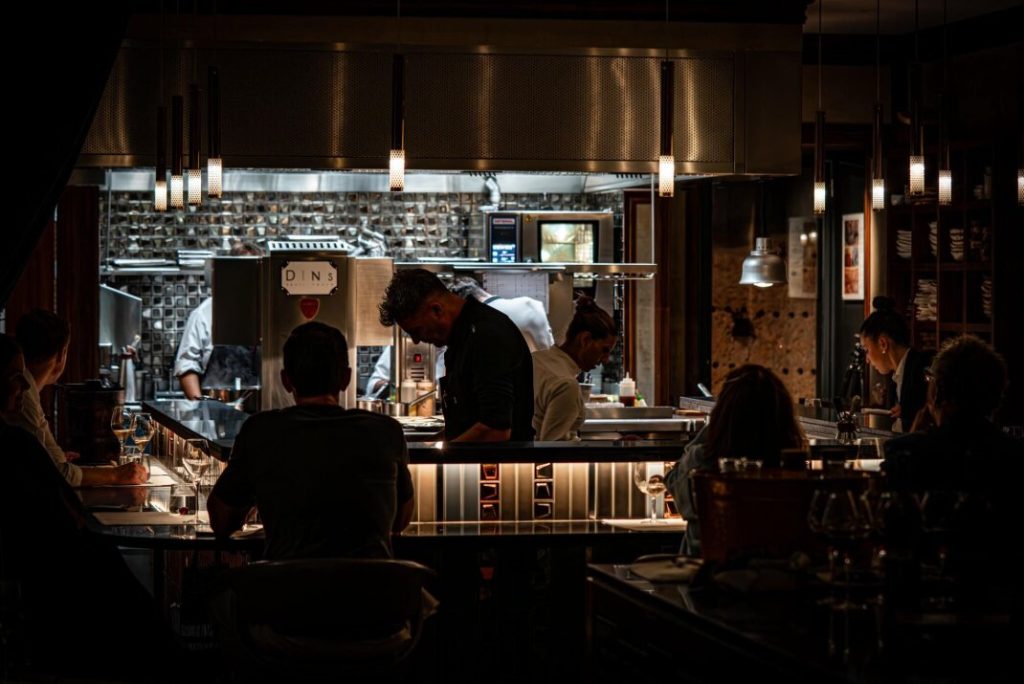
At DINS, chef Santi Taura offers something deeply rooted in Mallorcan identity. Rather than focusing on spectacle, the restaurant tells the story of the island through its food, reinterpreting classic stews, seafood dishes and traditional recipes. Dining here feels like a journey through Mallorca’s culinary memory.
Address: Plaça de Llorenç Villalonga, 4, 07001 Palma
Adrián Quetglas
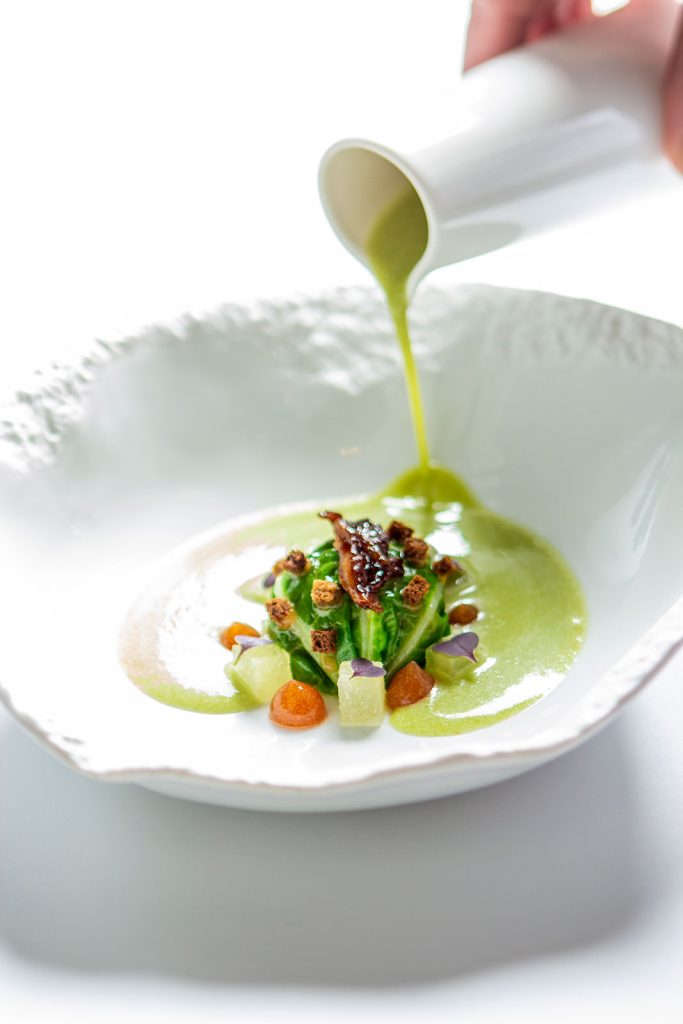
Image courtesy of Restaurant Adrian Quetglas
With a more relaxed, bistro-style atmosphere, Adrián Quetglas fuses Mediterranean flavours with international flair. Located within the charming Old Town, the space is contemporary and intimate, with clean lines, warm lighting and an understated elegance that allows the food to take centre stage. Chef Adrián Quetglas brings international excellence to his cuisine, shaped by his experience in kitchens throughout Europe. Elegant yet approachable, it’s ideal for diners seeking chef-driven cooking without the formality. Service is polished yet friendly, and the atmosphere encourages diners to relax rather than whisper.
Address: Passeig de Mallorca, 20, Palma
Voro
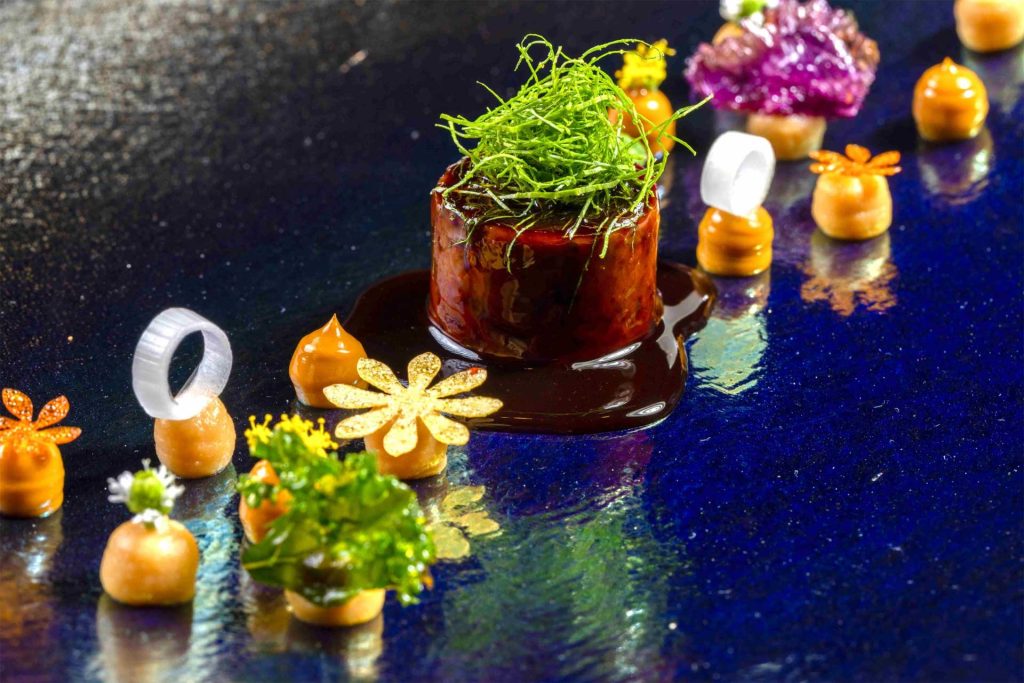
The only two-Michelin-star restaurant in the Balearics, Voro is a gourmet destination on the east coast, at the Cap Vermell Grand Hotel in Canyamel. Under chef Álvaro Salazar, the cuisine is avant-garde yet grounded in Mediterranean produce. Multi-course menus explore land and sea through bold technique and artistic composition, delivered with highly personalised service.
Address: Cap Vermell Grand Hotel, Urbanització Atalaya de Canyamel, Canyamel
Popular Palma Restaurants
Beyond Michelin stars, Palma’s eclectic culinary eateries differ in style, but each delivers personality and plates designed to impress.
Vandal Palma
Tucked into the bohemian neighbourhood of Santa Catalina, Vandal Palma provides a creative experience that feels edgy, artistic and globally inspired. The avant-garde interior is far removed from the traditional Mallorcan style and sets the scene for the eclectic menu. Expect an interesting fusion of Mediterranean, Latin American and Asian flavours with bold presentation. Dining at Vandal is as much about atmosphere as food, ideal for a stylish evening that feels energetic and slightly unexpected.
Address: Plaça del Progrés, 15, Palma
Fera Palma
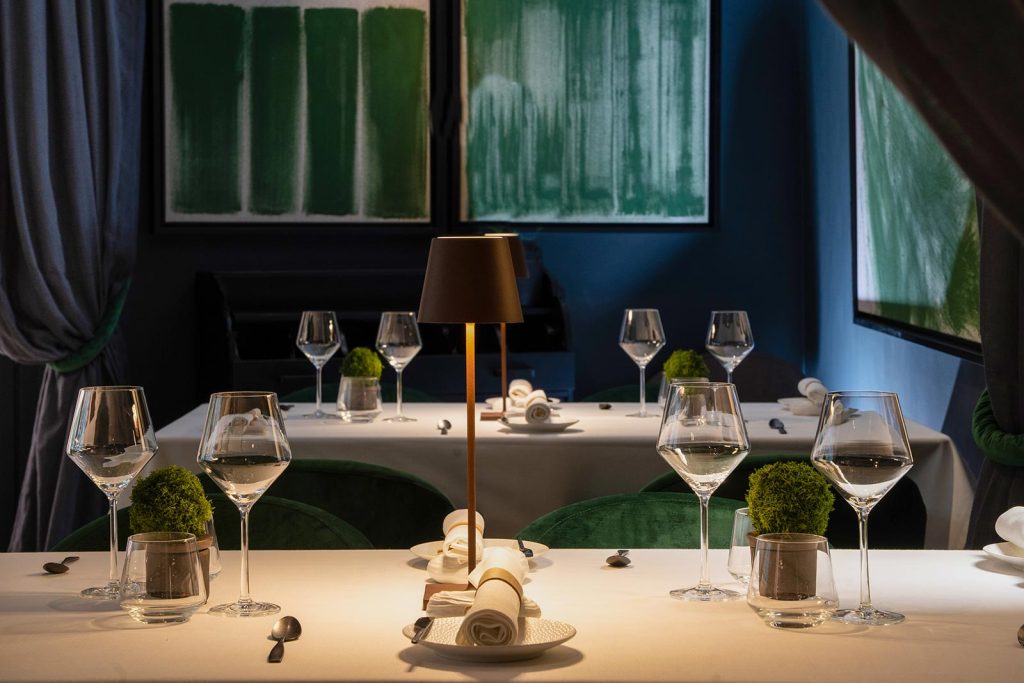
Fera Palma brings a sleek sophistication to the heart of the Old Town. Set within a 17th-century palace with a serene courtyard garden, the restaurant pairs contemporary Mediterranean cuisine with subtle Asian accents. The result is refined yet imaginative, polished but never pretentious. Fera is perfect for a romantic city dinner or a quietly impressive evening with wine pairings that showcase both Mallorcan and international vineyards.
Address: Carrer de la Concepció, 4, Palma de Mallorca
QUADRAT Restaurant and Garden
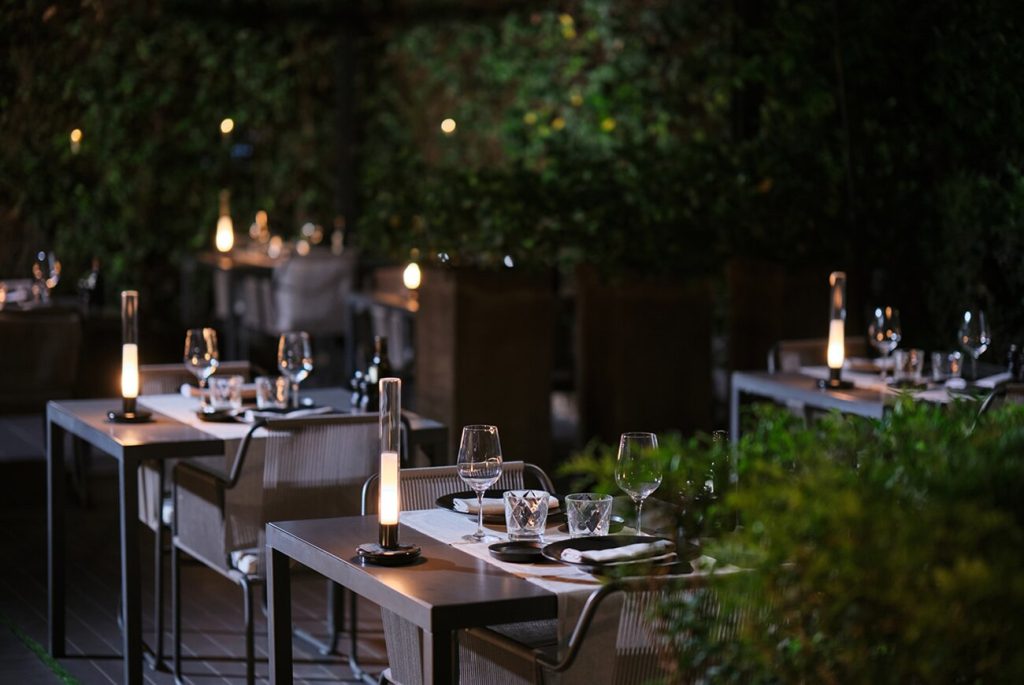
For a serene setting, Quadrat Restaurant is set within the elegant Hotel Sant Francesc in Palma’s Old Town. Quadrat is a refined oasis just moments from the hustle and bustle of the city. The leafy courtyard, shaded by palms and centred around a tranquil fountain, feels almost monastic in its calm, offering one of Palma’s most romantic al fresco settings.
The cuisine is rooted firmly in Mediterranean tradition with the focus on quality produce, careful technique and letting ingredients speak for themselves.
Address: Plaza de Sant Francesc 5, Palma
Plan by area: combine this restaurant guide with our local guides to Palma, Sóller and Alcúdia.
The Rest of the Island: Scenic Michelin-Star Restaurants
Beyond Palma, Mallorca’s dramatic landscapes provide extraordinary backdrops for some of Spain’s most exciting restaurants.
Andreu Genestra – Llucmajor
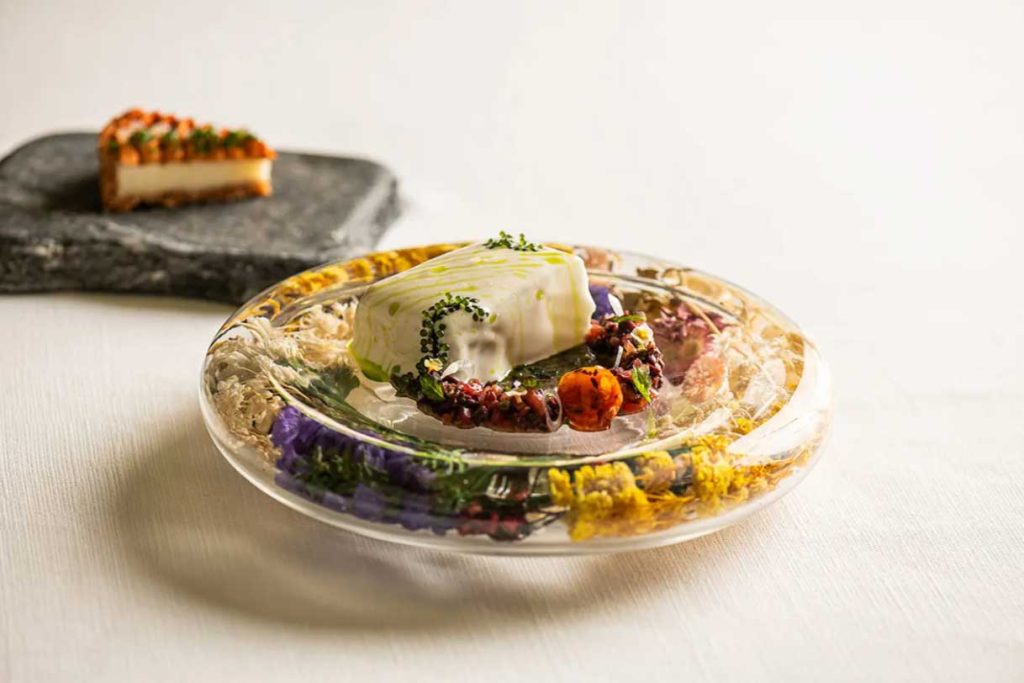
A champion of sustainability, Andreu Genestra’s country restaurant operates on a true farm-to-fork philosophy. Much of the produce is grown in the chef’s own gardens, and the menus change with the seasons.
Address: Camí de Sa Torre, Km 8, 07609 Llucmajor
Béns d’Avall – Sóller
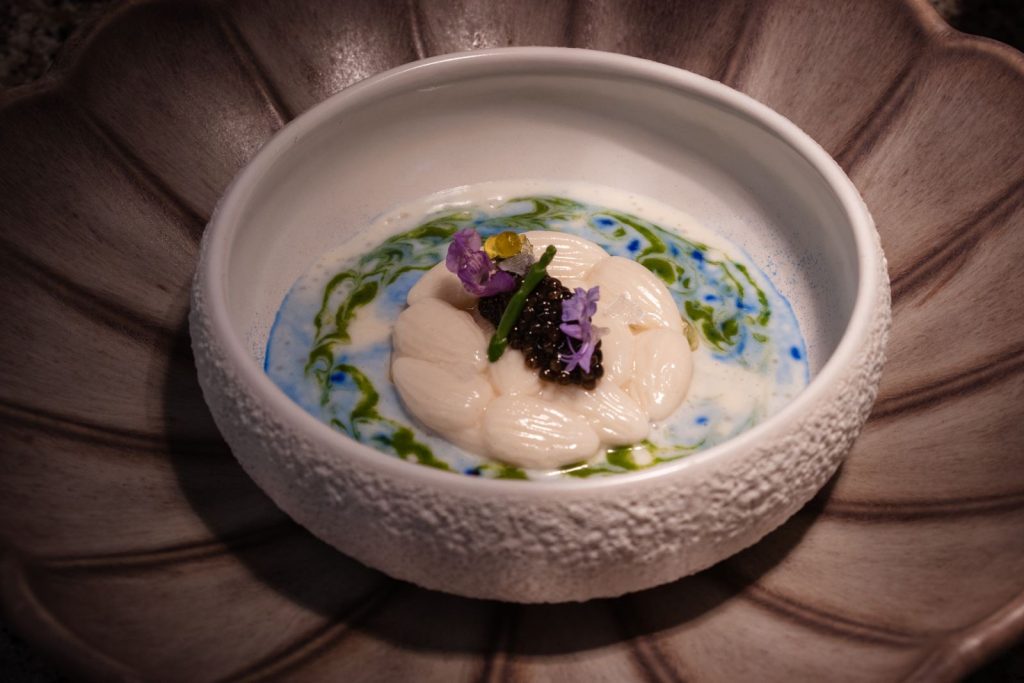
Few restaurants can rival the setting at Béns d’Avall. Perched above the Mediterranean with panoramic sea and cliffside views, it offers refined Balearic cuisine created from the finest seasonal produce. Seafood takes centre stage, often presented with delicate, modern touches. Sunset dining here is unforgettable and the perfect place for a romantic date.
Address: Carretera de Deià, km.56, 07100 Sóller
Maca de Castro – Alcúdia
One of Mallorca’s most innovative chefs, Maca de Castro has redefined the island’s fine dining landscape over the past decade. Her innovation lies not in culinary theatrics, but in a thoughtful, deeply rooted reinterpretation of Mallorcan gastronomy.
What sets her apart is her unwavering commitment to biodiversity and seasonality. Long before sustainability became an industry buzzword, she was working closely with local farmers, fishermen and artisans, championing forgotten native varieties, wild herbs and regional produce unique to the island. Instead of relying on luxury ingredients alone, she builds complexity through technique, texture and contrast. She often elevates vegetables to centre stage, often allowing humble ingredients such as courgette flowers, tomatoes or wild fennel to become the defining element of a dish.
Address: Carrer de Juno, s/n, 07400 Alcúdia
Es Fum – Costa d’en Blanes
Located within the luxurious St Regis Mardavall Hotel on Mallorca’s southwest coast, Es Fum delivers creative Mediterranean cuisine with polished sophistication. The setting is serene and refined, with an elegant dining room that reflects the discreet glamour of the hotel itself.
The cuisine is modern yet rooted in regional produce, balancing clarity of flavour with technical finesse. Each course feels considered and precise, supported by an exceptional sommelier programme that elevates the overall experience. Es Fum is ideal for those seeking refined luxury and an experience where service, wine and cuisine align seamlessly.
Address: St Regis Mardavall Hotel, Carretera Palma-Andratx 19, Costa d’en Blanes
Fusion19 – Muro
Fusion19 in the north of the island blends Mediterranean tradition with international technique to create imaginative and adventurous tasting menus. The atmosphere is contemporary yet welcoming, allowing the focus to remain firmly on the creativity unfolding on the plate.
Here, island ingredients are reinterpreted through global influences: unexpected textures, bold contrasts and meticulous presentation define the experience. Fusion19 is a bold choice for diners who appreciate innovation and enjoy tasting menus that surprise.
Address: Av. de s’Albufera, 23, Muro
Balearic Properties is an established, award-winning agency partnered with Savills International.
Living in Santa Maria del Camí
Nestled in the centre of Mallorca is Santa Maria, a small, charming town and municipality in the north-east of Palma. This quaint town manages to feel both timeless and contemporary with a compact historic centre, lively weekly markets, close access to the airport and Palma, and is surrounded by the island’s best vineyards. With an increasing number of high-end properties, it’s become a hot-spot for people seeking a quieter, authentic Mallorcan lifestyle without forgoing convenience, authenticity or luxury.
Santa Maria, a village with charm and character
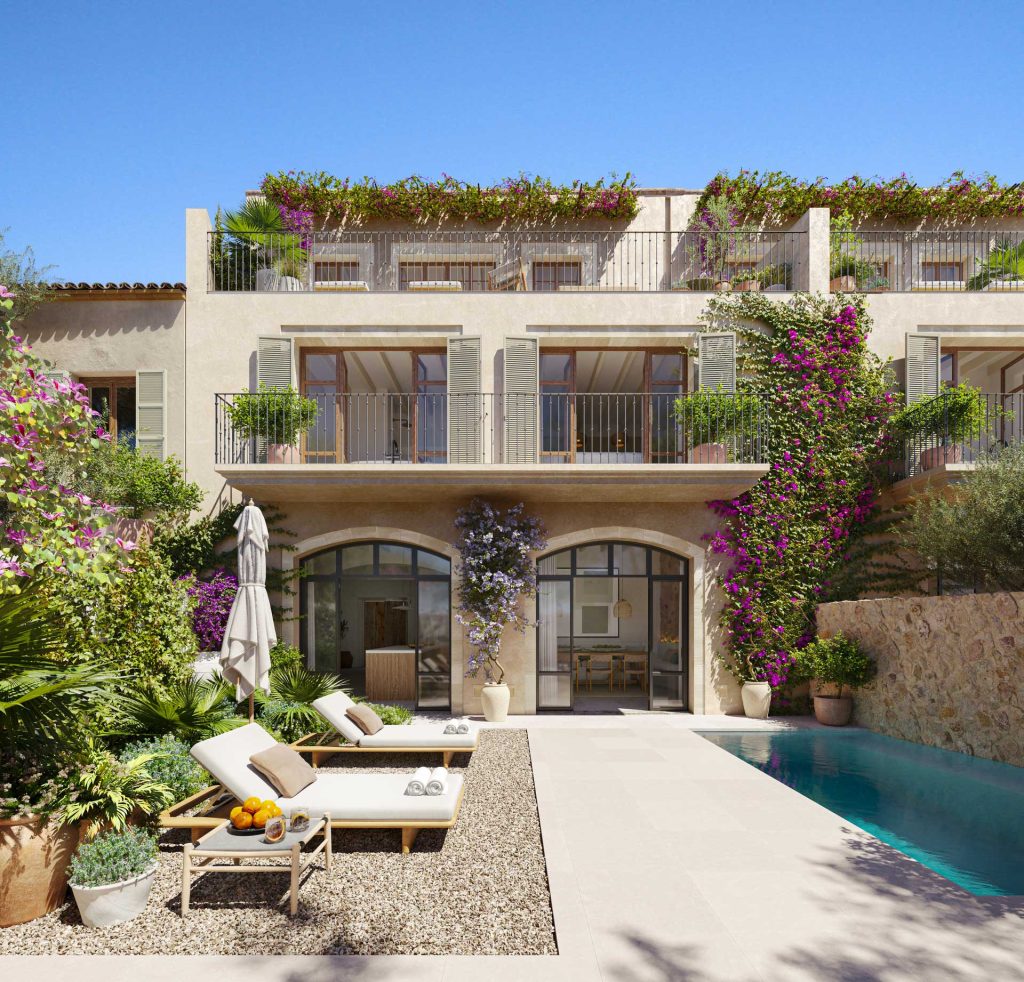
Meticulously renovated townhouse with mountain views, pool and roof terrace in Santa Maria. €2,450,000. View property
Santa Maria retains a distinctly Mallorcan character with white and stone fronted townhouses clustered around a pretty main square, a 13th-century parish church with its public plaza, narrow streets lined with small shops, bakeries, cafés and tapas bars. The town’s social life is active and public, locals gather in the square, the weekly market fills the streets on Sundays and cultural events and fiestas feature throughout the year. For buyers relocating from larger cities, the scale is immediately attractive, everything is walkable, neighbours are familiar faces, and there’s a real sense of community.
Santa Maria location and connectivity
Santa Maria is centrally located within easy reach of Palma and the airport, making it ideal for those who want island tranquillity but need convenient access to the city and international connections. Another key advantage is that Santa Maria is part of the Serveis Ferroviaris de Mallorca (Mallorca rail network), with a reliable train service to Palma and nearby towns, a practical option for commuters or those who prefer to reach the city without driving. In addition, the close proximity to the Serra de Tramuntana mountains provides excellent hiking and cycling routes right on the doorstep, while the island’s western and northern beaches are just a short drive away.
Distance and travel times
- To Palma city centre: about 12–16 miles (20–25 km), typically a 20–30 minute drive depending on traffic.
- Regular train service to Palma takes roughly 20–25 minutes.
- To Palma de Mallorca Airport (PMI): about 12–14 miles (18–22 km), usually a 15–25 minute drive depending on the time of day.
Property types in Santa Maria
The property mix in and around Santa Maria del Camí is diverse, from classic townhouses to traditional fincas scattered across the surrounding countryside set in olive groves or almond orchards. Historic townhouses are usually made from traditional stone or rendered townhouses in the centre, often featuring classic internal courtyards and terraces.
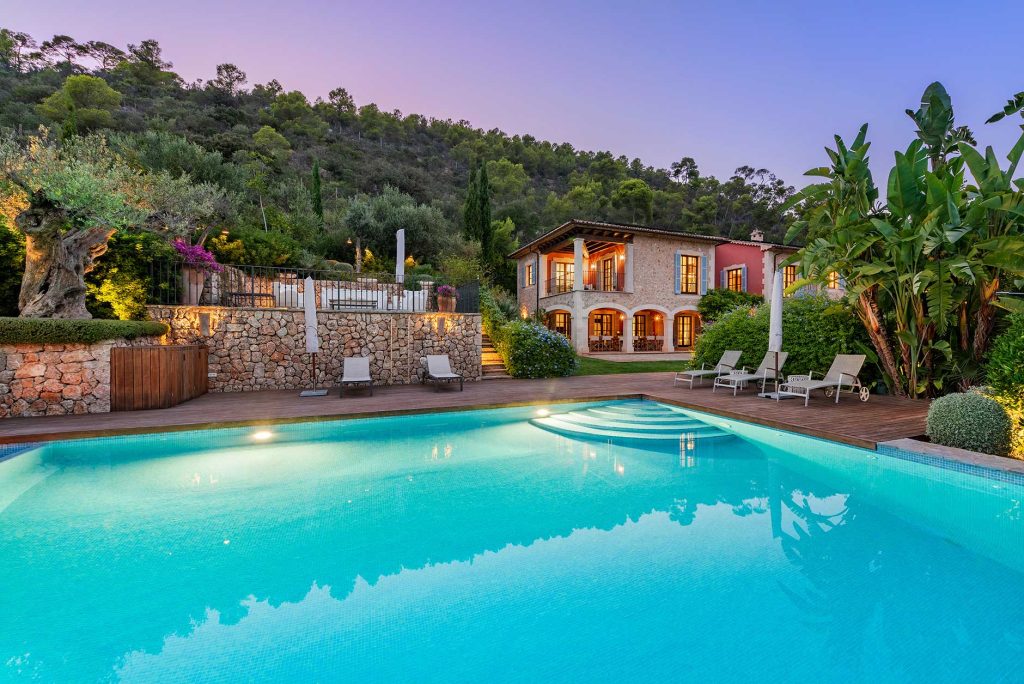
Eco friendly finca with holiday license with far reaching views between Santa Maria and Bunyola. €5,995,000. View property
Many of the fincas have been beautifully restored, blending original features – beamed ceilings, original window shutters and traditional Mallorcan stone walls. However, there is plenty of room for luxury villas, mainly new-builds or refurbished villas, often designed with Mediterranean minimalism, large indoor-outdoor living spaces, designer kitchens, infinity pools and landscaped gardens. Some also include smart-home functionality, private gyms and spa facilities. But for those who want to downsize, small apartments are available close to the centre and new developments that would appeal to those seeking lower-maintenance homes in the town.
Discover our selection of properties in Santa Maria
Daily life in Santa Maria
The town’s small size makes it appealing for those who value a slower pace, morning coffee in the plaza, cycling to nearby vineyards, and weekend markets and cultural events. Daily life combines rural calm with practical amenities. Supermarkets, a selection of independent grocers, specialist food shops and weekly markets provide fresh produce, primarily olives, citrus fruits and seasonal vegetables. Cafés and bistros serve Catalan and Mallorcan cuisine, while a few higher-end restaurants celebrate local wines and excellent farm-to-fork produce.
Health and education services are readily accessible in neighbouring towns and Palma. Santa Maria has public primary and secondary schools serving residents, plus municipal nursery options. The Montessori School of Mallorca in Santa Maria is a private, co-educational international school, offering education from early childhood through to secondary. There also several other international schools throughout Mallorca, including Green Valley, Queen’s College, Baleares International College (BIC) and Agora.
The wine region
While Santa Maria is not a wine town in the same way as nearby Binissalem, it sits in the centre of a rich winemaking area. Binissalem DO (Denominación de Origen) is one of Mallorca’s most respected wine regions, renowned especially for indigenous red grapes like Manto Negro and Mantonegro blends, alongside international varieties adapted to the island’s climate and terrain. The region is known for small to medium-sized producers rather than massive industrial wineries. Many bodegas are open for visits and tastings, offering intimate tours, food-pairing experiences and the chance to meet winemakers and learn about traditional and modern wine-making techniques.
Investment and market considerations
Santa Maria del Camí offers a compelling mixture of traditional Mallorcan life, easy access to Palma, a strong local wine culture and attractive opportunities for luxury living. Whether you’re drawn to a restored finca among olive trees, a stylish townhouse near the plaza, or a contemporary villa with designer finishes and a private pool, the area provides a balanced, high-quality lifestyle rooted in local culture and nature. For anyone looking to combine authentic island living with refined comforts and proximity to the countryside, Santa Maria is an appealing place to call home.
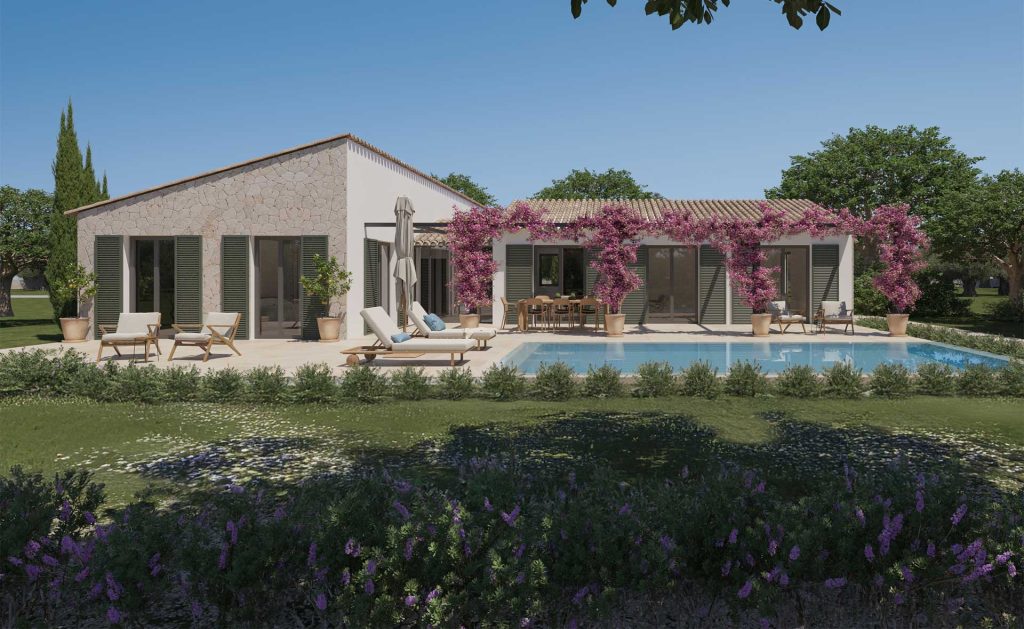
Build your dream home: Land with building license in Santa Maria €790,000. View property
Santa Maria del Camí attracts various buyer profiles, local families, international retirees, second-home owners, and investors seeking holiday rental potential. Market dynamics generally reflect Mallorca’s broader trends, steady demand for well-located, well-presented properties with strong interest in restored fincas and designer villas.
Factors to consider
- Rental potential: Proximity to Palma and the airport makes the town attractive for short-term and seasonal rentals, though local regulations on tourist rentals should be checked.
- Long-term value drivers: Historical charm, central location, access to transport and the wine-tourism appeal are positive value drivers. Quality of renovation and land size are crucial for resale value.
- Legal and buying process: Non-resident buyers should work with local legal advisors to navigate taxes, permits, and any renovation regulations, especially when dealing with listed or historic properties.
Practical tips for prospective residents or buyers
- Visit at different times of year to understand seasonal life, summers are lively and winters more peaceful and authentic.
- Explore both the town centre and surrounding countryside to compare property types and lifestyle options.
- Meet local producers, wineries, olive growers, and chefs, to get a sense of community and local produce.
Continue exploring: see the wider Central Mallorca area guide, compare Mallorca property prices by area and read about living in Mallorca year-round.
Looking to buy or sell in Mallorca?
Balearic Properties is an established, award-winning agency partnered with Savills International.
Is Mallorca a Good Property Investment in 2026?
Market data checked: 18 September 2026. Sources include Spain’s INE Housing Price Index (7 September 2026), the Balearic Government’s new Housing Observatory (17 September 2026), Idealista’s August 2026 asking-price index and the Registrars’ Q2 activity update (25 August 2026). Asking prices, transaction prices and official price indices measure different things and are identified separately below.
Mallorca has firmly established itself as one of Europe’s most desirable property markets, but in 2026 the conversation has shifted. The island is no longer an emerging opportunity — it is a mature, high-demand destination where buyers must be more strategic.
For many investors, the key question is no longer whether Mallorca is attractive, but whether it still offers room for growth and long-term value. The answer is yes, but only if you understand how the market has evolved and what now drives it.
A Market Defined by Stability, Not Speculation
Investment Starts with the Right Area
Mallorca is a collection of micro-markets rather than one investment market. Compare North Mallorca, Southwest Mallorca, Palma, Northwest Mallorca and Central Mallorca, then use our property price comparison by area to put those lifestyle differences into market context.
Over the past decade, Mallorca has transitioned from a relatively accessible Mediterranean market into a premium, supply-constrained environment. Prices have risen steadily, particularly in prime areas, but what is more important is how they have risen.
Unlike markets driven by rapid speculation, Mallorca’s growth has been underpinned by structural demand. Even during periods of economic uncertainty, property values have remained stable or continued to increase at moderate rates.
The latest available indicators still point to rising prices, but the rate depends heavily on the dataset. Spain’s official Housing Price Index recorded a 13.7% year-on-year increase for the Balearic Islands in Q2 2026, while Idealista’s asking-price series showed a 5.1% annual increase in August 2026. These measures are not directly comparable: the official index tracks price change across the region, while portal data reflects advertised stock. Together, they reinforce the need to use dated, source-specific evidence rather than a single headline growth rate.
For investors, this type of environment offers something increasingly rare: predictability.
September 2026 market check. The latest official evidence points to continued price pressure, but also shows why headline asking prices need context. The INE Housing Price Index published on 7 September 2026 recorded a 12.2% annual increase nationally in Q2, while the Balearic Islands registered 13.7%. Meanwhile, Idealista’s August 2026 index placed Balearic asking prices at €5,595/m², up 5.1% year on year and at a new high in that series.
There is an important caveat. On 17 September, the Balearic Government’s new Housing Observatory reported that advertised housing offers across the islands were around 38% above actual transaction prices. That does not mean every listing is overpriced by 38%; it means portal asking-price data and completed-sale data should not be treated as interchangeable.
Activity is also more nuanced than prices alone suggest. The Spanish Registrars’ 25 August 2026 update showed the national Real Estate Activity Index down 1.9% quarter on quarter in Q2, with the sales component down 2.6%, even as prices continued to rise. For Mallorca buyers, this reinforces the importance of looking at the specific micro-market and comparable completed transactions rather than extrapolating from a single island-wide percentage.
The Role of International Buyers
Foreign-buyer context. The Balearic Housing Observatory’s September release also shows the different price segment in which international demand operates: for 2025, the average purchase price reported for foreign buyers was €548,662, compared with €304,120 for Spanish buyers. This is historical transaction evidence rather than a 2026 forecast, but it helps explain why international demand has an outsized influence on the upper end of the Balearic market.
One of the most important factors supporting Mallorca’s property market is its international buyer base. Unlike many regions in Spain, demand here is not primarily driven by local purchasers, but by a diverse mix of foreign investors and second-home buyers.
German, Scandinavian and British buyers have traditionally dominated the market, but in recent years there has been a noticeable increase in interest from the United States and other international markets.
What makes this demand particularly strong is that it is not purely financial. Buyers are not simply looking for returns — they are looking for lifestyle, security and long-term usability. Many intend to use the property themselves, either seasonally or permanently.
This creates a much more resilient market, less vulnerable to short-term economic fluctuations.
Limited Supply and Structural Constraints
If there is one element that truly defines Mallorca as an investment destination, it is the limited availability of land.
The island operates under strict planning regulations, particularly in rural and coastal areas. Large portions of land are protected, and new development is tightly controlled. While this can be frustrating from a development perspective, it is precisely what protects long-term value.
In simple terms, demand continues to grow, but supply cannot expand at the same rate.
This imbalance is not temporary. It is structural, and it is one of the main reasons why property in Mallorca has proven to be such a strong long-term asset.
Not All Areas Perform Equally
A common mistake among investors is to view Mallorca as a single market. In reality, it is made up of multiple micro-markets, each with its own dynamics.
Asking-price data and local market evidence show substantial differences between municipalities and micro-locations. Areas such as the southwest, Palma and parts of the north often sit at higher price points because of accessibility, infrastructure, limited supply and international demand, but performance varies by period and property type.
Other areas may offer lower entry prices and a different buyer profile. Liquidity and future appreciation should be assessed property by property rather than assumed from the area label alone.
For this reason, location and property quality should be assessed together: micro-location, legal status, condition, orientation and long-term usability can all materially affect value.
The Rental Market: Opportunities and Limitations
Rental demand in Mallorca remains strong, particularly for long-term rentals in urban areas such as Palma and established residential zones.
However, the regulatory environment has changed significantly in recent years. Short-term holiday rentals are now heavily restricted, and obtaining licences can be complex or, in some areas, impossible.
This has shifted the investment landscape. While short-term rental strategies can still be viable in specific cases, long-term rentals often provide a more stable and predictable return.
Investors need to approach this segment with a clear understanding of the legal framework, rather than relying on outdated assumptions.
Lifestyle as a Core Investment Driver
What truly differentiates Mallorca from many other property markets is the role that lifestyle plays in sustaining demand. The island offers a combination of climate, safety, accessibility and natural beauty that is difficult to replicate elsewhere in Europe. This creates a type of demand that goes beyond purely financial considerations.
Even when yields fluctuate or growth slows, the intrinsic value of living in Mallorca remains high. This is why the market continues to attract buyers even at elevated price levels.
In many ways, Mallorca should not be viewed as a traditional investment market, but as a hybrid between lifestyle and capital preservation.
Risks and Market Realities
No investment is without risk, and Mallorca is no exception.
The most significant factor to monitor is regulation. There is increasing political pressure in the Balearic Islands to address housing affordability, which could lead to changes affecting foreign buyers or taxation.
Additionally, the high entry price of the market means that margins for error are smaller. Buying the wrong property or overpaying in a secondary location can limit future returns.
New-build and luxury supply varies significantly by municipality and development. Rather than assuming saturation, buyers should compare current competing stock, planning pipeline, specification and resale evidence in the specific micro-market.
So, Is Mallorca Still a Good Investment?
The answer depends entirely on the investor’s approach.
Mallorca is no longer a market where quick gains are easily achieved. It does not reward speculation or short-term strategies.
However, for investors who prioritise long-term stability, capital preservation and consistent demand, it remains one of the strongest property markets in Europe.
The key is to adjust expectations.
This is not about finding undervalued assets in a rising market. It is about securing a position in a market that is already established and likely to remain in demand.
A Long-Term Perspective
Ultimately, investing in Mallorca is less about timing the market and more about understanding it.
The island offers a rare combination of limited supply, international demand and lifestyle appeal. These factors create a level of stability that is increasingly difficult to find elsewhere.
For those willing to take a long-term view, Mallorca continues to represent not just a good investment, but a strategic one.
Continue your research: compare Mallorca property prices by area, review the tax considerations for foreign buyers and follow the Balearic Islands Buying Guide.
Considering Investing in Mallorca?
At Balearic Properties, we work with buyers who are looking beyond short-term opportunities and focusing on long-term value.
Whether the goal is a second home, a relocation or a carefully selected investment, understanding the nuances of the market is essential.
Because in Mallorca, the best decisions are rarely the most obvious ones.
Living in Mallorca Year-Round: What Life Is Really Like Beyond the Summer
Mallorca is often defined by its summer — long days, turquoise waters and a rhythm shaped by the Mediterranean sun.
But to understand the island properly, you have to step beyond that season. Because Mallorca is not built for a few months of the year. It is a place designed, almost quietly, for continuity.
Living in Mallorca year-round is not simply about staying longer. It is about experiencing how the island functions when it is no longer performing for visitors, but settling into its natural pace.
And that is where its real value begins to emerge.
When the Island Slows Down — and Becomes Itself
Where Does Year-Round Life Work Best?
The experience changes significantly by location. Explore North Mallorca for established towns and coastal communities, Palma for the island’s deepest year-round infrastructure, Southwest Mallorca for international services and connectivity, Central Mallorca for village and country life, and Northwest Mallorca for Tramuntana living. Each guide includes Iris Grünewald’s expert perspective for buyers considering the area as a real home rather than only a holiday destination.
By late September, a subtle shift takes place.
The intensity of summer recedes. Roads become quieter. The coastline feels more open. Restaurants and cafés return to a more local rhythm. The island, in a sense, exhales.
For residents, this is not the end of the season — it is the beginning of a different one.
Autumn in Mallorca is often overlooked, yet it is one of the most balanced times of the year. The sea remains warm, the temperatures soften, and the landscape takes on a calmer, more grounded tone.
Winter follows not with harsh conditions, but with clarity. Light becomes sharper. Air feels cleaner. The Serra de Tramuntana reveals a different character — less dramatic, more contemplative.
Spring, in turn, reawakens the island gradually, without the urgency that defines other destinations.
This seasonal variation is not extreme — and that is precisely the point. Mallorca offers change without disruption.
Climate and Light: More Than Just Good Weather
Mallorca’s climate is frequently summarised as “mild” or “sunny”, but these descriptions miss something essential.
What defines the island is not simply temperature, but consistency of light and outdoor possibility.
With over 300 days of sunshine per year, even the winter months allow for an outdoor life that continues rather than pauses.
- January and February often bring clear skies and temperatures between 12–18°C
- Spring arrives early, with longer days and increasing warmth
- Summers are hot, but moderated by sea breezes
- Autumn retains warmth without intensity
Unlike northern European climates, where winter imposes a clear break in lifestyle, Mallorca maintains continuity. Life does not move indoors completely. Movement, social life and daily routines remain connected to the outside.
This has a subtle but significant effect on how people live.
Time feels less fragmented. Days feel longer, even in winter. And the boundary between “seasonal living” and “year-round living” begins to dissolve.
A Stable, Year-Round International Community
Mallorca today is not just a holiday destination — it is a functioning, international place to live.
Over the past decade, the island has attracted a growing number of full-time residents, including:
- Northern European families relocating permanently
- Entrepreneurs and remote professionals
- Second-home owners transitioning into longer stays
Areas such as Pollensa, Palma and the southwest have developed into year-round communities, where services, restaurants and social life continue well beyond the summer months.
This creates a rare balance.
On one hand, Mallorca retains a strong local identity, with traditions, markets and a distinct cultural rhythm. On the other, it offers an international environment where integration is relatively natural.
For many residents, this duality is one of the island’s strongest attributes.
Everyday Living: Simplicity Without Sacrifice
There is a common assumption that island living requires compromise — a reduction in services, connectivity or convenience.
Mallorca challenges that perception.
In practical terms, daily life on the island is both comfortable and efficient:
- An international airport with year-round connections to major European cities
- High-quality public and private healthcare
- Reliable infrastructure and services
- Access to international education
But what changes is not what is available — it is how it is experienced.
Daily routines become less rushed. Distances feel shorter. Activities are less compressed into limited time.
There is a shift away from urgency, without losing functionality.
Education and Family Life in Mallorca
For families considering relocation, education is often one of the defining factors.
Mallorca offers a well-established network of international schools, making it a viable long-term option for those moving from abroad.
Among the most recognised are:
- The Academy International School (British curriculum)
- Bellver International College
- Baleares International College
- Rafa Nadal School
These institutions provide continuity in education while also benefiting from the island’s environment.
However, what distinguishes education in Mallorca is not only the schools themselves, but the broader context in which children grow up.
- Smaller class sizes
- Multicultural environments
- Strong emphasis on languages
- Regular exposure to outdoor activities
Children spend more time outside, less time in transit, and often develop a different relationship with both nature and daily routine.
For many families, this represents a significant shift — not just academically, but in terms of overall quality of life.
Winter: The Island at Its Most Authentic
Winter in Mallorca is often misunderstood by those who only know the island in summer.
It is quieter, certainly. But it is also more defined.
Without the intensity of tourism, the island’s structure becomes clearer. Villages return to their natural rhythm. Local life becomes more visible. The landscape feels more present.
In Palma, cultural life continues throughout the year. Restaurants, galleries and social spaces remain active, though at a more measured pace.
In the countryside and coastal areas, winter introduces a different kind of atmosphere — one that is less about activity and more about presence.
For many long-term residents, this is when Mallorca feels most real.
A Lifestyle Built Around Continuity
Perhaps the most distinctive aspect of living in Mallorca year-round is not any single feature, but the continuity it offers.
The ability to remain outdoors in every season changes the structure of daily life.
- Walking, cycling and hiking remain accessible year-round
- Outdoor dining does not disappear entirely in winter
- Social life adapts, but does not stop
This continuity removes the sense of interruption that characterises life in many other parts of Europe.
There is no clear divide between “summer life” and “winter life”. Instead, there is a gradual transition — one that allows for stability rather than disruption.
The Trade-Offs: Subtle but Real
Living in Mallorca full-time does require adjustment.
Some areas become noticeably quieter during the winter months. Certain seasonal businesses close or reduce hours. Outside Palma, a car is often necessary.
These factors are not limitations as much as they are structural characteristics of the island.
For those expecting a constant urban intensity, they may feel like compromises.
For those seeking a more balanced rhythm, they are often seen differently — as part of what defines Mallorca’s appeal.
From Visitor to Resident
One of the most interesting aspects of Mallorca is how perceptions change over time.
For visitors, the island is defined by experience — beaches, restaurants, landscapes.
For residents, it becomes something else.
Familiar routes gain meaning. Seasons create rhythm. Daily life develops a sense of continuity that is difficult to replicate elsewhere.
Mallorca does not reveal itself immediately. But over time, it becomes less of a destination and more of a framework for living.
A Different Way of Living
Living in Mallorca year-round is not about finding a better version of the same lifestyle.
It is about shifting to a different structure altogether.
Less acceleration.
More consistency.
Less fragmentation.
More presence.
In a world that increasingly prioritises speed and density, Mallorca offers an alternative — one that is quieter, but often more sustainable in the long term.
Considering a Move to Mallorca?
At Balearic Properties, we work with clients who are not just searching for a property, but for a long-term lifestyle decision.
From traditional fincas in the countryside to modern villas by the sea and apartments in Palma, Mallorca offers a range of possibilities — each aligned with a different way of living on the island.
The decision to live here is rarely impulsive. But once made, it is rarely reversed.
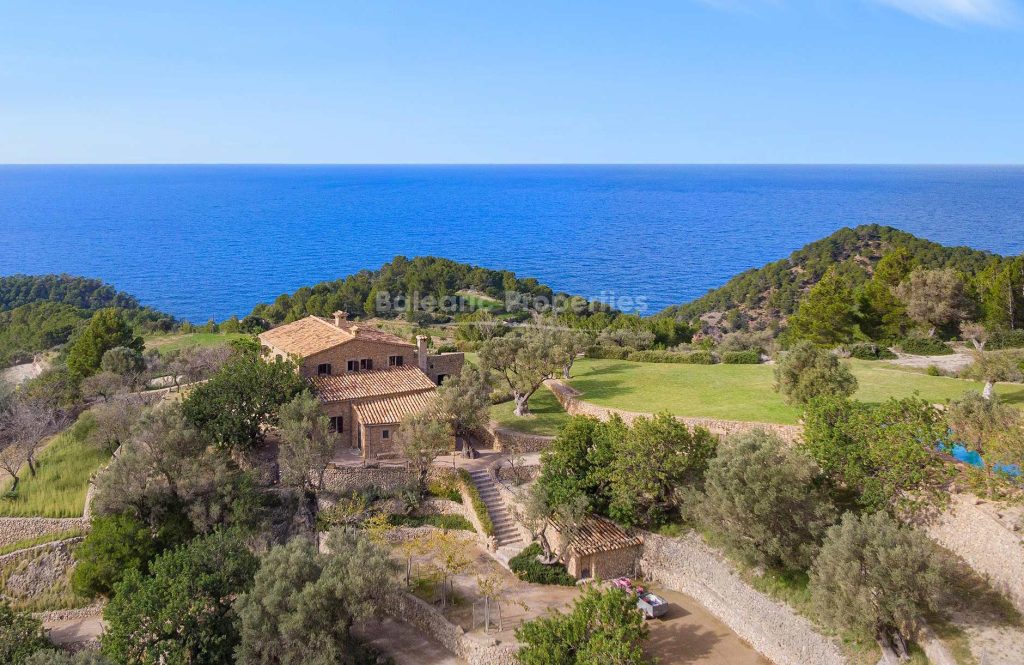
Living in Palma de Mallorca: Area Guide
Over the past decade, Palma has become one of Europe’s most sought-after cities to live in. The Mallorcan capital pairs a historic Mediterranean centre with a cosmopolitan cultural scene, and it does so on a human scale: the Gothic cathedral stands next to the sea, a modern marina runs along the bay, and most of daily life happens within a short walk, cycle or drive.
For international buyers, remote professionals and families relocating to the island, the appeal is the balance. Centuries-old architecture, theatres, galleries, markets, international restaurants and cafés all sit close to the city beaches, and the Serra de Tramuntana is a short drive away.
Why Palma Appeals to International Buyers
Shopping in Palma mixes international luxury brands, Spanish high-street names and independent boutiques in the narrow streets of the Old Town, alongside local artisan shops. Passeig del Born and Avinguda Jaume III are the main upmarket shopping streets, and El Corte Inglés has two department stores in the city, one on the Avingudes and a smaller one on Jaume III.
Access is a big part of the case. Palma airport is around 15 minutes by car from the city centre and has direct flights to the main European capitals, including London, Paris, Berlin and Madrid. Long-haul options have grown too: United has operated a seasonal route to New York (Newark) since 2022, and in summer 2026 Etihad added a seasonal direct service to Abu Dhabi.
That connectivity, combined with the Mediterranean lifestyle, has drawn a growing international community, and demand covers everything from city apartments to sea-view properties, classic townhouses and luxury villas.
Understanding Palma’s Neighbourhoods
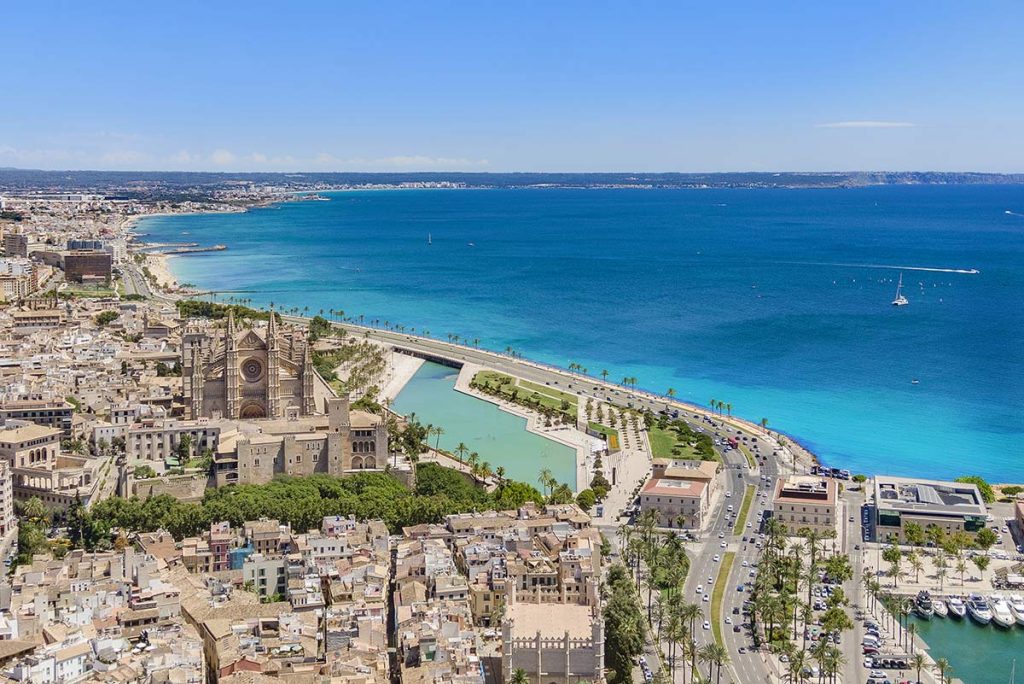
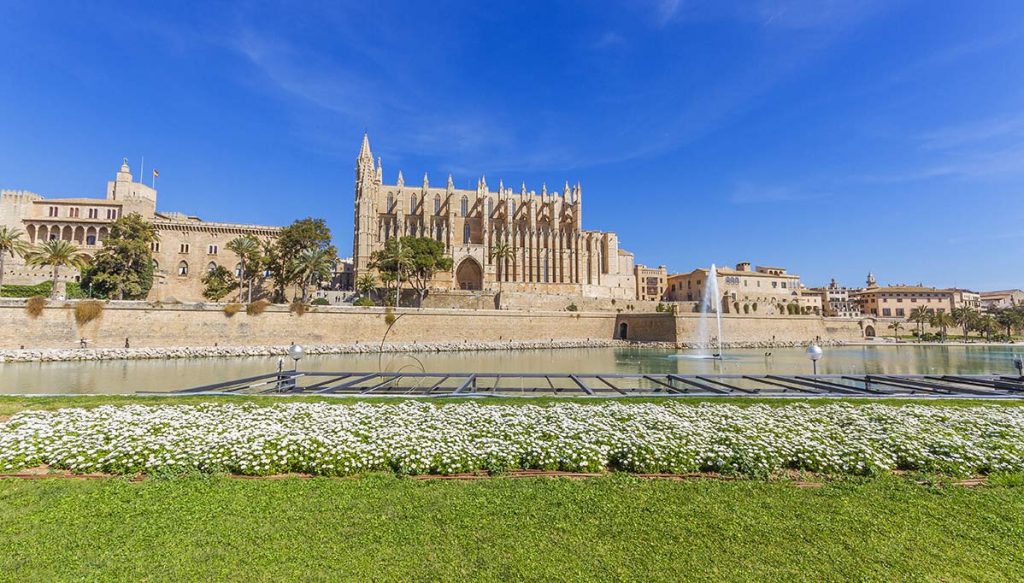
Despite its relatively compact size, Palma offers a real variety of places to live. Broadly, the city divides into a few lifestyle zones:
- Districts rich in historic architecture
- Lively neighbourhoods known for restaurants, nightlife and culture
- Seafront areas built around the beach and the marina
- Quieter residential districts popular with families
- Exclusive hillside areas known for villas and panoramic views
Knowing these differences matters when deciding where to live in Palma, because each neighbourhood offers a very different experience of the city.
The Old Town (Casco Antiguo): historic elegance
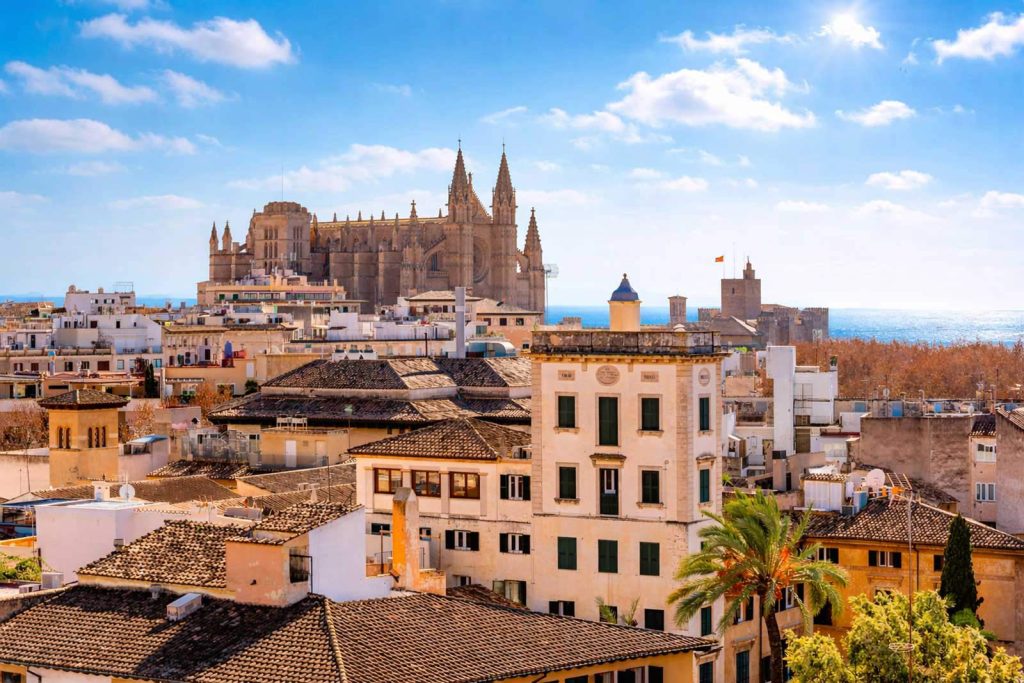
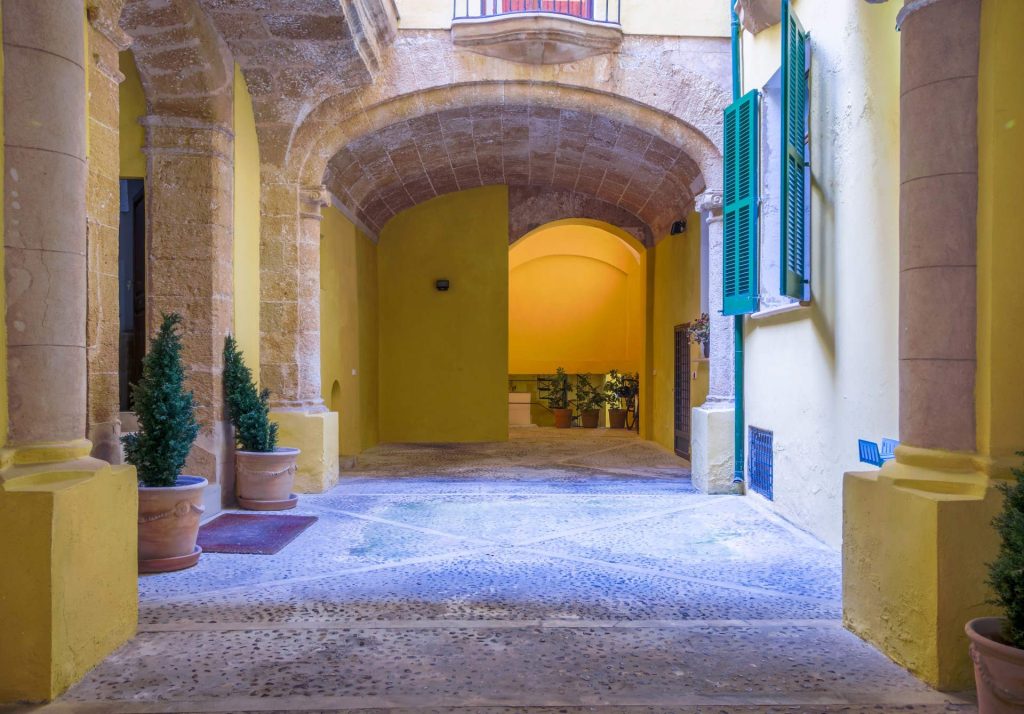
At the heart of the city lies the Casco Antiguo, Palma’s historic Old Town and one of the most prestigious addresses in Mallorca. Narrow cobbled streets run between Gothic churches, café-lined squares, Renaissance palaces and restored townhouses. Many historic buildings have been converted into apartments that combine original features, such as grand entrance halls, vaulted ceilings and private courtyards, with modern interiors, and some have roof terraces looking over the cathedral.
Living in Palma Old Town means being surrounded by culture: La Seu Cathedral, galleries, boutique hotels and shopping streets such as Passeig del Born and Jaume III are all on the doorstep. The area attracts buyers looking for historic character and central convenience, and prices are among the highest in the city. For a closer look at daily life there, see our guide to living in Palma Old Town.
Santa Catalina: Palma’s culinary and cultural hub
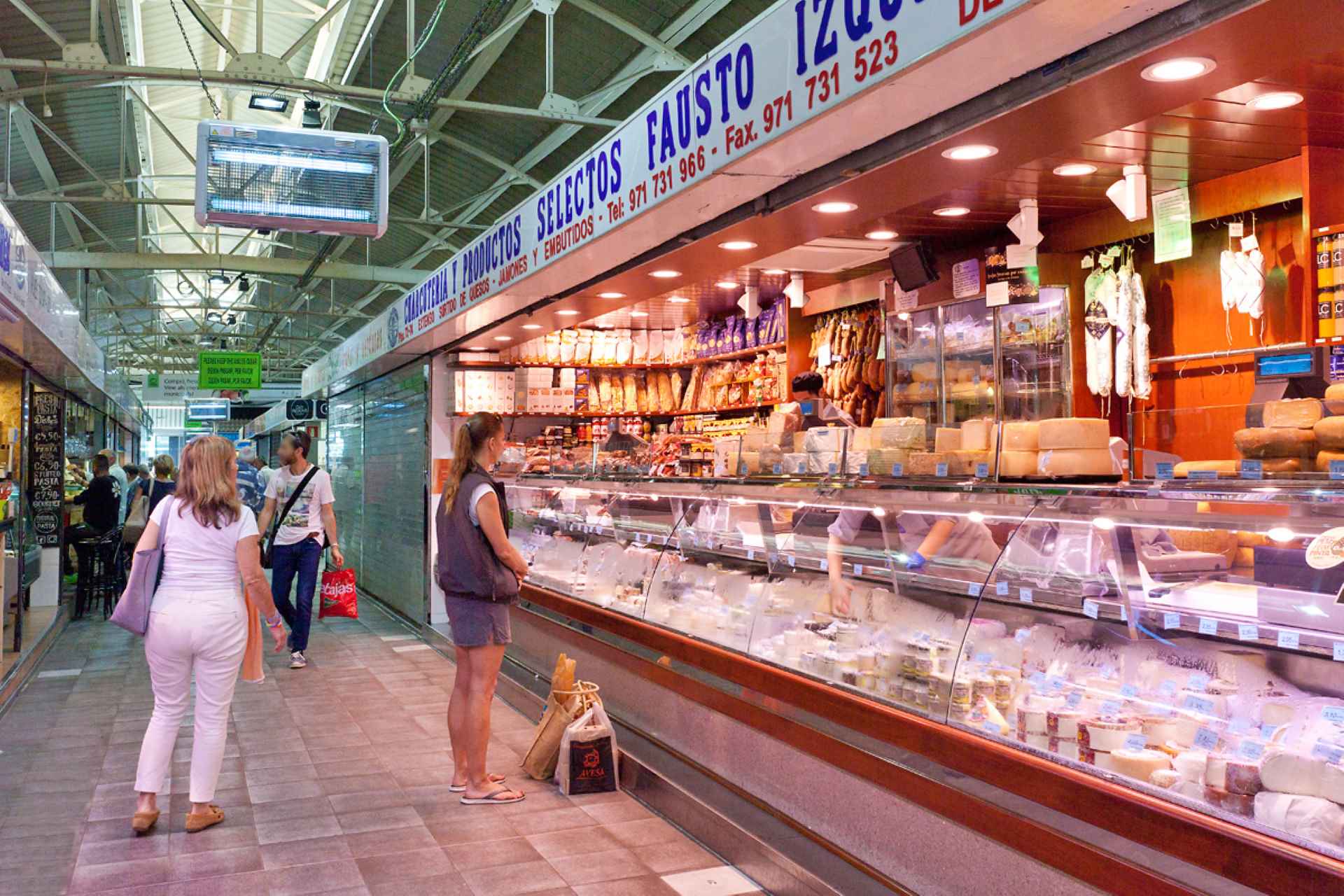
If the Old Town is the soul of the city, Santa Catalina is its liveliest quarter. Just west of the Old Town, this former fishing district has become a busy, international neighbourhood known for its restaurants, cafés, the Palma Sport & Tennis Club and an active social scene.
At its centre is the Mercat de Santa Catalina, one of Palma’s oldest food markets, where chefs and residents buy fresh fish, seasonal produce and Mallorcan specialities. Several of its bars serve tapas, and some will cook fish or seafood bought at the stalls for a small charge. Colourful houses, small balconies and traditional shutters give the streets their character, and many homes have been renovated in recent years while keeping the look of the neighbourhood. For buyers who want restaurants, bars and nightlife close by, Santa Catalina is often considered one of the best areas to live in Palma.
Portixol and El Molinar: seafront living
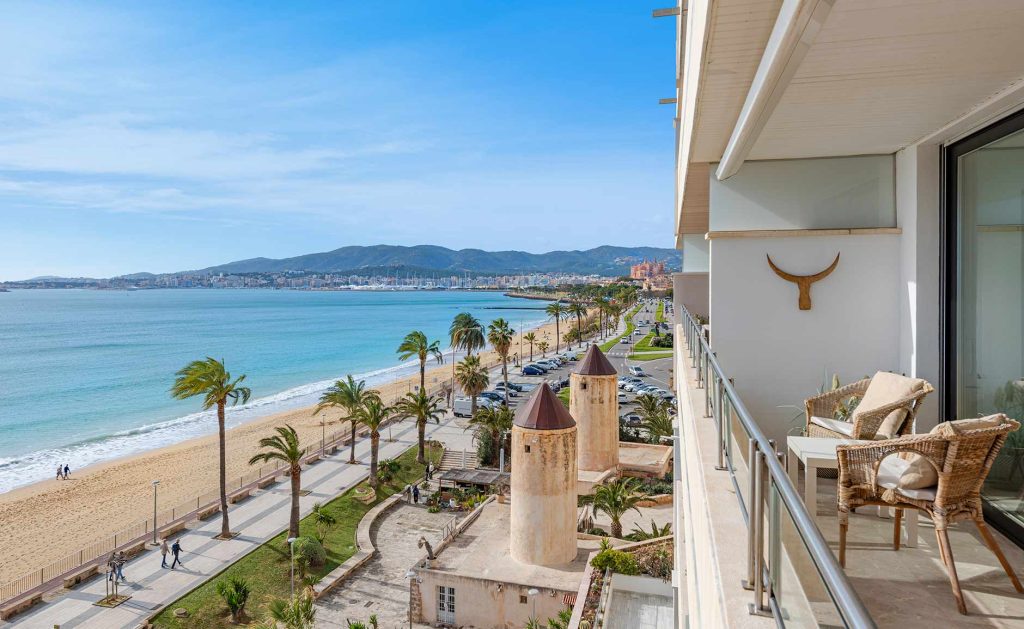
For many people, living in Palma means living near the sea. Just east of the centre, Portixol and El Molinar offer exactly that. Once quiet fishing villages, both have become some of the most desirable residential areas on the island.
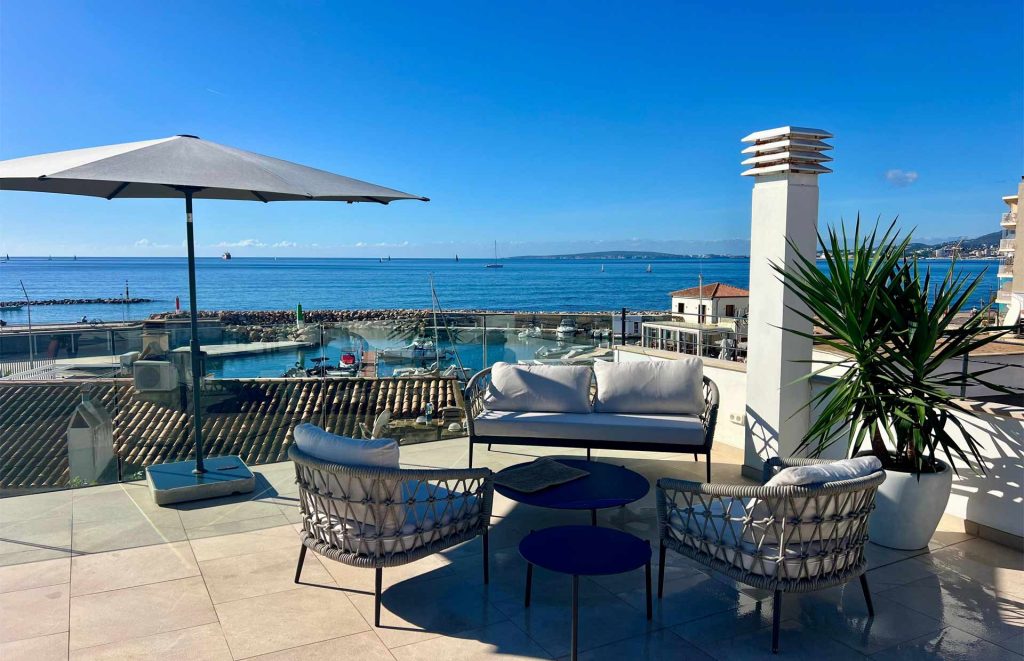
A seafront promenade links them with the city and several beaches, and it is one of Palma’s most scenic routes for cycling and walking. Portixol is known for its restaurants, boutique hotels and waterfront cafés; El Molinar keeps more of its local character and is slightly quieter, which makes it popular with families. Apartments and townhouses with sea views are in high demand, and property in Portixol and El Molinar commands some of the highest prices in Palma.
Son Vida: luxury living above Palma
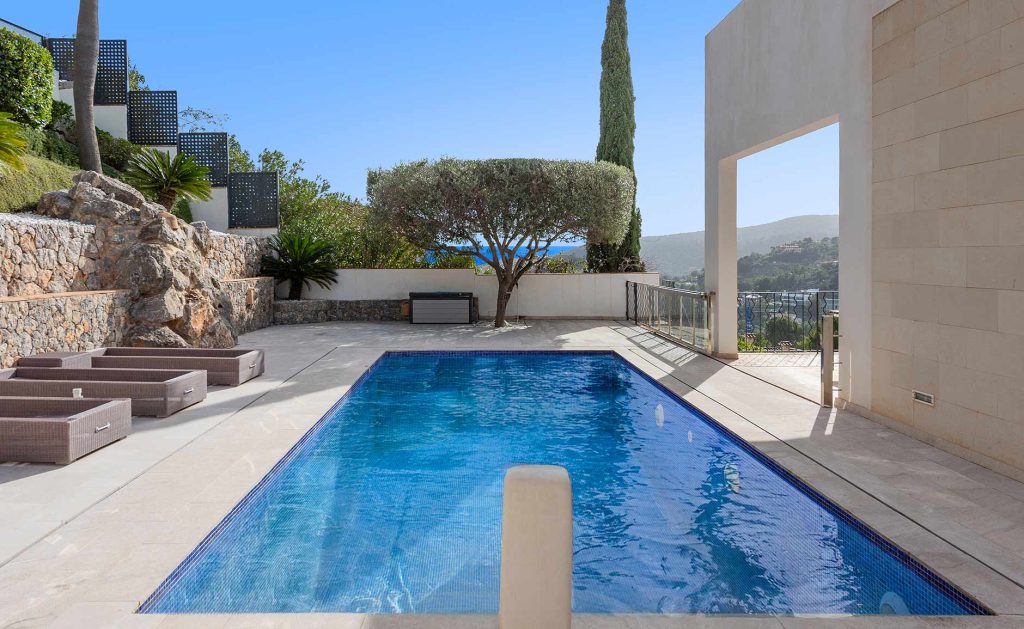
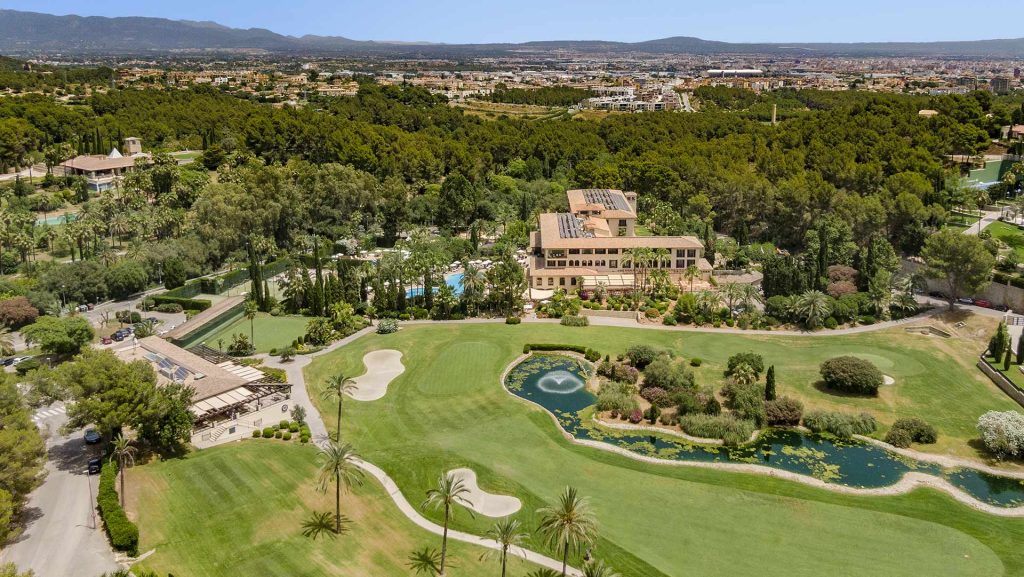
Often called the “Beverly Hills of Mallorca”, Son Vida is Palma’s most exclusive residential area. Set in the hills around ten minutes from the centre, it offers privacy, security and wide views over the Bay of Palma. The area is built around three golf courses and includes some of the island’s best-known five-star hotels. Properties in Son Vida are typically contemporary villas with infinity pools, large terraces and landscaped gardens, many within gated communities, which is why the area appeals to buyers looking for discretion. The trade-off is that it is not within walking distance of the centre.
El Terreno: Palma’s up-and-coming district
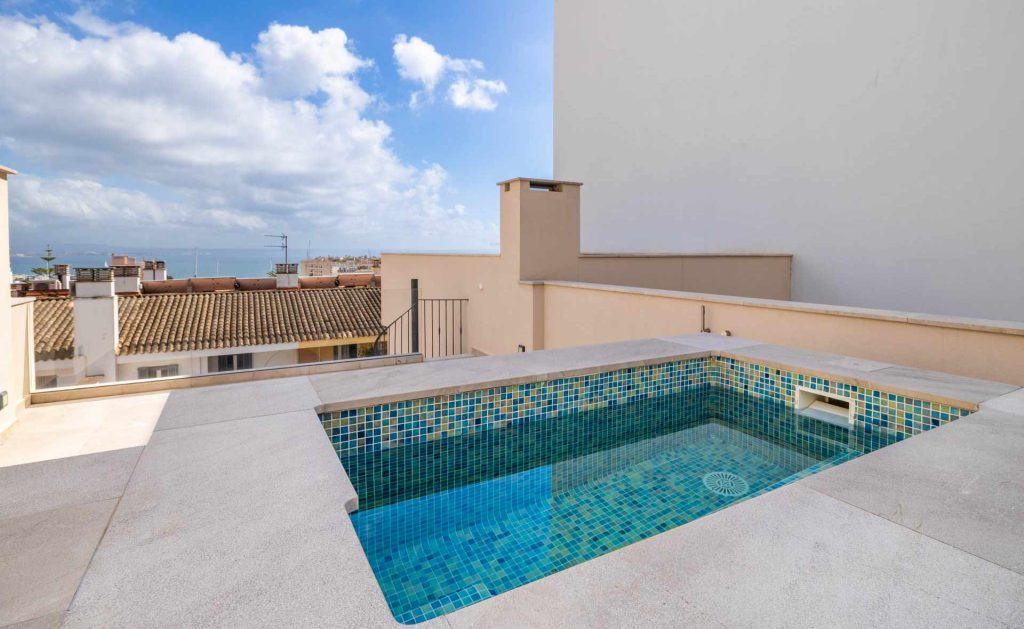
Between the Paseo Marítimo and the Bellver forest, El Terreno has become much more sought after in recent years, partly because prices have traditionally been lower than in other central areas. In the 1960s and 1970s it was known for its nightlife and artistic community, and it is now going through a revival, with new restaurants, galleries and renovated homes. Historic villas and mid-century apartment buildings are being restored, drawing creative professionals and investors who like its character and its easy access to the centre and nearby beaches. Being next to Bellver Castle and its forest park also makes it a good choice for people who want green space without leaving the city.
Son Espanyolet and Son Armadams: quieter residential living
Behind Santa Catalina are two of Palma’s most liveable residential districts, Son Espanyolet and Son Armadams. Both are calm while still within walking distance of the centre and the marina. Son Espanyolet has low-rise houses with terraces and gardens that give it a village feel; Son Armadams is larger, mainly made up of apartment buildings, and popular with families. For buyers who want a quieter life without leaving the city, they strike a good balance.
Génova: village charm above the city
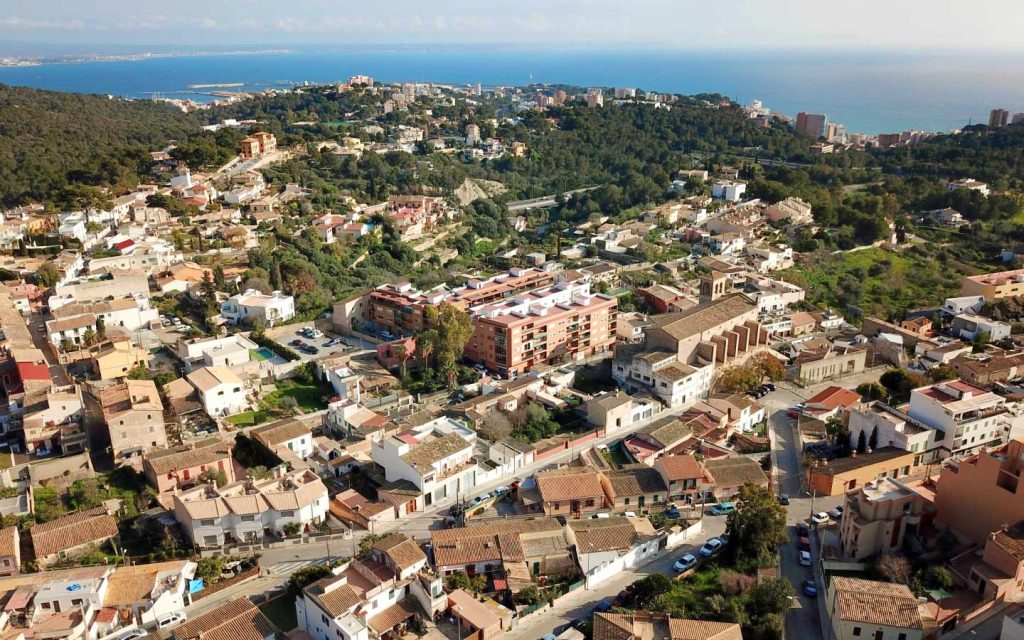
A few minutes’ drive north of the centre, Génova sits in the hills above Palma, surrounded by pine forest and with views out to sea. Although it is part of the city, it feels separate from it: narrow streets, stone houses and family-run restaurants such as the long-established Ca’n Pedro give it a traditional Mallorcan atmosphere. The housing mix combines village houses with newer villas, many with views across the bay, and the nearby mountain trails suit hikers and cyclists. For residents who want a quiet village setting close to city amenities, Génova is a good compromise.
Continue exploring: see the complete Palma area guide, our detailed guide to Palma Old Town and the latest Mallorca property price comparisons.
How to Choose the Best Area to Live in Palma
The right neighbourhood depends mainly on lifestyle and budget. Buyers drawn to historic architecture and the very centre tend to choose the Old Town; those who want a livelier atmosphere prefer Santa Catalina. For life by the sea, Portixol or El Molinar fit best. Son Vida offers more space, privacy and luxury homes, but not a walk into town. For a quieter, residential and family-friendly setting, Son Armadams, Son Espanyolet or Génova work well, bearing in mind that Génova is further out.
Palma’s compact size and transport links mean all of these neighbourhoods remain within easy reach of the centre, the beaches and the airport. To book viewings, contact our sales team: Balearic Properties is an established agency partnered with Savills and can help you find the right property in Mallorca.
Balearic Islands Buying Guide
A Complete Guide for International Buyers
Choose the Right Area of Mallorca
Once the buying process is clear, location becomes the key decision. Compare our expert guides to North Mallorca, Northwest Mallorca, Southwest Mallorca, Palma, Central Mallorca, East Mallorca, Southeast Mallorca and South Mallorca. You can also compare property prices by area before narrowing your search.
Mallorca has become one of Europe’s most desirable destinations for international property buyers. With its Mediterranean lifestyle, excellent infrastructure, international schools, and strong property market, the island offers an exceptional combination of lifestyle and long-term value.
This guide explains everything you need to know when buying property in Mallorca as a non-resident.
Why Buy Property in Mallorca?
- Year-round mild climate
- High quality of life and safety
- International airports with direct flights
- Strong and stable real estate market
- Wide variety of properties: villas, fincas, apartments, new developments
- Excellent healthcare and international education
Whether you are looking for a holiday home, a permanent residence or an investment, Mallorca offers long-term appeal.
Can Foreigners Buy Property in Mallorca?
Yes.
There are no restrictions for foreign buyers purchasing property in Mallorca, whether EU or non-EU citizens.
The process is transparent and well regulated, provided you work with experienced local professionals.
The Buying Process Step by Step
1. Define Your Requirements
Location, property type, budget, lifestyle goals and investment objectives.
2. Obtain an NIE Number
The NIE (Número de Identidad de Extranjero) is mandatory to buy property in Spain.
3. Property Search & Viewings
Your agent will shortlist suitable properties and organise viewings, on-site or remotely.
4. Reservation Agreement
Once you find the right property, a reservation agreement is usually signed with a small deposit.
5. Private Purchase Contract
A private contract (Contrato de Arras) is signed and typically involves a 10% deposit.
6. Completion at the Notary
The final deed (Escritura Pública) is signed before a Spanish notary and ownership is transferred.
Costs & Taxes When Buying in Mallorca
Buyers should budget approximately 10–13% of the purchase price for costs and taxes.
Main costs include:
- Property Transfer Tax (resale): approx. 8–11%
- VAT + Stamp Duty (new build): approx. 10–11.5%
- Notary fees
- Land registry fees
- Legal fees
Your advisor should provide a full cost breakdown in advance.
Legal Considerations
It is strongly recommended to work with an independent lawyer who will:
- Verify legal ownership
- Check planning permissions and licenses
- Confirm the property is free of debts or charges
- Review contracts and protect your interests
This is especially important in rural areas or when buying fincas or renovation projects.
Financing & Mortgages
Spanish banks offer mortgages to non-residents, typically up to 60–70% loan-to-value.
Requirements usually include:
- Proof of income
- Credit history
- Bank valuation of the property
Mortgage approval can be arranged before or during the buying process.
Best Areas to Buy in Mallorca
Mallorca offers a wide variety of locations depending on lifestyle preferences:
- Palma & surrounds – urban lifestyle, amenities, year-round living
- South-West Mallorca – luxury villas, marinas, international community
- North Mallorca – natural beauty, traditional towns, beaches
- Central & rural Mallorca – fincas, privacy, countryside living
Choosing the right area is key and should align with your lifestyle and usage plans.
Investment & Rental Potential
Mallorca remains a strong long-term investment market thanks to limited supply and high demand.
Important to note:
- Holiday rentals require a valid tourist licence
- Regulations vary by area and property type
- Long-term rentals remain in high demand
Professional advice is essential to ensure compliance and maximise returns.
Common Mistakes to Avoid
- Not budgeting correctly for taxes and costs
- Skipping legal due diligence
- Buying without understanding rental regulations
- Choosing location based only on price
Working with experienced local professionals helps avoid these pitfalls.
Buying property in Mallorca is straightforward when guided properly. A local expert will help you:
- Access the best properties (including off-market)
- Navigate legal and technical aspects
- Negotiate effectively
- Save time and avoid costly mistakes
Useful next steps: consult our Balearic real-estate glossary, review tax considerations for foreign buyers and compare Mallorca property prices by area.
Start Your Property Search in Mallorca
If you are considering buying property in Mallorca and would like professional guidance, our team is here to help you every step of the way.
Contact us for personalised advice and expert local knowledge.