 Deutsch
 English
 Español

Living in Puerto Pollensa
15 Jul 2026 | By Antonio Fuster
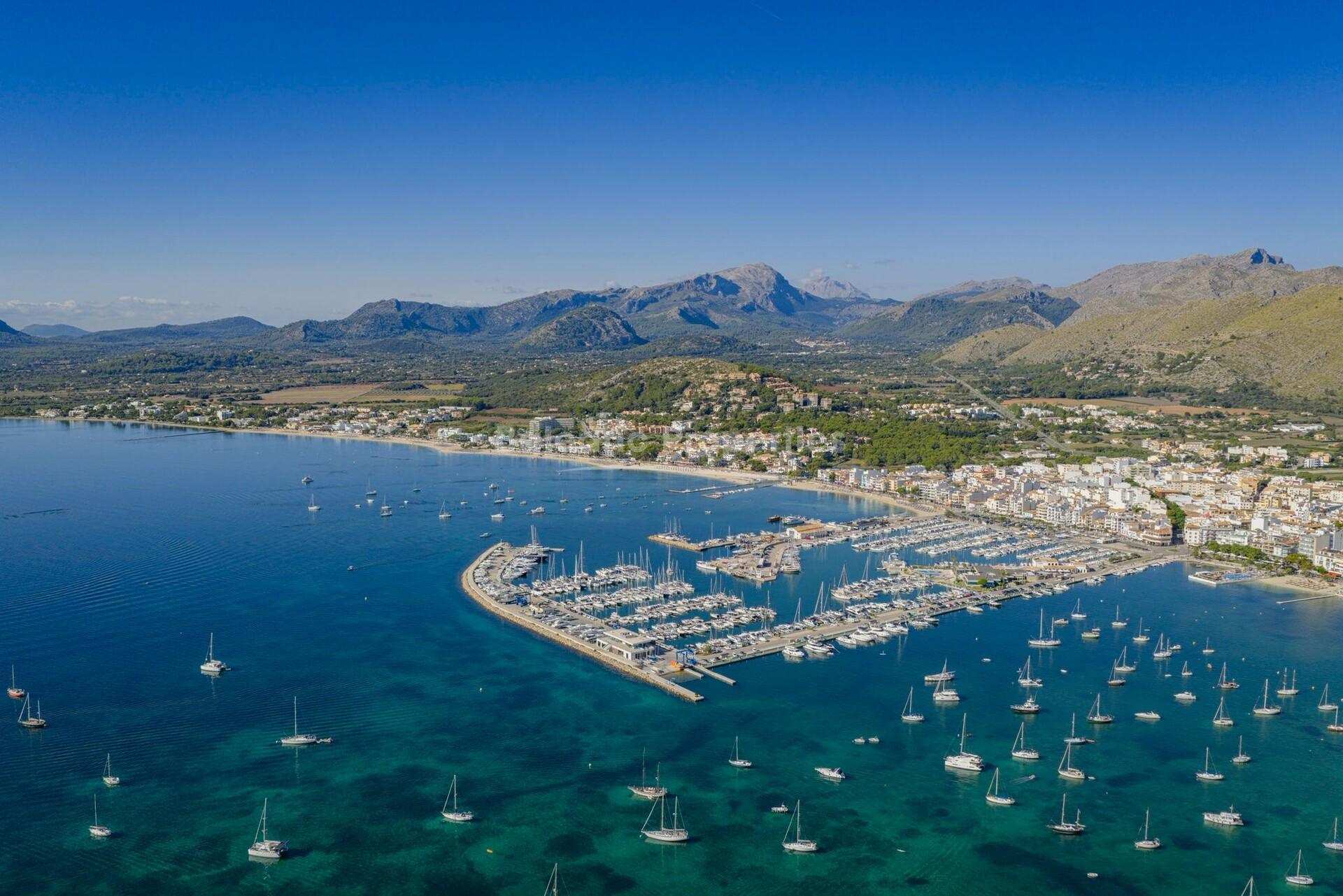
Puerto Pollensa sits on a wide, sheltered bay in the north of Mallorca, backed by the Tramuntana mountains and largely spared the high-rise development that reshaped much of the island’s coastline in the 20th century. It has drawn the same kind of international buyer, mostly British, German and Scandinavian, for decades, less for any single attraction than for the combination: a long sandy beach, a working marina, and a walkable town centre. Agatha Christie stayed here in the 1930s and set a short story, Problem at Pollensa Bay, in the town, an early sign of the pull this stretch of coast has held over its visitors for the best part of a century.
Why live here
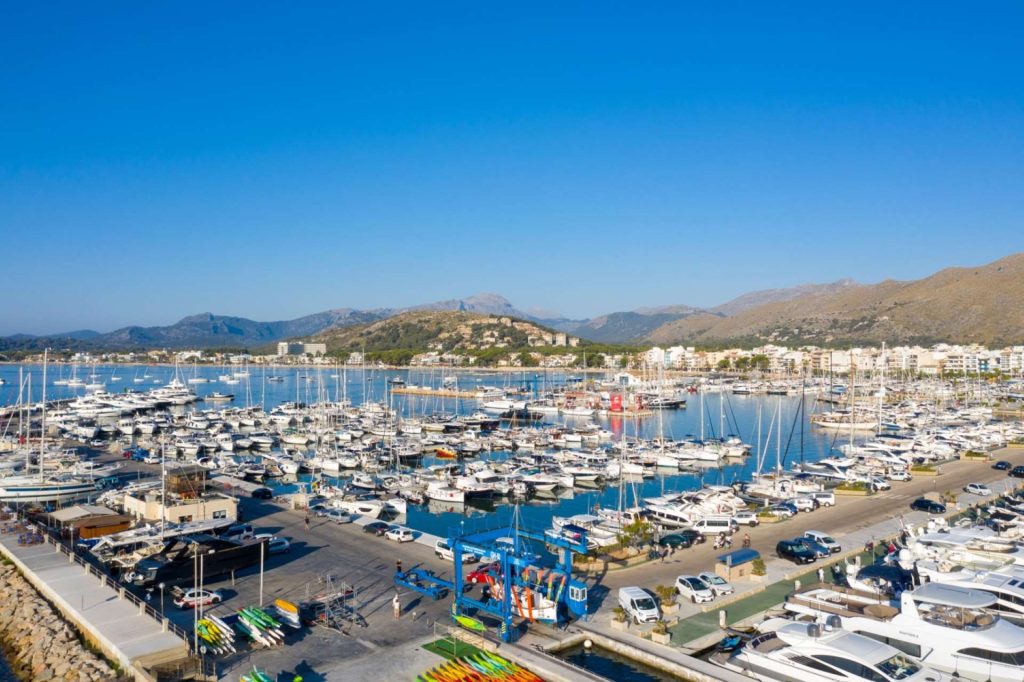
What sets Puerto Pollensa apart from other resorts on the north coast is what’s absent as much as what’s there: no high-rise towers, no nightlife strip, no unchecked development crowding the seafront. The local authorities have held the line on building density for years, which is part of why the bay still looks recognisably like the fishing port it once was, just with better restaurants.
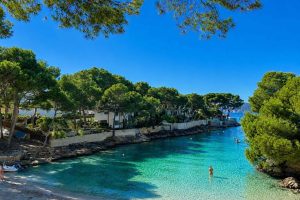
The setting does a lot of the work. The bay is sheltered enough for calm, reliable sailing conditions most of the year, the beach is long and sandy without the crowding you’d find further south in peak season, and the Tramuntana range, a UNESCO World Heritage landscape, provides a backdrop that’s hard to overstate until you’ve stood on the Pine Walk and looked at it. Add a marina that stays genuinely active outside the summer months and a restaurant scene with real depth rather than just tourist turnover, and it’s easy to see why so many buyers who came for a holiday ended up looking for something more permanent.
Lifestyle
Beaches
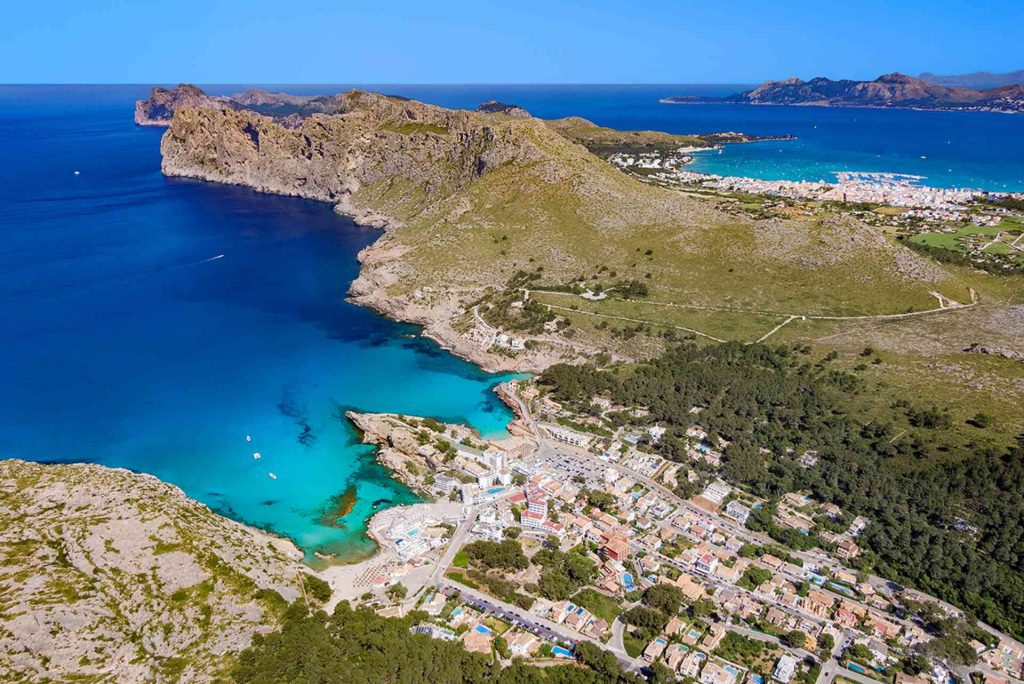
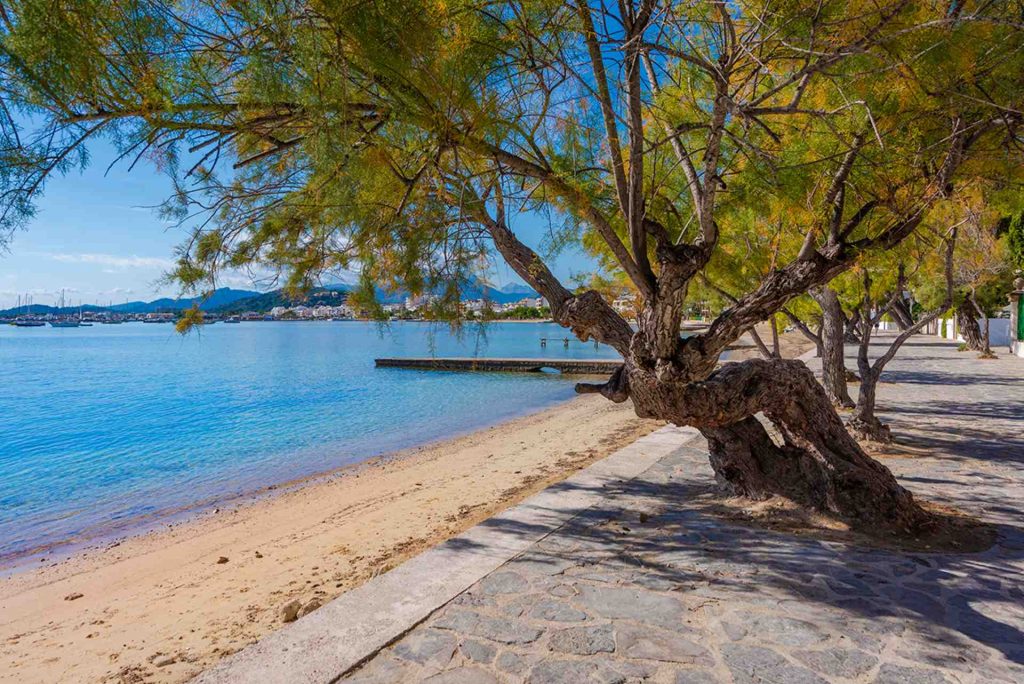
The main beach curves around the full sweep of the bay, a long, sandy stretch that stays genuinely swimmable and family-friendly even in August, backed for much of its length by the pine-lined promenade that gives the Pine Walk its name. For something smaller and quieter, Cala Sant Vicenç is a short drive over the hill, with a cluster of coves that suit a slower morning better than the main beach does.
Restaurants & Cafés
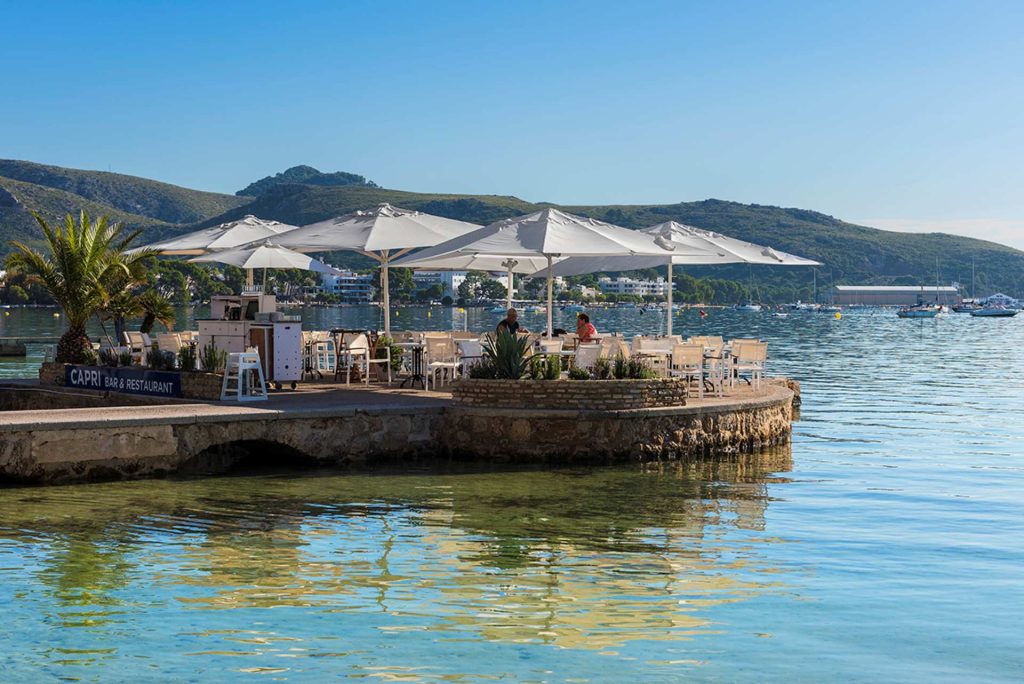
The dining scene stays open and active well beyond the summer season, with a real concentration of restaurants around the Moll Vell and Moll Nou piers. Seafood is the strong suit, unsurprisingly, and the port’s restaurants draw a loyal local crowd as much as visitors. The Pine Walk itself is lined with cafés that work equally well for a morning coffee or an evening drink looking out over the bay.
Schools
Families relocating with children have one clear local option: Mallorca International School, based in Crestatx near Sa Pobla, roughly 20 minutes’ drive from Puerto Pollensa, teaching the British curriculum from early years through secondary. It’s currently the only international school serving the north of the island; families wanting a wider choice of curriculum (IB, French, German) are generally looking at a 45 to 60 minute commute toward Palma. Pollença town itself also has Spanish/Catalan public schooling, which some international families choose for the language immersion.
Outdoor activities
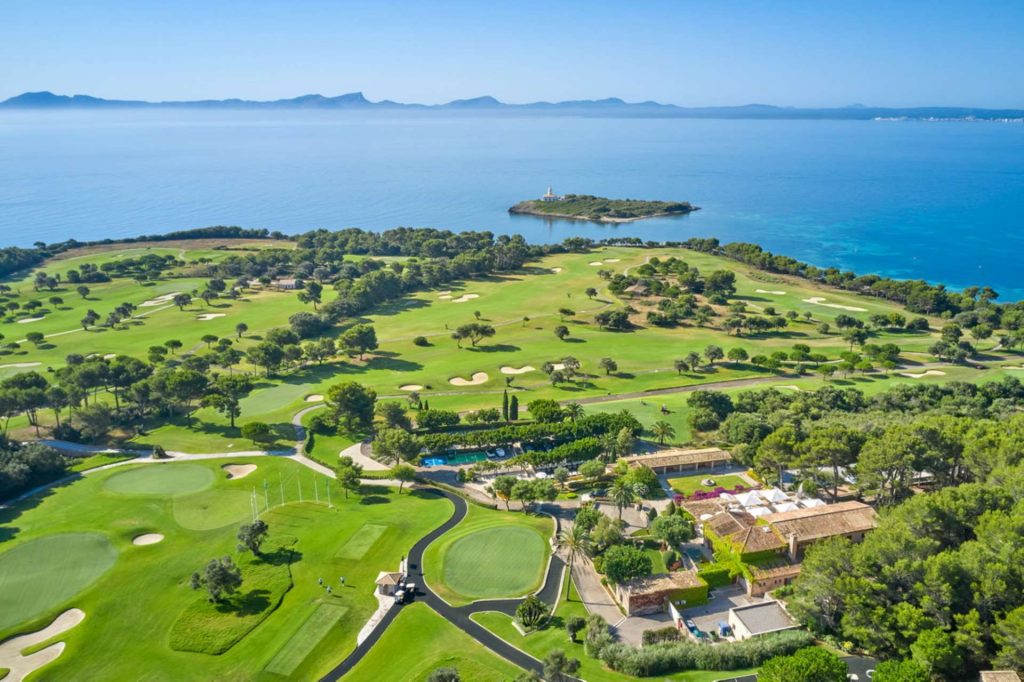
Sailing and watersports run through the Reial Club Nàutic Port de Pollença, the town’s sailing club, with a youth sailing school and a full events calendar. Golf is close on both sides: Golf Pollença, a 9-hole course dating to 1986, sits right at the edge of town, while the 18-hole Alcanada course, regularly ranked among the best in Europe, with the Alcanada lighthouse visible from most of its holes, is a short drive around the bay. Hikers have the Boquer Valley trail, a well-known route from the edge of town up through the valley to a wild, secluded beach, and the wider Tramuntana range beyond it. Cyclists use the coastal roads and the mountain climbs beyond Pollença in roughly equal measure, and the Pine Walk itself remains the default for an easy morning walk or run.
Community & International Life
Puerto Pollensa’s international community isn’t a recent arrival. British, German and Scandinavian residents have been coming here for decades, and it’s common to meet families on their second or third generation of returning, some now owning the same property their parents or grandparents first bought. That continuity shows up in daily life: English and German are widely spoken in shops and restaurants, and the town supports a genuine year-round social scene rather than one that only exists in July and August.
Much of that social life centres on the water. The Reial Club Nàutic Port de Pollença anchors a real sailing community, with racing, a youth sailing school and a calendar of events that runs through the year, not just summer. On land, the Pine Walk and the restaurants around Moll Vell and Moll Nou function as the town’s informal meeting points, and the mid-July Patrona and Carme festivities pull residents and visitors alike into open-air concerts and processions that feel distinctly local rather than staged for tourists.
Best Areas in Puerto Pollensa
Puerto Pollensa isn’t a single uniform neighbourhood: the seafront promenade and the residential areas behind it each have their own character and their own kind of buyer. Here’s how the main areas compare (see the full range of property in Puerto Pollensa for more):
Pine Walk
The most iconic address in Puerto Pollensa: a seafront promenade lined with mature pine trees, home to the town’s frontline apartments and penthouses. Direct beach access and uninterrupted bay views make this the most sought-after part of the market. View properties on the Pine Walk
Llenaire
The main destination for buyers after a villa near the beach, a short walk from the main stretch of sand with a noticeably quieter, more residential feel than the town centre. Plots tend to be generous, often 1,000 m² or more, with private pools and gardens standard, and well-priced properties here have a reputation for not staying on the market long. View properties in Llenaire
Gotmar
Close to both the port and the beach, with a mix of villas, apartments and smaller homes set among mature gardens and pine trees. Part of the area sits on flat ground; part rises gently up the hillside, giving a range of sea and mountain outlooks within the same neighbourhood. View properties in Gotmar
Boquer
Sits just behind the Pine Walk and climbs toward the hillside, with the road to Formentor running through it. Lower down, residential complexes with community pools suit lock-up-and-leave ownership; further up, detached villas get elevated views over the bay and town. It shares its name with the Boquer Valley hiking trail just beyond it.
Bellresguard
A smaller, quieter enclave known for security and low-maintenance ownership: the natural choice for buyers who want a lock-up-and-leave second home rather than a project. View properties in Bellresguard
Things to know
July and August bring the town to its busiest, especially around the mid-July Patrona and Carme festivities, when the road between Pollença and the port gets genuinely congested at peak times. Outside those two months, the town is markedly quieter but rarely feels closed: restaurants and services stay open through the shoulder seasons in a way some more purely seasonal resorts don’t manage.
Holiday-rental licensing (the ETV licence) is a real factor for anyone considering letting a property, and it affects both what a property can legally be used for and its rental potential, so it’s worth checking early with any property under consideration. Access is straightforward: Puerto Pollensa is roughly 50 km from Palma and the airport, about 45 to 50 minutes by motorway under normal traffic, with regular bus connections to Palma, Alcúdia, Sóller and Formentor for those without a car.
Who is it for?
- Families: A genuine, walkable town with a beach on the doorstep, though schooling means either the one international option in Crestatx or a longer commute toward Palma.
- Retirees: An established, decades-deep international community and a pace of life that slows down noticeably outside summer.
- Second-home owners: A lock-and-leave property that works for seasonal use without the upkeep of a full-time residence, particularly in quieter enclaves such as Bellresguard.
- Investors: Genuine rental potential around the port, though this depends on ETV licence availability and should be checked before buying with rental income in mind.
- Sailing and nautical buyers: A sheltered bay and an active sailing club right in town, including a youth sailing school.
- Cyclists: Flat coastal roads and serious Tramuntana climbs within a short ride of home.
Continue exploring: discover the wider North Mallorca area guide and compare life in Pollença, Alcúdia and Formentor.
Thinking of Buying?
If you’re ready to see what’s actually on the market, our Puerto Pollensa and Pollença property listings are updated regularly across the areas covered here, from Pine Walk apartments to Llenaire villas. Our team is based in Pollença town rather than managing this market remotely from Palma, so get in touch directly with any questions about current availability.
FAQs
Is Puerto Pollensa a good place to live year-round?
Yes. Unlike some more purely seasonal resorts, restaurants, shops and services stay open through the quieter months, and the town has a genuine year-round international community rather than one that empties out after summer.
Is there an international school near Puerto Pollensa?
Mallorca International School in Crestatx, about 20 minutes away, is currently the only international school serving the north of the island, teaching the British curriculum. Families wanting other curricula generally commute 45 to 60 minutes toward Palma.
What’s the difference between Puerto Pollensa and Pollença?
Puerto Pollensa is the coastal port area; Pollença is the historic inland town a few kilometres away. They’re often treated as one area for property purposes, but Pollença has more of a traditional old-town character, while Puerto Pollensa is built entirely around the bay and the beach.
Is Puerto Pollensa good for sailing and watersports?
Yes. The bay is sheltered and calm for most of the year, and the Reial Club Nàutic Port de Pollença runs an active sailing programme, including a youth sailing school, alongside the town’s other watersports.
How far is Puerto Pollensa from Palma airport?
Around 50 km, roughly 45 to 50 minutes by motorway under normal traffic conditions.
Do I need a car to live in Puerto Pollensa?
Not necessarily. The town centre and the Pine Walk are entirely walkable, and regular buses run to Palma, Alcúdia, Sóller and Formentor. A car becomes more useful if you’re based in one of the hillside areas like Boquer, or want easy access to golf, hiking or the wider island.
Related articles
Can we help you?
Call now, send us a message on WhatsApp, or fill out the contact form, and we’ll get back to you as soon as possible.