 Deutsch
 English
 Español

Living in Formentor
Formentor is not a town. It is a nine kilometre finger of pine forest and limestone cliff at the northern tip of Mallorca, reachable by one winding road or by boat across the Bay of Pollença. Since 1929, when an Argentine art patron built a hotel on its shore, the peninsula has drawn a small, discreet circle of owners rather than a settled population. There is no village square, no daily market, no school run. What Formentor offers instead is seclusion inside a landscape that is almost entirely protected from further development, and a handful of estates that rarely change hands.
Why live here
Formentor suits a very specific kind of buyer: someone who wants privacy measured in kilometres, not walls. The peninsula forms the northeastern tip of the Serra de Tramuntana, the mountain range UNESCO recognised as a World Heritage Cultural Landscape in 2011, and its far half beyond the hotel and a handful of private estates is protected natural land with no realistic prospect of new building. That scarcity is the whole point. Where other parts of Mallorca’s coast have filled in over the decades, Formentor has stayed close to how it looked when the road first reached it in 1925.
Living here full time is impractical for most people; the appeal sits closer to owning a private retreat than a primary residence. Puerto Pollença, with its shops, clinics, marina and international community, is around twenty minutes away by car and effectively serves as the peninsula’s service town. Palma airport is under an hour by car outside the seasonal traffic restrictions. Owners can also reach the peninsula itself by boat from Puerto Pollença or Alcúdia, much as Formentor’s earliest visitors always did. For the right buyer, that combination (genuine wilderness a short drive from a full-service Mediterranean harbour town) is difficult to match anywhere else on the island.
Lifestyle
Beaches
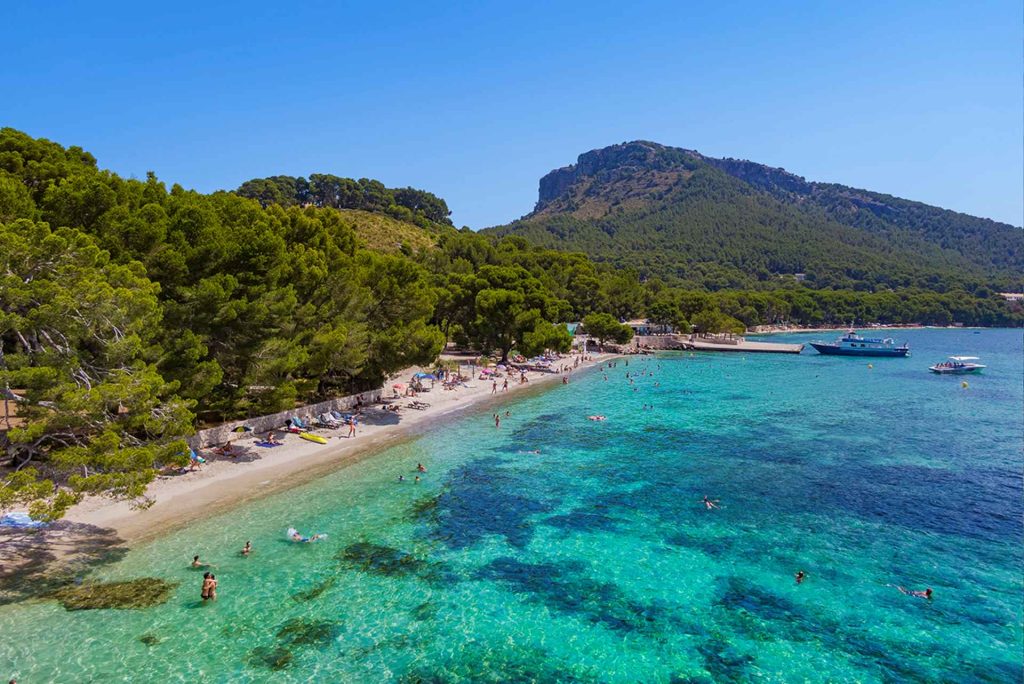
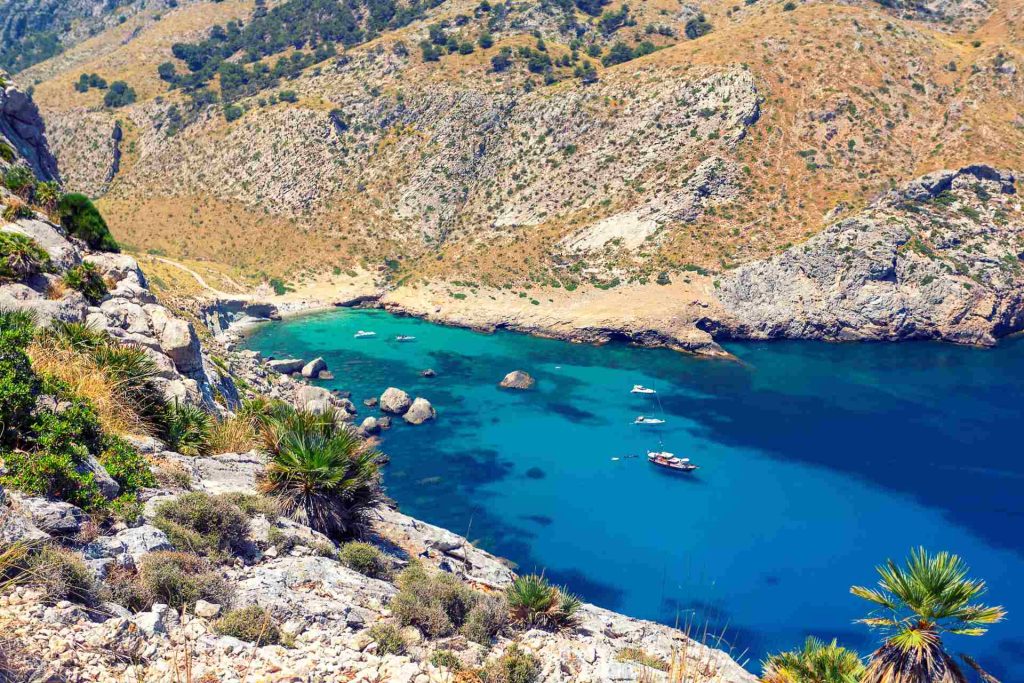
Platja de Formentor is the peninsula’s one proper beach: roughly a kilometre of pale sand backed by pine trees, facing the calm water of Cala Pi de la Posada where the resort itself sits. It is consistently ranked among Mallorca’s best beaches and, in season, draws a genuine crowd of day trippers arriving by boat and bus. For something quieter, Cala Murta is a pebble cove reached only on foot or by sea, around twenty minutes from the nearest car park, with no facilities and rarely more than a scattering of hikers or snorkellers. Cala Figuera, on the peninsula’s northern flank, is smaller again and entirely undeveloped, often described as one of Mallorca’s best coves.
Restaurants & Cafés
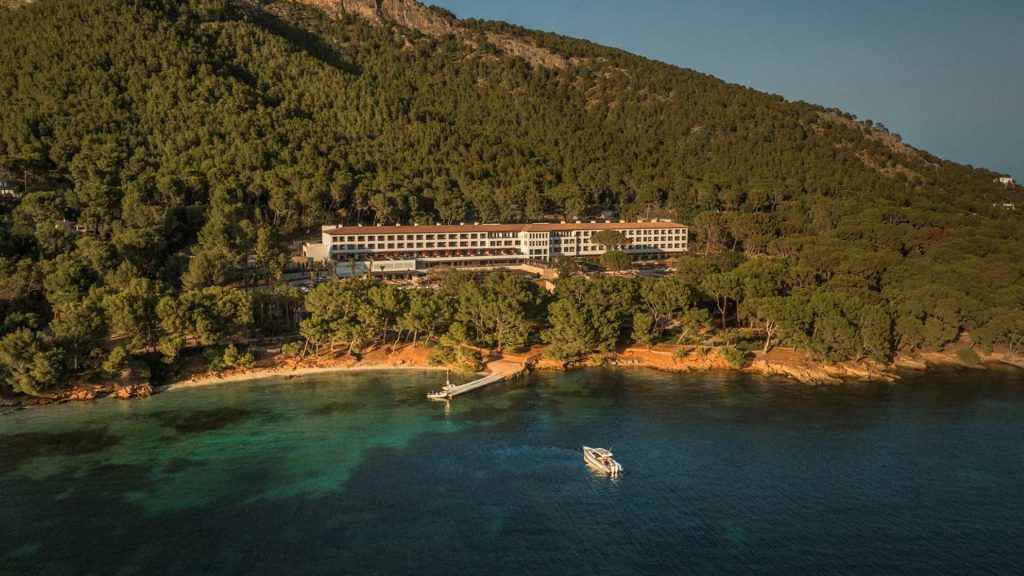
Dining directly on the peninsula is limited by design. Four Seasons Resort Mallorca at Formentor (the rebuilt and reopened version of the historic Hotel Formentor) runs several restaurants open to non-guests, from a beachfront seafood spot to a more casual poolside kitchen, plus a bar on Platja de Formentor itself. Beyond the resort, there is little else on the peninsula proper. Most people based here treat Puerto Pollença‘s harbourside restaurant scene, a short drive back along the same road, as their everyday option.
Schools
There are no schools on the Formentor peninsula, and none are realistically coming given the protected status of the land. Families based here send children to the state schools in Pollença or Puerto Pollença, or to Mallorca International School in Crestatx near Sa Pobla, the only international school serving the north of the island, roughly thirty to forty minutes away by car. It is one of the clearest signals that this is not a location built around a daily school run.
Outdoor activities
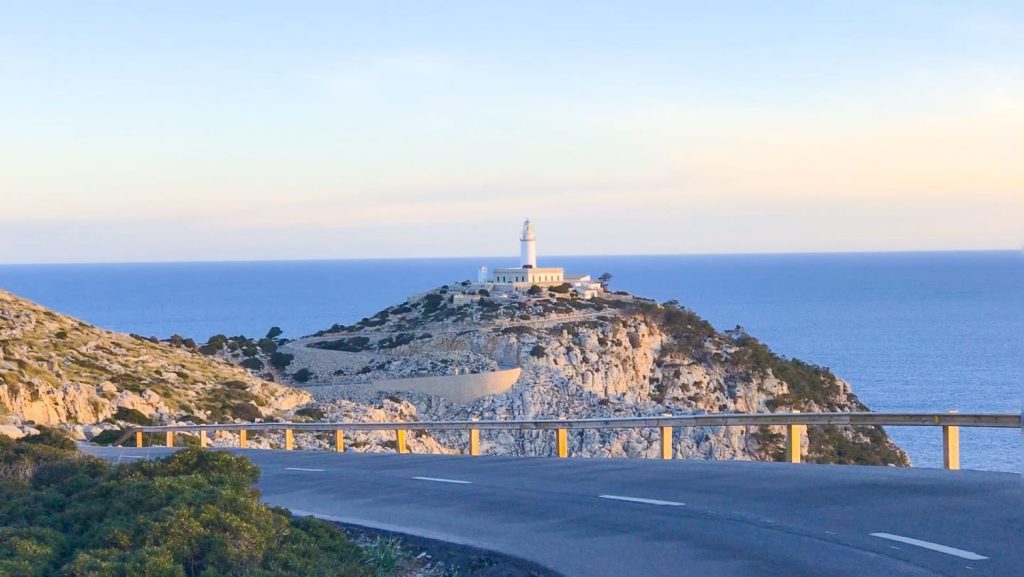
The road to the lighthouse is one of Mallorca’s best known road cycling climbs, and cyclists ride its bends year round, including during the summer months when the restrictions open the upper road exclusively to them, to pedestrians and to public transport. The clear water around the coves suits snorkelling more than diving, given the depth. Birdwatchers come specifically for Eleonora’s falcons, which breed on the cliffs facing north. Boat access has been part of daily life here since before the road existed: the resort still runs its own transfer service to and from Puerto Pollença, and several of the peninsula’s private properties keep their own moorings.
Community & International Life
Formentor does not have a community in the way Puerto Pollença or Pollença town does. There is no expat association, no weekly market, no fixed circle of neighbours dropping by. What it has instead is a lineage. Since Adan Diehl opened his hotel in 1929, the peninsula has drawn an unusually consistent, if small, cast of international owners and regular visitors, from the writers and Nobel laureates who gathered here for the Formentor literary prize in the 1960s to the string of European royals and film stars who have stayed at the hotel across nearly a century. The handful of private estates outside the resort follow a similar pattern: several have stayed within the same family for generations, changing hands rarely and quietly.
Social life, such as it is, centres on the resort rather than on a village or a club. People here are typically part time residents with an established base elsewhere on the island or in Europe, using Formentor as a private retreat rather than a full time home, and treating Puerto Pollença as their point of contact for everyday social life and errands.
Best Areas in Formentor
Formentor has almost no residential subdivisions in the way Puerto Pollença or Alcúdia do. There are, in practice, two distinct stretches of the peninsula worth knowing.
Around the hotel and Platja de Formentor
This is the one settled pocket of the peninsula: the resort, the beach it sits on, and a small number of private villas tucked into the pine forest nearby, several with direct sea access or a private mooring. It is the closest thing Formentor has to an address, and its properties rarely come to market.
Cap de Formentor and the protected headland
Beyond the beach, the road climbs through several kilometres of pure natural park toward the lighthouse: cliffs, pine forest, and the Mirador d’Es Colomer viewpoint, with essentially no private land and no prospect of any. It is included here for context rather than opportunity. This end of the peninsula is protected landscape, not a residential area, and buyers should not expect it to become one.
Things to know
Formentor is genuinely hard to reach by private car for part of the year. Since a 2018 pilot scheme cut peak season traffic by around 90 percent, the peninsula road has run under seasonal restrictions, and currently these apply daily from 15 May to mid October, between 10am and 10pm, with only public transport, taxis, authorised vehicles, cyclists and pedestrians allowed through. Residents can certainly apply for an exemption, but the exact dates and terms are reset each year by the Consell de Mallorca, so anyone counting on year round car access should check the current rules before committing to a purchase or a move.
There is no supermarket, pharmacy or general store on the peninsula. Puerto Pollença, roughly twenty minutes away by car outside restricted hours, covers all of that. Nearly the entire peninsula beyond the hotel and a small number of private plots falls within protected Serra de Tramuntana land, which is why the area has stayed largely unchanged for a century and is unlikely to see meaningful new construction. Being the exposed northern tip of the island also means real wind exposure: locals call it the meeting point of the winds, and the Tramuntana can blow hard here even on a calm day back in Puerto Pollença.
Who is it for?
- Second-home owners: Formentor suits someone who wants a private retreat used for a few weeks at a time, not a full time base with daily errands and a school run.
- Sailing & nautical buyers: several of the peninsula’s frontline properties come with direct sea access or a private mooring, and arriving by boat from Puerto Pollença remains a normal, and historic, way in.
- Investors: the appeal here is scarcity rather than yield. Genuinely new stock essentially never appears, which supports long term value, and a number of existing villas operate as high end holiday lets, though any holiday rental licence (ETV) needs to be checked and confirmed for the specific property rather than assumed.
Thinking of Buying?
Formentor may be the rarest micro market covered on this site. With almost the entire peninsula protected and no meaningful new development possible, the small number of villas here change hands infrequently, and each one is genuinely singular rather than one of a comparable set. Our current Formentor listings are the place to start; if total seclusion is more than you need, the wider Pollença property market, within the same bay, offers considerably more everyday convenience.
FAQs
Not in the way most Mallorcan towns have one. Formentor has no village centre and a very small number of private homes, most owned by people who use them as a seasonal retreat rather than a full time residence. Its identity has always been tied more to the historic hotel than to a resident population.
Yes, and it is a genuinely normal way to arrive. Boat transfers between Puerto Pollença and Formentor have been part of the peninsula’s routine since the hotel opened in 1929, when the road itself was not yet finished, and the resort still runs a private boat service today.
No. Everyday services, including a supermarket, pharmacy and post office, are all in Puerto Pollença, about twenty minutes away by car outside the seasonal traffic restrictions.
Outside the restricted season it is. In 2026 the road is closed to private cars daily from 15 May to mid October, between 10am and 10pm, with only public transport, taxis, cyclists, pedestrians and Formentor residents allowed through during those hours. The exact dates are set fresh each year, so this is worth confirming close to your travel or move date.
Yes. The peninsula forms the northeastern tip of the Serra de Tramuntana, which UNESCO recognised as a World Heritage Cultural Landscape in 2011, and almost all of the land beyond the hotel and a small number of private estates is protected from development.
Living in Pollença
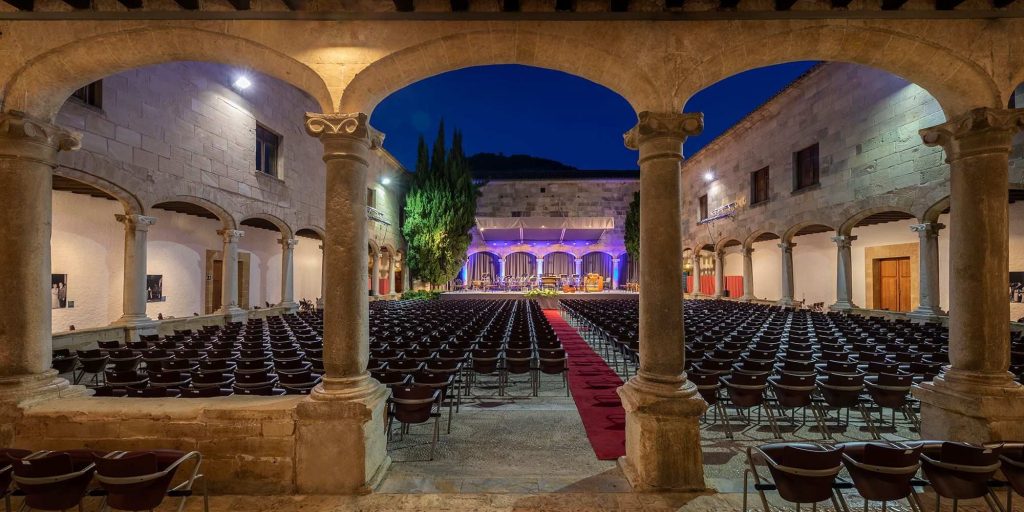
Pollença does not try to look like a resort, because it isn’t one. Set inland between two hills, the Puig de Maria and the Calvari, it is a working Mallorcan town with a Sunday market, a 17th-century cloister that has hosted world-class orchestras every summer since 1962, and a coastline it doesn’t actually touch. That last part matters: this is a guide to the town itself, not to Puerto Pollença five minutes down the road, which has its own character and its own guide. Pollença’s appeal is different, and it is worth being specific about why.

A local’s view: Iris Grünewald
Iris Grünewald is CEO of Balearic Properties and a Savills international associate, and she has lived in Pollença for more than 20 years. Featured in Portfolio by Savills’ Insider’s Guide to Pollença, she adds her own favourites to this guide: where she eats, shops and walks. She is also the founder of Pollensina, a collection of nine villas and fincas in Pollença that she has renovated and rents out.
Why live here
Pollença sits at the inland edge of Mallorca’s north, the same region as Alcúdia, but its character owes more to the mountains behind it than the coast. For an international buyer, it offers something rare here: a town that functions the same way in February as in August. Palma airport is around 45 minutes away by the Ma-13, close enough for weekend trips but far enough that Pollença never feels like an extension of the arrivals hall. The old town’s narrow stone streets and low-rise skyline have been protected through decades of planning restraint, so the place a buyer falls for on a viewing trip is largely the place they’ll still be living in a decade later.
What sets Pollença apart from its coastal neighbours is that its social and cultural life doesn’t switch off with the tourist season. The Festival de Pollença fills the Sant Domingo cloister every summer and has done for over 60 years; Galería Maior and a handful of smaller galleries keep an active exhibition calendar; the Sunday market is a genuine weekly fixture for residents, not a summer-only production. Mallorca International School, the only international school in the north of the island, is around ten minutes away in Crestatx. For buyers who want land and mountain views without losing that ten-minute connection to town, the countryside around La Font and El Vila is the draw. This is a town for people who want to live somewhere, not just holiday there.
Lifestyle
Beaches
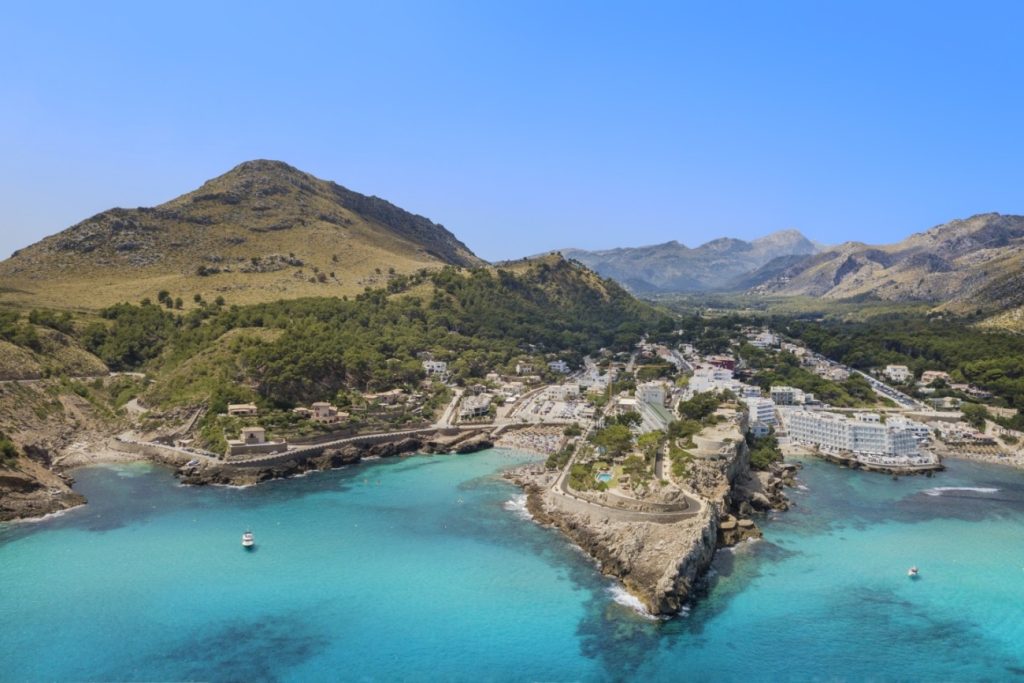
Pollença’s old town sits inland, so there’s no beach on the doorstep, and it would be misleading to pretend otherwise. What it has instead is easy access to two very different stretches of coast. Cala Sant Vicenç, about ten minutes north, is four small coves (Cala Barques, Cala Molins, Cala Clara and Cala Carbó) tucked beneath pine-covered cliffs and the Cavall Bernat ridge, better suited to a quiet swim than a big beach day. Puerto Pollença, five minutes east, has the long sandy bay and the Pine Walk promenade; residents of Pollença treat it as their local beach, even though it’s a separate town with its own guide.
Restaurants & Cafés
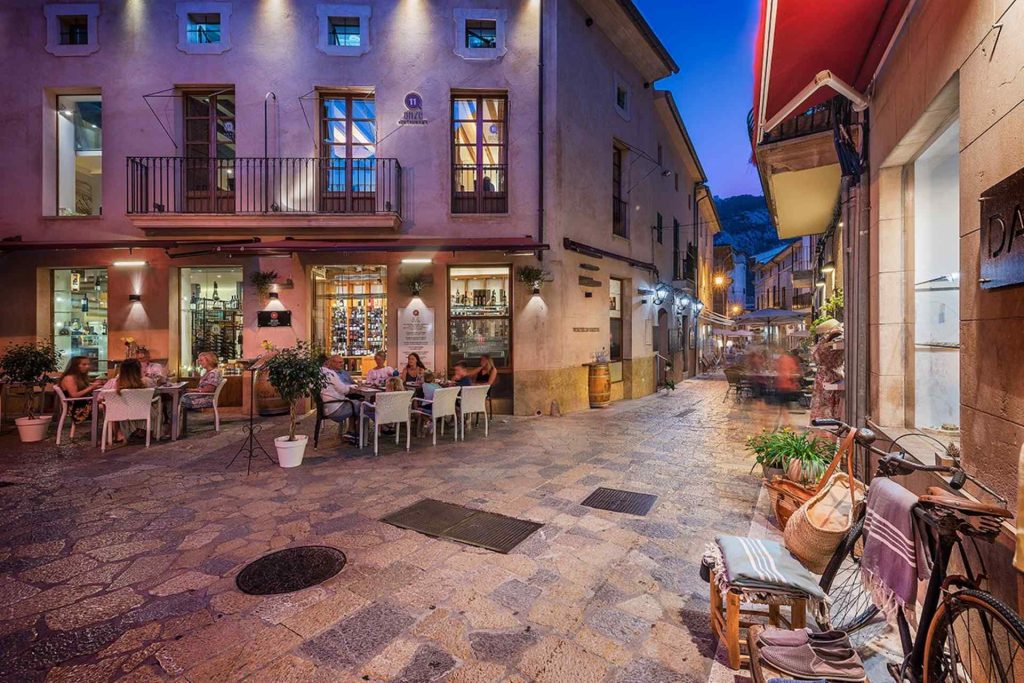
The restaurant scene sits around Plaça Major and the lanes leading off it: family-run Mallorcan kitchens in restored townhouses, tapas terraces that fill up on market mornings, and a handful of more ambitious dining rooms that have opened in the last decade without displacing the older, plainer places locals still use every week. Because Pollença has a genuine year-round population, most of this stays open outside the summer months, which is not something every north-coast town can say.
Iris’s picks: for home-style Mallorcan cooking she recommends Celler El Molí, where the tumbet (the potato, aubergine and pepper dish) is the one to order, along with lechona, slow-roast pork stuffed with rice, peas and onion. For something lighter she likes Onze, an Italian-Mediterranean kitchen, and its grilled scallops in mushroom sauce.
Schools
Mallorca International School (MySchool), in the Crestatx urbanisation around ten minutes from town, follows the British curriculum and is currently the only international school in the north of Mallorca, which has made the surrounding area noticeably more attractive to relocating families over the past few years. Families who want full Spanish or Catalan immersion have several state and concertada schools within the town itself.
Outdoor activities
Golf Pollença is a 9-hole course about two kilometres from town, opened in 1986, with views across the bays of Pollença and Alcúdia and the S’Albufereta nature reserve. Hikers have the Puig de Maria, a 330-metre climb to a 14th-century hermitage around 40 minutes up, and the Boquer Valley, a protected walking route popular with birdwatchers that runs out toward the coast. Cyclists use Pollença as a base for the quieter lanes of the north and for the climb out toward Cap de Formentor, one of the island’s signature routes.
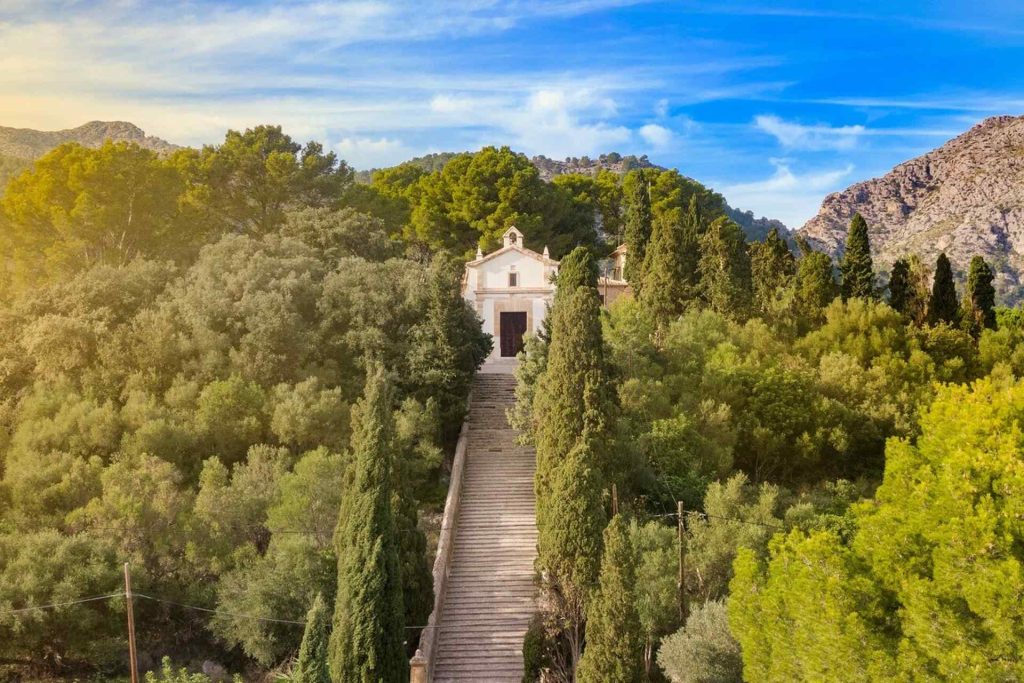
Iris’s own favourite: hiking in the mountains. After more than twenty years here she still calls the Carrer del Calvari, 365 cypress-lined steps up to a chapel, well worth the climb, and when she wants to be on the water she heads down to the bay at Puerto Pollença for kayaking and paddleboarding.
Shopping & local craft
Beyond the Sunday market, Iris sends visitors to a short list of makers: Teixits Vicens for Mallorcan linens woven with centuries-old techniques, ABCO Pottery Studio, a family-run workshop making distinctive ceramics, and Mastrenat, which keeps the art of leather braiding alive in bags, belts, shoes and home accessories. For contemporary art, Galería Maior focuses on local artists.
Community & International Life
Pollença’s international character isn’t a recent development. The Festival de Pollença was founded in 1962 by the British violinist Philip Newman, and the cloister of the Sant Domingo convent has since hosted more than 800 performers, including Mstislav Rostropovich, Yehudi Menuhin and Jessye Norman, as part of a programme that belongs to the European Festivals Association. That kind of institution doesn’t happen without decades of an engaged resident community behind it, and British and German buyers in particular have been part of Pollença’s fabric for that long.
Social life for residents runs through a few recurring fixtures rather than one expat club: the Sunday market at Plaça Major, which locals use as much as visitors do; the summer festival calendar; and a small but active gallery scene anchored by Galería Maior. It is a lower-key, more integrated version of international life than the marina-and-yacht-club model found in Puerto Pollença, and it tends to suit buyers who want to feel part of a town rather than part of a resort.
Iris’s cultural shortlist: the Museu de Pollença, housed in a former convent, for the town’s history through art and archaeology, and the Museu Dionís Bennàssar, in the former home of the Mallorcan painter. In autumn, La Fira de Pollença fills the town with ceramics, jewellery and weaving.
Best Areas in Pollença
Historic Old Town
The streets around Plaça Major and the Calvari steps are where lock-and-leave living happens: townhouses and apartments within walking distance of the market, restaurants and the parish church, all year-round rather than seasonally. It suits buyers who want to step outside and be in the middle of things. View properties in Pollença’s old town.
La Font
An established residential area just outside town known for elevated positions and views back over the bay. It has been one of the most sought-after addresses in Pollença for years, and it’s still a walk of around fifteen minutes into the centre. View properties in La Font.
El Vila
Similar in character to La Font and on the same side of the valley, but closer to the road toward the port, which makes it popular with buyers who want sea views and an easy run down to the restaurants and marina at Puerto Pollença.
Cala Sant Vicenç
Technically its own village rather than a Pollença neighbourhood, but part of the same municipality. Its draw is the coves themselves: compact, residential, and popular with buyers who want to be a short walk from the water without the scale of Puerto Pollença. View properties in Cala Sant Vicenç.
Crestatx
A quiet residential urbanisation on the way toward Sa Pobla, popular with families since Mallorca International School opened nearby, and increasingly asked about for that reason alone. It suits buyers prioritising the school run over proximity to Pollença’s centre, which is still only around ten minutes away.
Vall de Son March
A countryside valley just outside Pollença town, known for finca-style properties set among olive and almond groves with views back toward the Tramuntana. It suits buyers who want genuine rural privacy without losing a short drive into town. View properties in Vall de Son March.
Things to know
The Sunday market fills the old town from 8am to 1.30pm and draws visitors from across the island, so parking is tight and the centre is genuinely busy for those hours, though it’s quiet the rest of the week. Late July and August bring the Festival de Pollença and a fuller cultural calendar, along with more traffic on the single main road connecting Palma, Pollença and Alcúdia; the town itself is calmer than the port in peak season. Notably, the Ajuntament de Pollença (the town council) chose to withdraw Pollença from the “Most Beautiful Villages of Spain” network from January 2025 in favour of its own tourism strategy, a decision that says something about how deliberately the town manages its own profile rather than chasing visitor volume.
The local public health centre is part of the IB-Salut network and is currently being rebuilt on a larger site, expected to roughly triple capacity once complete. Pollença’s international community is long established rather than newly arrived, and the year-round population is meaningfully smaller than the summer influx, which is part of what keeps the town liveable off-season. Anyone planning to let a property short-term should check current holiday-rental (ETV) licence rules for the area before assuming one is available.
Who is it for?
- Families: the only international school in the north of the island is ten minutes away, and the old town itself is walkable and safe for children.
- Retirees: a genuine, year-round town rather than a seasonal one, with an established international community and a walkable centre.
- Second-home owners: lock-and-leave apartments and townhouses in the old town, with Palma airport around 45 minutes away.
- Investors: rental demand holds up around the market, the festival season and the school calendar, though ETV licence availability should always be checked before assuming a property qualifies for holiday letting.
- Culture and arts buyers: the Festival de Pollença and a small but genuine gallery scene make this a more culturally anchored option than most north-coast towns.
- Cyclists: quiet countryside lanes and direct access to the climb toward Cap de Formentor.
Stay before you buy: the Pollensina collection
The best way to find out whether Pollença suits you is to live it for a week. Iris has renovated every house in the Pollensina collection, nine villas and fincas in Pollença that she rents out through Pollensina. A few days in one of them, with the town, the market and the mountains close by, tells you more than any viewing schedule.
Iris knows each of these houses from the renovation onwards, so she can point you to the one that fits the way you want to live, whether that is a family week, a cycling trip or a quiet escape. And if you decide to stay, the Balearic Properties team can show you what is for sale around town.
Thinking of Buying?
Pollença’s property mix runs from lock-and-leave apartments in the old town to countryside estates around La Font, El Vila and Vall de Son March. The right fit depends mostly on whether someone wants to be in the middle of town or a short drive from it, so our Pollença property search is the best starting point for a closer look.
FAQs
Both, depending on the day. The Sunday market and the summer festival bring genuine crowds, but Pollença has a year-round resident population and a working town centre that doesn’t shut down once the visitors leave, which is a real difference from more purely seasonal resorts.
Pollença is the inland, historic town; Puerto Pollença is the coastal town five minutes away, with the marina, the promenade and the beach. Many residents use both, but they suit slightly different buyers: Pollença for town and countryside living, Puerto Pollença for beachfront and marina life.
Yes. Mallorca International School, around ten minutes away in Crestatx, follows the British curriculum and is currently the only international school in the north of the island.
Within the old town, day-to-day life is walkable. A car becomes useful for the beaches, the golf course, the school run to Crestatx, and reaching Palma, since public transport options are limited outside the main bus routes.
The town has its own public health centre within the IB-Salut network, currently being expanded onto a larger site. Private clinics are also available locally and further along the coast.
Yes, noticeably. The summer influx around the market and festival season eases off considerably from autumn, and the town settles into a slower, more local rhythm through the winter months.
Living in Puerto Pollensa
Puerto Pollensa sits on a wide, sheltered bay in the north of Mallorca, backed by the Tramuntana mountains and largely spared the high-rise development that reshaped much of the island’s coastline in the 20th century. It has drawn the same kind of international buyer, mostly British, German and Scandinavian, for decades, less for any single attraction than for the combination: a long sandy beach, a working marina, and a walkable town centre. Agatha Christie stayed here in the 1930s and set a short story, Problem at Pollensa Bay, in the town, an early sign of the pull this stretch of coast has held over its visitors for the best part of a century.
Why live here
What sets Puerto Pollensa apart from other resorts on the north coast is what’s absent as much as what’s there: no high-rise towers, no nightlife strip, no unchecked development crowding the seafront. The local authorities have held the line on building density for years, which is part of why the bay still looks recognisably like the fishing port it once was, just with better restaurants.
The setting does a lot of the work. The bay is sheltered enough for calm, reliable sailing conditions most of the year, the beach is long and sandy without the crowding you’d find further south in peak season, and the Tramuntana range, a UNESCO World Heritage landscape, provides a backdrop that’s hard to overstate until you’ve stood on the Pine Walk and looked at it. Add a marina that stays genuinely active outside the summer months and a restaurant scene with real depth rather than just tourist turnover, and it’s easy to see why so many buyers who came for a holiday ended up looking for something more permanent.
Lifestyle
Beaches
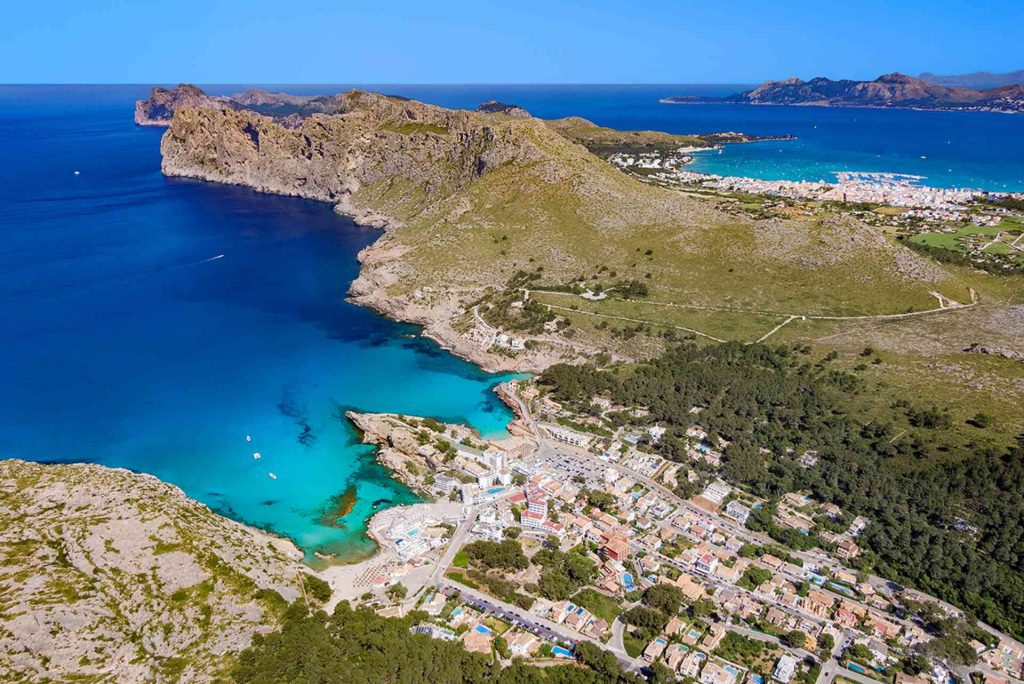
The main beach curves around the full sweep of the bay, a long, sandy stretch that stays genuinely swimmable and family-friendly even in August, backed for much of its length by the pine-lined promenade that gives the Pine Walk its name. For something smaller and quieter, Cala Sant Vicenç is a short drive over the hill, with a cluster of coves that suit a slower morning better than the main beach does.
Restaurants & Cafés
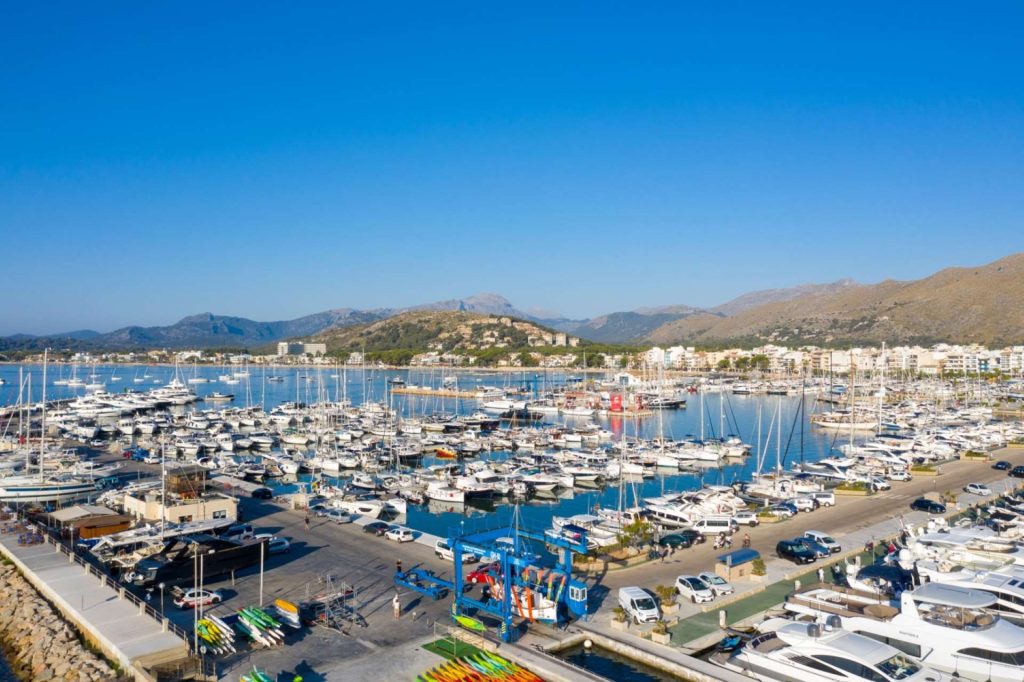
The dining scene stays open and active well beyond the summer season, with a real concentration of restaurants around the Moll Vell and Moll Nou piers. Seafood is the strong suit, unsurprisingly, and the port’s restaurants draw a loyal local crowd as much as visitors. The Pine Walk itself is lined with cafés that work equally well for a morning coffee or an evening drink looking out over the bay.
Schools
Families relocating with children have one clear local option: Mallorca International School, based in Crestatx near Sa Pobla, roughly 20 minutes’ drive from Puerto Pollensa, teaching the British curriculum from early years through secondary. It’s currently the only international school serving the north of the island; families wanting a wider choice of curriculum (IB, French, German) are generally looking at a 45 to 60 minute commute toward Palma. Pollença town itself also has Spanish/Catalan public schooling, which some international families choose for the language immersion.
Outdoor activities
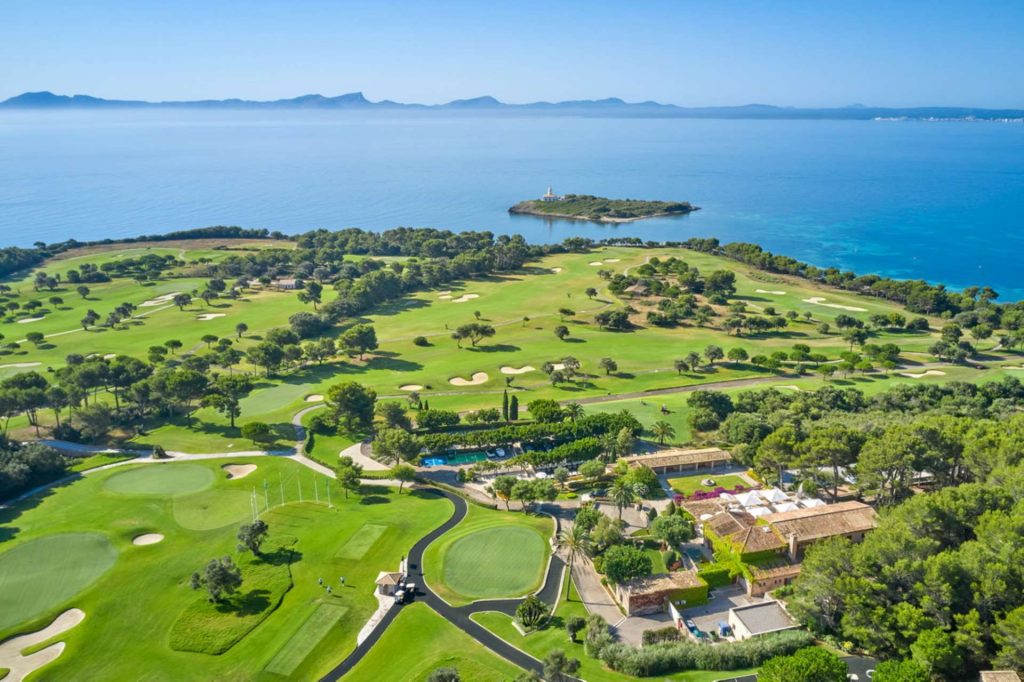
Sailing and watersports run through the Reial Club Nàutic Port de Pollença, the town’s sailing club, with a youth sailing school and a full events calendar. Golf is close on both sides: Golf Pollença, a 9-hole course dating to 1986, sits right at the edge of town, while the 18-hole Alcanada course, regularly ranked among the best in Europe, with the Alcanada lighthouse visible from most of its holes, is a short drive around the bay. Hikers have the Boquer Valley trail, a well-known route from the edge of town up through the valley to a wild, secluded beach, and the wider Tramuntana range beyond it. Cyclists use the coastal roads and the mountain climbs beyond Pollença in roughly equal measure, and the Pine Walk itself remains the default for an easy morning walk or run.
Community & International Life
Puerto Pollensa’s international community isn’t a recent arrival. British, German and Scandinavian residents have been coming here for decades, and it’s common to meet families on their second or third generation of returning, some now owning the same property their parents or grandparents first bought. That continuity shows up in daily life: English and German are widely spoken in shops and restaurants, and the town supports a genuine year-round social scene rather than one that only exists in July and August.
Much of that social life centres on the water. The Reial Club Nàutic Port de Pollença anchors a real sailing community, with racing, a youth sailing school and a calendar of events that runs through the year, not just summer. On land, the Pine Walk and the restaurants around Moll Vell and Moll Nou function as the town’s informal meeting points, and the mid-July Patrona and Carme festivities pull residents and visitors alike into open-air concerts and processions that feel distinctly local rather than staged for tourists.
Best Areas in Puerto Pollensa
Puerto Pollensa isn’t a single uniform neighbourhood: the seafront promenade and the residential areas behind it each have their own character and their own kind of buyer. Here’s how the main areas compare (see the full range of property in Puerto Pollensa for more):
Pine Walk
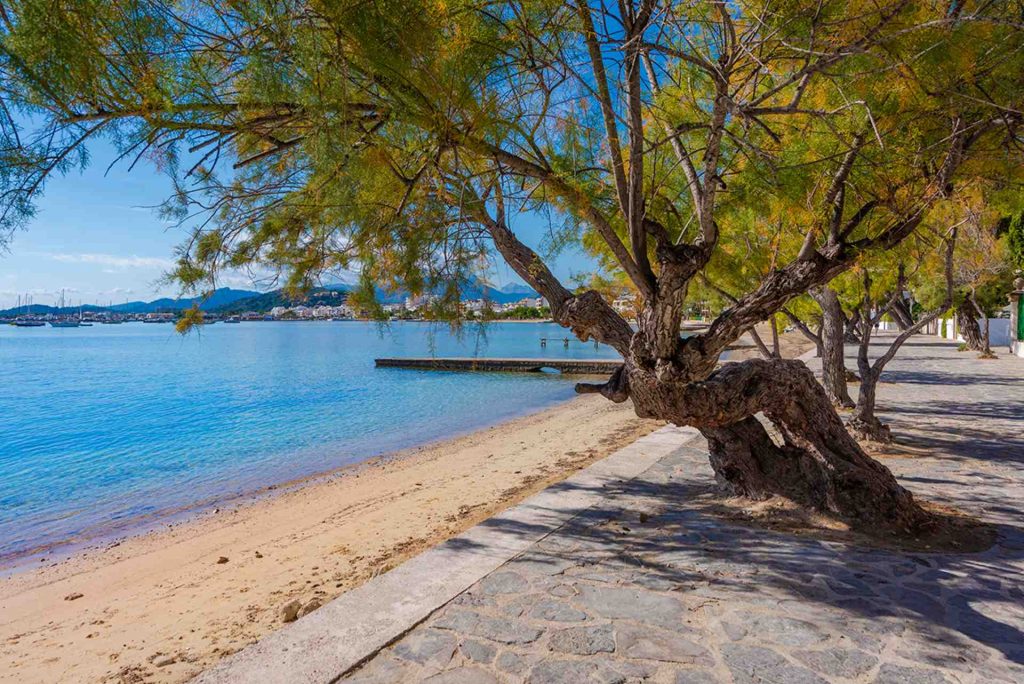
The most iconic address in Puerto Pollensa: a seafront promenade lined with mature pine trees, home to the town’s frontline apartments and penthouses. Direct beach access and uninterrupted bay views make this the most sought-after part of the market. View properties on the Pine Walk
Llenaire
The main destination for buyers after a villa near the beach, a short walk from the main stretch of sand with a noticeably quieter, more residential feel than the town centre. Plots tend to be generous, often 1,000 m² or more, with private pools and gardens standard, and well-priced properties here have a reputation for not staying on the market long. View properties in Llenaire
Gotmar
Close to both the port and the beach, with a mix of villas, apartments and smaller homes set among mature gardens and pine trees. Part of the area sits on flat ground; part rises gently up the hillside, giving a range of sea and mountain outlooks within the same neighbourhood. View properties in Gotmar
Boquer
Sits just behind the Pine Walk and climbs toward the hillside, with the road to Formentor running through it. Lower down, residential complexes with community pools suit lock-up-and-leave ownership; further up, detached villas get elevated views over the bay and town. It shares its name with the Boquer Valley hiking trail just beyond it.
Bellresguard
A smaller, quieter enclave known for security and low-maintenance ownership: the natural choice for buyers who want a lock-up-and-leave second home rather than a project. View properties in Bellresguard
Things to know
July and August bring the town to its busiest, especially around the mid-July Patrona and Carme festivities, when the road between Pollença and the port gets genuinely congested at peak times. Outside those two months, the town is markedly quieter but rarely feels closed: restaurants and services stay open through the shoulder seasons in a way some more purely seasonal resorts don’t manage.
Holiday-rental licensing (the ETV licence) is a real factor for anyone considering letting a property, and it affects both what a property can legally be used for and its rental potential, so it’s worth checking early with any property under consideration. Access is straightforward: Puerto Pollensa is roughly 50 km from Palma and the airport, about 45 to 50 minutes by motorway under normal traffic, with regular bus connections to Palma, Alcúdia, Sóller and Formentor for those without a car.
Who is it for?
- Families: A genuine, walkable town with a beach on the doorstep, though schooling means either the one international option in Crestatx or a longer commute toward Palma.
- Retirees: An established, decades-deep international community and a pace of life that slows down noticeably outside summer.
- Second-home owners: A lock-and-leave property that works for seasonal use without the upkeep of a full-time residence, particularly in quieter enclaves such as Bellresguard.
- Investors: Genuine rental potential around the port, though this depends on ETV licence availability and should be checked before buying with rental income in mind.
- Sailing and nautical buyers: A sheltered bay and an active sailing club right in town, including a youth sailing school.
- Cyclists: Flat coastal roads and serious Tramuntana climbs within a short ride of home.
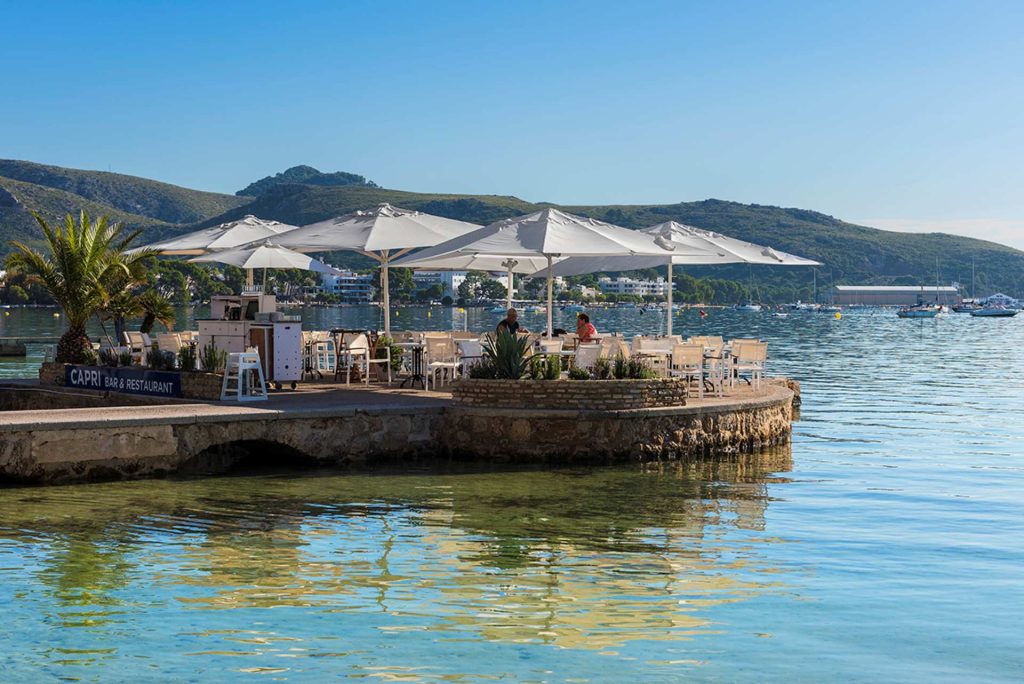
Continue exploring: discover the wider North Mallorca area guide and compare life in Pollença, Alcúdia and Formentor.
Thinking of Buying?
If you’re ready to see what’s actually on the market, our Puerto Pollensa and Pollença property listings are updated regularly across the areas covered here, from Pine Walk apartments to Llenaire villas. Our team is based in Pollença town rather than managing this market remotely from Palma, so get in touch directly with any questions about current availability.
FAQs
Yes. Unlike some more purely seasonal resorts, restaurants, shops and services stay open through the quieter months, and the town has a genuine year-round international community rather than one that empties out after summer.
Mallorca International School in Crestatx, about 20 minutes away, is currently the only international school serving the north of the island, teaching the British curriculum. Families wanting other curricula generally commute 45 to 60 minutes toward Palma.
Puerto Pollensa is the coastal port area; Pollença is the historic inland town a few kilometres away. They’re often treated as one area for property purposes, but Pollença has more of a traditional old-town character, while Puerto Pollensa is built entirely around the bay and the beach.
Yes. The bay is sheltered and calm for most of the year, and the Reial Club Nàutic Port de Pollença runs an active sailing programme, including a youth sailing school, alongside the town’s other watersports.
Around 50 km, roughly 45 to 50 minutes by motorway under normal traffic conditions.
Not necessarily. The town centre and the Pine Walk are entirely walkable, and regular buses run to Palma, Alcúdia, Sóller and Formentor. A car becomes more useful if you’re based in one of the hillside areas like Boquer, or want easy access to golf, hiking or the wider island.