 Deutsch
 English
 Español


Families
- Why it works
- The only international school in the north of the island is ten minutes away, and the old town is walkable and safe for children.
- Weigh up
- The school run to Crestatx, the beaches and Palma all need a car.
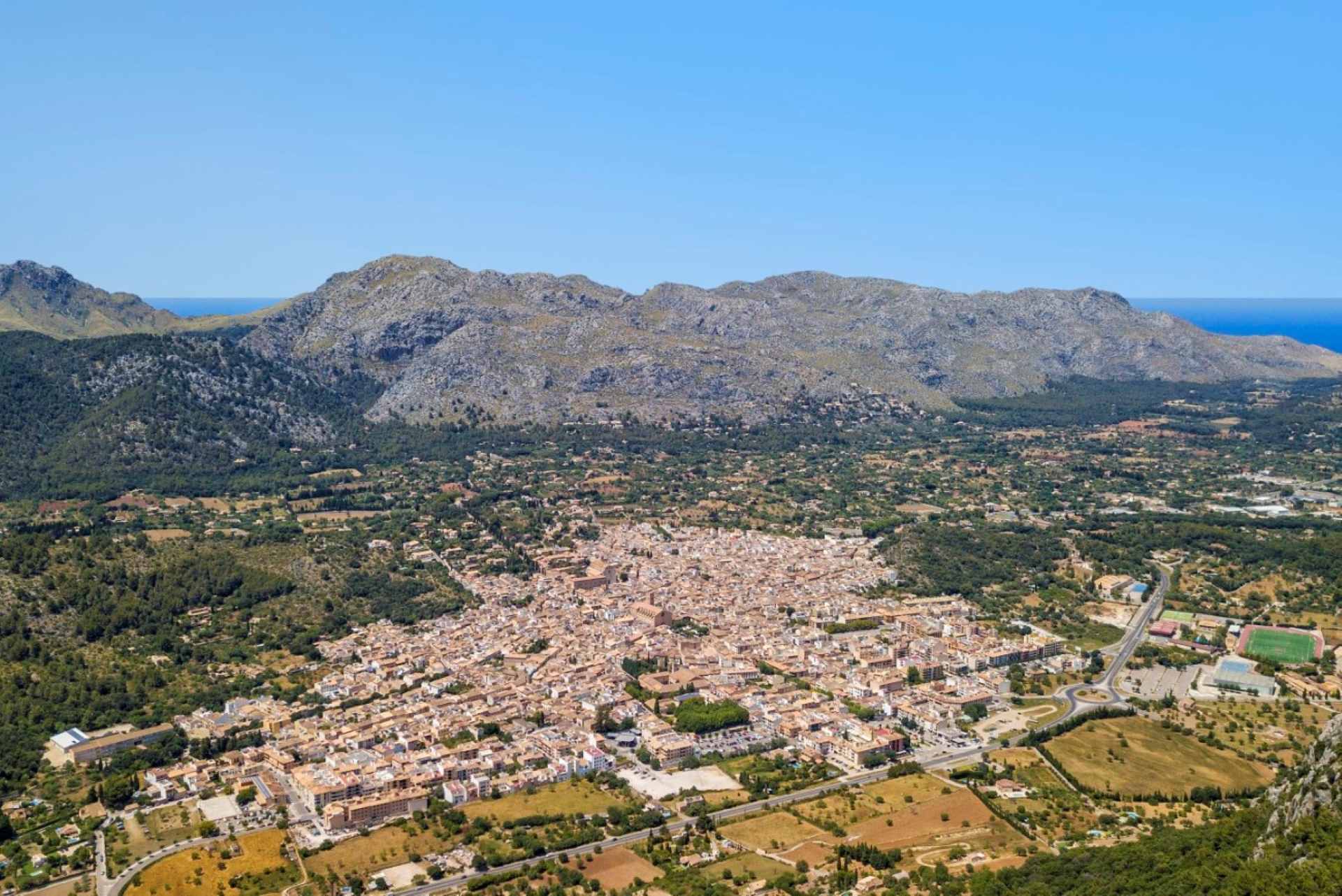
A working Mallorcan town set inland between the Puig de Maria and the Calvari, with a Sunday market, a 17th-century cloister that has hosted a summer music festival since 1962, and a town life that doesn't switch off with the season.
Pollença is the historic inland town of Mallorca's north, five minutes from Puerto Pollença and around 45 minutes from Palma airport by the Ma-13. It is a year-round town rather than a resort: homes range from lock-and-leave apartments and townhouses in the old town to countryside estates around La Font, El Vila and Vall de Son March.
Pollença suits people who want to live in a town, not just holiday in one.
The main choice is between living in the middle of town or a short drive from it.
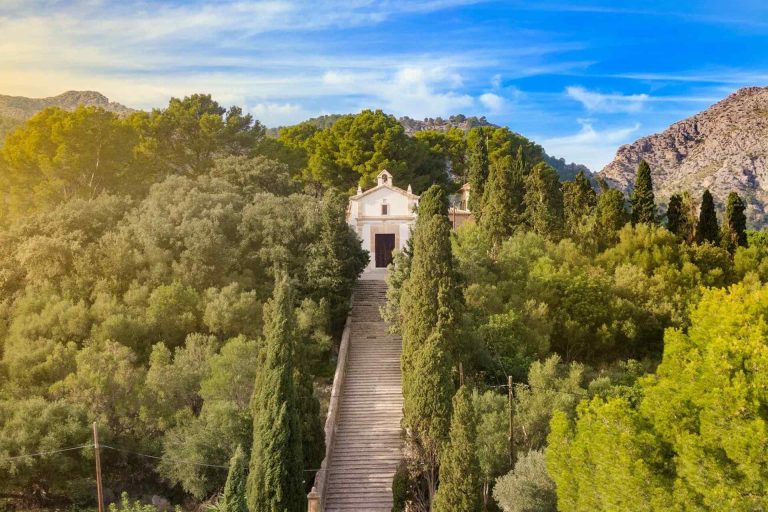
The streets around Plaça Major and the Calvari steps, within walking distance of the market, restaurants and the parish church, all year round.
An established residential area just outside town, known for elevated positions and views back over the bay. Around fifteen minutes' walk into the centre.
Similar in character to La Font and on the same side of the valley, but closer to the road toward the port and the restaurants and marina at Puerto Pollença.
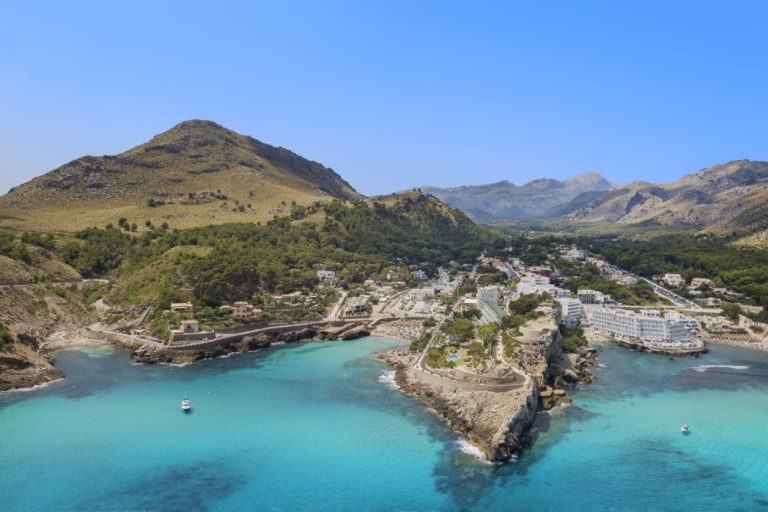
Its own village within the municipality, built around four small coves beneath the Cavall Bernat ridge. Compact and residential, without the scale of Puerto Pollença.
A quiet residential urbanisation on the way toward Sa Pobla, popular with families since Mallorca International School opened nearby. Around ten minutes from the centre.
A countryside valley just outside town, with views back toward the Tramuntana and a short drive into Pollença.
A selection from our current listings. Availability changes quickly, so see the full list for today’s homes.
On a resale home in the Balearics, budget for transfer tax plus notary, land registry and legal fees. Enter a price to see an estimate.
Estimate for a resale home at the general Balearic ITP scale (8% to 13%, applied band by band). New builds pay 10% VAT plus stamp duty instead, and reduced rates can apply to a resident’s main home. Indicative only, not tax advice.
| Transfer tax (ITP) | – |
|---|---|
| Notary and land registry (approx.) | – |
| Lawyer, approx. 1% + VAT | – |
| Estimated costs | – |
| As a share of the price | – |
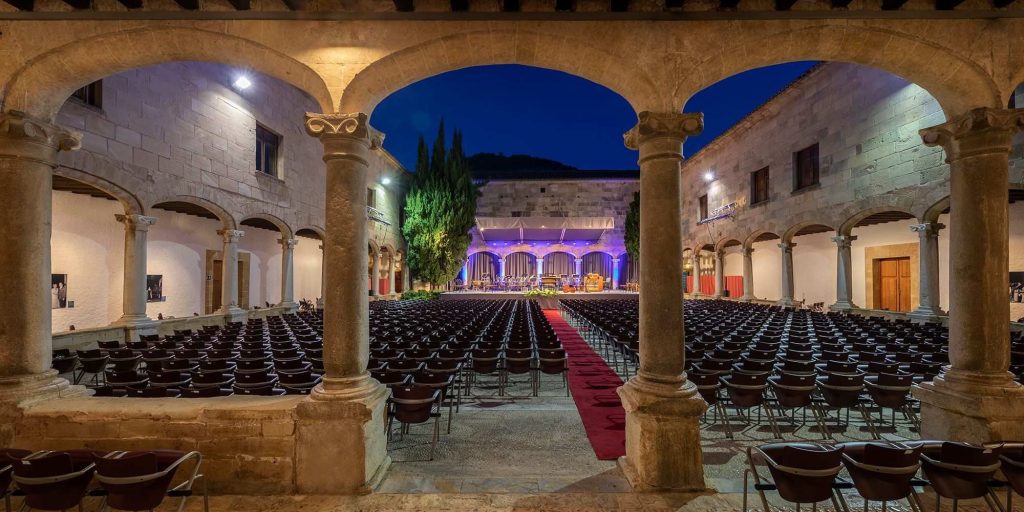
The restaurant scene sits around Plaça Major and the lanes leading off it: family-run Mallorcan kitchens in restored townhouses, tapas terraces that fill up on market mornings, and a handful of more ambitious dining rooms. Because Pollença has a genuine year-round population, most of this stays open outside the summer months. Social life runs through a few recurring fixtures rather than one expat club: the Sunday market at Plaça Major, the summer festival calendar and a small but active gallery scene anchored by Galería Maior. The Festival de Pollença was founded in 1962 by the British violinist Philip Newman, and the cloister of the Sant Domingo convent has since hosted more than 800 performers, including Mstislav Rostropovich, Yehudi Menuhin and Jessye Norman.
The old town sits inland, so there’s no beach on the doorstep. What it has instead is easy access to two very different stretches of coast. Cala Sant Vicenç, about ten minutes north, is four small coves (Cala Barques, Cala Molins, Cala Clara and Cala Carbó) beneath pine-covered cliffs, better suited to a quiet swim than a big beach day. Puerto Pollença, five minutes east, has the long sandy bay and the Pine Walk promenade.
Two favourites from Iris Grünewald, who has lived in Pollença for more than 20 years.
Golf Pollença is a 9-hole course about two kilometres from town, opened in 1986. Hikers have the Puig de Maria, a 330-metre climb to a 14th-century hermitage, and the Boquer Valley, a protected route popular with birdwatchers. Cyclists use Pollença as a base for the quieter lanes of the north and the climb toward Cap de Formentor. Iris still calls the Calvari, 365 cypress-lined steps up to a chapel, well worth the climb.
Beyond the Sunday market, the makers Iris sends visitors to.

A local’s view: Iris Grünewald
Iris Grünewald is CEO of Balearic Properties and a Savills international associate, and she has lived in Pollença for more than 20 years. Featured in Portfolio by Savills’ Insider’s Guide to Pollença, she adds her own favourites to this guide: where she eats, shops and walks. She is also the founder of Pollensina, a collection of nine villas and fincas in Pollença that she has renovated and rents out.
The best way to find out whether Pollença suits you is to live it for a week. Iris has renovated every house in the Pollensina collection, nine villas and fincas in Pollença that she rents out through Pollensina. A few days in one of them, with the town, the market and the mountains close by, tells you more than any viewing schedule.
Iris knows each of these houses from the renovation onwards, so she can point you to the one that fits the way you want to live, whether that is a family week, a cycling trip or a quiet escape. And if you decide to stay, the Balearic Properties team can show you what is for sale around town.
Pollença works the same way in February as in August, but the year still has a rhythm.
Market in the old town, 8am to 1.30pm
Festival de Pollença in the Sant Domingo cloister
La Fira de Pollença: ceramics, jewellery and weaving
Check the Ajuntament de Pollença calendar for this year's dates.
| To | Distance | Time |
|---|---|---|
| Puerto Pollença | about 5 min | |
| Cala Sant Vicenç | about 10 min | |
| Crestatx (Mallorca International School) | about 10 min | |
| Golf Pollença | about 2 km | |
| Palma airport | around 45 min |
Planning to let short-term? Check current holiday-rental (ETV) licence rules before assuming a licence is available.
Both, depending on the day. The Sunday market and the summer festival bring genuine crowds, but Pollença has a year-round resident population and a working town centre that doesn’t shut down once the visitors leave, which is a real difference from more purely seasonal resorts.
Pollença is the inland, historic town; Puerto Pollença is the coastal town five minutes away, with the marina, the promenade and the beach. Many residents use both, but they suit slightly different buyers: Pollença for town and countryside living, Puerto Pollença for beachfront and marina life.
Yes. Mallorca International School, around ten minutes away in Crestatx, follows the British curriculum and is currently the only international school in the north of the island.
Within the old town, day-to-day life is walkable. A car becomes useful for the beaches, the golf course, the school run to Crestatx, and reaching Palma, since public transport options are limited outside the main bus routes.
The town has its own public health centre within the IB-Salut network, currently being expanded onto a larger site. Private clinics are also available locally and further along the coast.
Yes, noticeably. The summer influx around the market and festival season eases off considerably from autumn, and the town settles into a slower, more local rhythm through the winter months.
Our team knows the area, including homes that never reach the portals. Tell us what you are looking for and we will send a shortlist.
Call now, send us a message on WhatsApp, or fill out the contact form, and we’ll get back to you as soon as possible.


