
Where Are International Buyers Buying in Mallorca? A Guide by Zone and Nationality
The Balearic Islands are, according to the latest figures from Spain's Colegio de Registradores, the region of Spain where foreigners buy property most often, well above the national average. That share has kept climbing through 2026, as set out below with the exact source for each quarter.
Analysis by Iris Grünewald, CEO & Founder of Balearic Properties and Mallorca property specialist with more than 25 years of local market experience.
Published July 2026 · Last reviewed 19 September 2026
The headline number hides a far more specific picture on the ground. Not every international buyer is looking for the same thing, or looking in the same place. A German buyer and a British buyer rarely compete for the same property, and an American buyer arriving in Mallorca today has a different profile from the one that dominated the market a decade ago. This guide sets out, zone by zone, who buys where and why.
Methodology: This guide combines published market statistics with Balearic Properties’ active buyer enquiries, property searches and local sales experience. Nationality preferences describe recurring patterns rather than rules: every purchase depends on budget, lifestyle and the individual property.
Balearic Islands leads Spain in foreign home buying
According to Colegio de Registradores figures reported by economiademallorca.com, the Balearic Islands ranked first among Spain's regions by share of foreign buyers in the first quarter of 2026, at 28.9% of all transactions. Comunitat Valenciana follows at 28.2%, then Canarias at 22.8% and Murcia at 21.7%.
The trend held into the second quarter: according to the same Colegio de Registradores data, this time reported by Última Hora, the share rose to 32.3%, with an average price of 4,311 euros per square metre, again the highest in Spain. The Balearics are, by some distance, the most international region in Spain for property sales.
Nationally, European buyers dominate the foreign share: 58.3% of foreign purchases are made by EU citizens. Among individual nationalities, British, Dutch, Moroccan and German buyers are the most active, each accounting for around 6 to 7% of foreign purchases. It is worth stressing that this is the national breakdown, not a Balearic-specific figure. The Colegio de Registradores does not publish a public, quarterly breakdown of buyer nationality by region or municipality.
That distinction matters. The nationality patterns by zone described below are not drawn from a disaggregated official statistic, but from Balearic Properties' accumulated experience on the ground, cross-checked against the public information available for each area. We flag this clearly so readers can distinguish between the hard data, sourced from the Colegio de Registradores, and the qualitative reading of the market that follows.
| Buyer profile | Zone with the strongest association | Typical property type |
|---|---|---|
| German / Swiss | Andratx, Puerto Andratx, Santa Ponsa | Villa, finca |
| British | Pollensa, Puerto Pollensa, Alcudia | House, flat |
| Scandinavian | North, southeast, Palma | House, flat |
| American | Palma, Son Vida, Tramuntana | Villa, finca |
| Middle Eastern | Palma, Son Vida | Luxury villa |
Qualitative synthesis by Balearic Properties based on general patterns in the Balearic market, not on an official statistic broken down by zone or on internal sales data by nationality. The zones listed are where each profile's association is most visible, not an exclusive list: Palma, as the island's capital and largest, most diverse market, draws buyers of every nationality to some degree.
Why buying patterns vary so much by nationality
Each nationality arrives in Mallorca with a different logic. Central European buyers have been present on the island for decades and tend to prioritise direct flight connections, an established social circle and services available in their own language. British buyers, with an even older resident community, tend to look for a slower pace of life and a more accessible entry price. American and Middle Eastern buyers, who have arrived in meaningful numbers over the past three years, often prioritise privacy, security and proximity to Palma.
These differences translate into recognisable geographic concentrations, which Balearic Properties observes consistently in its day-to-day activity across the island's five main areas.
Southwest: Andratx, Puerto Andratx and Santa Ponsa

Puerto Andratx marina, framed by pine-covered hills
The southwest of Mallorca has, for more than thirty years, shown a strong presence of the German, Swiss and northern European buyer, based on Balearic Properties' market experience. Proximity to Palma, the marina at Puerto Andratx and a well-established service infrastructure explain much of this preference.
This depth of demand shows up in prices too. Sea view villas and fincas in Andratx and Puerto Andratx consistently rank among the highest value transactions recorded anywhere on the island, a pattern Balearic Properties sees repeated year after year along this stretch of coast, matched by current listings in Santa Ponsa.
North: Pollensa, Puerto Pollensa and Alcudia

Puerto Pollensa's bay, seen from the Tramuntana foothills
The north of the island is traditionally popular with the British and Scandinavian buyer. Pollensa and Puerto Pollensa, with their sheltered bay and historic old town, attract buyers looking for a second home with more local character and less development pressure than the southwest. Alcudia, with its mix of beach, golf and heritage, remains a reference point for families who return season after season before finally deciding to buy.
This area tends to offer a somewhat more accessible entry point than the southwest, though renovated country properties with bay views can still command very high prices.
Tramuntana Mountains: Deia, Soller and Valldemossa

Puerto Soller's horseshoe bay and marina
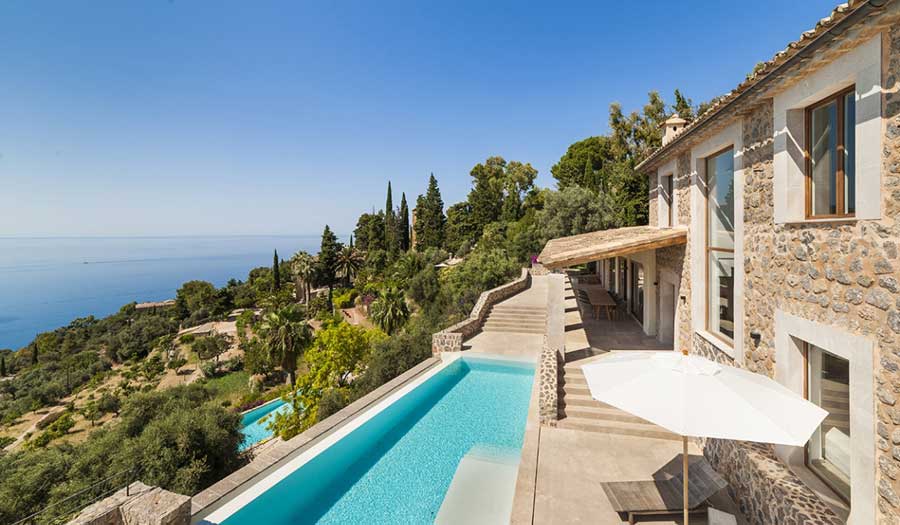
The Tramuntana, a Unesco World Heritage site, attracts a buyer profile that crosses nationality but is very clear in intent: those seeking privacy, architectural heritage and distance from tourist noise. Deia, with its long tradition of artists and public figures, still accounts for some of the most discreet transactions in the Balearic market. Soller and its orange-grove valley offer a different balance, with more village life and a stronger connection to Palma through the tunnel.
It is an area where German, British and French buyers sit alongside a growing number of Americans looking for a restored stone finca away from the coast, with current listings in Deia, Soller and Valldemossa.
Palma and Son Vida: the new focus for American and Middle Eastern buyers
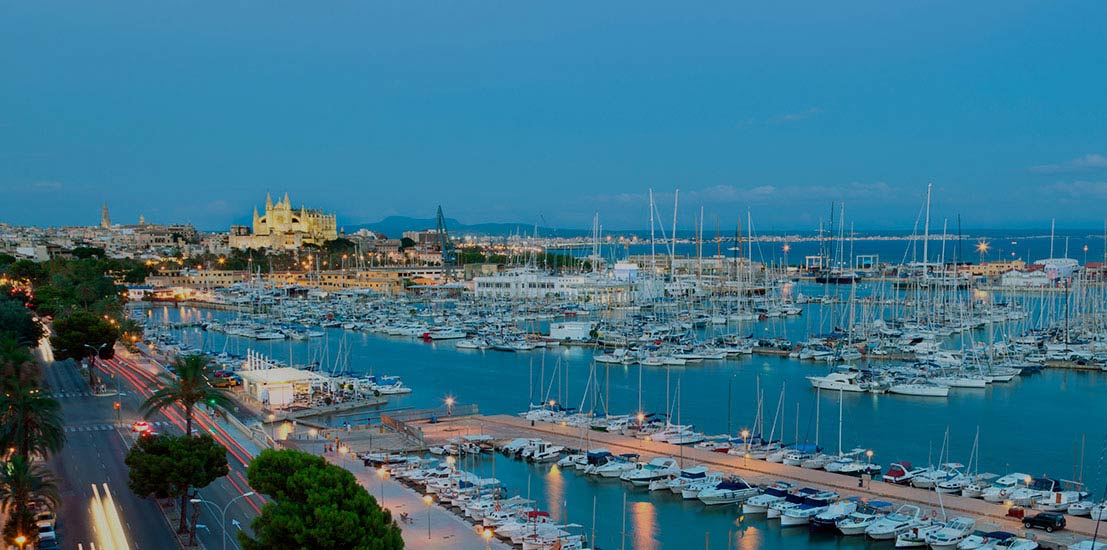
Palma marina at dusk, with the cathedral behind
If one area best reflects the shift of the past three years, it is Palma. The capital and its upmarket residential outskirts, led by Son Vida, have become an increasingly strong draw for a buyer profile that had barely any presence on the island until recently: American and Middle Eastern. Direct flight connections to the United States, the legal security of buying within the European Union, and an urban lifestyle paired with beaches minutes away all explain much of this interest.
For those considering this route, Balearic Properties has published dedicated guides on why Americans invest in Mallorca and on whether a US citizen can buy property on the island. Palma's old town and its upmarket residential zone can be browsed in Palma and Son Vida.
Southeast: Santanyi and Cala D'Or

One of the turquoise coves near Santanyi
The southeast completes the picture with a profile more oriented towards second homes and residential tourism: northern European buyers, including Scandinavians and some Central Europeans, drawn to unspoilt coves, Santanyi's traditional stone architecture and Cala D'Or's sailing culture. It is an area with fewer very high value transactions than the southwest, but with a steady, less seasonal demand than is often assumed.
What kind of property each buyer profile is looking for
Budget remains, alongside nationality, the factor that most determines where and what an international buyer purchases. At the top of the market, above 5 million euros, demand concentrates on newly built or fully renovated villas in the southwest and in Son Vida, with sea views a near-non-negotiable condition. This buyer profile, often American, Middle Eastern or northern European, prioritises discretion and security as much as design.
In the mid-range, between 800,000 and 2.5 million euros, the profile is more varied: professionals looking for a semi-permanent base, families making the leap after several summers of renting, and buyers who prioritise a finca with land over a design-led villa. This is where the north and the Tramuntana gain ground over the southwest.
Below 800,000 euros, supply is concentrated mainly in flats and village houses in areas set slightly further back from the coast, a segment where both budget-conscious European buyers and residents seeking an occasional second home compete. It is also the range where rental yield weighs more heavily in the buying decision, particularly among Scandinavian and Central European investors.
Buyers looking for a finca or country home can browse the dedicated selection of country homes in Mallorca, while higher-budget profiles will generally find more options among the island's luxury properties.
Legal and tax considerations every foreign buyer should know
Buying in Mallorca as a non-resident is a regulated but paperwork-heavy process. Obtaining an NIE, opening a Spanish bank account and securing independent legal advice are usual steps before signing the deed of sale before a notary. Costs associated with the purchase, including taxes, notary and registry fees, typically fall between 10% and 13% on top of the purchase price, though this figure is a guide only: it varies by region, whether the property is newly built or resale, and which tax applies (ITP, IVA or AJD). It is worth confirming the exact percentage with a tax adviser before budgeting for a purchase.
Each nationality also faces its own specific considerations. British buyers need to account for Brexit-related stay limits, capped at 90 days within any 180-day period unless they hold a long-term visa. American buyers, meanwhile, are liable in Spain for non-resident income tax, charged annually on the property whether or not it is rented out, and must declare any rental income to the IRS. The property itself is not a reportable asset under FBAR or FATCA, but Spanish bank accounts opened to manage it are, if they exceed the relevant IRS thresholds. None of these circumstances prevents a purchase, but the specifics depend on each buyer's personal situation and are worth planning for in advance with a tax adviser in both jurisdictions. Balearic Properties covers these points in detail in its guide for British buyers and its comprehensive guide for foreign buyers.
Frequently asked questions
What percentage of homes in the Balearic Islands do foreigners buy?
According to the Colegio de Registradores' Estadística Registral Inmobiliaria, foreign buyers accounted for 28.9% of registered home sales in the Balearic Islands in the first quarter of 2026, and 32.3% in the second quarter, the highest share of any region in Spain.
Which nationality buys the most property in Mallorca?
There is no official Balearic-specific breakdown by nationality. Nationally, EU citizens account for 58.3% of foreign purchases in Spain, with British, Dutch and German buyers among the most active individual nationalities. In Mallorca, market experience shows a strong historic German and Swiss presence in the southwest, British and Scandinavian buyers in the north, and recent growth in American buyers around Palma and Son Vida.
Where do German buyers mainly buy in Mallorca?
The southwest of the island, with Andratx, Puerto Andratx and Santa Ponsa as the main areas, has traditionally concentrated the strongest presence of German and Swiss buyers, drawn by direct flight connections and an already well-established Central European community.
Is American property buying growing in Mallorca?
Yes. Balearic Properties has observed a significant increase in American and Middle Eastern buyers over the past three years, with particular concentration in Palma and the Son Vida residential area.
Do I need to be a Spanish resident to buy property in Mallorca?
No. Any foreign national can buy property in Spain without prior residency. It is compulsory to obtain an NIE (foreigner identification number) before signing the deed of sale before a notary.
How much should I budget in additional costs on top of the purchase price?
As a guide only, buyers should budget between 10% and 13% on top of the purchase price to cover taxes, notary, registry and legal fees, though the exact percentage varies by region, the type of property and whether it is new build or resale. It is worth confirming this with a tax adviser.

By Iris Grünewald
Founder

