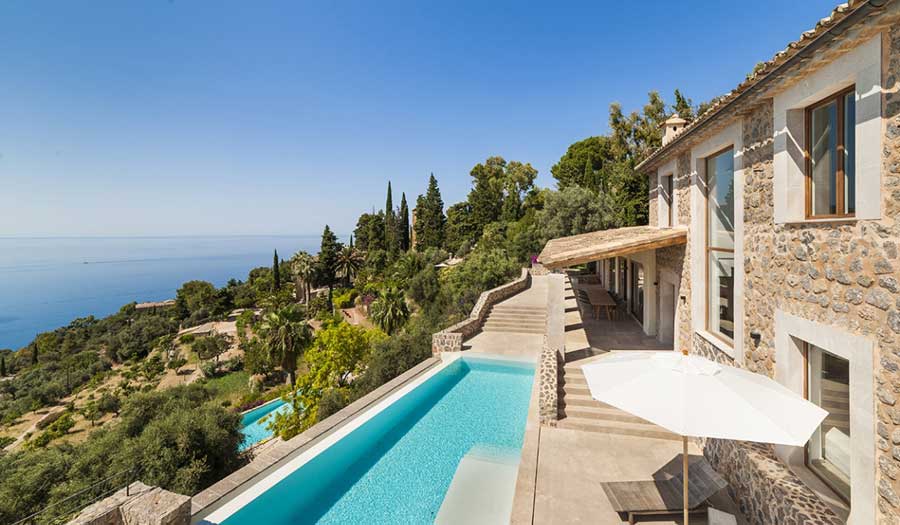

Can Americans Buy Property in Mallorca? Everything You Need to Know
The short answer is yes. Americans can legally buy property in Mallorca, and there are no restrictions on foreign ownership. No residency required, no citizenship required. What you do need is the right information, because buying on a Spanish island as a US citizen involves two separate tax systems that both want a piece of your transaction.
Property market commentary by Iris Grünewald, CEO & Founder of Balearic Properties, with more than 25 years of Mallorca real estate experience.
Published June 2026 · Last reviewed 19 September 2026
Editorial methodology: Property-market guidance is based on Balearic Properties’ local experience. Tax, visa and reporting information is summarised from official Spanish and United States sources and should be checked again at the time of purchase.
This guide covers everything: the legal process, what it costs in Spain, what it means back home, where to buy, how to finance it, and the traps that catch American buyers who did not read the fine print.
A Few Things About Mallorca That Surprise American Buyers
Most Americans researching Mallorca already know the basics: Mediterranean climate, incredible food, direct flights from major European hubs, UNESCO-protected mountain landscapes. What they often do not expect:
- Buying property does not give you residency. Spain's Golden Visa program, which used to link property investment to residency, closed officially in April 2025. Owning a villa in Andratx does not come with a visa attached.
- Short-term rental licences are essentially frozen. Mallorca imposed a moratorium on new tourist rental licences years ago. If generating holiday rental income is part of your plan, you need a property that already holds a valid licence. They exist, but you have to specifically look for them.
- The proposed 100% additional tax on non-EU buyers was submitted to the Spanish parliament in May 2025 and, as of 2026, has not become law. New builds and off-plan properties are explicitly excluded from the proposal. Do not let this stop you from researching the market, but do follow it with your lawyer.
- Spain's Coastal Law applies everywhere on the island. Even if you own beachfront property, public beach access cannot be blocked. Total seclusion at the water's edge is not a legal option in Spain.
- You will still file US taxes. American citizens pay US tax on worldwide income regardless of where they live or what they own. Buying in Mallorca adds Spanish obligations on top, not instead of, US ones.
The Legal Framework: Who Can Buy and What You Need
Spain imposes no nationality-based restrictions on property ownership. EU nationals, UK nationals post-Brexit, Americans, Canadians, Australians: all can purchase on equal footing in terms of the right to buy. The practical differences show up in tax rates, mortgage terms, and annual filing obligations.
The NIE: Your First Step
Before anything else, you need a NIE (Número de Identificación de Extranjero). This is your Spanish tax identification number and it is required for every property transaction in Spain: signing contracts, paying taxes, opening a Spanish bank account. Without it, the deal cannot close.
You can apply for an NIE at the Spanish consulate in your home city in the US, or in person at a police station in Mallorca. The process typically takes a few weeks. Most buyers working with a local lawyer grant power of attorney so the lawyer can handle the application on their behalf, which saves a trip.
Resident vs. Non-Resident Status
Your residency status does not affect your right to buy, but it changes what you pay and owe going forward. Spend more than 183 days per year in Spain and you become a Spanish tax resident, which means your worldwide income falls under Spanish taxation. Most American buyers purchasing a second home or investment property in Mallorca will remain non-residents, taxed in Spain only on Spanish-sourced income.
Visa Options for Americans in Mallorca
Property ownership and legal residency are separate matters. If your plan is to spend extended time in Mallorca beyond the 90-day Schengen limit for US passport holders, you need a visa independent of your property purchase.
Non-Lucrative Visa (NLV)
The most common route for Americans who want to live in Mallorca without working locally. You must demonstrate sufficient passive income (roughly €28,800 annually, more for families) and hold private health insurance. It does not permit you to work for Spanish companies but is compatible with remote work for US employers, though tax implications should be reviewed carefully.
Digital Nomad Visa
Launched in 2023, this visa targets remote workers earning income from non-Spanish companies. Minimum income threshold is around €2,760 per month. It allows you to live and work legally in Spain and access the Beckham Law tax regime, which caps Spanish income tax at 24% for the first four years.
Golden Visa: Closed Since April 2025
For reference, Spain's Golden Visa previously offered residency to buyers investing €500,000 or more in property without a mortgage. It closed in April 2025 and is no longer available. If an agent or promoter suggests it is still an option, treat that as a red flag.
Visa Comparison: Which Route Suits You?
| Non-Lucrative Visa (NLV) | Digital Nomad Visa (DNV) | |
|---|---|---|
| Best for | Retirees, those with passive income | Remote workers employed by non-Spanish companies |
| Min. income | ~€28,800/year (passive income) | ~€2,760/month (active income from abroad) |
| Work in Spain? | No (Spanish companies) | Yes (for non-Spanish employers) |
| Tax regime | Standard Spanish resident rates | Beckham Law: 24% flat rate for up to 4 years |
| Health insurance | Private coverage required | Private coverage required |
| Schengen travel | Yes | Yes |
| Path to permanent residency | After 5 years continuous residency | After 5 years continuous residency |
| US tax interaction | May trigger Spanish worldwide tax after 183 days | Same; Beckham Law reduces Spanish tax but US obligations remain |
The Buying Process in Mallorca, Step by Step
Step 1: Get Your NIE and Open a Spanish Bank Account
Do both before you make any offers. The NIE takes time. A Spanish bank account is not legally mandatory but is practically necessary for tax payments, utility direct debits, and the funds transfer at completion. Most buyers open an account with BBVA, Santander, or CaixaBank, all of which have English-speaking staff experienced with international clients.
Step 2: Appoint an Independent Spanish Lawyer
This is the most important decision in the process. Your lawyer must be independent, meaning they represent you, not the seller, not the agent, not the developer. They will verify the property's legal status through the Land Registry, check the Nota Simple for outstanding debts or encumbrances, confirm planning permissions are in order, review all contracts before you sign anything, and manage the tax filings at completion. Budget 1% to 1.5% of the purchase price for legal fees. It is money well spent. You can find vetted English-speaking property lawyers in Mallorca through specialist directories if you need help finding the right firm.
Step 3: Make an Offer and Sign the Reservation Agreement
When you find the right property and agree on a price, a reservation contract takes it off the market while due diligence proceeds. You pay a small reservation deposit, typically 1% to 3% of the purchase price, which is usually non-refundable if you walk away for reasons other than legal issues uncovered during due diligence.
Step 4: Sign the Contrato de Arras (Deposit Contract)
This is the substantive preliminary contract. You pay 10% of the purchase price at this stage. If you withdraw without legal cause, you lose the 10%. If the seller withdraws, they must return double, so 20%. This mutual commitment is real: once signed, both sides are financially exposed.
Step 5: Due Diligence
Your lawyer reviews the full legal picture: Land Registry records, cadastral records, local planning authority permissions, community fee payments, IBI arrears, and any pending charges registered against the property. For rural properties or fincas, this also includes checking water rights, access rights, and any agricultural classifications that might restrict how the land is used. Allow four to eight weeks.
Step 6: Sign the Escritura Before a Notary
The final deed of sale is signed before a Spanish notary. Both buyer and seller must be present or represented by power of attorney. The remaining purchase funds are transferred at this point and the keys change hands. The notary then registers the transaction with the Land Registry.
Step 7: Pay Taxes and Register Ownership
Your lawyer handles the post-completion tax filings and ensures your ownership is formally registered. Do not skip this step: unregistered ownership creates complications for future sales and for your heirs.
Browse Properties for Sale in MallorcaPurchase Costs: What Americans Actually Pay
This is where many buyers get a shock. The purchase price is not your total outlay. For a resale property in Mallorca, add 10% to 12% on top. For a new build, 12% to 13%. Here is the breakdown:
Property Transfer Tax (ITP): Resale Properties
This is the Balearic Islands' main purchase tax on resale properties, and it is progressive:
- Up to €400,000: 8%
- €400,001 to €600,000: 9%
- €600,001 to €1,000,000: 10%
- Above €1,000,000: 11%
On a €2M villa, that is €182,000 in ITP alone before any other costs.
VAT and Stamp Duty: New Builds
New construction is exempt from ITP but subject to 10% VAT (IVA) plus 1.5% Stamp Duty (AJD). On a €1.5M new build, total tax liability is €172,500.
Notary, Land Registry and Legal Fees
- Notary fees: approximately 0.5% to 1% of purchase price
- Land Registry inscription: approximately 0.2% to 0.5%
- Independent legal representation: 1% to 1.5%
3% Retention on Non-Resident Sellers
If the seller is not a Spanish tax resident (which is common in Mallorca's international market), you as buyer must withhold 3% of the full purchase price and pay it directly to the Spanish tax authority on the seller's behalf. This is not an extra cost to you: it simply reduces the net amount the seller receives. It can, however, complicate negotiations if the seller has not factored it into their expectations.
Total Cost Breakdown: Example on a €1,500,000 Purchase
| Cost item | Resale property | New build |
|---|---|---|
| Purchase price | €1,500,000 | €1,500,000 |
| ITP (transfer tax, ~10.33% blended) | ~€148,000 | n/a |
| VAT at 10% (new builds only) | n/a | €150,000 |
| Stamp Duty AJD at 1.5% (new builds only) | n/a | €22,500 |
| Notary and Land Registry fees (~0.75%) | ~€11,250 | ~€11,250 |
| Legal fees (~1.25%) | ~€18,750 | ~€18,750 |
| Total additional costs | ~€178,000 (11.9%) | ~€202,500 (13.5%) |
| Total outlay | ~€1,678,000 | ~€1,702,500 |
Figures are illustrative estimates. Exact ITP is calculated progressively by tranche. Legal and notary fees vary by firm and complexity. Always request a formal cost estimate from your lawyer before signing.
Annual Costs of Owning Property in Mallorca
Buying is a one-time event. What follows is ongoing, and Americans often underestimate the total annual outlay.
IBI (Local Property Tax)
Spain's equivalent of property tax, calculated on the cadastral value (which is typically well below market value). Rates across Mallorca's municipalities range from 0.4% to 1.1%. For most luxury properties, the annual IBI bill is lower than buyers initially expect because the cadastral value lags market prices significantly.
Non-Resident Income Tax (IRNR)
Even if the property sits empty every day of the year, non-residents must file an annual Spanish tax return. The tax is calculated on a notional rental income: 1.1% or 2% of the cadastral value (depending on when it was last updated), taxed at 19% for EU residents or 24% for non-EU nationals including Americans. For a property with a cadastral value of €300,000, the annual IRNR for a US owner comes to roughly €6,000 at the 2% rate. Factor this in.
If you rent the property, actual rental income is taxed instead. EU citizens can deduct expenses. Americans currently cannot deduct expenses against Spanish rental income, though this is an area of ongoing legal challenge.
Wealth Tax
The Balearic Islands apply wealth tax on Spanish assets held by non-residents. The exemption threshold is €700,000, with rates from 0.28% to 3.45% on the value above that threshold. For high-net-worth buyers with significant Spanish asset values, this requires specific planning.
Community Fees
Properties within urbanisations or gated communities pay monthly or quarterly community fees covering shared maintenance, pools, gardens, and security. These range from a few hundred euros per year for a simple complex to €10,000+ annually for a premium estate.
Capital Gains Tax When You Sell
When you eventually sell, Spain takes a share of your profit. As a non-resident American, you pay a flat 19% on the entire capital gain, with no tiered brackets. Compare that to the Spanish resident structure:
- First €6,000 of gain: 19%
- €6,001 to €50,000: 21%
- €50,001 to €200,000: 23%
- €200,001 to €300,000: 27%
- Above €300,000: 28%
On a straight capital gain basis, non-resident Americans pay less than Spanish residents on large gains. The flat 19% is applied to the full profit from day one.
At closing, the buyer is required to withhold 3% of the sale price (not the gain) and pay it to the Spanish tax authority as an advance against your CGT liability. After filing, you receive a refund if the 3% withholding exceeded your actual tax bill, or you pay the difference if not.
US Tax Obligations: What Owning Mallorca Property Means for Your IRS Filing
This section is where most American buyers need specialist advice. Owning property abroad does not reduce your US tax obligations. It adds to them.
Reporting Rental Income
If you rent the Mallorca property, that rental income must be reported on your US federal tax return (Schedule E) regardless of whether it has already been taxed in Spain. The US-Spain tax treaty and the Foreign Tax Credit (Form 1116) can offset double taxation, but you must file correctly to claim them.
Capital Gains on Sale
When you sell, the gain must be reported on your US return. Spain will tax it at 19%. The US will tax it at your applicable long-term capital gains rate (typically 15% to 20% for most Americans). The Foreign Tax Credit offsets the US liability by the Spanish tax already paid, but the mechanics require careful calculation, particularly on currency gain or loss between purchase and sale.
FBAR (FinCEN Form 114)
If you open a Spanish bank account, as you should, and the balance at any point during the year exceeds $10,000, you must file an FBAR. This is a separate filing from your tax return, due April 15 with automatic extension to October 15. Penalties for non-filing are severe: up to $10,000 per violation for non-wilful failures, and significantly more for wilful ones.
FATCA (Form 8938)
If your total foreign financial assets exceed $200,000 at year-end (or $300,000 at any point during the year) as a single filer living abroad, or $50,000 at year-end as a US-based filer, you must file Form 8938 with your return. The property itself is generally not a foreign financial asset for FATCA purposes, but the Spanish bank account and any Spanish investment accounts are.
The US-Spain Tax Treaty
The treaty prevents double taxation on most income types and provides tie-breaker rules for residency status. It does not eliminate your US filing obligation, but it does provide mechanisms, primarily the Foreign Tax Credit, to ensure you are not paying full tax rates in both countries simultaneously. Work with a CPA experienced in expatriate taxation to structure this correctly from the start.
Financing Your Mallorca Purchase
Spanish banks lend to non-residents, including Americans, though on more conservative terms than for residents.
Typical Mortgage Terms for Non-Residents
- Loan to Value: 60% to 70% for non-residents, meaning you fund 30% to 40% upfront between the down payment, taxes, and fees. On a €2M property with 10% purchase costs, you need roughly €800,000 to €900,000 in cash.
- Term: 15 to 25 years for non-residents, up to 30 to 40 years for residents
- Rates: The 12-month Euribor averaged approximately 2.22% in February 2026. Fixed-rate products for 10 to 20 years are available and popular with international buyers who want predictability.
- Age limit: Most lenders require the mortgage to be fully repaid before the borrower turns 75.
Spanish banks that work regularly with American buyers include BBVA, Santander, and CaixaBank. An independent mortgage broker with experience in international non-resident clients is worth the fee for navigating the documentation requirements, which are more extensive than for domestic buyers.
Cash Purchases
A significant share of the luxury market in Mallorca transacts in cash, and sellers in competitive locations actively prefer it. Spain prohibits cash payments above €10,000 per transaction: everything beyond that must move via traceable bank transfer. Plan international transfers carefully. Currency exchange platforms such as Wise, OFX, or Revolut typically offer substantially better rates than bank-to-bank transfers for dollar-to-euro conversions on large sums.
Where to Buy: Best Areas in Mallorca for American Buyers
Southwest: Puerto Andratx and Calvia
Mallorca's most prestigious corridor. Puerto Andratx and Calvia attract buyers who want maximum privacy, sea views, and proximity to the marina scene. Average villa prices in Andratx exceed €3.8M. This is the part of the island where you are most likely to have American neighbours. Santa Ponsa offers an entry point into the southwest at slightly lower prices with strong community infrastructure.
Palma: Urban Living With International Standards
For Americans accustomed to city life, Palma delivers: international schools, world-class restaurants, excellent hospitals, and a year-round social scene. The Old Town has some of the island's most sought-after period apartments. Son Vida, Palma's gated hilltop enclave, offers villa living with city proximity. Average prices in Palma are around €5,429/m².
North: Pollensa and Alcudia
The north offers a quieter, more authentically Mallorcan experience. Pollensa has a loyal international community, traditional market squares, and a strong secondary property market. Puerto Pollensa suits buyers who want beach access without the resort atmosphere. Prices are more moderate than the southwest, making this area attractive for buyers at earlier stages of the market.
West: Deia, Valldemossa, Soller
The Tramuntana coast is UNESCO World Heritage territory. Deia and Valldemossa attract buyers who value architecture, landscape, and a creative international community above proximity to marinas. Supply is extremely tight. Properties rarely come to market and competition when they do is significant. Soller and Puerto de Soller are increasingly popular with buyers who want Tramuntana character with slightly better availability.
South: Santanyi, Cala D'Or, Campos
The southeast offers natural beaches, less development, and lower entry prices than the southwest. Santanyi has an established international community and a strong market for traditional stone houses. Cala D'Or is well-suited for families seeking protected coves and a relaxed pace.
Property Types Worth Knowing
Mallorca's market offers genuine variety at the luxury end:
- Villas: The dominant luxury product. Contemporary new builds with smart-home systems and infinity pools, or classic Mediterranean estates with mature gardens. Sea views add significant premium.
- Fincas and country homes: Traditional stone farmhouses on substantial land. Popular with buyers who want space, privacy, and an authentic connection to the island's landscape. Due diligence on rural properties requires extra care: water rights, access rights, and agricultural classifications all matter.
- Apartments and penthouses: Preferred by buyers who want a lock-up-and-leave property in Palma or a coastal town. Supply is tight, particularly in Palma.
- Frontline and beachfront: True beachfront supply is extremely limited. When available, prices reflect the scarcity.
- Properties with rental licences: If holiday rental income is part of your financial plan, buying a property that already holds a valid tourist rental licence is essential. New licences are no longer issued in most of Mallorca's municipalities.
Pros and Cons for American Buyers
Why Mallorca Makes Sense
- No ownership restrictions. Americans can buy freely, own outright, and sell without nationality-based limitations.
- Strong long-term appreciation. Average Balearic prices rose 14.1% year-on-year to mid-2025. Since 2016, island-wide values have increased roughly 148%.
- Lifestyle quality. 300 days of sunshine, direct flights from major European hubs, international schools, excellent healthcare, and a cuisine that competes with anywhere in Europe.
- Non-resident CGT advantage. At a flat 19% on gains, Americans pay less capital gains tax than Spanish residents on large profits.
- Dollar strength. When the USD trades strongly against the euro, purchasing power for American buyers improves materially. Monitor the rate around your target purchase window.
Where It Gets Complicated
- Dual tax obligations. You file in Spain and the US. Every year. With a property abroad, both systems require attention.
- Non-resident rental expense deductions. Americans cannot currently deduct property expenses against Spanish rental income the way EU nationals can. This reduces net rental yield compared to what a French or German owner of the same property would net.
- Mortgage access. Non-residents get lower LTV and less competitive terms. Cash buyers have a meaningful advantage in competitive markets.
- Rental licence scarcity. If rental income was a key part of your investment thesis and the property does not have a licence, that income is not legal.
- Currency risk. You earn in dollars, the property is priced in euros, and your annual costs are in euros. Exchange rate movements affect your real return in both directions.
Common Mistakes American Buyers Make
- Not hiring an independent lawyer. Using the seller's lawyer, or no lawyer at all, is the single most common expensive mistake in the Spanish property market.
- Ignoring the Nota Simple. This Land Registry summary reveals outstanding debts, encumbrances, and ownership history. Check it before paying any deposit.
- Forgetting FBAR and FATCA. Opening a Spanish bank account triggers US reporting obligations. Miss the FBAR deadline and the penalties are disproportionate to the offence.
- Assuming a rental licence can be obtained later. It almost certainly cannot. If the property does not have one now, plan accordingly.
- Underestimating renovation budgets. Older Mallorcan properties, particularly fincas and period apartments, routinely reveal structural or systems issues once work begins. Build in 15% to 25% contingency above your quoted renovation cost.
- Ignoring currency costs. On a €1.5M purchase, a 2% difference in exchange rates is €30,000. Use a currency specialist rather than your retail bank for large transfers.
For a broader view of the Spanish property purchase process from a regulatory standpoint, the Colegio de Registradores de España publishes quarterly transaction data by nationality and region, which gives useful context on market conditions and buyer composition.
Speak With Our Mallorca TeamFrequently Asked Questions
Official sources and professional advice
- Spanish Tax Agency: property and non-resident taxation
- IRS: comparison of Form 8938 and FBAR requirements
- FinCEN: official FBAR filing guidance
- Spanish Ministry of Foreign Affairs: visas and consular information
This article provides general property-market information, not personalised legal, immigration or tax advice. Rules and thresholds may change. American buyers should obtain independent advice from qualified Spanish and US professionals before acting.

By Iris Grünewald
Founder

