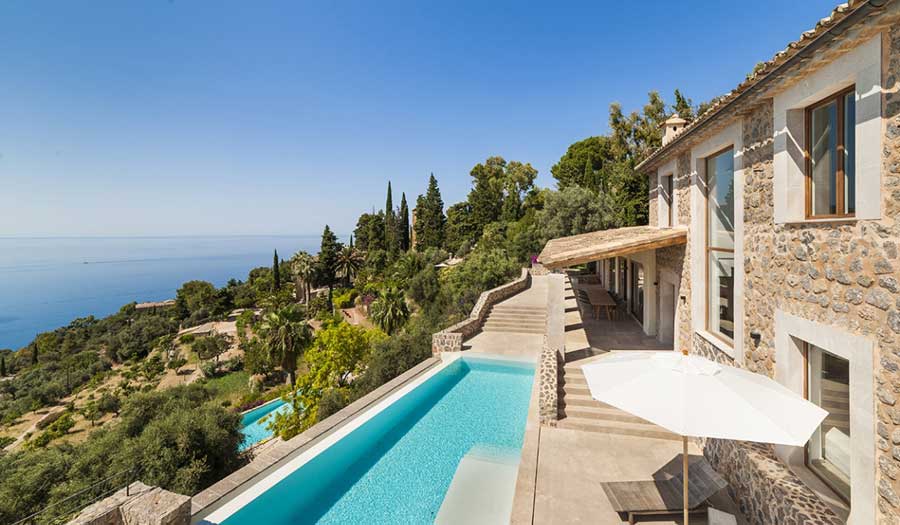

From Second Home to Lifestyle: The Luxury Buyer in Mallorca
For years, buying a luxury property in Spain followed a familiar script: choose the destination, find the most impressive home the budget allowed, and enjoy the lifestyle that came with it. That buyer still exists, but they are no longer the only one, or even the most representative.
Spain's luxury property sector is going through a shift in cycle, with more moderate growth than in recent years. But within that cycle there is a deeper transformation that the numbers alone do not explain: who buys, why they buy and what they expect from a luxury property has changed. Mallorca, one of Spain's four most important prime markets, is one of the settings where this shift shows most clearly.
From bricks to how we live: what has changed
For a long time, defining a luxury property was fairly straightforward: a prestigious address, generous proportions and a certain visual grandeur were usually enough to signal the top end of the market. Those factors still matter, but they no longer tell the full story.
Today's buyer is looking for something more complete: not just a beautiful home, but a home that makes life easier, calmer and more enjoyable. Privacy, wellness and service weigh more heavily in the decision than ever, alongside security and ease of maintenance. The appeal of a property no longer lies only in how it looks, but in how well it supports everyday life.
Spain fits this shift particularly well. Its appeal has never been purely about real estate: climate, light, outdoor living, gastronomy, healthcare and a more balanced pace of life are all part of what makes buying here attractive. For internationally mobile buyers, that combination matters more than ever. A home in Spain is no longer simply an asset or a second residence. Increasingly, it is part of a wider decision about how and where to live well.
This also explains the growing interest in turnkey homes and new development projects with professional management. Today's premium buyer tends to lead an international life and has less patience for avoidable complexity. Time has become one of the market's most valuable luxuries, and homes that are ready to use from day one, well maintained and easy to leave and return to, command an ever stronger premium.
The numbers behind the shift
The latest available data on Spain's prime residential market describes a sector that has moved beyond recovery and into a phase of structural strength. A few figures illustrate that strength:
| Indicator | Figure |
|---|---|
| Home sales, first half of 2025 | 379,484 transactions, the highest H1 figure since before the financial crisis |
| Price growth, first half of 2025 | Between 8% and 13%, the fastest pace in nearly 20 years |
| House prices, Q1 2026 (INE) | +12.9% year-on-year, the sharpest rise since 2007 |
| Prime segment price forecast for 2026 | Between 3% and 6%; super-prime, between 6% and 10% |
| Foreign buyers in transactions above €2.5M | 62% |
| Mallorca's share of Spain's prime stock | 25.3%, second only to Málaga (28.5%) |
According to the Instituto Nacional de Estadística, house prices rose 12.9% year-on-year in the first quarter of 2026, the sharpest rise since 2007, with resale homes leading growth (+13.5%) ahead of new-build (+9.1%).
Available stock in the prime segment is limited: total homes for sale fell 15% in the first half of 2025, yet properties priced above €2.5M declined by just 1%, leaving around 14,000 prime homes on the Spanish market. Four regions account for most of that limited stock: Málaga, Mallorca, Madrid and Barcelona. And in transactions above €2.5M, 60% of super-prime purchases close without financing, a reminder that this is a market driven by liquidity, not mortgages.
Who is buying luxury property today
The buyer profile has become harder to reduce to a single type. According to the latest sector data, between 50% and 60% of buyers still use the property as a second home or hybrid model, but the motivations behind that choice are increasingly varied.
Relocating families
They prioritise international schools, green space and privacy, and buy with a long stay in mind, not a holiday.
Entrepreneurs and executives
They look for a European base that combines strong international connectivity with quality of life, and increasingly work remotely from the property.
Classic second-home buyers
They still exist, but increasingly expect to spend longer periods in the property, or even relocate permanently in the future.
Added to this profile is an emerging 2026 cohort: tech founders, finance executives, professional athletes and entertainment figures, whose buying habits are shaped by lifestyle rather than the traditional second-home logic. Family offices, meanwhile, continue to increase their exposure to residential as a long-term asset class.
From the city to the street: the rise of micro-location
One of the most notable shifts in Spain's prime market is the growing importance of micro-location. Choosing Madrid is no longer enough. Neither is choosing Marbella, Barcelona or Mallorca in the abstract.
Today's buyer increasingly focuses on the specific neighbourhood, the street, even the building. They understand that not every property within the same prime area performs equally, either as a home or as a long-term asset. The conversation has shifted from buying in the right city to finding the right street, and from buying a holiday home to investing in a property capable of adapting to a lifestyle that may change over the next ten or twenty years.
How this plays out in Mallorca
In Mallorca, this same logic of precision applies with force. The difference between Palma, Puerto de Andratx, Deià and Pollensa goes far beyond geography: each area responds to a different way of living, not just a different price bracket. Pollensa, with its international community established over decades, is also the area where Balearic Properties holds its largest portfolio of available properties.
This same dynamic is repeated in Ibiza, the other Balearic island where the lifestyle market sits expressly alongside Madrid, Barcelona and Marbella among Spain's most notable prime destinations.
For anyone selling or advising in this market, understanding that difference matters as much as knowing the prices. Value no longer depends solely on location and scarcity, but on service, design quality, management and ease of use.
See luxury property for sale in Mallorca
What today's luxury buyer looks for in a property
Current demand is increasingly shaped by a handful of specific characteristics:
- Hotel-style service: concierge, housekeeping, private chef and wellness clubs within the property itself
- Hybrid use: second homes designed for partial rental or flexible stays too
- Biophilic design: private spas, well-resolved natural light, air and water filtration, indoor gardens
- Environmental credentials: solar energy, certifications such as BREEAM or Passivhaus, low-emission materials
Nationally, branded residences have moved from niche to mainstream, with 38 projects already underway in Spain and a further 25 in development, commanding a 20–40% premium over a comparable unbranded home. Marbella accounts for most of them, but the logic behind it, the brand acting as a guarantee of quality and management, is the same logic drawing Mallorca buyers towards fincas and villas with professional management and integrated services.
Within Balearic Properties' current portfolio, two examples illustrate this buyer profile well:
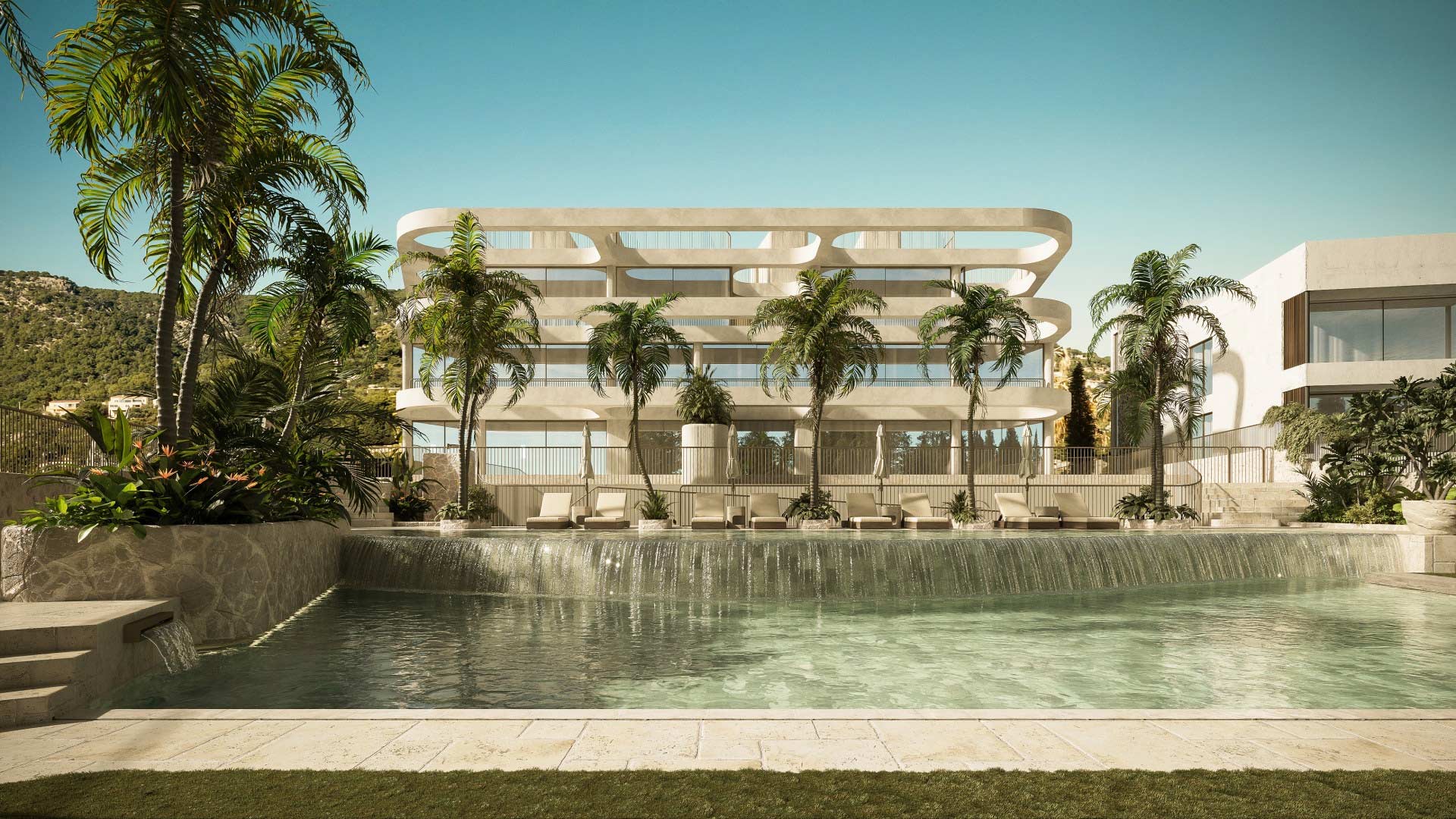
Sea-view penthouse in southwest Palma
3 bedrooms, 359 m², private rooftop terrace, within an exclusive complex with a pool and gardens. View property
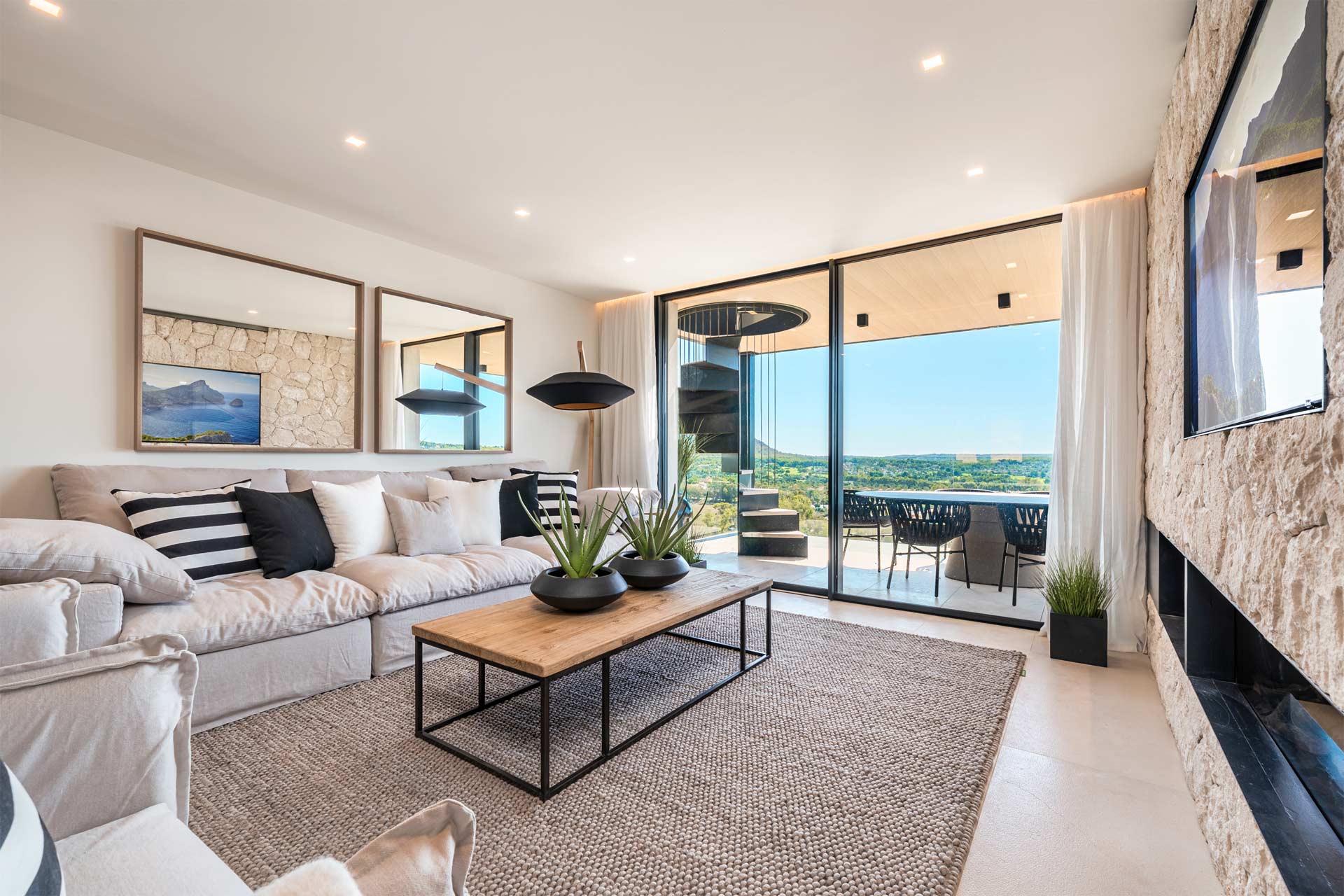
Penthouse with private rooftop pool, Santa Ponsa
4 bedrooms, 263 m², a 108 m² terrace with private pool and sea views, within an exclusive development of just 8 apartments and penthouses. View property
Why this matters for anyone selling or investing in Mallorca
Spain's luxury market is not entering 2026 overheated or speculative. Deeper forces explain it: structural scarcity of supply, diversified international demand, demographic growth and a broad reassessment of lifestyle priorities. For the owner selling, this means price and location alone no longer justify a property's value: today's buyer pays for how easily that property can support their life.
For the buyer, understanding this shift helps identify which properties in Mallorca will keep their appeal in the medium term: those combining location, genuine scarcity, lasting quality and the flexibility needed to stay relevant over the next five to ten years.
Frequently Asked Questions
Why is the luxury buyer profile in Spain changing?
Because the priority has shifted from appearance and prestige to privacy, wellness, service and ease of use. Today's buyer values how they live in the home as much as how it looks from outside.
Is there still demand for second homes in Mallorca?
Yes. Between 50% and 60% of luxury buyers in Spain still use the property as a second home or hybrid model, although it is increasingly common for them to plan longer stays or eventually relocate permanently.
How has luxury house pricing evolved in Spain?
According to the INE, house prices rose 12.9% year-on-year in the first quarter of 2026, the sharpest rise since 2007. The prime segment has a forecast of 3–6% growth for 2026, and super-prime, 6–10%.
Which areas of Mallorca concentrate luxury demand?
Areas such as Palma, Puerto de Andratx, Son Vida, Deià and Pollensa attract different profiles depending on the lifestyle sought: urban living, marina and international life, privacy and nature, or an already established international community.
Is now a good time to invest in luxury property in Mallorca?
Mallorca accounts for 25.3% of Spain's prime stock, the second largest share in the country after Málaga, against a backdrop of limited supply and sustained international demand. That is not a guarantee of returns, but it is a context of structural scarcity that tends to support value over the medium term.

By Iris Grünewald
Founder

