

Building Licences in Mallorca: How EPCUs Can Help with New Builds and Renovations
Obtaining a building licence in Mallorca, similar to planning permission in the UK, is one of the most important steps when building a new home, renovating an existing property or investing in real estate on the island. For international buyers unfamiliar with Spanish planning law, the process can be difficult to navigate.
To speed up licensing, the Balearic Islands have introduced a system of authorised Private Urban Planning Certification Entities, known officially as EPCUs (Entidades Privadas de Certificación Urbanística) and still referred to as ECUs in some municipal communications and by professionals in the sector.
An authorised EPCU does not replace the municipality. It reviews a project's technical documentation and checks it against planning regulations before the application is submitted for a final decision, which may help reduce delays by ensuring the file is complete when it reaches the town hall.
The system is designed to operate across the whole of Mallorca, though each municipality can set its own rules on how, and whether, it applies locally.
Whether you are planning to build a luxury villa, renovate a traditional finca or townhouse in one of Mallorca's historic villages, or invest in a residential development, understanding how the Mallorca building licence process works can help you plan your investment with greater confidence.
What is an EPCU or ECU in Mallorca?
An Entidad Privada de Certificación Urbanística (EPCU) is an authorised private organisation that reviews certain urban planning and building licence applications before the municipality examines them.
EPCU is the official term, though these entities are still widely called ECUs by municipalities and by architects, lawyers and planning professionals working in the sector.
The EPCU checks the technical documentation prepared by the applicant's architect, verifying that the project appears to comply with the applicable planning regulations and that the file is complete. If the review is satisfactory, the EPCU issues a certificate of urban planning conformity, which is submitted together with the licence application.
The EPCU does not replace the local authority. The municipality remains solely responsible for granting or refusing the licence and can carry out its own additional checks.
The system forms part of the Balearic Government's wider administrative simplification measures, intended to speed up licensing while keeping public oversight of planning decisions in municipal hands.
Are EPCUs Available Throughout Mallorca?
Authorised EPCUs registered by the Consell de Mallorca may operate across the whole island, not only in Palma. According to the Consell de Mallorca, three entities are currently authorised to process building licence applications on this basis: Ab-Aucatel Inspección y Control, Addient Empresa Certificadora and Ab-EIC Control Reglamentario.
The Consell's register works on a subsidiary basis. EPCUs registered with it can act before any Mallorcan town hall that has not set up its own separate authorisation system. Where a municipality does have its own regulations, those take precedence, and some town halls limit EPCU involvement to specific procedures or exclude certain applications altogether.
Palma was one of the first municipalities to use the system and remains a useful example, but it does not represent the whole picture. Applicants should always check the current rules of the municipality where the property is located, since practice still varies from one town hall to the next.
What Types of Building Projects Can Use an EPCU?
The EPCU system is designed to support a broad range of urban planning applications, not only renovations. Depending on the project and the municipality, an EPCU may be involved in new detached villas and residential buildings, major renovations, extensions and structural alterations, swimming pools and other substantial external works, changes of use, certain property divisions, modifications to previously authorised projects, and completion or first-occupancy checks where these apply.
Not every project automatically qualifies. Eligibility depends on the nature of the works, the municipality, the planning classification of the land, and whether reports from other public authorities are required first. Projects affecting protected buildings, environmentally sensitive areas, coastal zones or certain categories of rural land often need authorisations that fall outside the EPCU process.
Before preparing any application, buyers should get project-specific advice from a qualified architect and, where relevant, an independent planning lawyer.
Using an EPCU for New Construction in Mallorca
For many international buyers, new construction is where the EPCU system offers the clearest benefit. Whether the project is a contemporary villa, a traditional Mediterranean-style home or a small residential development, obtaining the building licence is one of the most significant milestones before work can start.
Every new-build project must comply with the planning rules that apply to its specific plot, and these vary between municipalities. Before committing to a project, it is worth checking the legal classification of the land, whether the plot qualifies as a buildable urban plot, minimum plot size, setbacks from neighbouring properties, maximum site occupation, permitted building volume and height, and parking requirements.
For anyone building a house in Mallorca, confirming that a plot is legally suitable for construction should form part of due diligence before completing the purchase. Not every plot marketed for sale automatically meets the legal conditions required.
An EPCU may review the architectural project and supporting documentation before it reaches the municipality, which can help catch missing information or inconsistencies early, before they turn into requests for further documentation and lost time. The same applies to residential developments and to extensions substantial enough to significantly change a property's volume or structure.
Even so, the municipality remains the competent authority throughout. A certificate of urban planning conformity from an EPCU does not stop the local council carrying out its own checks or requesting any external reports the law requires.

Beachside plot with project licence, Puerto Pollensa, €1,850,000
1,085 m² plot with approved building permits for a 4 to 5 bedroom detached house of up to 400 m², designed to Passivhaus standard, a short walk from the beach in Puerto Pollensa. View this property
Using an EPCU for Property Renovations in Mallorca
Property renovation remains one of the most popular forms of investment in Mallorca. International buyers frequently purchase traditional fincas, village townhouses, seafront villas and apartments with the intention of modernising or extending them while preserving their original character.
Townhouses located in historic centres may require particular attention, especially where protected façades, heritage regulations or conservation areas apply. In these situations, additional planning requirements or external authorisations may be necessary before a building licence can be granted.
Not every renovation follows the same procedure. Minor interior works that do not affect a building's structure may, depending on the municipality, be carried out under a simplified procedure or a responsible declaration rather than a full licence.
Larger renovation projects generally need a full building licence. This typically covers structural alterations, extensions that increase the built area, major internal reconfigurations, façade changes, swimming pools, changes of use, work on listed or protected buildings, and comprehensive refurbishments.
Where local rules allow it, an authorised EPCU can review the renovation project before it reaches the municipality, which may help identify gaps in the documentation before the town hall's own assessment begins. Renovation projects touching protected heritage, environmentally sensitive land, rural land or other sector-specific constraints usually need separate authorisations that sit outside the EPCU process.
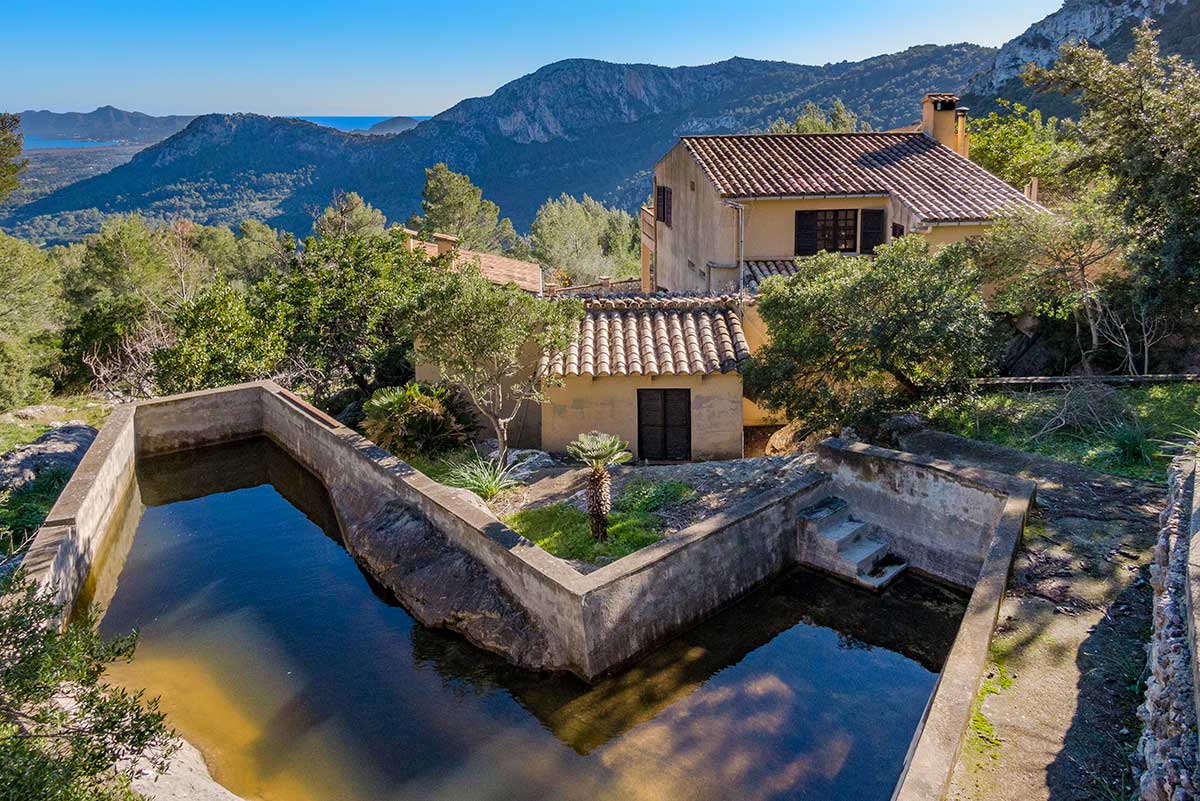
Mountainside finca in need of reform, Pollensa, €995,000
249 m² built on a 48,000 m² plot, with views over Pollensa bay. Full of character and still waiting for its reform licence. View this property
Getting professional advice early matters most for renovation projects, since feasibility often depends as much on the condition and history of the existing building as on the planning rules themselves.
Browse properties for sale in Mallorca
How the EPCU Building Licence Process Works
Although each municipality may establish its own administrative procedures, the EPCU process generally follows a similar sequence.
- The property owner appoints an architect or qualified technical professional.
The architect prepares the project and the supporting technical documentation required for the licence application. - The project documentation is completed.
Plans, technical reports and all supporting documentation are prepared in accordance with the applicable planning regulations. - The applicant voluntarily appoints an authorised EPCU.
Using an EPCU is generally optional and involves an additional private professional fee. - The EPCU reviews the application.
The organisation examines the documentation to verify its completeness and assess whether the proposal complies with the applicable urban planning regulations. - The EPCU issues a Certificate of Urban Planning Conformity.
If the documentation satisfies the relevant requirements, the EPCU issues the corresponding certificate. - The application is submitted to the municipality.
The certificate forms part of the documentation submitted together with the building licence application. - The municipality makes the final decision.
The local authority remains responsible for granting or refusing the building licence and may carry out any additional legal or technical reviews required under the applicable legislation.
Standard route versus EPCU-assisted route
| Standard route | EPCU-assisted route | |
|---|---|---|
| Who reviews the project first | Municipal planning department only | Authorised EPCU, followed by the municipality |
| Extra cost | None beyond standard municipal fees | EPCU's own professional fee, on top of municipal fees |
| Who grants the licence | The municipality | The municipality, unchanged |
| Effect on timescale | Depends entirely on municipal workload | Still depends on the municipality, but a complete, pre-checked application may reduce delays |
Can an EPCU Grant the Building Licence?
No. This is one of the most important points for buyers to understand.
An EPCU is not a public authority. Its role is limited to reviewing the application and issuing a technical certificate where appropriate. It cannot replace the municipality, guarantee approval, override planning restrictions, waive environmental, heritage, coastal or aviation authorisations, or legalise an unlawful building by issuing a certificate.
The municipality alone decides whether to grant or refuse the licence, and can request further documentation, obtain reports from other authorities, and apply the planning rules as it sees fit. The certificate of urban planning conformity is part of the application file. It is not the licence itself.
When Can an EPCU Not Be Used?
The EPCU route is not always available. Common examples include projects where the municipality has excluded EPCU intervention for that specific procedure, where the application needs a report that only the municipality can request directly, where the property sits on rural land requiring binding reports from other authorities, where the plot does not meet the legal conditions to count as a buildable urban plot, or where heritage, environmental, coastal, aviation, road or water authorisations are required.
This list is not exhaustive. Planning rules vary by municipality and by the characteristics of the property and the works involved, so project-specific advice from a qualified architect and, where relevant, an independent planning lawyer, remains essential before starting any development.
EPCU Costs and Potential Advantages
Using an authorised EPCU involves an additional private professional fee, separate from standard municipal taxes and licence fees. Fees vary depending on the complexity of the project and the services provided, so it is worth requesting a quote before appointing one.
The main advantages are an independent review of the project before submission, verification that the documentation is complete, earlier identification of potential issues, and greater confidence that the application complies with planning regulations.
What an EPCU cannot promise is speed. A complete, pre-checked application may help reduce administrative delays, but overall processing time still depends on the municipality, the complexity of the project, and whether other public bodies need to issue additional reports. An EPCU is best understood as a way of improving the quality of an application, not as a guarantee of any particular timeframe.
What International Buyers Should Check Before Purchasing
Obtaining a building licence is only one part of due diligence for international buyers. Before purchasing a property with plans to build, extend or renovate, it is worth asking your architect and an independent legal adviser to check the following:
- Whether the property has all necessary planning permissions and licences.
- Whether previous alterations were properly authorised.
- The land's planning classification and whether a plot has the legal status required for construction.
- Whether any planning, heritage, environmental or coastal restrictions apply.
- Whether the local municipality currently allows EPCU involvement for the proposed project.
- Whether further reports or authorisations will be needed before a licence can be granted.
Checking these points before completing a purchase helps buyers judge whether a project is realistic, estimate reasonable timescales, and avoid planning surprises later on.
How Balearic Properties Can Help
At Balearic Properties, we help buyers find homes and investment opportunities that match their plans, whether that means building a new property, renovating an existing home, or buying something ready to move into.
Our team can help identify building plots suitable for new construction, country houses and fincas with renovation potential, homes with existing planning permission, and new-build villas ready for occupation, across Mallorca. We can also introduce clients to experienced local architects, project managers and independent legal advisers who know the island's planning system.
Balearic Properties does not grant building licences, provide legal opinions, or act as an EPCU. Any planning or legal advice should always come from appropriately qualified professionals.
Speak to Our Property Specialists
Frequently Asked Questions
What is an EPCU in Mallorca?
An EPCU (Entidad Privada de Certificación Urbanística) is an authorised private organisation that reviews certain building licence applications before they reach the municipality, and may issue a certificate of urban planning conformity where the project complies with the applicable rules.
Is an EPCU the same as an ECU?
Yes. EPCU is the official term, though ECU is still commonly used by municipalities and planning professionals.
Can an EPCU process a licence for a new villa?
Potentially, yes, subject to the applicable rules and the municipality involved. Eligibility depends on the specific project and location.
Can an EPCU be used for renovations?
Yes, where permitted locally. Major renovations, extensions and structural alterations may be suitable for EPCU review, depending on the circumstances.
Are EPCUs available outside Palma?
Yes. EPCUs registered with the Consell de Mallorca may operate across the island, though each municipality decides how and when the system applies within its own procedures.
Does an EPCU grant the building licence?
No. Only the municipality has the legal authority to grant or refuse a building licence.
Is using an EPCU compulsory?
No. Appointing an EPCU is normally voluntary and involves an additional private fee.
Can an EPCU be used for properties on rural land?
Not always. Projects on rural land often need additional authorisations or binding reports that sit outside the EPCU process.
How much does an EPCU cost?
Fees vary by project complexity and the services provided. Ask for an individual quotation before appointing one.
Does using an EPCU guarantee a faster building licence?
No. A well-prepared application may help reduce delays, but timing still depends on the municipality, the project and any additional reports required.
Can an EPCU legalise an existing illegal construction?
No. An EPCU cannot legalise an unlawful building or override planning legislation.
Do I still need an architect?
Yes. Most building licence applications require a qualified architect or technical professional to prepare the documentation and manage the process.
Legal Disclaimer
This article is provided for general information only and does not constitute legal, planning or professional advice.
Urban planning legislation, municipal procedures and EPCU participation can change over time, and availability depends on the municipality, the nature of the project, the classification of the land and any additional authorisations required.
Before purchasing a property, applying for a building licence, or starting any construction or renovation project in Mallorca, readers should get project-specific advice from a qualified architect and an independent planning lawyer.
This article reflects the regulatory position at the time of publication, including the administrative simplification measures introduced under Ley 7/2024, of 11 December. Always verify current requirements with the relevant municipality before relying on any planning procedure.

By Iris Grünewald
Founder

